🧠 Why Do We Get Goosebumps? Simple Science Explained
Why does your skin suddenly form tiny bumps when you’re cold or scared?how do you get goosebumps
This weird reaction is actually an ancient survival mechanism.
And humans still carry it today.
Have you ever noticed small bumps on your skin when you feel cold, scared, or emotional? Those tiny bumps are called goosebumps, and they are one of the most fascinating automatic reactions of the human body.
In this post, we’ll explore why we get goosebumps, the science behind them, and what purpose they serve in humans and animals.
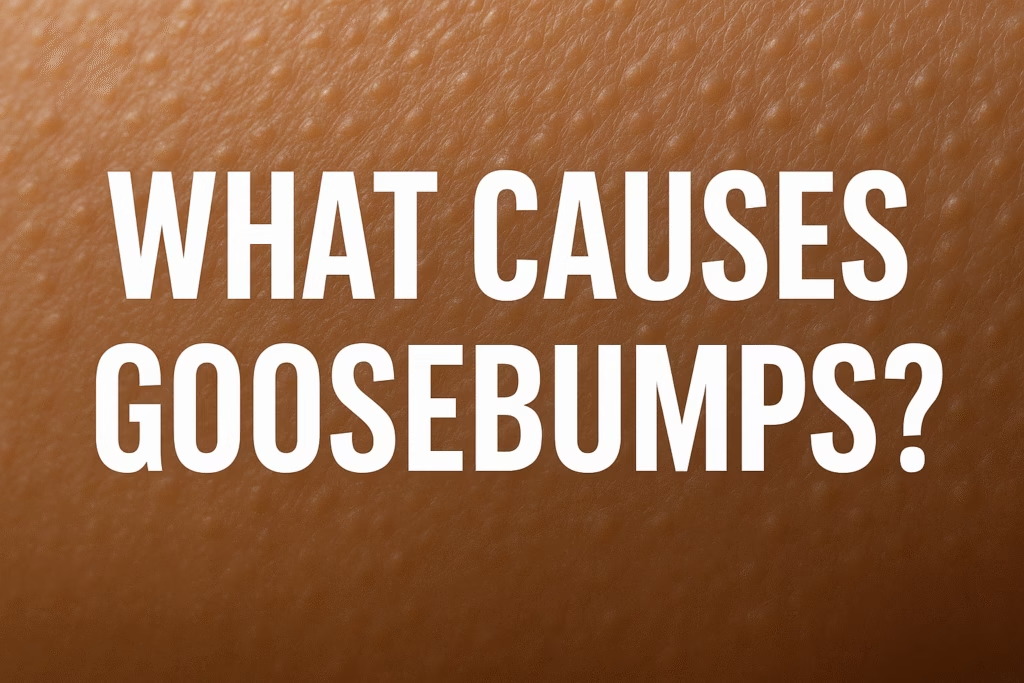
🩸 What Are Goosebumps?
Goosebumps are tiny raised bumps that appear on your skin when the muscles at the base of each hair follicle contract.
This happens due to a reaction controlled by your body’s autonomic nervous system — the part that works automatically without you thinking about it.
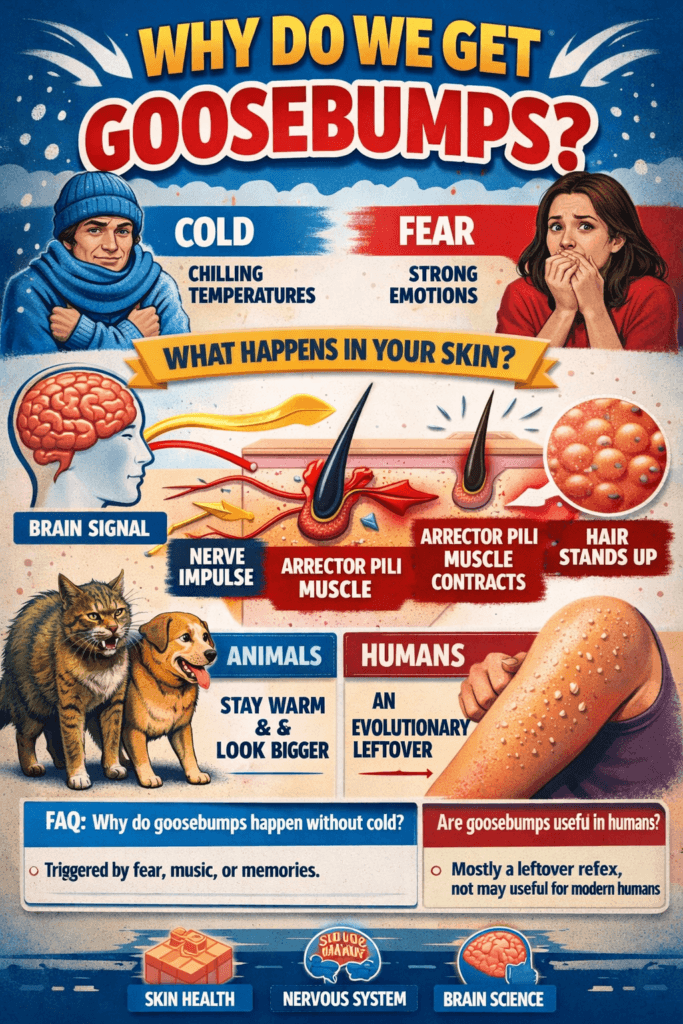
⚙️ The Science Behind Goosebumps
When you feel cold, afraid, or even moved emotionally, your body releases a hormone called adrenaline.
Adrenaline activates the small muscles called arrector pili attached to each hair follicle, causing your hairs to stand upright.
This reaction is called the pilomotor reflex or piloerection.
It’s an evolutionary response that humans have inherited from animals.
🧊 Cold Response: Why Goosebumps Help in Cold
When your body feels cold, it activates a survival mechanism controlled by the sympathetic nervous system. Tiny muscles attached to your hair follicles contract, making your hair stand upright.
👉 This process is called piloerection.
In animals, this helps trap a layer of warm air between the skin and fur, acting like insulation. In humans, however, body hair is too thin to provide significant warmth — so goosebumps are mostly a leftover evolutionary response.
Quick Fact:
Goosebumps are your body’s attempt to “fluff up” for warmth — just like animals do in winter.
learn Chemical coordination and integration
😨 Fear Response: Why Goosebumps Happen During Emotions
Goosebumps don’t just happen in cold — they also appear during strong emotions like fear, excitement, or even while listening to music.
This happens because:
- The brain detects a strong emotional stimulus
- It activates the fight-or-flight response
- Adrenaline is released
- Hair follicles contract → goosebumps appear
👉 This is the same response that prepares your body to face danger.
Example:
Ever felt chills during a powerful scene or song? That’s your nervous system reacting, not just your feelings.
🐾 Evolution: Animals vs Humans
In animals, goosebumps serve two important survival functions:
1. Appear Bigger to Threats
When animals like cats or dogs feel threatened, their fur stands up, making them look larger and more intimidating.
2. Stay Warm
Raised fur traps heat and protects against cold environments.
But in Humans…
- We have very little body hair
- Goosebumps don’t significantly help with warmth
- They don’t make us look bigger
👉 So why do we still have them?
Because evolution hasn’t completely removed this reflex — it’s a vestigial trait (a leftover from our ancestors).
🧬 Why Hair Stands Up (The Science Explained)
Each hair on your body is connected to a tiny muscle called the arrector pili muscle.
When triggered:
- The brain sends signals via nerves
- These muscles contract
- Hair shafts are pulled upright
- Skin forms small bumps → goosebumps
👉 This entire process happens automatically — you can’t control it.
Simple Explanation:
Your skin is reacting like animal fur, even though it no longer serves the same purpose.
🐒 Why Do Humans Still Get Goosebumps?
In animals like cats or porcupines, goosebumps serve a purpose — raised fur makes them look bigger and helps trap heat.
But in humans, since we have very little body hair, goosebumps no longer serve the same function.
Still, they remain as a reflex from our ancestors, showing how evolution has shaped our body responses.
😱 When Do We Get Goosebumps?
Goosebumps can happen in many emotional and physical situations:
- When you feel cold
- When you are afraid or anxious
- When you listen to inspiring music or speeches
- When you feel strong emotions like excitement, love, or nostalgia
It’s your body’s way of showing that your brain and emotions are deeply connected.
💡 Fun Facts About Goosebumps
- The scientific term for goosebumps is piloerection.
- Goosebumps can also appear when you feel intense emotions, not just cold.
- Animals use goosebumps as a defense mechanism to look bigger.
- Some people get “aesthetic chills” from music or art — that’s goosebumps too!
- They are a vestigial reflex, meaning it’s left over from our animal ancestors.
🤔 Do Goosebumps Have Any Health Meaning?
In general, goosebumps are harmless.
However, if you experience them frequently without cold or emotion, they could sometimes signal:
- Fever or chills
- Strong anxiety or stress
- Certain hormonal reactions
If it happens often or with other symptoms, it’s a good idea to consult a doctor.
🧬 Conclusion
Goosebumps may seem small, but they tell a big story about our body’s evolution, emotions, and reflexes.
They’re a reminder that even simple reactions connect us to our ancient ancestors — and to the deep power of our human nervous system.
So next time you feel those tiny bumps on your skin, remember: your body is just reacting in the most natural, scientific way possible.
REFRENCE ;HEALTHLINE
❓ Frequently Asked Questions
Q1. What causes goosebumps on the skin?
Goosebumps are caused when tiny muscles at the base of each hair follicle contract, making the hairs stand upright. This happens due to a hormone called adrenaline.
When you’re cold, your body automatically tightens those tiny muscles to trap heat — a leftover reflex from our furry animal ancestors.
Yes. Strong emotions such as fear, excitement, or even listening to powerful music can trigger goosebumps through adrenaline release.
Goosebumps are completely normal. They only become a concern if you get them often without reason, such as fever or anxiety-related reactions.
They’re called goosebumps because human skin looks like the skin of a plucked goose when those tiny bumps appear.