
Have you ever wondered how your brain remembers things like your first day at school or a friend’s name? Memory formation is a fascinating process where the brain creates and strengthens connections between neurons. In this article, we’ll explain how memories are formed in a simple and easy way.how memories are formed in the brain simple explanation
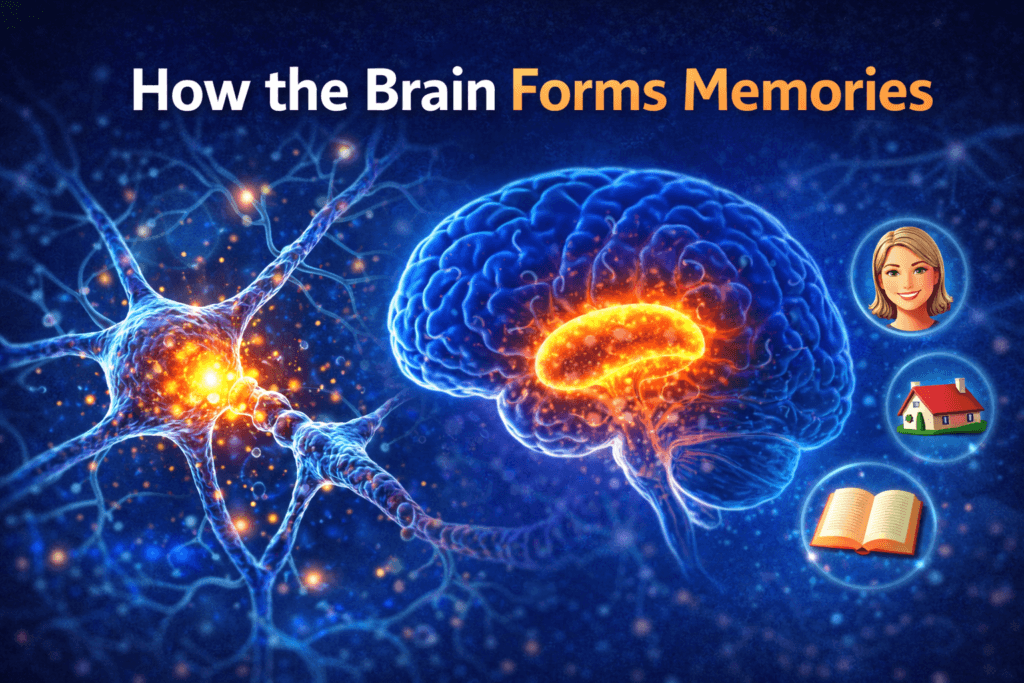
Memory formation begins with encoding sensory information and linking neurons
Every moment of your life — a conversation, a smell, a place, a face — can become a memory.how the brain forms memories
But how does the brain actually store these experiences?
The answer lies in billions of tiny brain cells constantly communicating with each other.
📌 Why?
Because memory works through neuron connections + synaptic changes
Let’s explore how memories are created inside the brain.
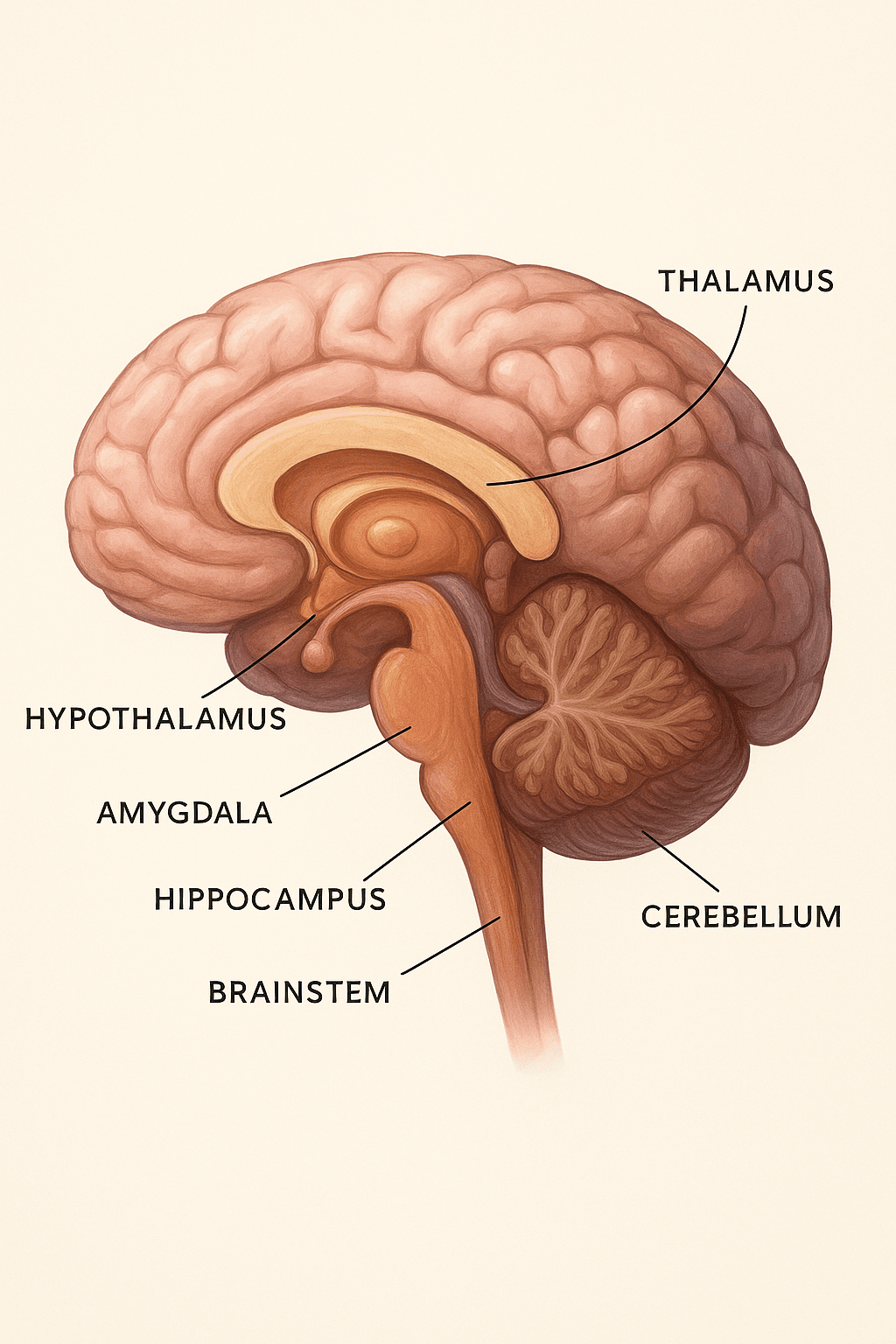
Parts of the Human Brain and Their Functions Explained
🧬 Your Brain Has Billions of Neurons
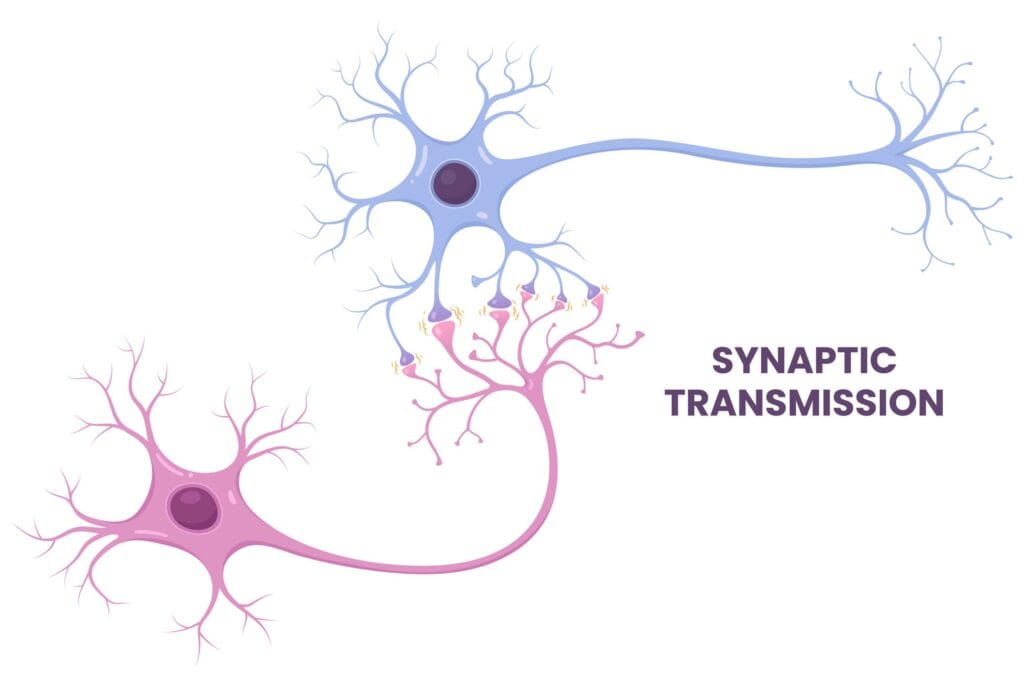
The human brain contains about 86 billion nerve cells, called neurons.
Neurons communicate using electrical and chemical signals.
Each neuron connects with thousands of others through tiny contact points called synapses.
These connections form massive communication networks that allow the brain to:
- Think
- Learn
- Feel emotions
- Store memories
Memory is essentially the result of changes in these neural connections.
⚡ Step 1: Your Brain Receives Information
Every memory begins when your senses collect information from the world.
Your:
- eyes see images
- ears hear sounds
- nose detects smells
- skin feels touch
- tongue tastes food
This information is converted into electrical signals and sent to the brain.
Different areas of the brain process different types of information.
For example:
- The visual cortex processes images
- The auditory cortex processes sounds
Parts of Ear and Their Functions (Simple Diagram Explained)
🧠 Step 2: The Hippocampus Organizes Memories
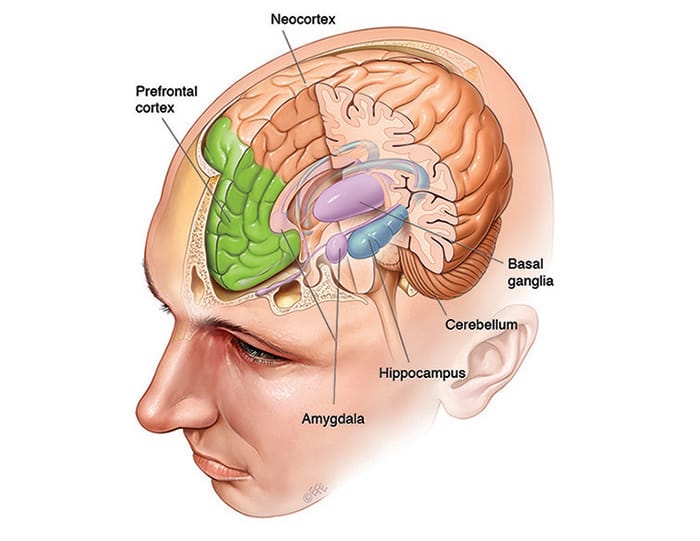
Deep inside the brain is a small but very important structure called the Hippocampus.
The hippocampus acts like a memory organizer.
It helps decide:
- what information is important
- what should be stored
- what should be forgotten
When you experience something meaningful, the hippocampus begins organizing the memory.
Without this structure, forming new memories becomes extremely difficult.
This 2% Body Organ Controls 20% of Your Energy
🔗 Step 3: Neurons Strengthen Their Connections
Memories are formed when neurons strengthen their connections with each other.
Scientists call this process synaptic plasticity.
When two neurons communicate repeatedly, their connection becomes stronger.
Think of it like a path through grass:
- The more people walk on it
- The clearer the path becomes
The same happens with brain connections.
The more a neural pathway is used, the stronger it becomes.
⏳ Step 4: Short-Term Memory Forms First
At first, most information is stored as short-term memory.
Short-term memory only lasts for seconds or minutes.
Examples include:
- remembering a phone number briefly
- recalling directions you just heard
- remembering what someone just said
Short-term memory has limited capacity.
The brain quickly decides what to keep and what to discard.
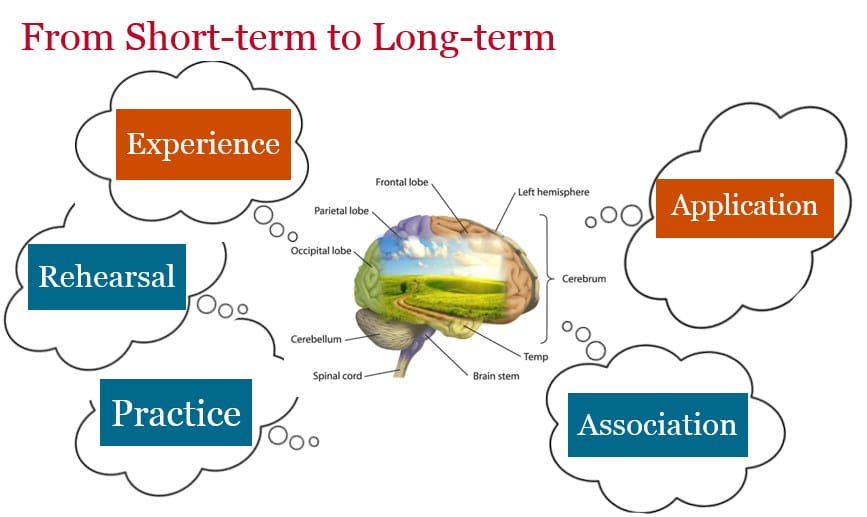
🧬 Step 5: Important Memories Become Long-Term
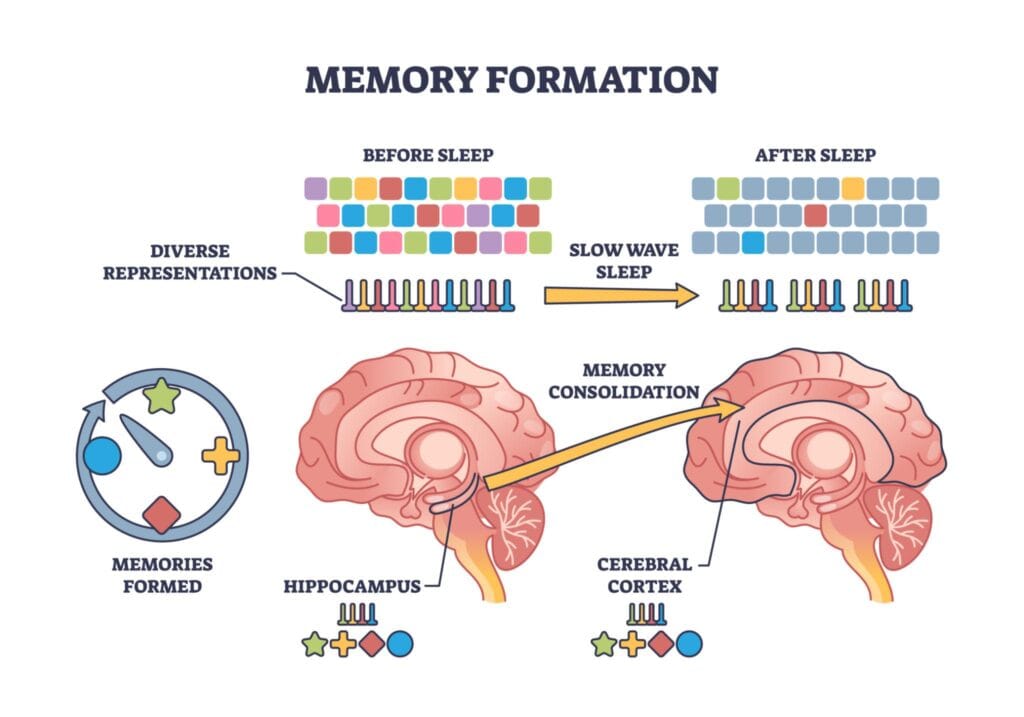
If information is meaningful or repeated, the brain converts it into long-term memory.
This process is called memory consolidation.
During consolidation:
- neural connections become stronger
- new proteins are created in neurons
- memory pathways become stable
This allows memories to last for years or even a lifetime.
😴 Sleep Helps Strengthen Memories
Sleep plays a critical role in memory formation.
While you sleep:
- the brain replays information from the day
- important memories are strengthened
- unnecessary information is removed
That is why studying before sleep can help improve learning.
Sleep acts like a memory storage system.
read 🧬 Why Do We Age? The Real Science Behind Growing Older
🧠 Different Types of Memory
The brain stores different kinds of memories.
Episodic Memory
Personal experiences.
Example:
your last birthday or a vacation.
Semantic Memory
Facts and knowledge.
Example:
knowing that Earth orbits the Sun.
Procedural Memory
Skills and habits.
Example:
riding a bicycle or typing on a keyboard.
These memories involve different brain regions working together.
learn brain decision making
🔬 Why Some Memories Are Stronger Than Others
Memories connected with strong emotions tend to last longer.
This happens because emotional events activate the amygdala, another brain structure.
The amygdala signals the brain that something important is happening.
As a result:
- memory formation becomes stronger
- details are stored more clearly
That’s why emotional events are easier to remember.
⚠ Why We Forget Things
Forgetting is actually a normal and useful brain function.
The brain removes less important information to avoid overload.
Memories can fade because:
- neural connections weaken
- new information replaces old information
- memories are not recalled often
In simple terms, the brain keeps what matters most.
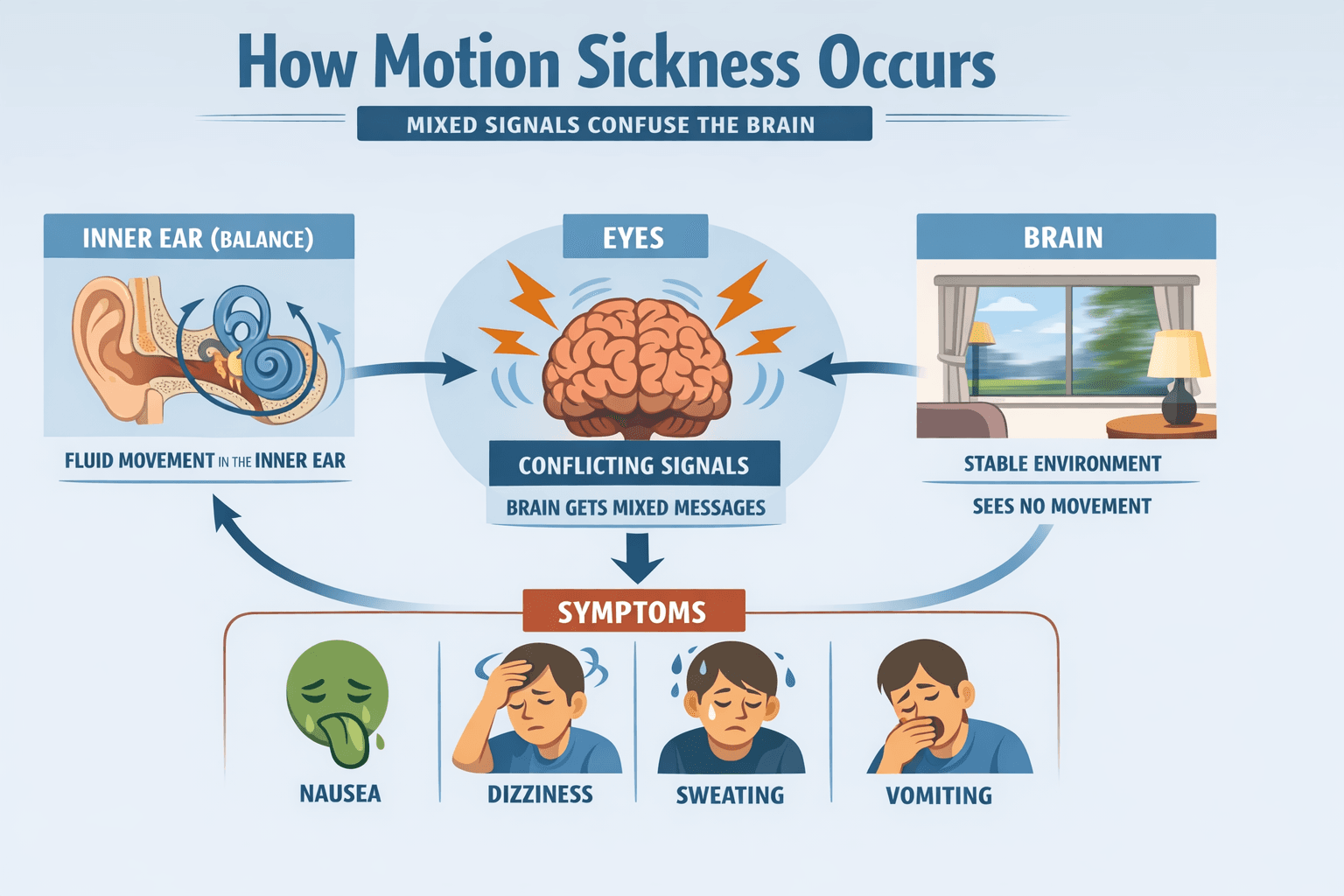
learn MOTION SICKNESS..
🧬 The Amazing Efficiency of the Brain
Your brain can store an enormous amount of information.
Scientists estimate the brain’s storage capacity to be roughly 2.5 petabytes — similar to millions of books.
Every day your brain is constantly:
- storing new memories
- modifying old ones
- connecting experiences together
Memory is not a fixed recording.
It is a dynamic, living process.
Can’t Focus? This Brain Hack Fixes It in Minutes
🌟 The Bigger Picture
Memories shape who we are.
They influence our:
- personality
- decisions
- relationships
- knowledge
Every memory represents a unique pattern of connections inside the brain.
And those patterns change throughout our lives.
Your brain is constantly rewriting your story.
🧠 Why Does Your Brain Forget Things? The Science Will Surprise You
💡 Final Thought
How Memories Become Stronger
Memories are formed and strengthened through changes in the brain:
- Synapses become stronger: When neurons communicate repeatedly, their connections improve. This process is called synaptic plasticity.
- Repetition reinforces learning: The more you repeat something, the stronger the neural pathway becomes, making recall easier.
- Sleep stabilizes memories: During sleep, the brain processes and stores information, helping convert short-term memories into long-term ones.
Research suggests that both repetition and sleep are essential for strong and lasting memories.
A Memory may feel like a simple moment in time
But inside your brain, it is the result of billions of neurons communicating, strengthening connections, and storing information in complex networks.
That incredible process allows us to learn, remember, and understand the world around us.
And that’s one of the most fascinating powers of the human brain.
Why Does Your Brain Feel Tired After Studying? The Science Behind Mental Fatigue
❓ FAQ
The brain forms memories by strengthening connections between neurons through repeated neural activity.
The hippocampus plays a major role in organizing and storing new memories.
Memories fade when neural connections weaken or when information is not used frequently.
Yes. Sleep strengthens memory consolidation and helps store information in long-term memory.
read Modes of virus transmission
https://www.instagram.com/sciencegajab/?hl=en