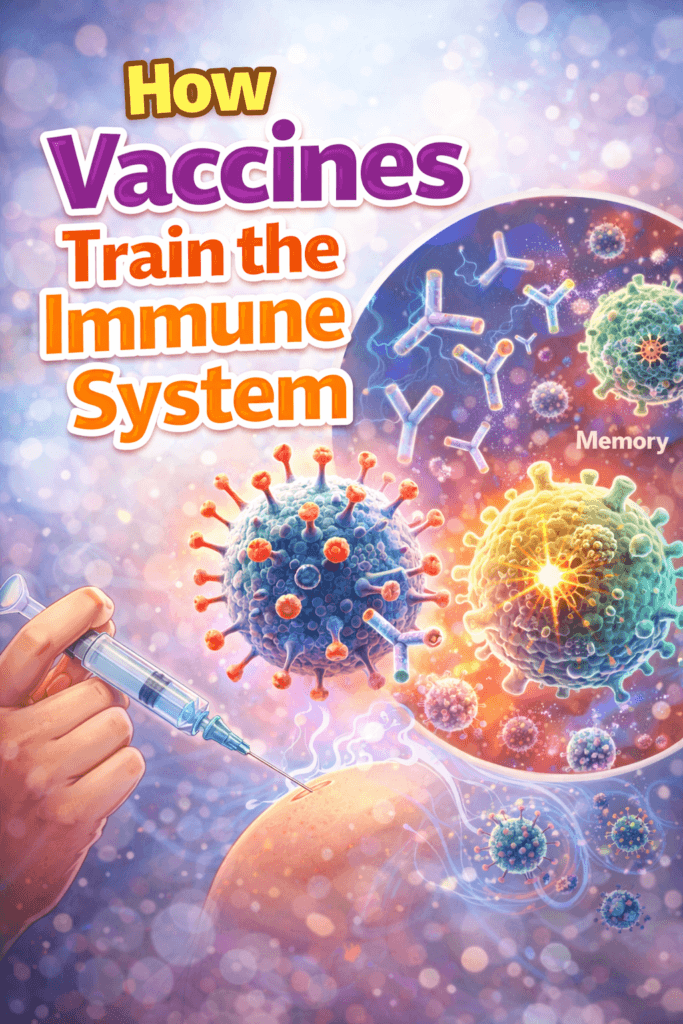

Your Immune System Has a Memory
Every day your body is exposed to thousands of bacteria and viruses in the environment. Most of the time, you never notice because your immune system silently protects you. how vaccines train the immune system
But when a new virus enters the body for the first time, the immune system may take time to recognize and fight it. During this delay, the virus can multiply and cause illness.
Vaccines solve this problem by training the immune system before a real infection occurs. They act like a practice session, allowing the immune system to learn how to defeat a virus safely.
Let’s explore the fascinating science behind how vaccines prepare your body to fight disease.
🛡️ What Is the Immune System?
The immune system is the body’s defense network that protects us from harmful pathogens such as viruses, bacteria, and parasites.
It includes several components working together:
- White blood cells
- Antibodies
- Lymph nodes
- Immune memory cells
These elements constantly patrol the body looking for anything that does not belong.
When a pathogen enters the body, the immune system begins a complex defensive response.
learn how vaccines work
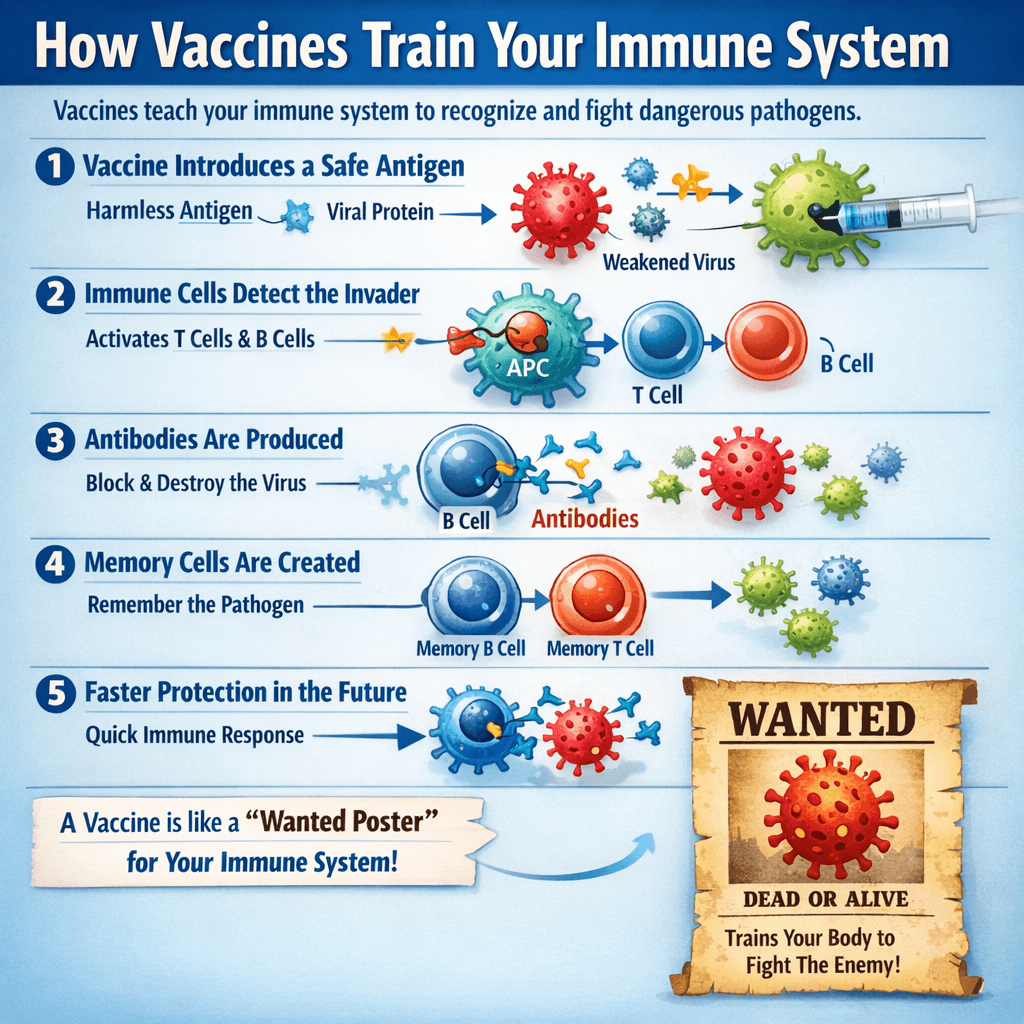
🧬 Step 1: The Vaccine Introduces a Harmless Target
A vaccine contains a harmless form or piece of a virus or bacteria.
Depending on the type of vaccine, it may contain:
- a weakened version of the pathogen
- an inactivated (killed) pathogen
- a protein from the virus
- genetic instructions for making a viral protein
This small piece of the pathogen is enough for the immune system to recognize it as foreign.
Importantly, vaccines cannot cause the disease itself, but they provide the immune system with valuable information.
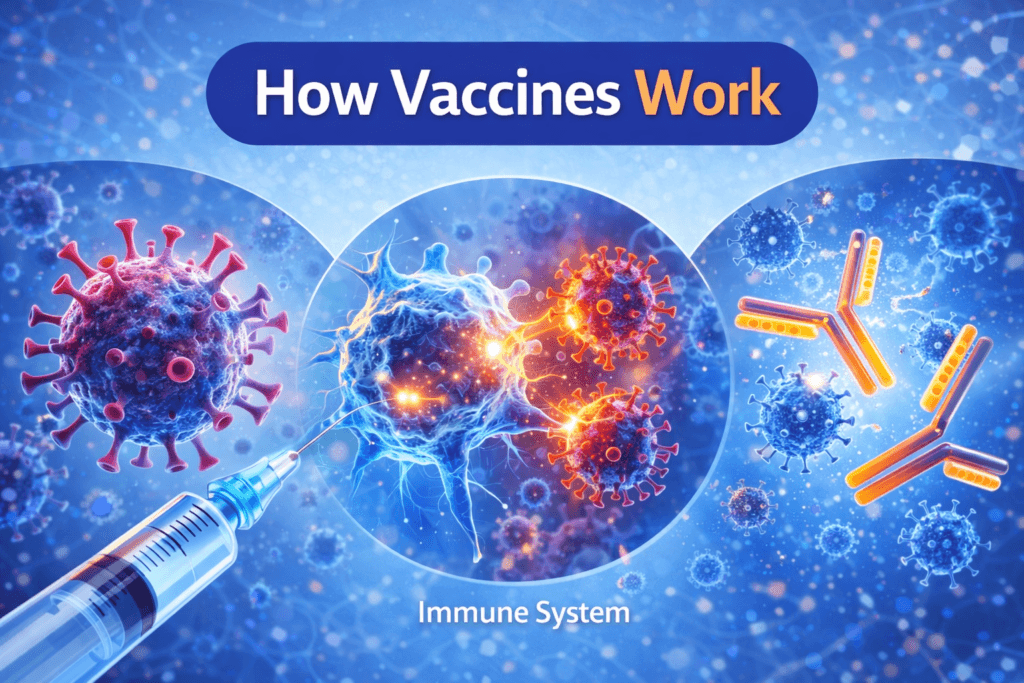
⚡ Step 2: The Immune System Activates Its Defenses
Once the vaccine enters the body, immune cells quickly detect the foreign material.
Special immune cells called antigen-presenting cells capture the vaccine components and show them to other immune cells.
This activates two key defenders:
B Cells
B cells produce antibodies, which are proteins designed to attach to viruses and block them from infecting cells.
T Cells
T cells help destroy infected cells and coordinate the immune response.
Together, these immune cells begin preparing the body to fight the pathogen.
🧠 Step 3: The Immune System Creates Memory
One of the most remarkable features of the immune system is immunological memory.
After exposure to a vaccine, the body creates special memory B cells and memory T cells.
These cells remain in the body for years — sometimes for life.
Their job is to remember the specific pathogen.
If the real virus later enters the body, these memory cells recognize it immediately and trigger a rapid immune response.
This fast reaction often stops the infection before symptoms even appear.
⏱️ Why Vaccinated People Fight Infections Faster
Without vaccination, the immune system may take several days to recognize and respond to a new virus.
During this time, the virus can multiply and cause illness.
But if the immune system has already been trained by a vaccine, it responds almost instantly.
Antibodies and immune cells attack the virus quickly, preventing it from spreading inside the body.
This is why vaccinated individuals often experience:
- milder symptoms
- shorter illness
- lower risk of severe disease
🌍 Vaccines Also Protect Communities
Vaccination does not only protect individuals.
When a large portion of a population is vaccinated, the spread of disease slows dramatically.
This phenomenon is called herd immunity.
With fewer people susceptible to infection, viruses have fewer opportunities to spread.
Herd immunity helps protect vulnerable individuals such as:
- newborn babies
- elderly people
- individuals with weakened immune systems
🔬 Different Types of Vaccines
Scientists have developed several types of vaccines to train the immune system.
Live Attenuated Vaccines
Contain a weakened version of the virus.
Examples include vaccines for measles and chickenpox.
Inactivated Vaccines
Contain viruses that have been killed so they cannot replicate.
Example: some flu vaccines.
mRNA Vaccines
Provide genetic instructions that teach cells to produce a harmless viral protein.
The immune system learns to recognize this protein.
Example: some COVID-19 vaccines.
🧠 Amazing Fact About Your Immune System
Your immune system can remember thousands of different pathogens at the same time.
This biological memory allows your body to respond quickly to infections you have encountered before.
Vaccines simply help your immune system learn this information safely without experiencing the disease.
learn How Immune System Works
❓ FAQ
Vaccines expose the immune system to a harmless part of a pathogen, allowing it to produce antibodies and memory cells that recognize the pathogen in future infections.
Some vaccines provide lifelong protection, while others require booster doses to maintain immunity
Mild side effects such as soreness or fever occur because the immune system is actively responding and building protection.
Yes, but vaccination usually reduces the severity of illness and lowers the risk of complications.