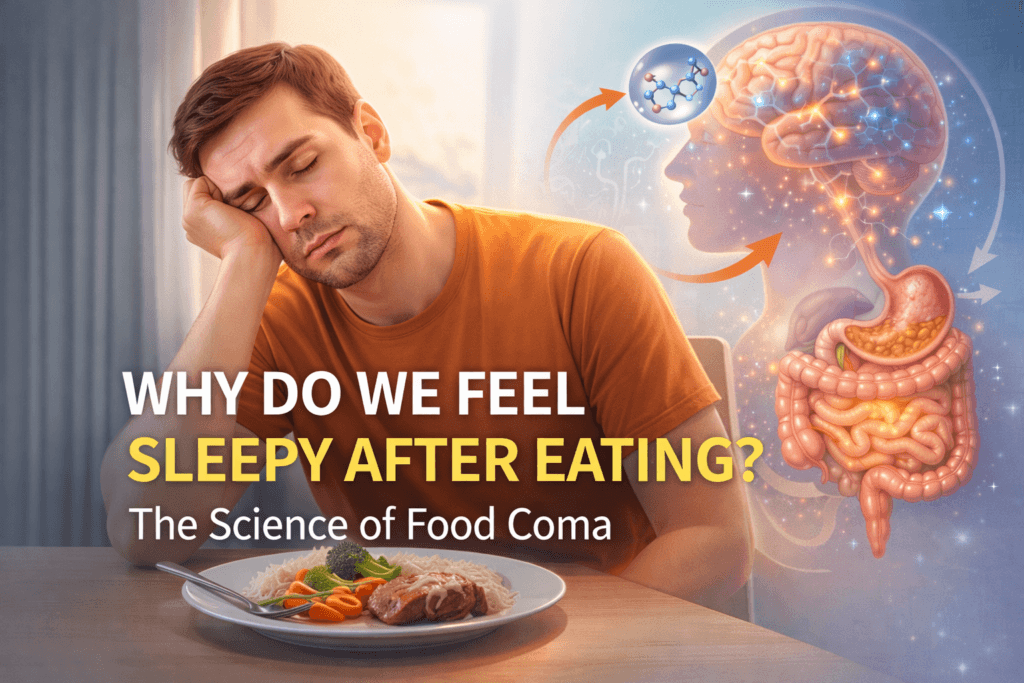

Feeling sleepy after eating happens because blood flow shifts to digestion and hormones like serotonin increase.
Have you ever finished a big meal and suddenly felt slow, relaxed, and ready for a nap? This common experience is often called a “food coma.” Many people notice it especially after lunch or a heavy dinner.why do we feel sleepy after eating
But why does this happen? Is it normal? And why do certain foods make you even sleepier?
The answer lies in how your body digests food, manages blood sugar, and releases hormones that influence the brain.
In this article, we’ll explore the science behind post-meal sleepiness, the foods that trigger it, and simple ways to avoid feeling tired after eating.
What Is Post-Meal Sleepiness?
Feeling tired after eating is scientifically known as postprandial somnolence.
It refers to the natural drop in alertness that happens after a meal. While it may feel strange, it’s actually a normal biological response caused by several processes happening inside your body at the same time.
When you eat, your body suddenly shifts into digestion mode. Energy is redirected toward breaking down food and absorbing nutrients. This shift can make you feel calm, relaxed, and sometimes sleepy.
1. Your Body Redirects Energy to Digestion
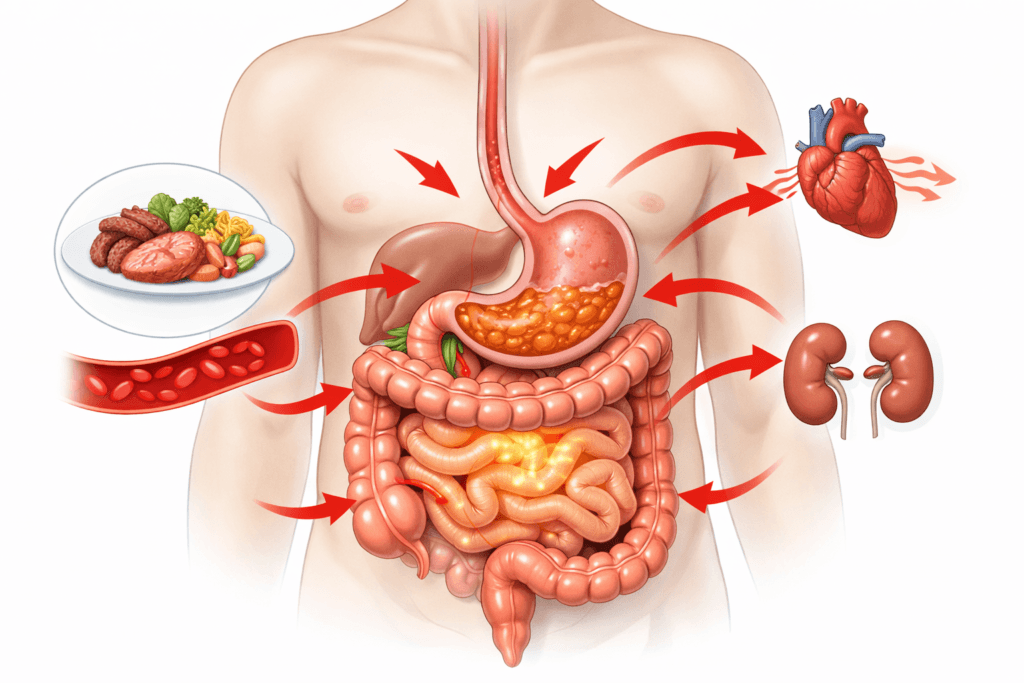
One of the main reasons you feel sleepy after eating is that digestion requires a lot of energy.
When food enters your stomach:
- Blood flow increases to the digestive organs
- Your stomach and intestines begin breaking down food
- Nutrients start being absorbed into the bloodstream
Because more blood is directed toward the digestive system, your body slightly reduces activity in other areas. This can make your brain feel less alert, leading to drowsiness.
Your body is essentially saying:
“Let’s focus on digestion for a while.”
learn How Immune System Works
2. Blood Sugar Changes Affect the Brain
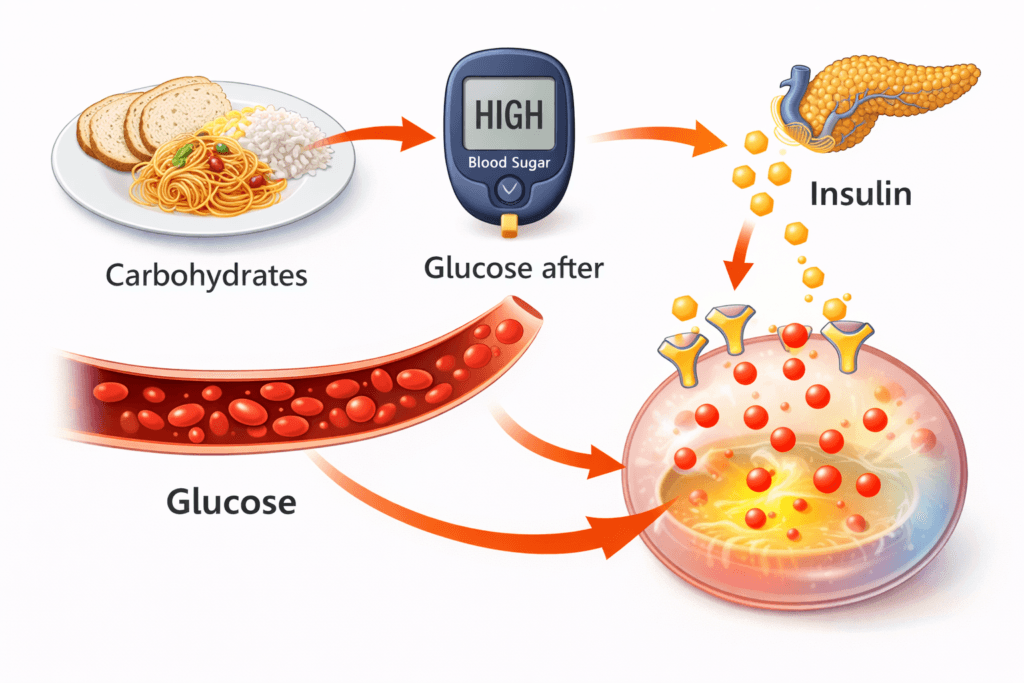
Another important factor is blood sugar levels.
After eating carbohydrates such as:
- rice
- bread
- pasta
- sweets
your blood glucose rises.
To manage this increase, the body releases insulin, a hormone that helps move sugar from the blood into cells for energy.
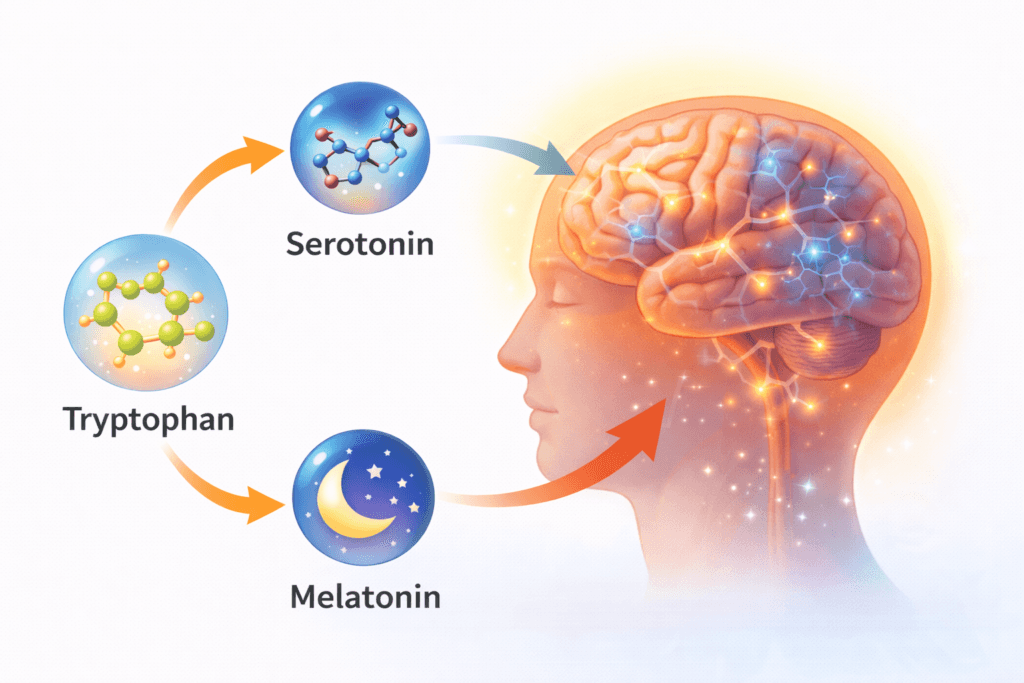
But insulin also changes the balance of certain amino acids in the blood, which allows more tryptophan to enter the brain.
Tryptophan is important because it is used to produce serotonin and melatonin, two chemicals linked to relaxation and sleep.
As a result, your brain may become calmer and sleepier after eating.
3. Certain Foods Naturally Promote Sleep
Some foods contain nutrients that can make you feel more relaxed or sleepy.
For example:
Tryptophan-rich foods
Tryptophan is an amino acid involved in producing sleep-related hormones.
Foods high in tryptophan include:
- turkey
- eggs
- cheese
- milk
- nuts
These foods may increase the production of serotonin and melatonin, which can promote relaxation.
High-carbohydrate foods
Meals rich in carbohydrates can increase serotonin production, which helps regulate mood and sleep.
Examples include:
- white rice
- bread
- potatoes
- sugary foods
This is why a heavy carb-rich meal often causes stronger sleepiness.
4. Your Circadian Rhythm Plays a Role
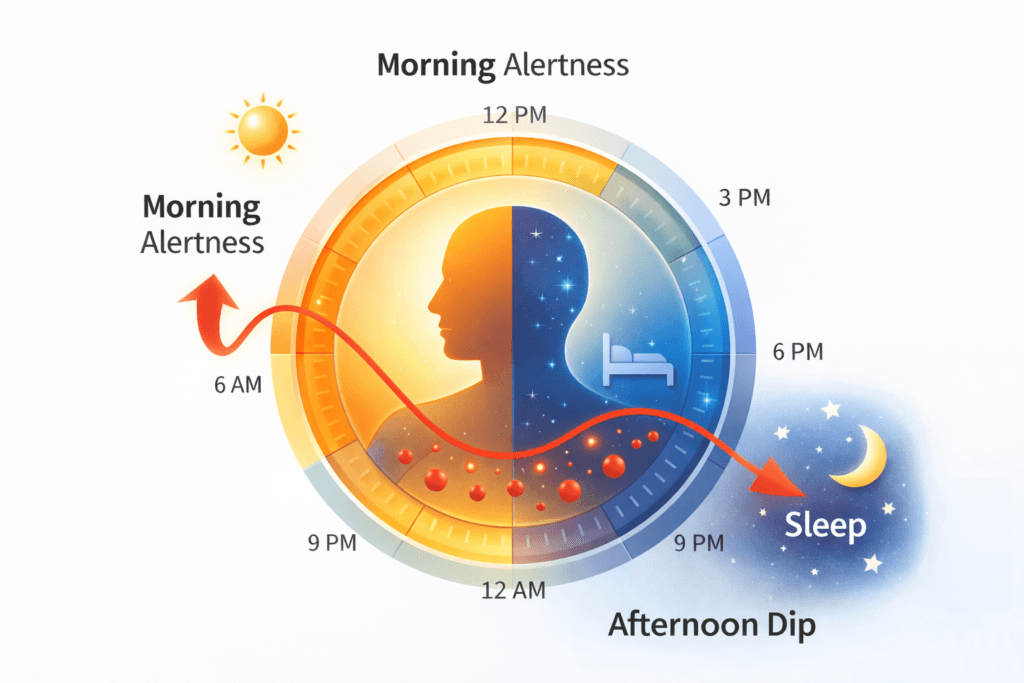
Your body follows a biological clock known as the circadian rhythm.
This internal clock controls:
- sleep cycles
- body temperature
- hormone release
- alertness levels
Interestingly, most people naturally experience a dip in alertness during the early afternoon.
This is why many cultures have traditions like the afternoon nap or siesta.
If you eat lunch during this natural dip, the combined effects of digestion and circadian rhythm can make you feel even sleepier.
learn what are hormones?
5. Large Meals Can Increase Drowsiness
The size of the meal also matters.
Large meals require:
- more digestion
- more blood flow to the stomach
- more insulin release
As a result, eating a very heavy meal can increase fatigue and sluggishness.
This is especially common after:
- large holiday meals
- buffet meals
- high-calorie dinners
The body simply needs more time and energy to process everything.
6. Hormones That Make You Relax
Eating food also triggers the release of several digestive hormones, including:
- cholecystokinin (CCK)
- glucagon-like peptide (GLP-1)
These hormones help:
- signal fullness
- slow stomach emptying
- support digestion
But they also activate parts of the nervous system associated with relaxation and rest.
This is another reason you may feel calm and sleepy after a meal.
7. Poor Sleep Makes It Worse
If you didn’t sleep well the night before, post-meal sleepiness becomes much stronger.
When your body is already tired, eating triggers an additional relaxation response, making fatigue more noticeable.
Many people experience strong drowsiness after lunch because:
- they slept poorly
- they skipped breakfast
- they ate a large meal
Together, these factors can make the midday slump more intense.
Foods Most Likely to Cause Sleepiness
Some foods are more likely to cause post-meal fatigue.
High carbohydrate meals
Examples:
- pasta
- white bread
- sugary desserts
- pizza
High fat meals
Fat slows digestion, which can increase sluggishness.
Examples:
- fried foods
- burgers
- creamy dishes
Large mixed meals
Meals that combine high fat and high carbohydrates often cause the biggest drop in energy.
How to Avoid Feeling Sleepy After Eating
The good news is that a few simple habits can help reduce post-meal fatigue.
1. Eat smaller meals
Instead of one large meal, try smaller portions throughout the day.
This reduces the digestive workload.
2. Choose balanced meals
Include a combination of:
- protein
- healthy fats
- fiber
- complex carbohydrates
Balanced meals help keep blood sugar stable.
3. Stay hydrated
Dehydration can worsen fatigue.
Drinking enough water supports digestion and energy levels.
4. Take a short walk
Light activity after eating can help improve:
- circulation
- digestion
- alertness
Even a 10-minute walk can reduce sleepiness.
5. Get enough sleep
Proper nighttime sleep helps maintain normal energy levels and metabolism.
When you are well rested, post-meal fatigue is usually milder.
Is It Normal to Feel Sleepy After Eating?
Yes, feeling slightly sleepy after a meal is completely normal.
It simply means your body is doing its job of:
- digesting food
- absorbing nutrients
- balancing hormones
However, extreme or persistent sleepiness after meals could sometimes be linked to issues such as:
- poor sleep habits
- large high-carb meals
- blood sugar problems
If fatigue after eating becomes severe or frequent, it may be helpful to discuss it with a healthcare professional.
learn The Science of Happiness: How Dopamine Hacks Your Brain
The Bottom Line
Feeling sleepy after eating is a natural biological response. It happens because your body redirects energy toward digestion while hormones and blood sugar changes influence brain activity.
Several factors contribute to this feeling:
- increased blood flow to the digestive system
- changes in blood sugar and insulin
- sleep-related hormones like serotonin
- large or carbohydrate-heavy meals
- the body’s natural circadian rhythm
In most cases, post-meal drowsiness is completely harmless. By eating balanced meals, staying active, and getting enough sleep, you can reduce the chances of feeling overly tired after eating.
So the next time you feel that familiar post-lunch sleepiness, remember: it’s simply your body working hard to turn food into energy.
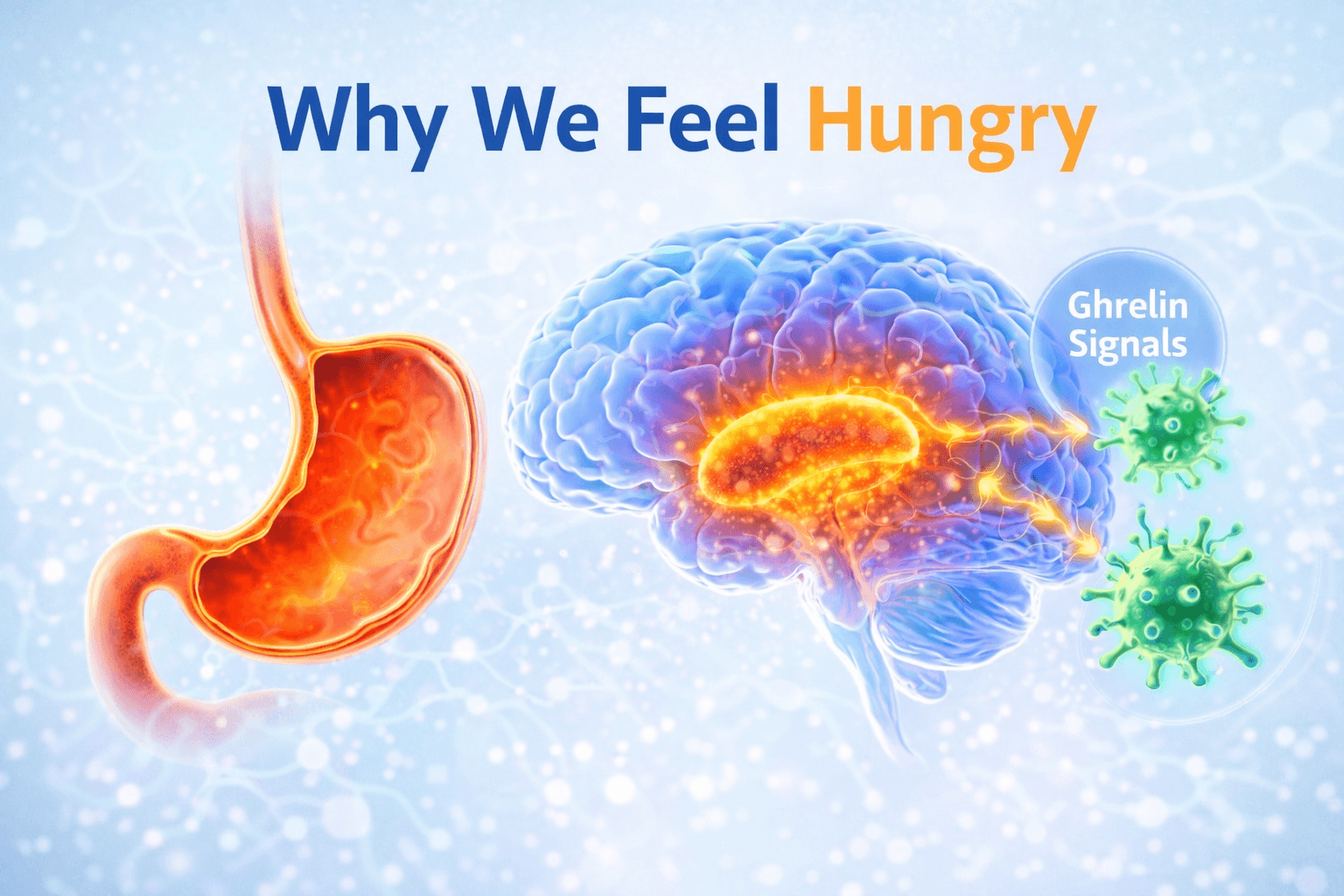
learn why we feel hungry