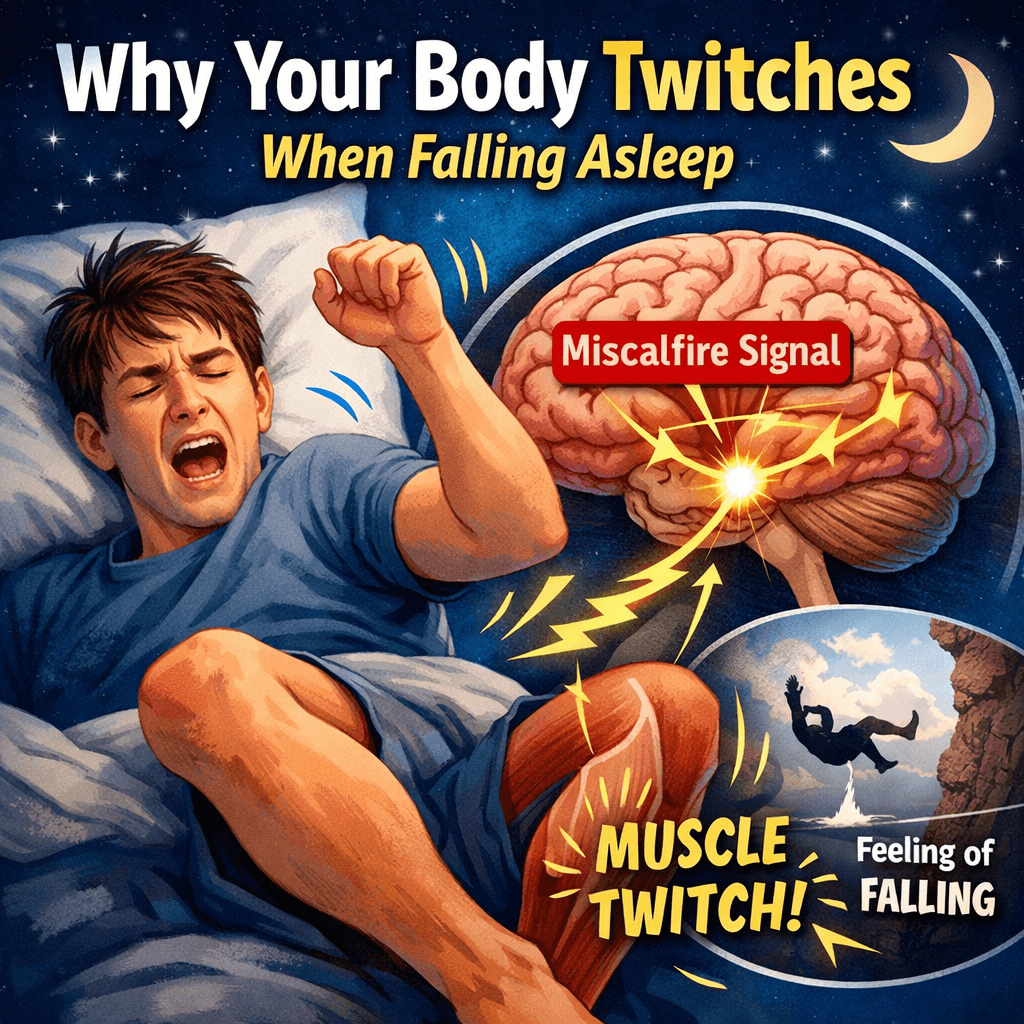

Have you ever been just about to fall asleep, and suddenly your body jerks or twitches like you’re falling?hypnic jerk
Your arms jump, your legs kick, and suddenly you’re wide awake again.
This strange experience is extremely common and even has a scientific name: Hypnic jerk.
Scientists estimate that 60–70% of people experience it regularly. But why does it happen?
Let’s break it down in simple terms.
What Is a Hypnic Jerk?
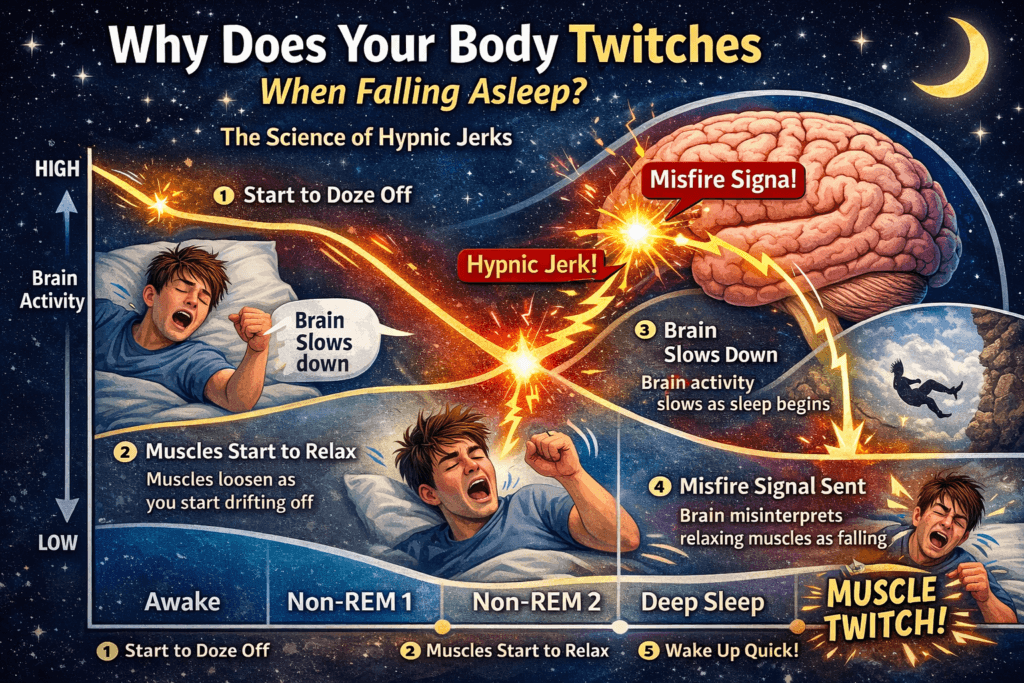
A hypnic jerk (also called a sleep start) is a sudden involuntary muscle contraction that occurs as your body transitions from wakefulness to sleep.
It usually happens during the early stage of sleep known as Non-REM sleep.
Typical signs include:
- Sudden body twitch
- Feeling like you’re falling
- A brief shock sensation
- Sometimes a quick dream of tripping or slipping
It lasts only a fraction of a second, but it can feel intense.
learn human sleep cycle
What Happens in Your Brain During This Twitch?
As you fall asleep, your body begins shutting down for rest.
Several things happen simultaneously:
1. Muscles Begin to Relax
Your muscles loosen so your body can enter deep sleep.
2. Brain Activity Slows Down
Your brain moves from alertness toward the first stage of sleep.
3. Nervous System Sends Confusing Signals
Sometimes the brain misinterprets muscle relaxation as falling.
To “protect” you, the brain sends a quick emergency signal to your muscles — causing the twitch.
Think of it as a false alarm from your nervous system.
learn Parts of the Human Brain and Their Functions Explained
Why Do We Feel Like We’re Falling?
Many people report dreaming they are falling from a height just before the twitch.
Researchers believe this happens because the brain areas responsible for balance and movement are still active while sleep is starting.
The brain momentarily thinks:
“The body is losing control — wake up!”
So it sends a sudden muscle contraction.
learn why do we dream
Common Triggers That Increase Sleep Twitches
Hypnic jerks become more frequent when your body or brain is overstimulated.
Stress
High stress keeps the nervous system active even when you try to sleep.
Caffeine
Stimulants like coffee or energy drinks keep the brain alert.
Sleep Deprivation
Being overly tired can make sleep transitions unstable.
Intense Evening Exercise
Heavy workouts before bed can excite the nervous system.
Excess Screen Time
Blue light from phones delays sleep signals.
learn why do we yawn
Is It Dangerous?
In most cases, hypnic jerks are completely harmless.
They are simply a normal part of the sleep process.
However, frequent sleep disruptions may sometimes be linked with conditions like Sleep apnea or severe insomnia.
If twitches occur many times per night, consulting a doctor may help.
learn why do we hiccup
How to Reduce Sleep Twitches
Here are simple ways to reduce hypnic jerks:
✔ Reduce caffeine after afternoon
✔ Maintain a regular sleep schedule
✔ Avoid heavy workouts before bedtime
✔ Practice relaxation before sleep
✔ Reduce phone and screen exposure at night
Improving sleep habits usually reduces the frequency significantly.
Fascinating Fact About Sleep Twitches
Some scientists believe hypnic jerks might be an evolutionary reflex.
Early humans often slept in trees or elevated areas.
If muscles relaxed too quickly, the brain might have triggered a reflex to prevent falling from a branch.
While this theory isn’t fully proven, it’s a fascinating possibility.
learn 15 Amazing Human Biology Facts Everyone Should Know
The Bottom Line
That strange sleep twitch is actually your brain and nervous system communicating during the transition to sleep.
It may feel surprising, but it’s usually just a harmless sleep-start reflex.
So the next time your body suddenly jerks while falling asleep, remember:
Your brain is simply making sure you’re safe while drifting into sleep.
https://www.instagram.com/sciencegajab/?hl=en