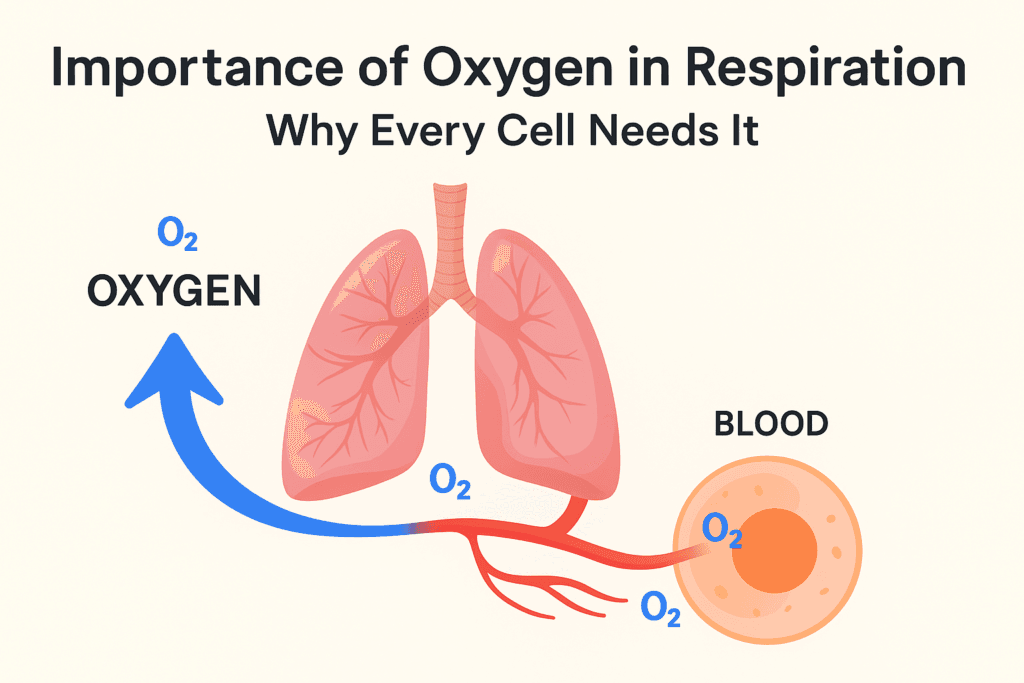
🫁 Importance of Oxygen in Respiration
🌬️ Introduction
Oxygen is something we breathe every second — but why is it so important?
The real reason is simple: oxygen is the fuel that powers every cell in your body.
Without oxygen, cells cannot make energy, and without energy, life stops.
Let’s understand why oxygen is crucial for respiration in the simplest way.
🔥 What Is Respiration?
Respiration is the process by which your cells break down food to release energy.
There are two types:
- Aerobic respiration → requires oxygen
- Anaerobic respiration → no oxygen, but produces very little energy
Humans depend mainly on aerobic respiration.
💡 Why Oxygen Is So Important
1. Oxygen Helps Produce Energy (ATP)
Inside each cell, tiny structures called mitochondria use oxygen to break down glucose.
This process produces ATP — the energy currency of the body.
👉 More oxygen = more energy.
2. Oxygen Helps Maintain Body Functions
Your body needs energy for:
- Breathing
- Thinking
- Movement
- Digestion
- Heartbeat
- Repairing tissues
All of this energy comes from oxygen-based respiration.
3. Oxygen Removes Harmful Waste
During respiration, cells produce carbon dioxide (CO₂).
Oxygen helps remove this waste by allowing cells to continue making energy efficiently.
4. Oxygen Keeps Organs Alive
Some organs need oxygen more than others, especially:
- Brain
- Heart
- Kidneys
The brain can survive only 4–5 minutes without oxygen.
5. Oxygen Helps Metabolism
Your body breaks down food more efficiently when oxygen is present.
This is why breathing deeply improves energy levels and focus.
⚡ What Happens When There Is No Oxygen?
- Low energy
- Dizziness
- Fatigue
- Brain damage
- Organ failure
Without oxygen, cells switch to anaerobic respiration → producing lactic acid → causing weakness.
❓ FAQ
Why does the body need oxygen?
To produce energy (ATP) inside cells.
How long can humans survive without oxygen?
Brain damage begins after 4 minutes.
Why do athletes breathe heavily?
More oxygen needed → more energy produced.