
🌀 What Causes Motion Sickness? (The Science Explained)
Have you ever felt nauseous while traveling in a car, boat, or airplane?
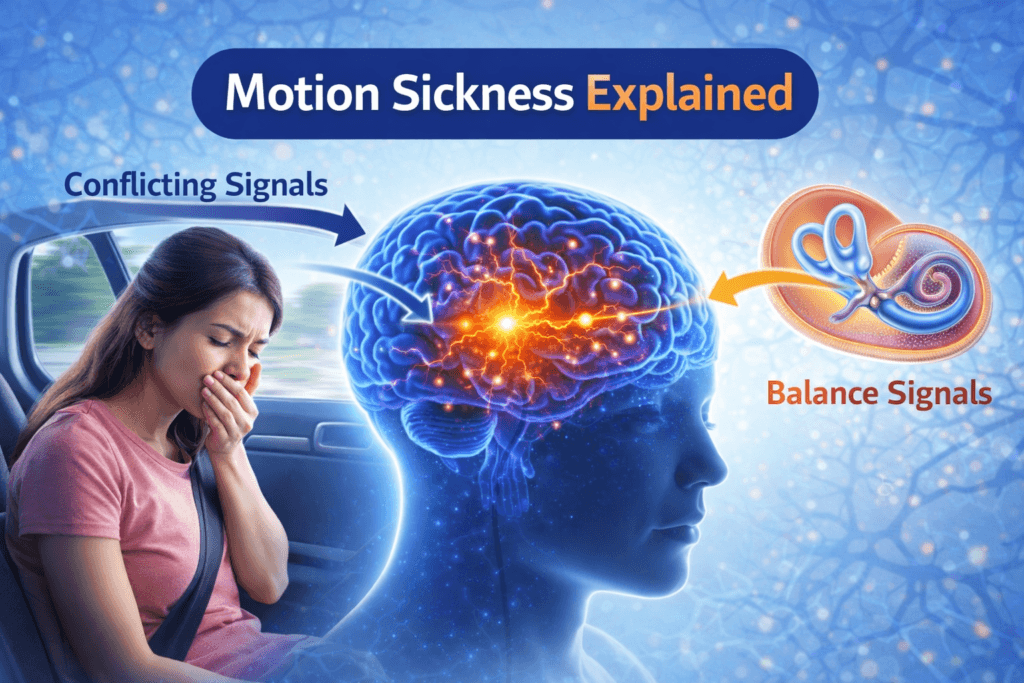
That uncomfortable feeling is called motion sickness. It happens when your brain receives confusing signals about movement from different parts of your body.
Motion sickness is very common and can affect people of all ages, especially during travel.
To understand why it happens, we need to look at how the brain normally keeps track of motion and balance.
🧠 Your Brain Uses Multiple Systems to Detect Movement
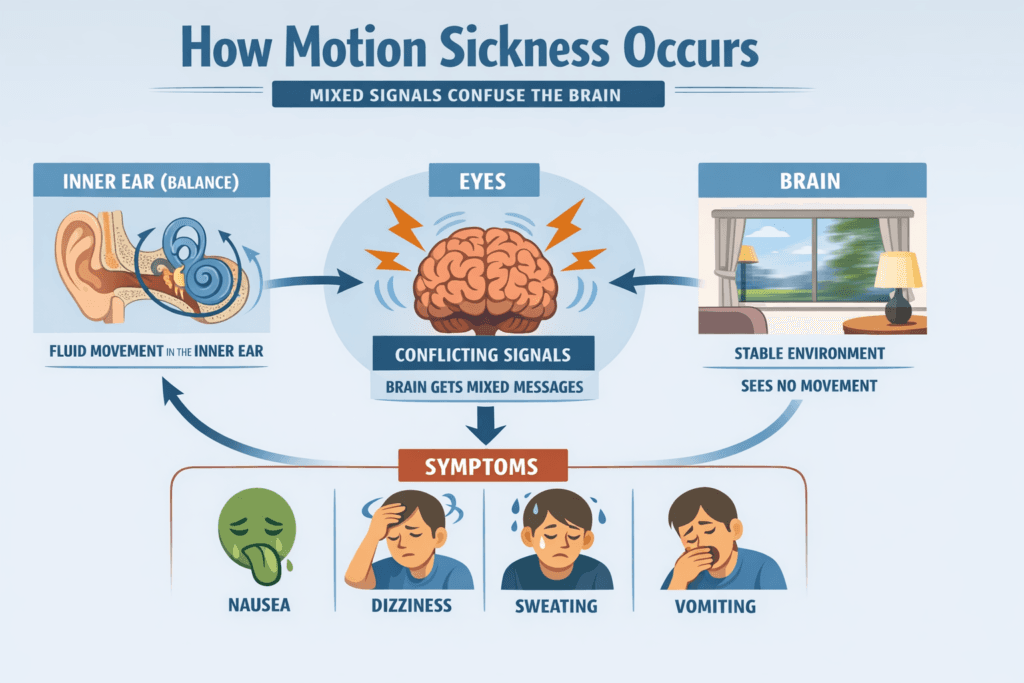
Your brain determines whether you are moving or standing still by combining information from three main systems:
- Eyes (visual system)
- Inner ear balance organs (vestibular system)
- Muscles and joints (body position sensors)
When these systems send matching information, your brain clearly understands your body’s movement.
But when the signals don’t match, confusion occurs.
That confusion is what causes motion sickness.
👂 The Inner Ear Detects Motion
Inside your inner ear is a complex structure called the vestibular system.
This system contains fluid-filled canals that detect head movement and acceleration.
When your head moves:
- fluid inside these canals shifts
- tiny sensors detect the movement
- signals are sent to the brain
This helps the brain understand how your body is moving.
👁 The Eyes Send Visual Information
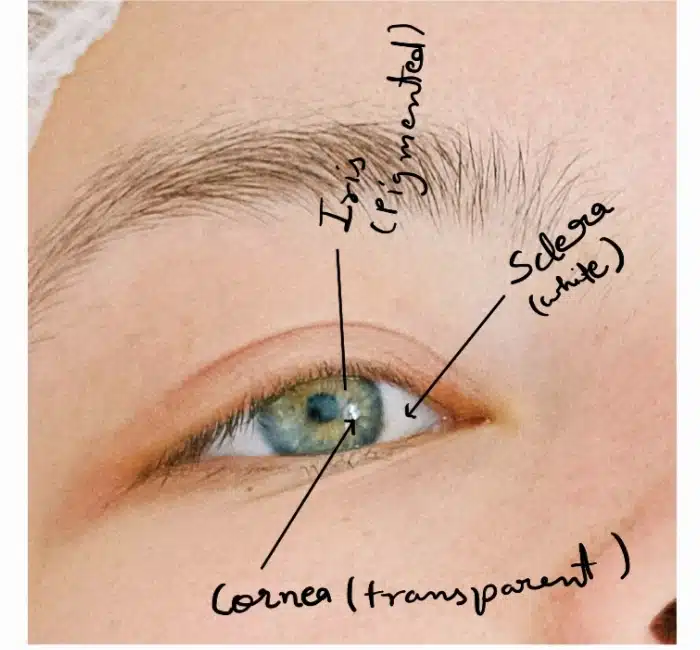
Your eyes also play an important role in detecting movement.
For example, when you watch scenery passing by through a car window, your eyes detect motion.
This visual information tells the brain that your body is moving.
Normally, the brain compares this visual input with signals from the inner ear.
If both match, everything feels normal.
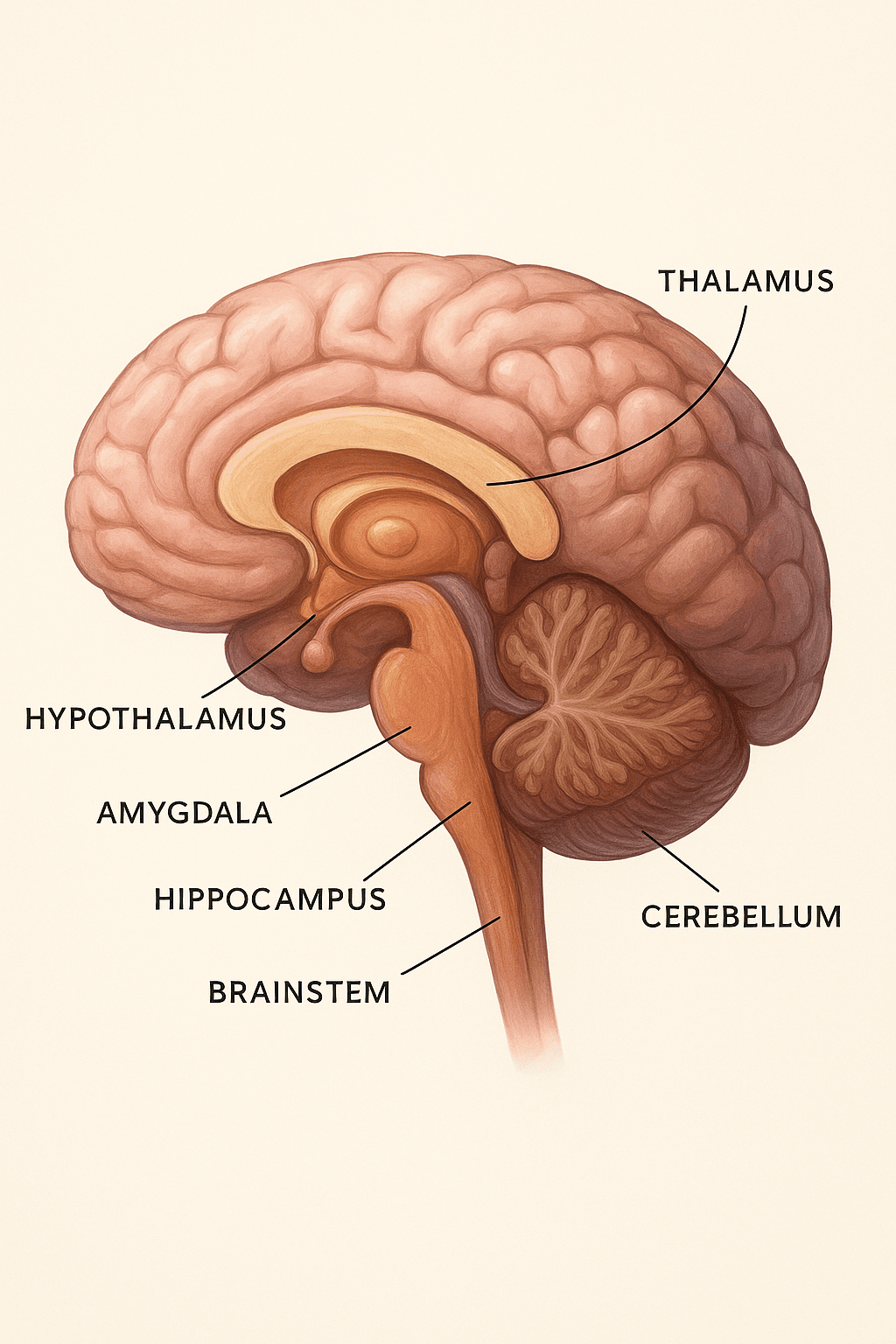
Parts of the Human Brain and Their Functions Explained
⚠ Signal Conflict Causes Motion Sickness
Motion sickness happens when these signals do not match.
For example:
Reading in a Moving Car
- Your eyes see a stationary book
- Your inner ear senses motion
The brain receives two conflicting messages.
It becomes confused about whether the body is moving or still.
This conflict can trigger symptoms of motion sickness.
🤢 Why Motion Sickness Causes Nausea
Scientists believe the brain may interpret sensory confusion as a possible poisoning event.
From an evolutionary perspective, similar confusion could occur if someone ingested toxins that affected brain function.
As a protective response, the brain activates areas that trigger nausea and vomiting.
This response is controlled by a region of the brain called the vomiting center.
⚡ Common Symptoms of Motion Sickness
Symptoms may include:
- nausea
- dizziness
- sweating
- headache
- pale skin
- vomiting
These symptoms can range from mild discomfort to severe nausea.
🚗 Situations That Commonly Cause Motion Sickness
Motion sickness can occur in many situations.
Common triggers include:
- traveling in cars
- riding boats or ships
- flying in airplanes
- virtual reality experiences
- amusement park rides
People who sit facing backward in a vehicle may experience motion sickness more easily.
👶 Why Children Get Motion Sickness More Often
Motion sickness is more common in children between 2 and 12 years old.
Their balance system is still developing, making sensory signals easier to confuse.
Adults often adapt better to motion over time.
🧠 How the Brain Eventually Adapts
With repeated exposure to motion, the brain can learn to adapt.
For example, sailors who spend long periods at sea often develop “sea legs.”
Their brains learn to interpret motion signals more accurately, reducing motion sickness symptoms.
Why Do We Get “Brain Freeze” When Eating Ice Cream? The Science Behind Ice Cream Headaches 🍦🧠
🌟 The Bigger Picture
Motion sickness occurs because the brain receives conflicting information about movement from the eyes, inner ear, and body sensors.
When these signals don’t match, the brain struggles to interpret motion correctly.
The resulting confusion can trigger dizziness, nausea, and other symptoms.
💡 Final Thought
Although motion sickness can feel unpleasant, it is actually a sign that your brain is trying to make sense of conflicting signals about movement.
Your balance system is constantly working behind the scenes to keep you stable and aware of your surroundings.
Understanding how this system works helps explain why motion sickness happens and why it eventually passes.
https://www.facebook.com/sciencegajab/
LEARN Why Do We Sneeze? The Simple Science Explained