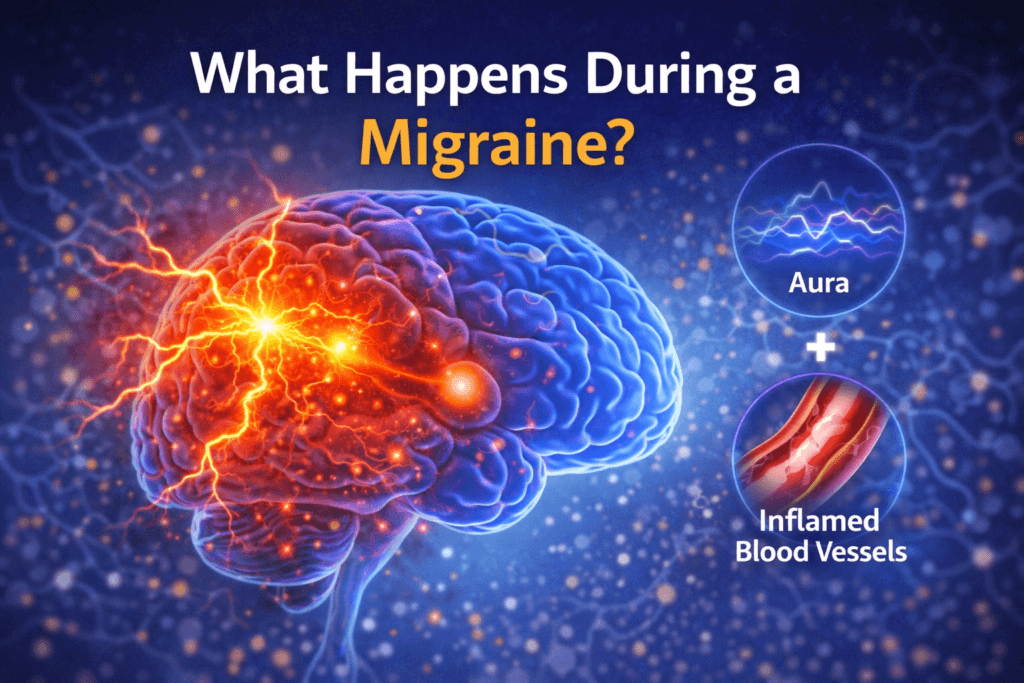

🧠 What Happens During a Migraine? (The Science Explained Simply)
A migraine is not just a bad headache.
It is a complex neurological event involving the brain, nerves, and blood vessels. During a migraine attack, several changes occur inside the brain that can cause intense pain, sensitivity to light, nausea, and other symptoms.
Millions of people around the world experience migraines, but the biological process behind them is still being studied.
Let’s explore what actually happens inside the body during a migraine.
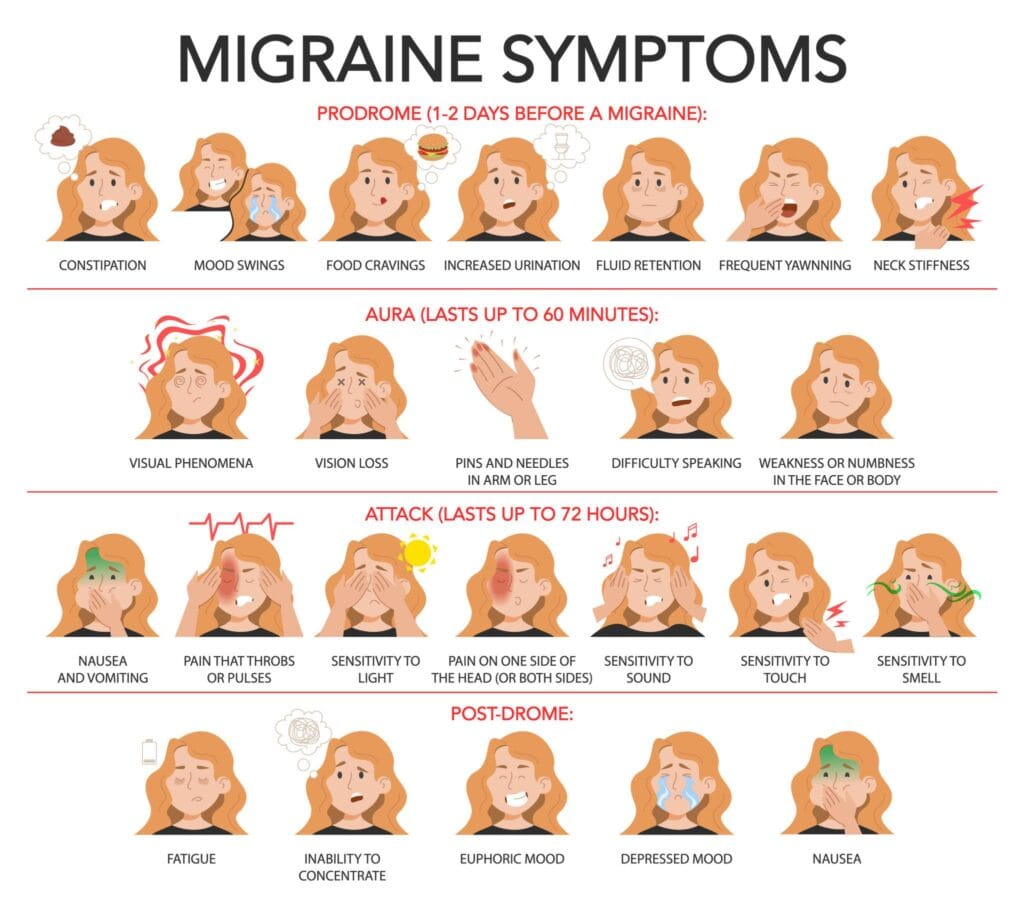
⚡ Phase 1: Early Brain Changes Begin
For some people, a migraine starts with subtle warning signs that appear hours or even a day before the headache begins.
This stage is called the prodrome phase.
Common symptoms include:
- fatigue
- mood changes
- food cravings
- difficulty concentrating
- neck stiffness
Scientists believe these symptoms occur because certain brain areas that regulate energy, mood, and hormones begin to change their activity.
🌈 Phase 2: Migraine Aura (In Some People)
About 25–30% of migraine sufferers experience something called an aura.
An aura usually happens before the headache starts and often lasts 20–60 minutes.
Common aura symptoms include:
- flashing lights or zigzag patterns in vision
- blind spots in the visual field
- tingling sensations in the face or hands
- difficulty speaking
These symptoms occur because of a wave of electrical activity moving across the brain’s outer layer (the cerebral cortex). This phenomenon is known as cortical spreading depression.
This wave temporarily disrupts normal brain signaling.
💥 Phase 3: The Headache Begins
The most recognizable part of a migraine is the headache itself.
Migraine pain is usually:
- throbbing or pulsating
- located on one side of the head
- moderate to severe in intensity
The pain occurs when nerves connected to the brain’s blood vessels become activated.
These nerves release chemicals that cause:
- inflammation
- increased pain sensitivity
- changes in blood vessel activity
One important molecule involved is CGRP (calcitonin gene-related peptide), which can increase inflammation and pain signaling.
🤢 Why Migraines Cause Nausea and Sensitivity
Migraines often come with other symptoms besides head pain.
These may include:
- nausea
- vomiting
- sensitivity to light (photophobia)
- sensitivity to sound (phonophobia)
This happens because migraines affect several brain regions that control sensory processing and the digestive system.
The brain becomes temporarily more sensitive to stimulation, making normal lights or sounds feel overwhelming.
⏳ Phase 4: Postdrome (The Migraine “Hangover”)
After the headache fades, many people enter the postdrome phase.
This stage can last several hours or even a full day.
Common symptoms include:
- tiredness
- difficulty concentrating
- mild head discomfort
- sensitivity to light
The brain is essentially recovering from the neurological stress of the migraine attack.
🧬 What Triggers Migraines?
Migraine triggers vary from person to person.
Some common triggers include:
- stress
- lack of sleep
- dehydration
- hormonal changes
- certain foods
- bright lights or strong smells
Triggers do not directly cause migraines, but they can make the brain more likely to start a migraine episode.
🧠 Why the Brain Is So Sensitive During a Migraine
During a migraine, the brain becomes unusually sensitive to sensory input.
Scientists believe this occurs because migraine brains may process signals differently than non-migraine brains.
Certain nerve pathways become overactive, amplifying pain signals and sensory information.
This is why migraines can feel so intense.
🌟 The Bigger Picture
Migraines are not simply headaches.
They are complex neurological events involving:
- brain electrical activity
- nerve signaling
- inflammatory molecules
- sensory processing
Understanding these mechanisms helps researchers develop better treatments for migraine sufferers.
💡 Final Thought
A migraine may feel like overwhelming head pain, but inside the brain a series of intricate biological events are unfolding.
From electrical waves across the brain to nerve signals that trigger inflammation, migraines show just how complex the human nervous system really is.
And the more science learns about migraines, the closer we get to better ways of preventing and treating them.
move to why do we dream