
👅 What Is Human Saliva Made Of? Explained Simply
🧠 Introduction
We all produce saliva — nearly 1 to 1.5 liters every day.
But what exactly is saliva made of, and why is it so important?
Let’s break it down in simple science.
💧 What Is Saliva?
Saliva is a watery fluid made by salivary glands in your mouth.
It helps in chewing, tasting, swallowing, and protecting the mouth from germs.
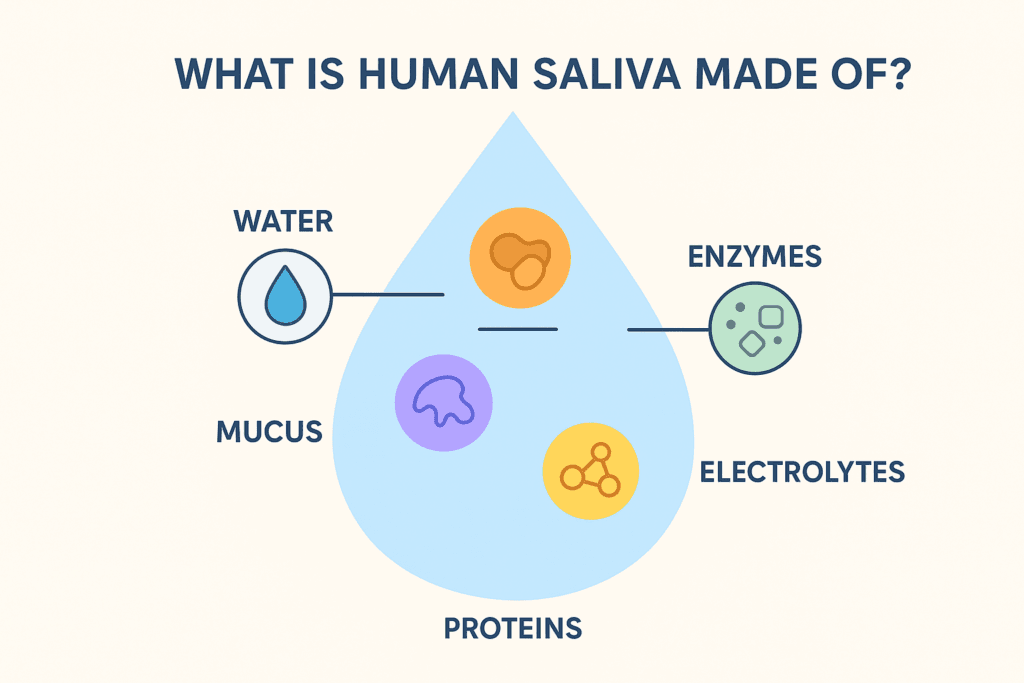
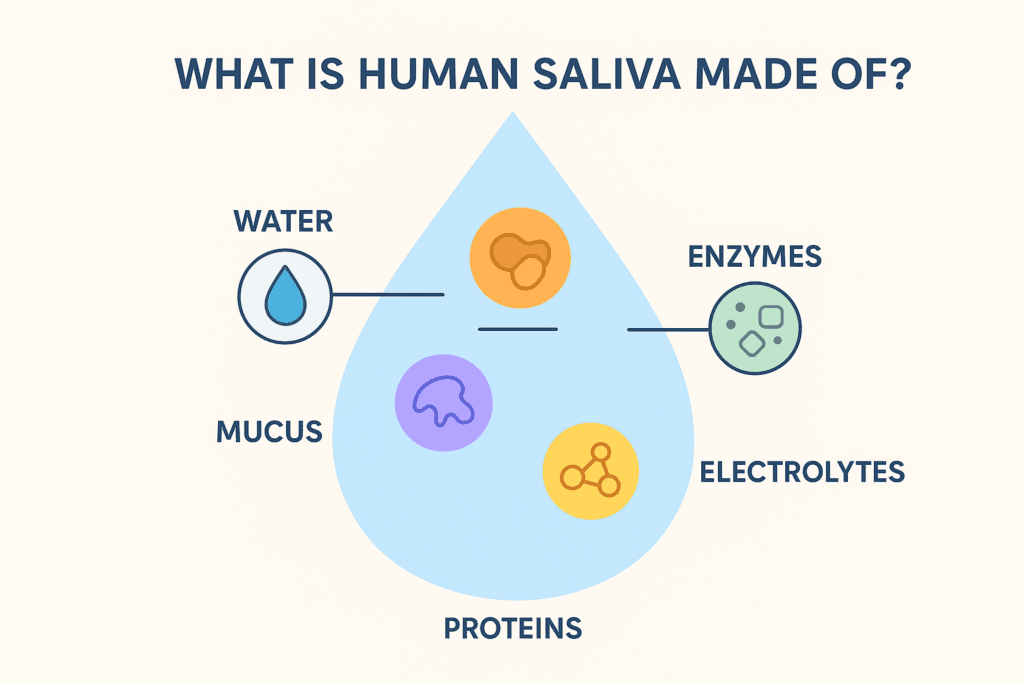
🧪 What Is Human Saliva Made Of?
1. Water (99%)
Saliva is mostly water.
This keeps your mouth moist and helps you speak, chew, and swallow.
2. Enzymes
Saliva contains enzymes that start digestion:
- Amylase → breaks down starch into sugar
- Lipase → starts fat digestion
Digestion begins in the mouth — not the stomach.
3. Mucus
This makes food slippery → helping you swallow smoothly.
4. Electrolytes
Saliva contains minerals like:
- Sodium
- Potassium
- Calcium
- Chloride
- Bicarbonate
These keep the pH of the mouth balanced.
5. Antibodies (IgA)
These protect the mouth from harmful bacteria and infections.
6. Proteins
Certain proteins keep your teeth strong and prevent cavities.
7. Urea and Waste Molecules
Small amounts of waste products are also present — but harmless.
🦷 Why Saliva Is Important
1. Helps in Digestion
Enzymes break down food before it reaches the stomach.
2. Protects Teeth
Neutralizes acids, prevents tooth decay.
3. Helps You Taste Food
Dissolves food particles → allowing taste buds to detect flavors.
4. Fights Germs
Antibodies and enzymes kill harmful microbes.
5. Keeps the Mouth Moist
Prevents dryness and mouth infections.
❓ FAQ
What is saliva mostly made of?
About 99% water.
Why is saliva important for digestion?
It contains enzymes that start breaking down starch and fats.
Why does the mouth feel dry sometimes?
Low saliva production due to dehydration, stress, or medication.
read also why we get goosebumps