
💊 A Common Medical Misunderstanding
Many people believe that antibiotics can cure any infection. When someone gets a cold, flu, or viral fever, they often expect antibiotics to help them recover faster.why antibiotics don’t work on viruses
However, doctors usually say something surprising:
Antibiotics do not work against viruses.
This is not because antibiotics are weak — it’s because viruses are completely different from bacteria.
To understand why antibiotics fail against viruses, we first need to understand how these tiny microbes work.
💊 How Antibiotics Kill Bacteria (And Why They Don’t Work on Viruses)
🧬 What Are Antibiotics?
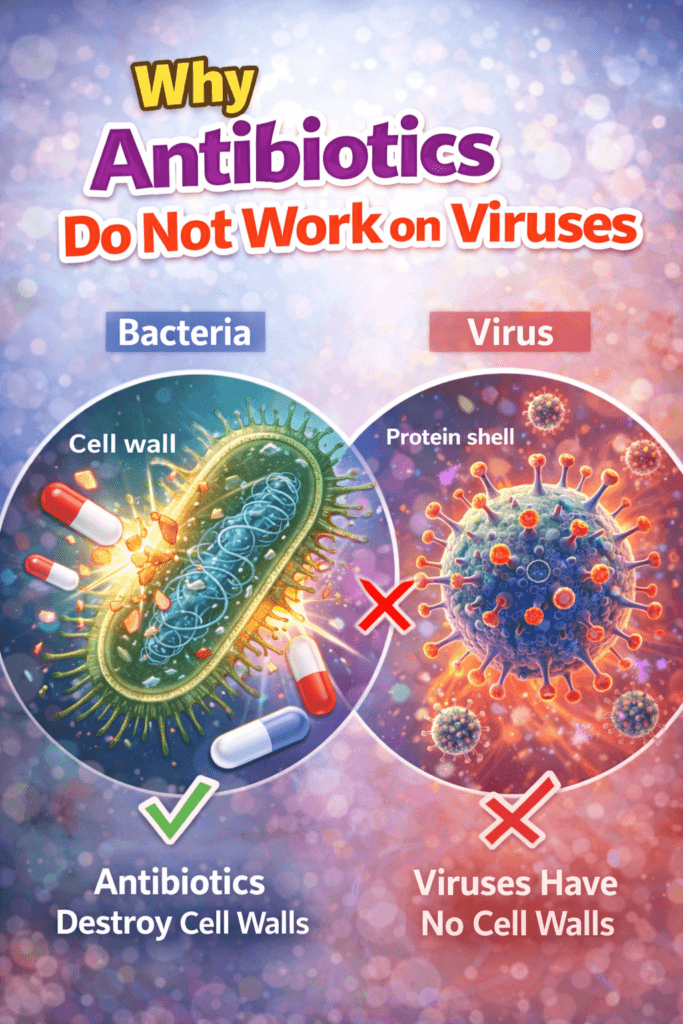
Antibiotics are medicines specifically designed to kill bacteria or stop their growth.
Bacteria are living microorganisms that have:
- a cell wall
- their own metabolism
- the ability to reproduce independently
Antibiotics work by targeting these bacterial structures.
Different antibiotics attack bacteria in different ways:
1️⃣ Destroying the Bacterial Cell Wall
Some antibiotics break down the protective wall surrounding bacteria, causing them to burst.
2️⃣ Blocking Protein Production
Other antibiotics prevent bacteria from producing proteins necessary for survival.
3️⃣ Preventing Bacterial Reproduction
Some antibiotics interfere with bacterial DNA replication.
Because bacteria rely on these systems to survive, antibiotics are extremely effective against them.
🦠 What Makes Viruses Different?
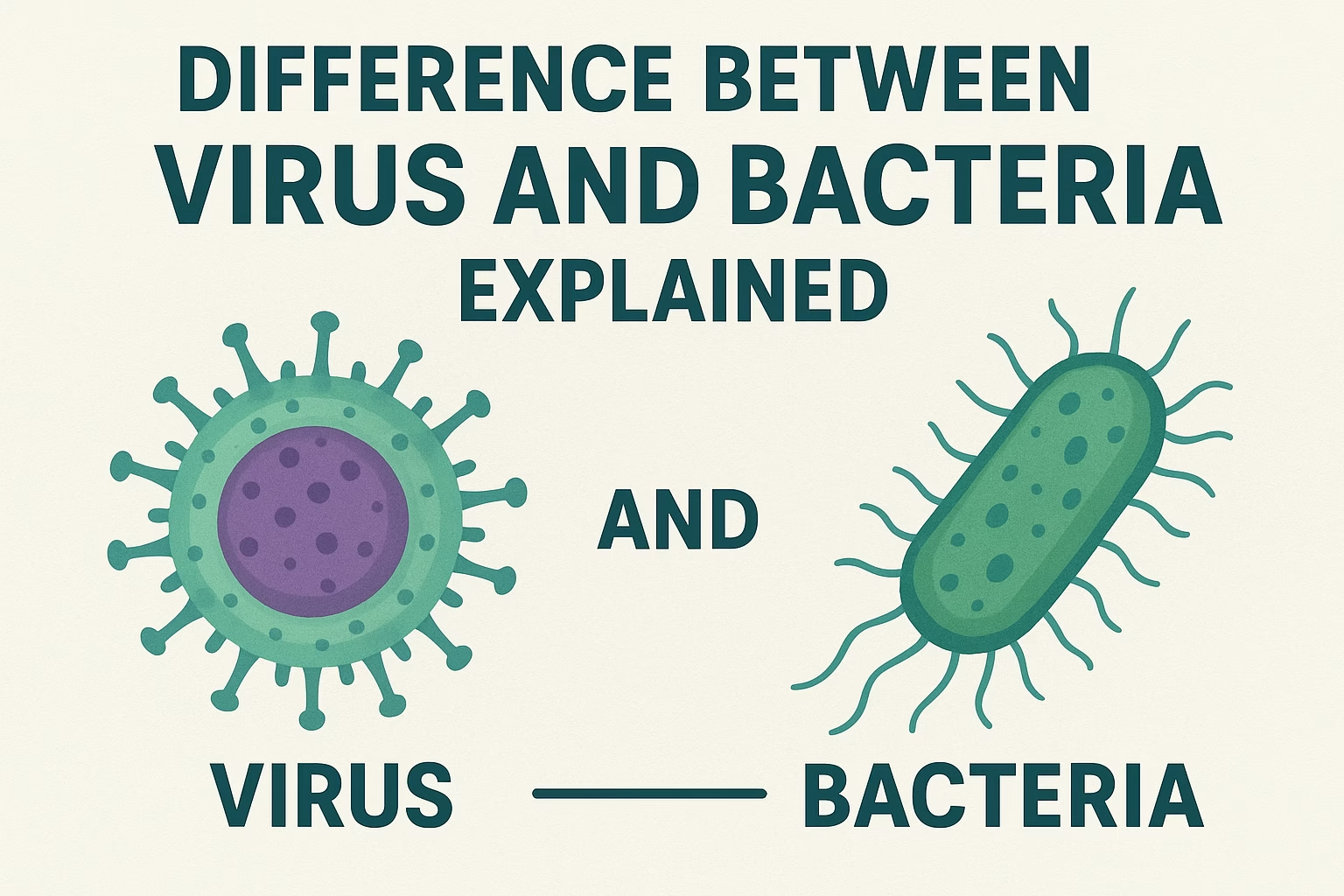
Viruses are much simpler and smaller than bacteria.
In fact, viruses are not considered fully living organisms.
A virus is basically:
- genetic material (DNA or RNA)
- surrounded by a protein shell
Unlike bacteria, viruses cannot survive or reproduce on their own.
Instead, they must invade a host cell and use its machinery to produce more viruses.
Once inside a human cell, the virus hijacks the cell’s internal systems and forces it to create viral copies.
Because viruses rely entirely on host cells, they do not have the structures antibiotics target.
🦠 Difference Between Virus and Bacteria Explained
⚠️ Why Antibiotics Cannot Kill Viruses
Antibiotics are designed to attack specific bacterial features such as cell walls or bacterial enzymes.
Viruses simply do not have these features.
They lack:
- bacterial cell walls
- bacterial metabolism
- bacterial ribosomes
Since antibiotics have nothing to attack, they cannot stop viral infections.
This is why antibiotics do not work for illnesses caused by viruses such as:
- common cold
- influenza (flu)
- COVID-19
- most sore throats
- viral fevers
🧪 How Viral Infections Are Treated
Although antibiotics do not work against viruses, the body has its own powerful defense system — the immune system.
When a virus enters the body, immune cells begin detecting and attacking infected cells.
The immune response includes:
- antibodies attaching to viruses
- white blood cells destroying infected cells
- immune memory cells remembering the virus
In many cases, the immune system clears viral infections without any medication.
For some viruses, doctors may prescribe antiviral drugs, which are specifically designed to block viral replication.
Examples include medications used for:
- influenza
- HIV
- herpes viruses
⚠️ The Problem With Unnecessary Antibiotics
Using antibiotics when they are not needed can cause serious problems.
The biggest concern is antibiotic resistance.
When bacteria are repeatedly exposed to antibiotics, some of them may evolve resistance.
Over time, these resistant bacteria become harder to treat.
This makes infections more dangerous and difficult to cure.
Because of this risk, doctors carefully prescribe antibiotics only when bacterial infections are confirmed.
🛡️ How Vaccines Help Prevent Viral Diseases
Vaccines protect against many viral infections by training the immune system in advance.
They expose the body to a harmless piece of a virus, allowing immune cells to learn how to recognize it.
When the real virus enters the body later, the immune system responds quickly and stops the infection before it becomes severe.
Vaccines have helped control diseases such as:
- measles
- polio
- influenza
- COVID-19
🧠 Fascinating Fact About Microbes
Your body encounters thousands of microbes every day.
Most of them are harmless, and many are destroyed instantly by your immune system without you even noticing.
This invisible defense system works continuously to keep the body healthy.
❓ FAQ
Antibiotics target bacterial structures such as cell walls and enzymes, which viruses do not have. Therefore, antibiotics cannot affect viruses.
No. The flu and common cold are caused by viruses, so antibiotics are ineffective.
Antiviral drugs are designed to block viral replication, but many viral infections are cleared naturally by the immune system.
Overuse of antibiotics can lead to antibiotic resistance, making bacterial infections harder to treat.