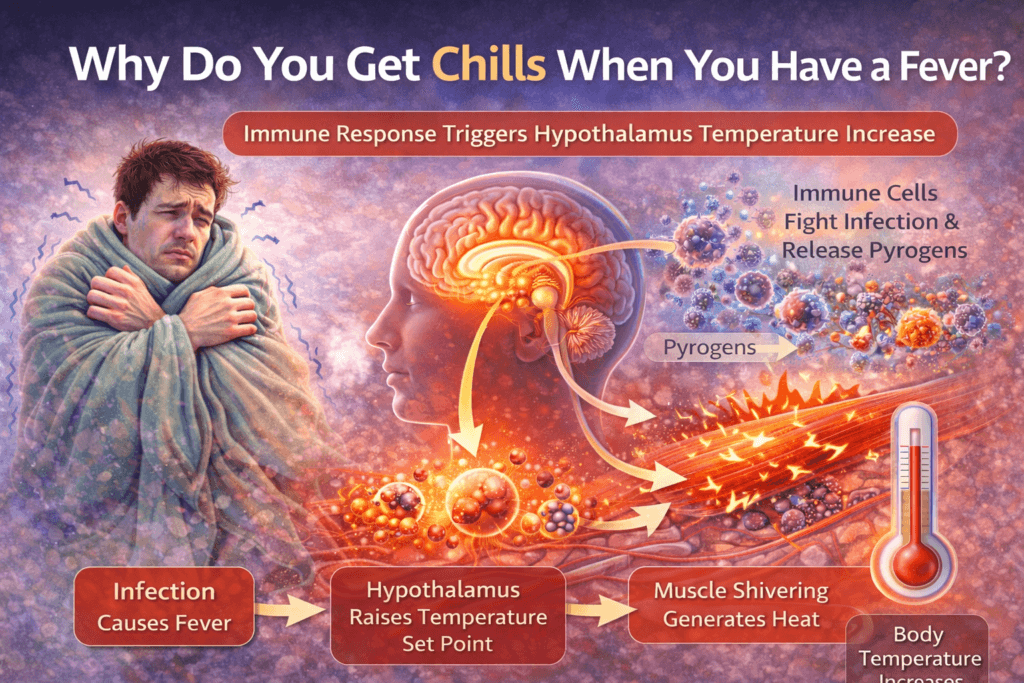

When you have a fever, you might experience chills and uncontrollable shivering, even though your body temperature is actually rising. This can feel confusing—why would the body shiver if it is already hot?why body shivers during fever
The answer lies in how the immune system and brain work together to fight infection. Shivering during fever is a natural biological response that helps the body increase its temperature to fight harmful microbes.
Understanding why this happens requires looking at how fever works and how the brain controls body temperature.why body shivers during fever
What Is a Fever?
A fever occurs when the body’s temperature rises above its normal range, usually around 37°C (98.6°F).
Fever is not a disease itself—it is a defense mechanism used by the immune system to fight infections caused by:
- viruses
- bacteria
- parasites
Higher body temperatures can slow down the growth of pathogens and help immune cells work more efficiently.
learn Fever Isn’t Your Enemy – Here’s What Your Body Is Actually Doing
The Brain Controls Body Temperature
The part of the brain responsible for regulating body temperature is called the hypothalamus.
The hypothalamus acts like a biological thermostat, constantly monitoring the temperature of the body.
When you become infected, immune cells release chemical signals called pyrogens. These chemicals travel through the bloodstream and signal the hypothalamus to raise the body’s temperature set point.
Once this happens, the brain believes the body is too cold, even though the temperature is already normal.
learn 🧠 Blood Supply of the Brain: The Hidden Network That Keeps You Alive (Explained Simply!)
Why Shivering Happens During Fever
Because the hypothalamus has raised the body’s temperature target, the body begins producing heat to reach the new set point.
Shivering is one of the fastest ways to generate heat.
Shivering occurs when:
- muscles rapidly contract and relax
- these contractions produce heat
- body temperature rises
This is similar to what happens when you shiver in cold weather. Your muscles move quickly to generate warmth.
During fever, the body uses this same mechanism to increase internal temperature.
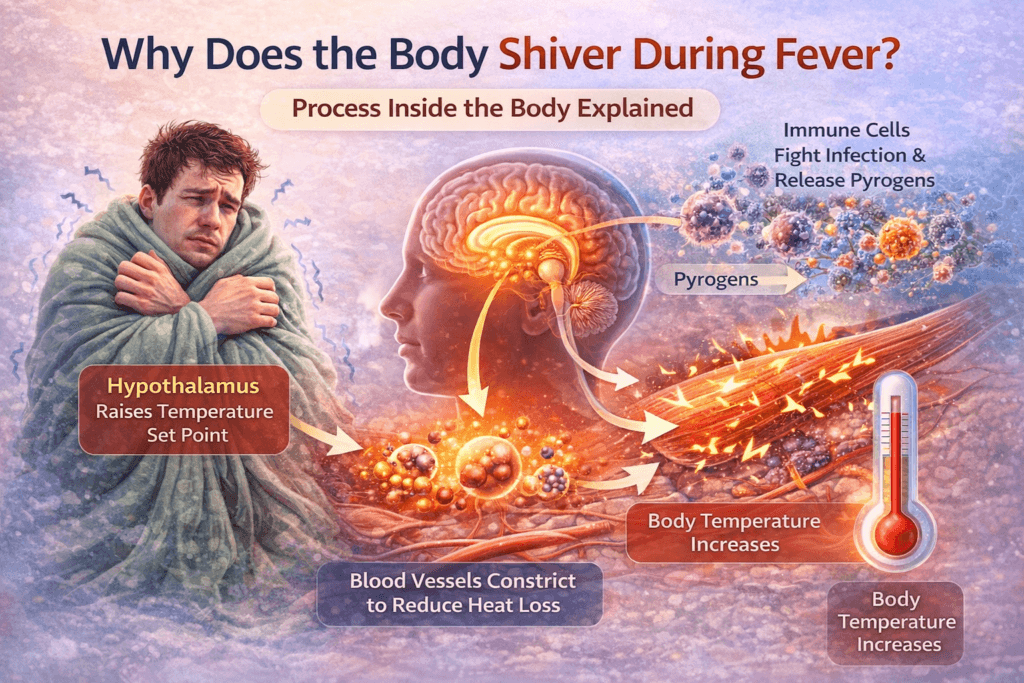
Blood Vessel Constriction Also Happens
Another reason people feel cold during fever is vasoconstriction.
The hypothalamus signals blood vessels near the skin to narrow, which reduces heat loss.
As a result:
- less warm blood reaches the skin
- the skin feels cold
- chills occur
Even though your core temperature is rising, your skin may feel cold and you may start shivering.
Why Higher Temperatures Help Fight Infection
The body raises temperature for an important reason—many pathogens struggle to survive at higher temperatures.
Fever can help by:
- slowing bacterial growth
- improving immune cell activity
- increasing production of protective proteins
Some immune cells, such as white blood cells, become more active during fever and can fight infections more effectively.
Why Chills Often Occur Before the Fever Peaks
Many people notice that chills and shivering occur before their fever reaches its highest temperature.
This happens because the body is still trying to increase heat production.
Once the body reaches the new temperature set point, the shivering usually stops.
At this stage, the person may start feeling warm or flushed instead of cold.
Why Sweating Happens When Fever Breaks
When the infection starts to improve, the hypothalamus lowers the temperature set point back to normal.
Now the body suddenly realizes it is too hot.
To cool down, the body activates mechanisms such as:
- sweating
- dilation of blood vessels
- heat loss through the skin
This is why people often sweat heavily when their fever begins to break.
Is Shivering During Fever Dangerous?
In most cases, shivering during fever is completely normal and harmless.
It simply means the body is trying to raise its temperature to fight infection.
However, extremely high fevers (usually above 40°C or 104°F) can be dangerous and may require medical attention.
Symptoms that should be evaluated by a doctor include:
- persistent high fever
- confusion
- severe headache
- seizures
- difficulty breathing
How to Reduce Fever Chills
While fever chills are natural, they can be uncomfortable.
Some ways to reduce discomfort include:
Stay hydrated
Drinking fluids helps regulate body temperature and prevents dehydration.
Rest
Your body needs energy to fight infection.
Light clothing
Avoid heavy blankets that may trap too much heat.
Fever-reducing medications
Medications like acetaminophen or ibuprofen can help lower fever when necessary.
learn 💊 How Antibiotics Kill Bacteria (And Why They Don’t Work on Viruses)
The Bottom Line
Shivering during fever happens because the brain temporarily raises the body’s temperature set point in response to infection. The hypothalamus signals muscles to contract rapidly, generating heat through shivering.
This process helps increase body temperature so the immune system can fight infections more effectively.
Although chills during fever can feel unpleasant, they are usually a sign that the body’s natural defense system is working.
learn sexually transmitted infection