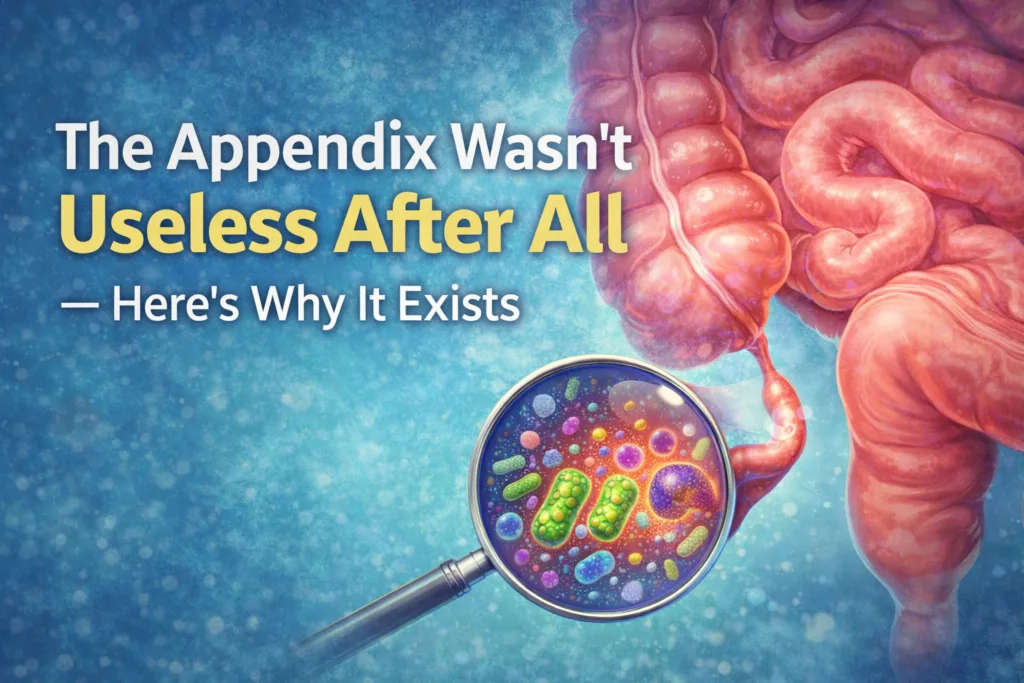

For many years, the appendix was considered one of the most mysterious organs in the human body. Doctors once believed it had no real function, calling it a vestigial organ—a leftover part from human evolution that no longer served a purpose.why does the appendix exist
But modern research has started to change that view. Scientists now think the appendix may play a hidden but important role in the immune system and gut health.
Although it is small—only about 8 to 10 centimeters long—the appendix might act like a biological backup system for the body.
Where Is the Appendix Located?
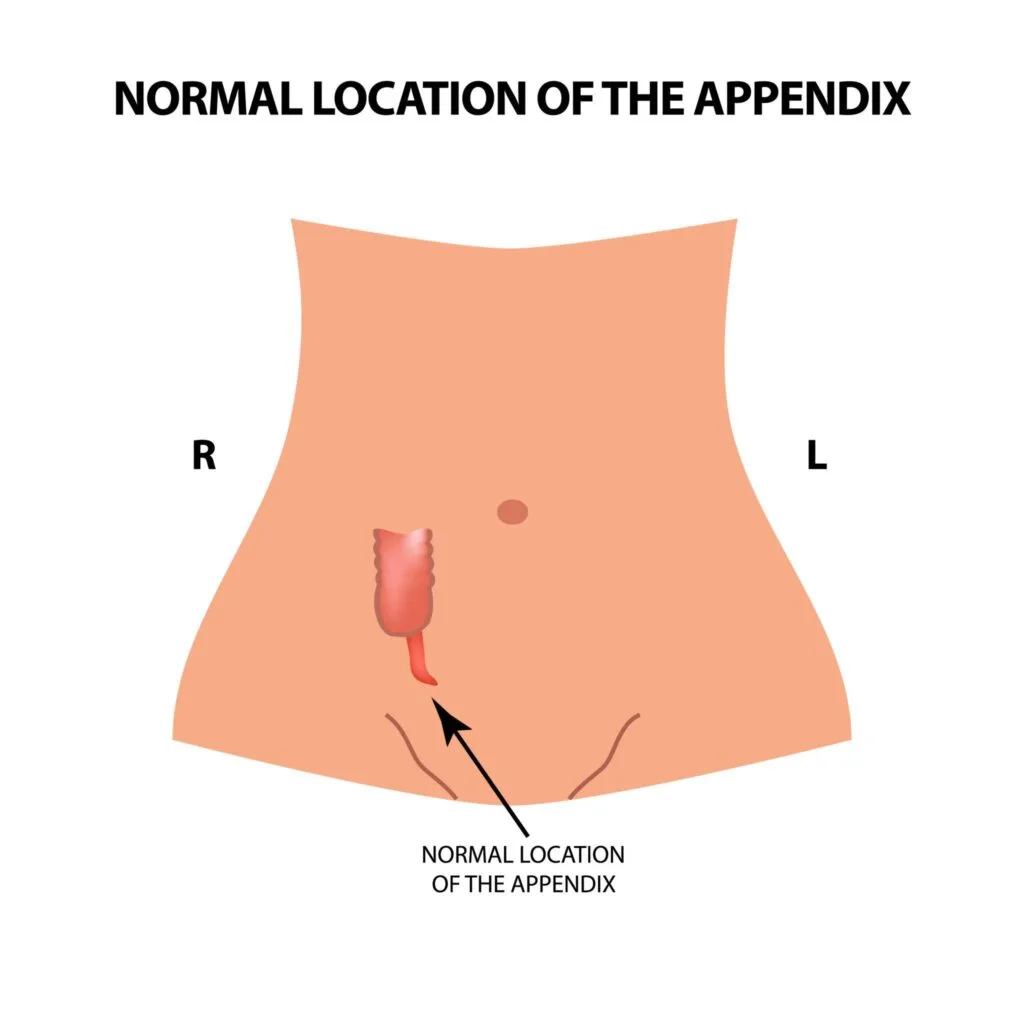
The appendix is a small tube-shaped pouch connected to the large intestine.
It is located in the lower right side of the abdomen, where the small intestine meets the large intestine.
Despite its tiny size, the appendix contains lymphoid tissue, which is part of the body’s immune system.
The Old Theory: A Leftover From Evolution
For more than a century, scientists believed the appendix was simply a remnant from human ancestors.
Early humans ate large amounts of raw plants and fibrous food. Their digestive systems likely required additional structures to help break down tough plant materials.
Some researchers suggested the appendix once functioned as part of a larger digestive chamber that helped process cellulose.
As human diets changed and cooking became common, the digestive system adapted, and the appendix became much smaller and less essential.
Because people can live normally without it, many scientists concluded that the appendix had no real purpose.
However, modern discoveries suggest the story may be more complicated.
learn EVOLUTION
The New Idea: A Safe House for Good Bacteria
One of the most interesting modern theories is that the appendix acts as a “safe house” for beneficial gut bacteria.
Your digestive system contains trillions of microbes, collectively known as the gut microbiome. These microbes help with:
- digestion
- nutrient absorption
- immune system regulation
- protection against harmful bacteria
Sometimes illnesses such as severe diarrhea can wash many of these helpful bacteria out of the intestines.
Scientists believe the appendix may protect a small reserve of beneficial bacteria.
After an illness clears, bacteria stored in the appendix could help repopulate the gut, restoring the normal microbial balance.
In this way, the appendix might act like a backup storage system for healthy microbes.
learn BIOLOGICAL CLASSIFICATION EXAMPLES
The Appendix and the Immune System
Another important function of the appendix may involve immune defense.
The appendix contains a large amount of lymphoid tissue, similar to what is found in lymph nodes.
This tissue helps the body:
- recognize harmful microbes
- produce immune cells
- support immune responses
During early life, the appendix may help train the immune system by exposing it to various bacteria and microorganisms.
This process may help the body learn the difference between harmless microbes and dangerous pathogens.
Why the Appendix Can Become Inflamed
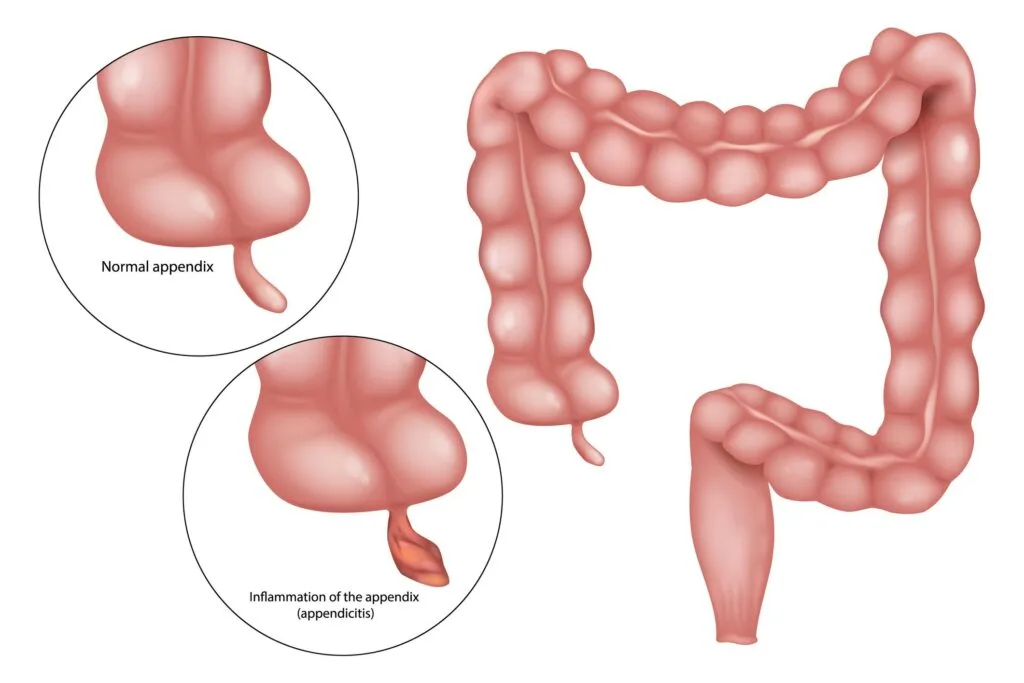
Although the appendix may have useful functions, it can sometimes become inflamed in a condition called appendicitis.
Appendicitis occurs when the appendix becomes blocked, often by:
- hardened stool
- infection
- swollen lymph tissue
When this blockage happens, bacteria multiply inside the appendix, causing inflammation and pain.
Appendicitis is considered a medical emergency because the appendix can rupture if not treated quickly.
Can Humans Live Without an Appendix?
Yes. People can live perfectly normal lives without an appendix.
When appendicitis occurs, doctors often perform a surgery called an appendectomy, which removes the appendix.
Because other parts of the immune system can compensate, most people do not experience major long-term health effects after removal.
This is why the appendix was long considered nonessential.
Evolution Still Keeps the Appendix
One interesting scientific observation is that the appendix has not disappeared through evolution.
In fact, studies suggest the appendix has evolved multiple times independently in different mammals.
This suggests that the organ may provide some evolutionary advantage, even if its function is subtle.
If the appendix had no purpose at all, natural selection might have eliminated it over millions of years.
Instead, it continues to exist in many species, including humans.
The Appendix May Be More Important Than We Thought
Scientists are still studying the appendix to understand its exact role.
Recent research suggests it may contribute to:
- maintaining healthy gut bacteria
- supporting immune development
- regulating intestinal microbes
These functions may not be essential for survival but could still provide biological benefits, especially during recovery from illness.
learn DIGESTION & ABSORPTION
The Bottom Line
The appendix was once thought to be a useless leftover from human evolution. But modern science suggests it may actually play subtle roles in immune defense and gut microbiome balance.
By acting as a safe reservoir for beneficial bacteria and supporting immune system development, the appendix may help maintain digestive health.
Although humans can live without it, this tiny organ reminds us that even small parts of the body may have hidden purposes waiting to be discovered.
learn How Immune System Works