
You walk into a room… and suddenly forget why you went there.Why does your brain forget things
You meet someone new… and forget their name in minutes.
Why does your brain forget things — even important ones?
Is it a flaw? Or is forgetting actually part of how your brain works?
The truth might surprise you.
🧬 Memory Isn’t a Storage Drive
Your brain is not a hard disk that saves everything permanently.
Instead, memory is a dynamic process involving:
- Encoding (taking in information)
- Storage (holding it temporarily or long-term)
- Retrieval (bringing it back when needed)
Forgetting can happen at any of these stages.
Researchers studying memory at Harvard Medical School explain that forgetting is often a sign of normal brain function — not failure.
🧠 The Hippocampus: Your Memory Center
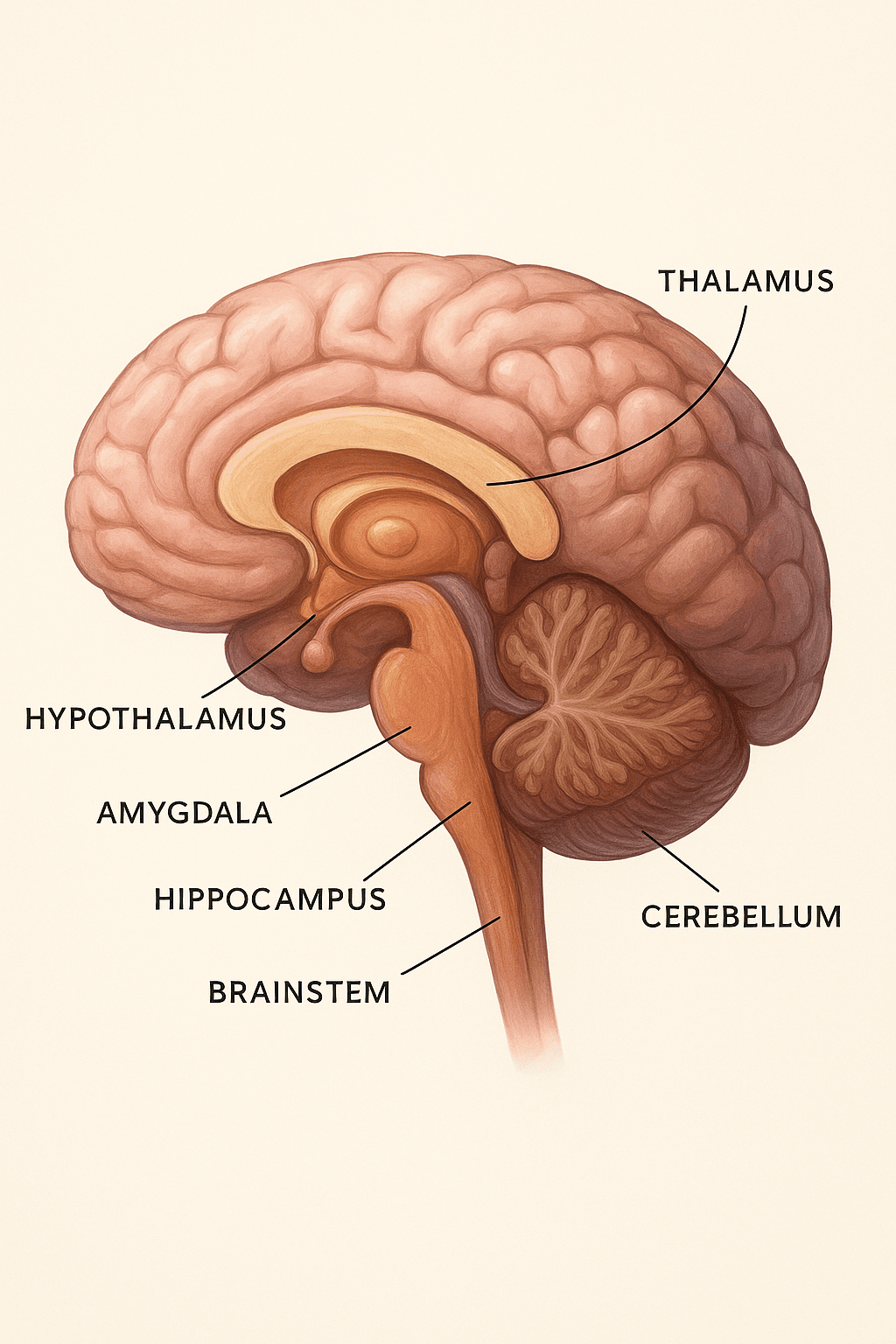
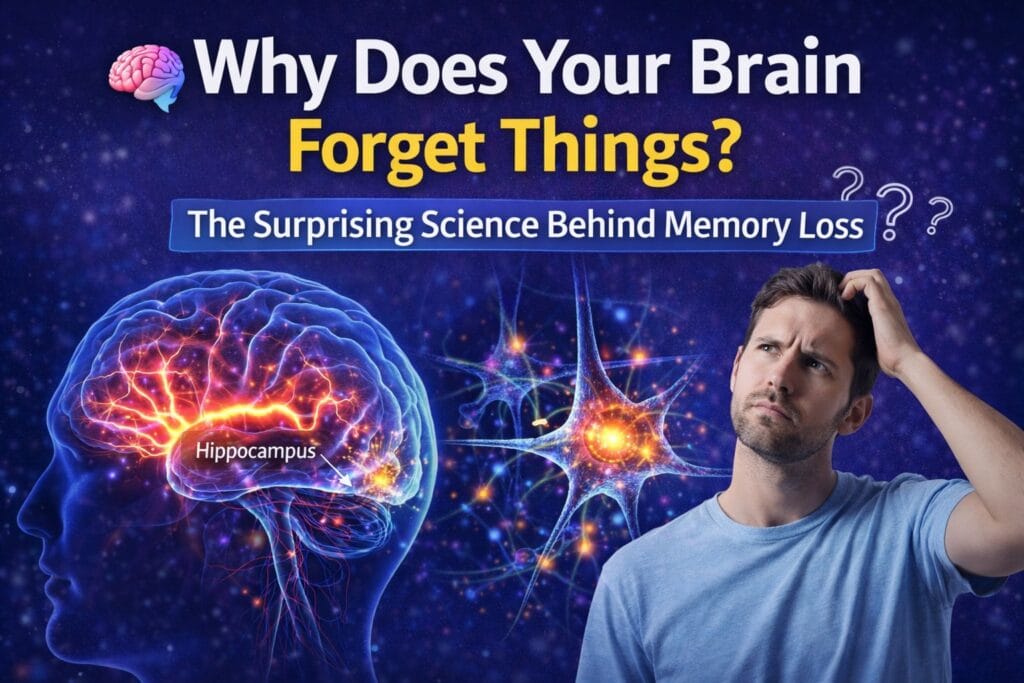
A small structure deep inside your brain called the hippocampus plays a major role in forming new memories.
If information isn’t repeated or emotionally strong, the hippocampus may not transfer it into long-term storage.
That’s why:
- You remember emotional events clearly
- But forget random daily details
Your brain prioritizes what matters.
⏳ The “Use It or Lose It” Rule
Neurons communicate through connections called synapses.
When you repeat information:
- Synapses strengthen
- Memory pathways become stronger
When you don’t:
- Connections weaken
- The brain removes unused pathways
This process is called synaptic pruning.
It actually makes your brain more efficient.
💤 Sleep and Memory
Sleep plays a huge role in memory consolidation.
During deep sleep:
- The brain replays important information
- Short-term memories move to long-term storage
- Irrelevant details are deleted
Research supported by National Institutes of Health shows that poor sleep significantly weakens memory formation.
So forgetting may simply mean you didn’t sleep enough.
😰 Stress and Forgetting
High stress releases cortisol — a hormone that can interfere with memory.
Chronic stress can:
- Shrink hippocampus size
- Reduce focus
- Disrupt recall ability
That’s why during exams or pressure situations, your mind sometimes “goes blank.”
📱 Digital Overload Effect
In today’s world, your brain receives constant information:
- Notifications
- Social media
- Emails
- News
When overloaded, the brain filters aggressively.
If something doesn’t seem urgent or emotional, it gets discarded.
Forgetting becomes a survival tool.
🧪 When Forgetting Isn’t Normal
Occasional forgetting is normal.
But warning signs include:
- Forgetting familiar places
- Repeating the same questions
- Struggling with daily tasks
These may signal conditions like Alzheimer’s disease or other cognitive disorders.
If memory loss interferes with daily life, medical evaluation is important.
🚀 Why Forgetting Is Actually Good
Here’s the powerful truth:
If your brain remembered everything, it would be overwhelmed.
Forgetting:
- Removes unnecessary data
- Improves decision-making
- Boosts learning efficiency
- Reduces mental clutter
Your brain forgets on purpose.
It’s optimization — not weakness.
🧠 How to Improve Memory Naturally
✔️ Sleep 7–8 hours
✔️ Repeat important information
✔️ Stay physically active
✔️ Reduce stress
✔️ Practice focus (avoid multitasking)
✔️ Eat brain-healthy foods
Consistency strengthens neural pathways.
🧠 The Big Takeaway
Your brain forgets things because:
- Not all information is stored
- Weak neural connections fade
- Sleep and stress affect memory
- The brain prioritizes efficiency
Forgetting isn’t always a problem.
It’s part of how your brain stays powerful.
Read also why do we yawn, Parts of the Human Brain and Their Functions Explained
🙏 Support ScienceGajab
If our science content has helped you, please consider supporting us.
Your small contribution helps us keep knowledge free and fight misinformation.
Scan the UPI QR code Below to support.

💙 Every support matters.