Ever noticed how a healing cut suddenly starts itching like sweet itchy?
It might feel annoying, but it’s actually a sign your body is repairing itself.
Here’s what’s really happening under your skin.
If you have ever had a cut, scrape, or insect bite, you probably noticed something strange during recovery — the wound starts to itch as it heals. Many people feel the urge to scratch, even when the injury is almost gone.why wounds itch while healing
This itchy sensation is actually a normal part of the body’s healing process. As your skin repairs itself, several biological processes occur that can trigger itching.
Let’s explore why wounds itch while healing and what is happening inside your skin.
7 Steps of Hand hygiene : Back to the basics of infection control
learn What is Inflammation?
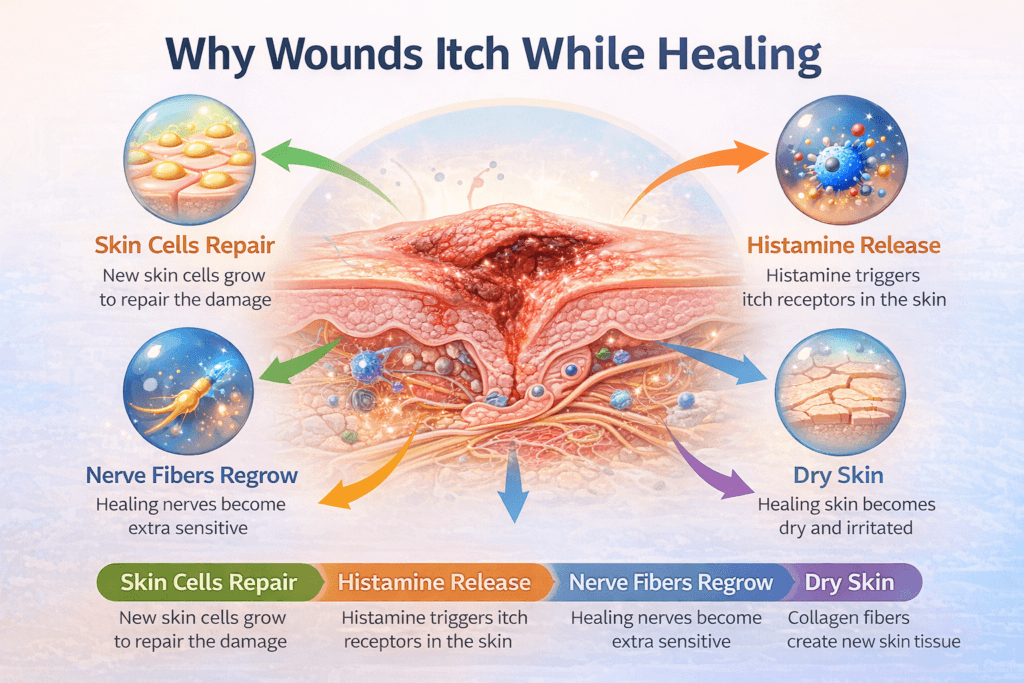
1. Skin Cells Are Repairing the Injury
When the skin is damaged, the body immediately begins a complex repair process.
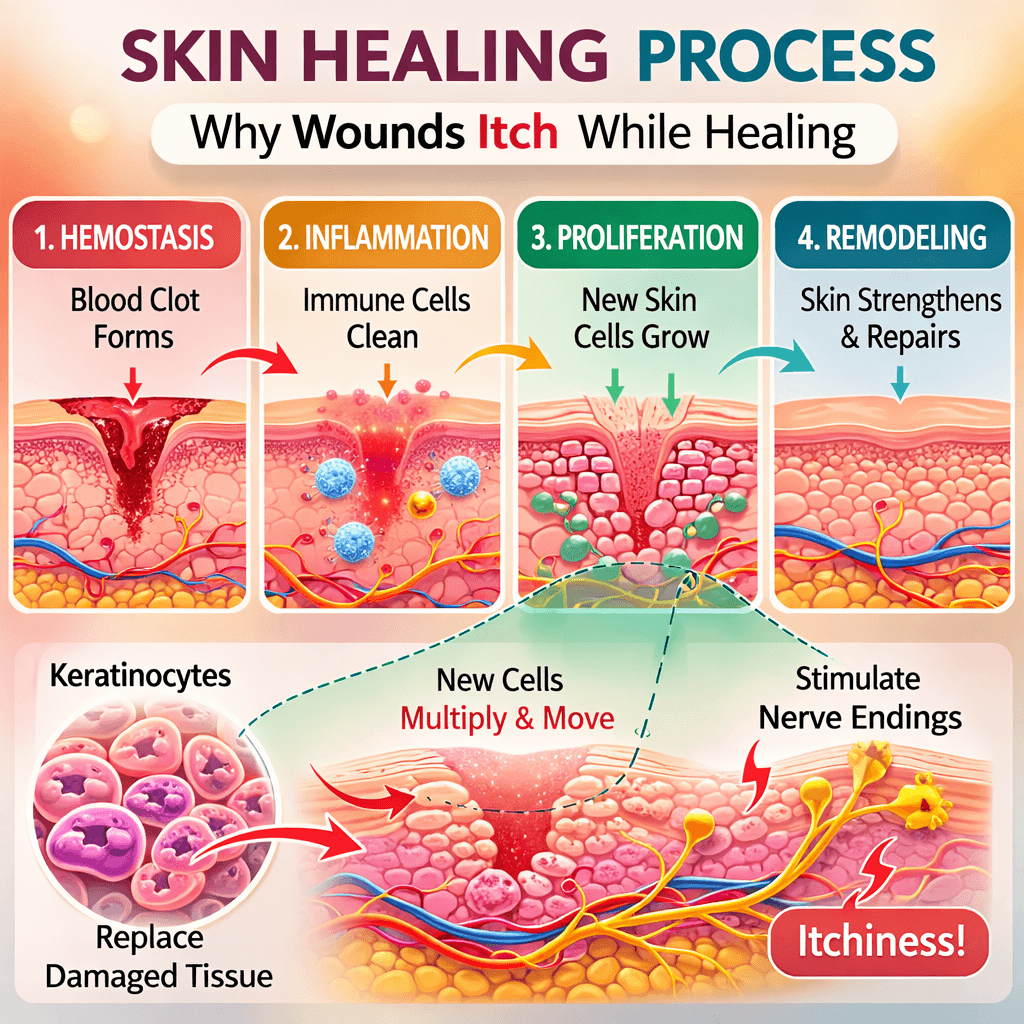
The healing process usually occurs in four stages:
- Hemostasis – blood clot forms to stop bleeding
- Inflammation – immune cells clean the wound
- Proliferation – new skin cells grow
- Remodeling – the skin strengthens and repairs
During the proliferation stage, new skin cells called keratinocytes grow to replace damaged tissue.
As these new cells multiply and move across the wound, they can stimulate nerve endings in the skin, causing itchiness.
discover How Immune System Works
2. Histamine Release Causes Itching
Your immune system releases chemicals to help the wound heal. One of the most important chemicals involved is histamine.
Histamine helps by:
- increasing blood flow
- bringing immune cells to the injury
- stimulating tissue repair
However, histamine also activates itch receptors in the skin, which is why wounds often feel itchy during recovery.
This is similar to the itching sensation experienced during allergic reactions or insect bites.
3. Nerve Endings Are Regenerating
When a wound damages the skin, tiny nerve fibers can also be injured.
As healing occurs, these nerve endings begin to regrow and reconnect with surrounding tissues.
During this regeneration process, nerves can become extra sensitive, which can trigger itching sensations.
In other words, the itching may be a sign that your nerves are repairing themselves.
4. Dry Skin Around the Wound
Healing skin often becomes dry and tight, especially when a scab forms.
Dryness can irritate the skin and stimulate itch receptors, making the wound feel itchy.
This is one reason doctors sometimes recommend keeping wounds slightly moisturized to reduce irritation.
5. New Tissue Is Forming
As wounds heal, the body produces collagen, a protein that helps rebuild skin structure.
Collagen fibers pull the wound together and create new tissue.
While this process strengthens the skin, it can also place pressure on nearby nerves, contributing to the itchy sensation.
learn What is Inflammation?
Why Scratching a Healing Wound Is a Bad Idea
Although itching can be annoying, scratching the wound can slow healing.
Scratching may:
- reopen the wound
- introduce bacteria
- increase infection risk
- cause scars
Keeping the wound clean and protected helps ensure faster and safer healing.
learn MICROBES IN HUMAN WELFARE
How to Reduce Itching While a Wound Heals
Here are simple ways to manage itching without damaging the skin.
1. Keep the wound moisturized
Applying ointments or healing creams helps prevent dryness.
2. Avoid scratching
Instead of scratching, gently tap or apply pressure near the wound.
3. Use cold compresses
Cool temperatures can calm irritated nerves and reduce itching.
4. Keep the wound covered
Bandages protect the healing area and reduce irritation.
Move to Pain Isn’t Where You Think — The Brain’s Hidden Role Explained
Is Itching a Good Sign?
In many cases, itching is actually a positive sign. It often means the body is successfully repairing the skin and rebuilding tissue.
However, extreme itching accompanied by symptoms like:
- swelling
- pus
- severe redness
- pain
may indicate infection and should be checked by a healthcare professional.
LEARN Fever Isn’t Your Enemy – Here’s What Your Body Is Actually Doing
The Bottom Line
Wounds itch while healing because several biological processes are happening at the same time. Skin cells are regenerating, nerve endings are reconnecting, histamine is released, and new tissue is forming.
These processes stimulate the skin’s nerve receptors, creating the familiar itchy sensation during healing.
Although the urge to scratch can be strong, it’s best to avoid scratching and allow your body to complete the natural healing process.
learn Prevention of Needle Stick Injury