
Types of hand hygiene & 7 steps of washing hands
1 Mistake = Infection Risk!
You touch your phone… door handle… face… food…
👉 Without realizing it, your hands become a carrier of dangerous microbes
And the scary part?
👉 Most infections spread just through hands
🤯 Why Hand Hygiene is So Important
- 🦠 Hands carry millions of bacteria & viruses
- 🏥 Major cause of hospital infections
- ⚡ Can spread diseases in seconds
👉 Studies show proper hand hygiene significantly reduces infection spread
💡 It’s the simplest and cheapest life-saving habit
🧠 The “5 Critical Moments” You MUST Remember
(This is GOLD for exams + real life)
According to infection control guidelines:
- Before touching a person/patient
- Before any clean procedure
- After exposure to body fluids
- After touching a person
- After touching surroundings
👉 Missing even ONE = risk of infection
🧪 Types of Hand Hygiene (Very Important!)
🟢 1. Handwashing (Soap + Water)
Use when:
- Hands are visibly dirty
- After toilet
- After contact with fluids
🔵 2. Alcohol-Based Hand Rub
Use when:
- Hands look clean
- Quick disinfection needed
👉 Faster + more effective in many cases
Steps of Hand Rubbing and Hand Washing
WHO has also laid down the guidelines describing the appropriate steps involved for an effective hand rubbing and hand washing
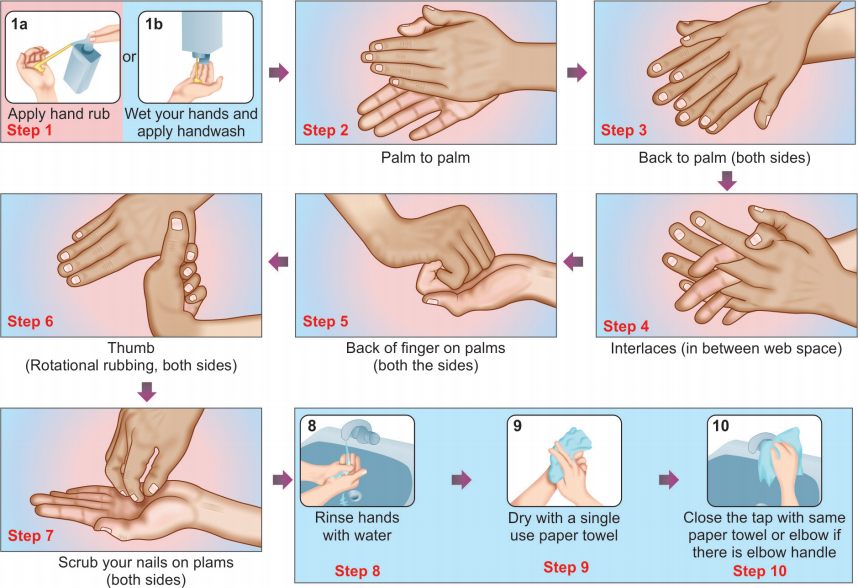
🧼 7 Steps of Handwashing (Exam Favourite)
Follow this sequence:
- Palm to palm
- Between fingers
- Back of hands
- Interlock fingers
- Clean thumbs
- Fingertips
- Wrists
👉 Takes just 20–30 seconds but kills most germs
🚨 Hidden Truth (Most People Don’t Know)
👉 Even healthcare workers follow hand hygiene less than 50% of the time
That’s why infections spread in hospitals!
💥 Easy Trick (Never Forget This)
💡 “5 + 7 Rule”
- 5 Moments → When to clean hands
- 7 Steps → How to clean hands
👉 This combo = full marks + real-life safety
🎯 Exam Tip
✔ Most asked questions:
- Types of hand hygiene
- 5 moments
- 7 steps
👉 Write steps in order = scoring answer
📊 Quick Revision Table
| Topic | Key Point |
|---|---|
| Importance | Prevents infection spread |
| Methods | Soap + Water / Alcohol rub |
| Critical moments | 5 |
| Steps | 7-step WHO technique |
| Time required | 20–30 sec |
⚠️ Common Mistakes
❌ Washing for only 5–10 sec
❌ Ignoring thumbs & fingertips
❌ Not cleaning after touching surfaces
👉 These mistakes make handwashing useless
🚀 Final Reality Check
You don’t need expensive medicine…
You don’t need advanced technology…
👉 Just clean hands can break the chain of infection
Hand Rub
Alcohol based (70–80% ethyl alcohol) and chlorhexidine (0.5–4%) based hand rubs are available. The duration of contact has to be at least for 20–30 seconds.
Advantage: After a period of contact, it gets evaporated of its own, hence drying of hands is not required separately.
Indications: Hand rub is indicated during routine patient care activities or taking rounds in the wards or ICUs—whenever opportunity for hand hygiene arises, except when the hands are visibly soiled with blood or other specimens.7 steps of washing hands
Hand Wash
Antimicrobial soaps (liquid, gel or bars) are available containing 4% chlorhexidine. If facilities are not available, then even ordinary soap and water can also be used.
The duration of contact has to be at least for 40–60 seconds.
- Hand washing is indicated in the following situations:
- When the hands are visibly soiled with blood, excreta, pus, etc.
- Before and after eating
- After going to toilet
- Before and after shift of the duty
- When giving care to a patient with diarrhea.
Surgical Hand Scrub (3-5 min):
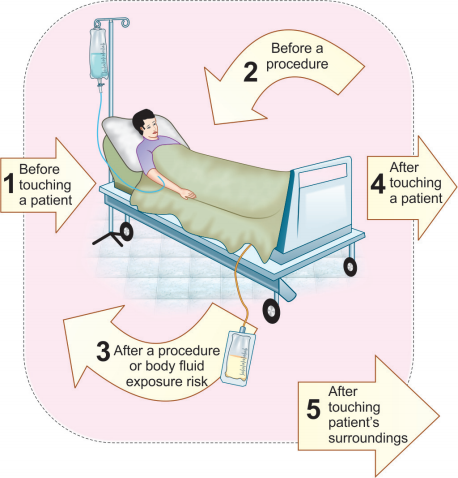
This is indicated prior to any surgical procedure and also in between the cases; using 4% chlorhexidine hand wash.Indications (Five Moments for Hand Hygiene)The WHO has published standard guidelines describing the situations or opportunities when hand hygiene is indicated in healthcare sectors —known as ‘My Five Moments for Hand Hygiene’; which include:
1. Before touching a patient
2. Before clean/aseptic procedures
3. After body fluid exposure/risk
4. After touching a patient
5. After touching patient’s surroundings.
LEARN Bed sore
Steps of Hand Rubbing and Hand Washing
WHO has also laid down the guidelines describing the appropriate steps involved for an effective hand rubbing and hand washing


