Signs of Diabetes Visible on Feet
Signs of Diabetes Visible on Feet: 10 Warning Signs You Should Never Ignore
Diabetes affects millions of people worldwide and can impact nearly every part of the body. One of the first places where diabetes-related complications often become noticeable is the feet.
High blood sugar levels can damage nerves, blood vessels, and the body’s ability to heal wounds. Over time, this may lead to symptoms that are visible on the feet long before more serious complications develop.
Recognizing these early warning signs is important because timely treatment can help prevent infections, ulcers, and even amputation in severe cases.
In this article, we’ll explore the most common signs of diabetes visible on feet, why they occur, and when you should seek medical attention.
Why Does Diabetes Affect the Feet?
Your feet rely on healthy nerves and blood vessels to function properly.
Over time, uncontrolled blood sugar can cause:
Nerve Damage (Diabetic Neuropathy)
Damaged nerves may reduce sensation in the feet.
Poor Circulation
Reduced blood flow slows healing and increases the risk of infection.
Increased Infection Risk
High blood sugar can weaken the immune system, making infections more likely.
Because of these factors, foot problems are among the most common complications of diabetes.
Body Fluids and Circulation – Complete NCERT + Exam Notes for NEET & Class 11 Biology
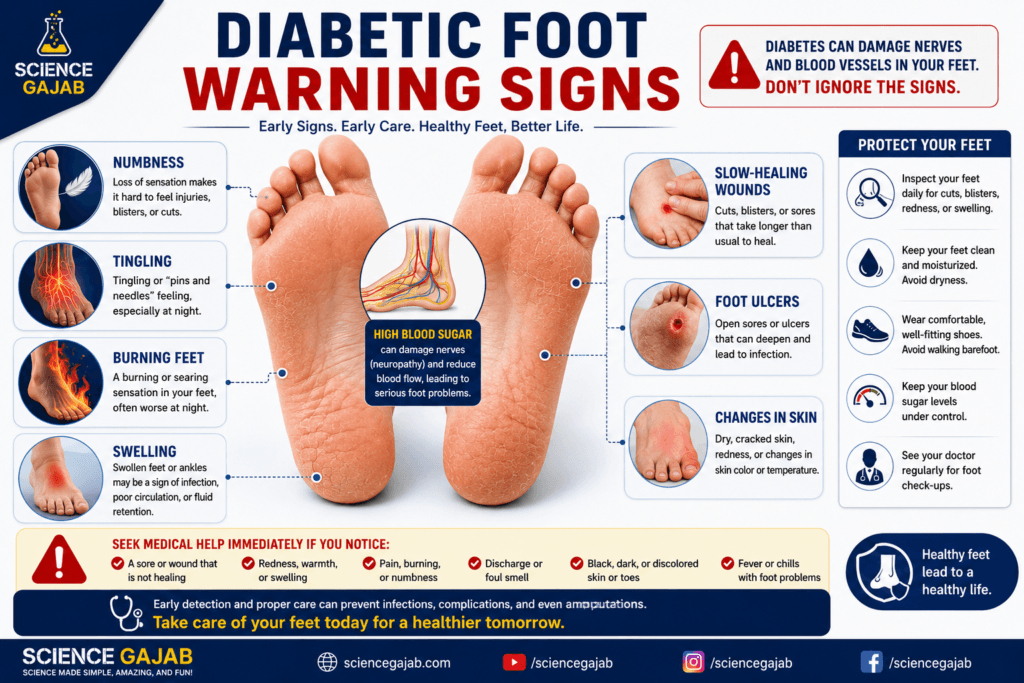
1. Numbness in the Feet
Numbness is one of the earliest and most common signs of diabetic neuropathy.
Why It Happens
High blood sugar damages nerves responsible for sensation.
Symptoms
- Reduced feeling in the feet
- Difficulty sensing temperature
- Feeling like you’re wearing socks when barefoot
- Loss of touch sensation
Numbness may increase the risk of unnoticed injuries.
🚨 Early Signs of Vitamin B12 Deficiency — Don’t Ignore These Warning Signals!
2. Tingling or Pins and Needles Sensation
Many people experience tingling before complete numbness develops.
Symptoms
- Pins and needles sensation
- Electric shock-like feelings
- Intermittent tingling
- Increased symptoms at night
Persistent tingling should not be ignored.
🚨 10 Signs Your Body Lacks Vitamins You Should Never Ignore
3. Burning Feet
A burning sensation is another common symptom of diabetic nerve damage.
Symptoms
- Burning pain
- Warm or hot sensation
- Nighttime discomfort
- Increased sensitivity
Many patients report that symptoms worsen during sleep.
Can Low Vitamins Damage Nerves? (Simple Explanation You Can Trust)
4. Slow-Healing Cuts and Wounds
Healthy wounds normally heal within a reasonable period.
When diabetes affects circulation and immune function, healing may become delayed.
Warning Signs
- Small cuts that remain for weeks
- Persistent redness
- Repeated infections
- Ulcers
Slow-healing wounds are among the most serious warning signs.
tingling due to vitamin deficiency
5. Foot Ulcers
Diabetic foot ulcers are open sores that often develop on pressure points.
Common Locations
- Bottom of the foot
- Heel
- Toes
Risk Factors
- Poor circulation
- Nerve damage
- Improper footwear
Without treatment, ulcers may become infected and lead to severe complications.
6. Dry and Cracked Skin
Diabetes may reduce normal sweating in the feet.
Symptoms
- Dry skin
- Cracked heels
- Peeling skin
- Itching
Cracks in the skin may create entry points for infection.
Cracks at Mouth Corners: Causes, Symptoms & Treatment Explained Simply
7. Changes in Foot Color
Circulation problems caused by diabetes may affect skin color.
Possible Changes
Pale Feet
May indicate reduced blood flow.
Blue or Purple Feet
May suggest poor circulation.
Red Feet
May indicate inflammation or infection.
Persistent color changes should be evaluated by a healthcare professional.
Burning Tongue Causes: Why Your Tongue Feels Hot, Painful, or Burning
8. Swelling in the Feet and Ankles
Swelling can occur for several reasons in people with diabetes.
Possible Causes
- Poor circulation
- Kidney disease
- Infection
- Inflammation
Warning Signs
- Persistent swelling
- One-sided swelling
- Painful swelling
Medical evaluation may be necessary.
Modes of Virus Transmission with Examples (Airborne, Vector, Contact) – Easy Guide for Students
9. Increased Risk of Foot Infections
People with diabetes are more susceptible to infections.
Signs of Infection
- Redness
- Swelling
- Warm skin
- Drainage
- Fever
Even minor infections should be treated promptly.
10. Foot Pain and Leg Cramps
Reduced circulation may cause discomfort in the feet and legs.
Symptoms
- Foot pain while walking
- Leg cramps
- Aching feet
- Nighttime discomfort
These symptoms may indicate circulation problems.
What Is Diabetic Neuropathy?
Diabetic neuropathy refers to nerve damage caused by prolonged high blood sugar levels.
Common Symptoms
- Numbness
- Tingling
- Burning
- Pain
- Muscle weakness
The condition often starts in the feet and progresses upward.
What Is Diabetic Foot Disease?
Diabetic foot disease involves a combination of:
- Nerve damage
- Poor circulation
- Increased infection risk
Without proper care, complications can become serious.
Early detection significantly improves outcomes.
Who Is at Higher Risk?
The risk increases among people who:
- Have had diabetes for many years
- Have poorly controlled blood sugar
- Smoke
- Have high cholesterol
- Have high blood pressure
- Are higher-weight
Managing these risk factors helps protect foot health.
Daily Foot Care Tips for People With Diabetes
Proper foot care is essential.
Check Your Feet Daily
Look for:
- Cuts
- Blisters
- Red spots
- Swelling
- Color changes
Wash and Dry Carefully
Pay special attention between the toes.
Moisturize Dry Skin
Avoid applying lotion between the toes.
Wear Proper Footwear
Choose comfortable, well-fitting shoes.
Never Walk Barefoot
Even small injuries can become serious.
How Vaccines Train Your Immune System to Fight Dangerous Viruses
When Should You See a Doctor?
Seek medical attention if you notice:
- Persistent numbness
- Burning pain
- Foot ulcers
- Swelling
- Color changes
- Signs of infection
- Slow-healing wounds
Early treatment can prevent serious complications.
How Doctors Diagnose Diabetic Foot Problems
Healthcare providers may perform:
Foot Examination
Checking:
- Skin condition
- Blood flow
- Sensation
Blood Sugar Testing
To assess diabetes control.
Vascular Testing
To evaluate circulation.
Nerve Function Tests
To identify neuropathy.
💊 How Antibiotics Kill Bacteria (And Why They Don’t Work on Viruses)
Can Diabetic Foot Complications Be Prevented?
Yes.
Many complications can be prevented through:
1✔ Good blood sugar control
2✔ Regular exercise
3✔ Healthy diet
4✔ Smoking cessation
5✔ Daily foot inspections
6✔ Routine medical checkups
Prevention is far easier than treating advanced complications.
Frequently Asked Questions
Yes. Numbness, tingling, and slow-healing wounds may sometimes appear before diabetes is diagnosed.
High blood sugar damages nerves responsible for sensation
They can be. Burning sensations are commonly associated with diabetic neuropathy.
Yes. Poor circulation, kidney problems, and infections may contribute to swelling.
Daily foot inspection is recommended
Expert Health Note
This article is based on established medical knowledge regarding diabetic neuropathy, diabetic foot disease, circulation disorders, and foot health. It is intended for educational purposes only and should not replace professional medical advice. Anyone with diabetes who develops foot symptoms should consult a qualified healthcare provider for evaluation and treatment.
Conclusion
The feet often provide some of the earliest warning signs of diabetes-related complications. Symptoms such as numbness, tingling, burning sensations, slow-healing wounds, swelling, color changes, and infections should never be ignored.
Regular foot inspections, good blood sugar control, and prompt medical attention for any concerning symptoms can significantly reduce the risk of serious complications. Paying attention to your feet today may help protect your health for years to come.