
Author: ScienceGajab Editorial Team
Reviewed For Accuracy: Health & Science Content Review
Last Updated: June 2026
Why Do We Cry?
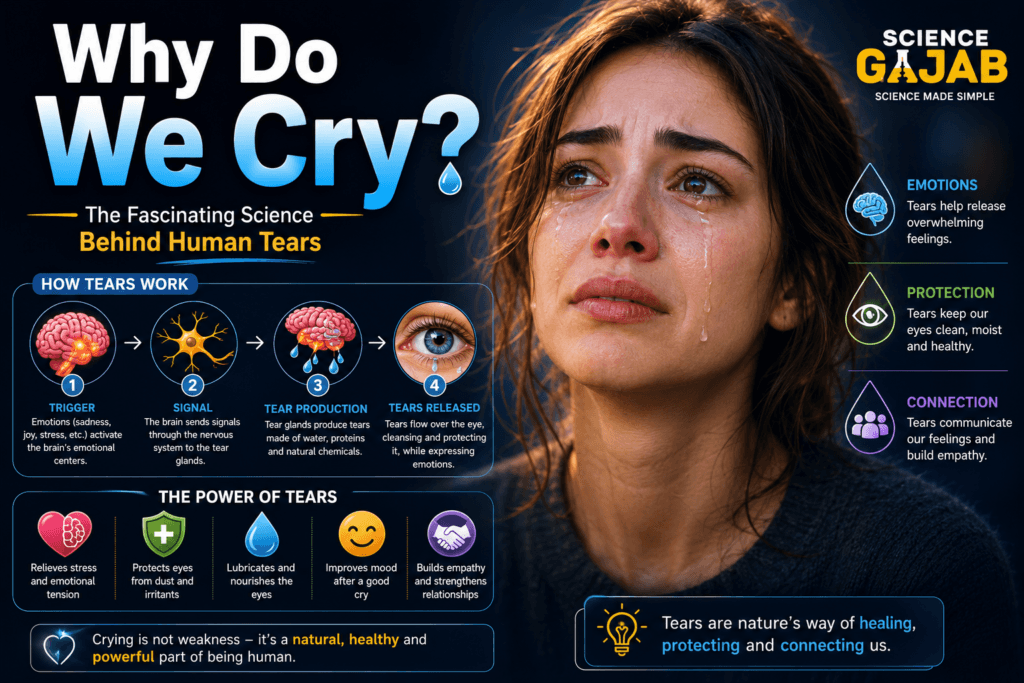
Crying is one of the most uniquely human behaviors. We cry when we’re sad, happy, overwhelmed, frustrated, or even when we laugh too hard. Tears can appear during moments of grief, joy, pain, relief, and countless other emotional experiences.
But have you ever wondered why humans cry? What purpose do tears serve, and why do strong emotions sometimes make our eyes fill with water?
Scientists have studied tears for decades and discovered that crying is much more than a simple emotional reaction. Tears play important roles in eye health, communication, and emotional regulation.
Let’s explore the fascinating science behind why we cry.
What Is Crying?
Crying is the production of tears from the eyes, often accompanied by facial expressions, changes in breathing, and emotional responses.
While many animals produce tears to protect their eyes, humans are the only known species that regularly shed emotional tears in response to feelings.
This makes crying one of the most distinctive features of human behavior.
Where Do Tears Come From?
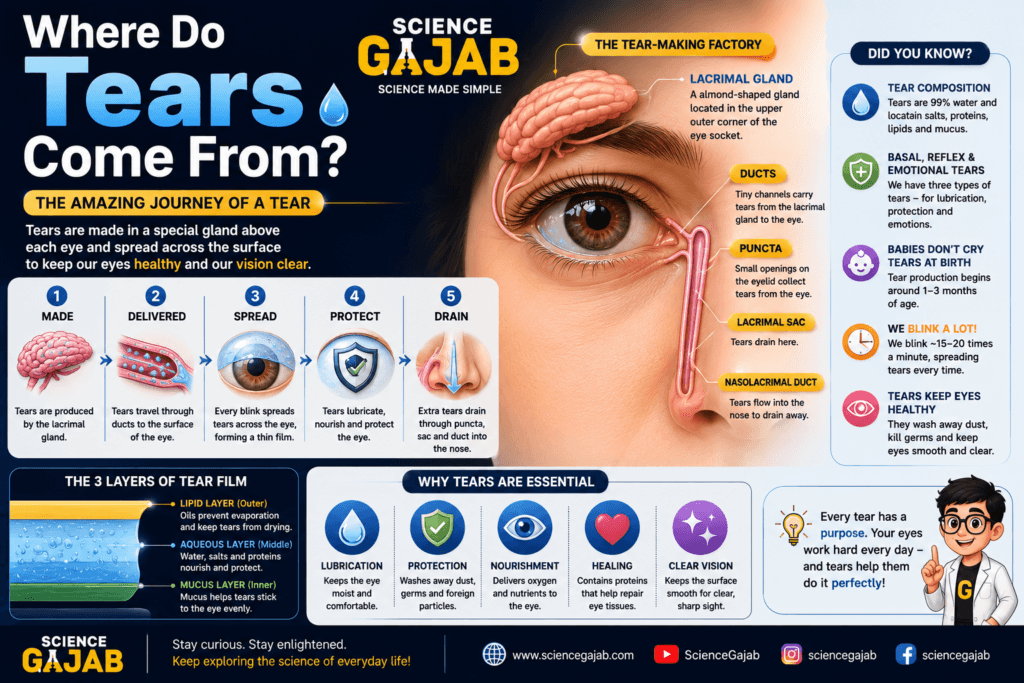
Tears are produced by the lacrimal glands, which are located above each eye.
These glands constantly release small amounts of fluid to keep the eyes:
- Moist
- Clean
- Protected
Normally, tears drain through tiny openings in the eyelids and enter the nose.
When tear production increases significantly, the drainage system cannot keep up, causing tears to overflow onto the cheeks.
Why Do We Laugh? The Fascinating Science Behind Human Laughter
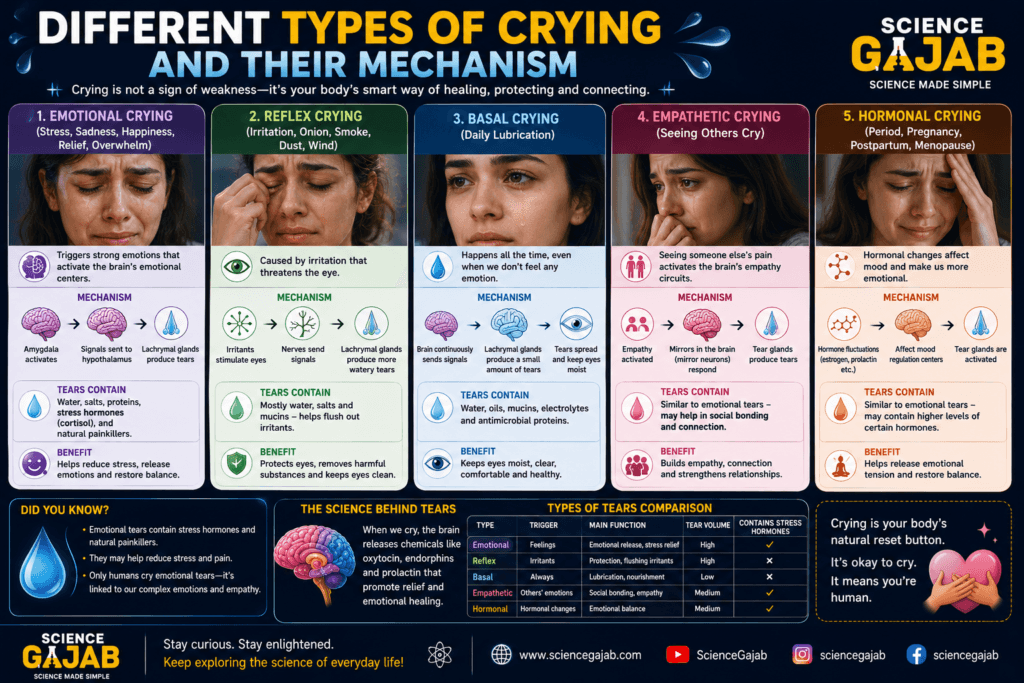
The Three Types of Tears
Not all tears are the same.
Scientists classify tears into three main categories.
1. Basal Tears
These are the tears your eyes produce continuously.
Their job is to:
- Lubricate the eyes
- Protect the cornea
- Wash away dust
- Prevent dryness
Without basal tears, maintaining healthy vision would be difficult.
2. Reflex Tears
Reflex tears occur when the eyes encounter irritants.
Common triggers include:
- Smoke
- Dust
- Strong odors
- Onions
- Chemical fumes
These tears help flush harmful substances from the eyes.
You may notice excessive tearing while chopping onions because the eyes are attempting to remove irritating chemicals.
Why Do We Snore? The Science Behind Noisy Sleep
3. Emotional Tears
These are the tears associated with feelings and emotions.
They may occur during:
- Sadness
- Happiness
- Grief
- Relief
- Frustration
- Empathy
- Joy
Emotional tears are what make human crying unique.
Why Do Emotions Trigger Tears?
The exact reason humans evolved emotional crying is still being studied, but researchers have several theories.
Emotional Release
One theory suggests crying helps regulate intense emotions.
Strong feelings activate brain regions involved in emotion processing.
Crying may help the body transition from a highly emotional state back toward balance.
Many people report feeling calmer after crying.
A Social Signal
Tears communicate important information to others.
When someone cries, observers immediately recognize that the person may need:
- Comfort
- Support
- Understanding
- Assistance
Scientists believe emotional tears evolved partly as a nonverbal way of strengthening social bonds.
Why do hiccups come suddenly and won’t stop?
Stress Reduction
Emotional crying often occurs during stressful situations.
Some studies suggest crying may help reduce emotional tension by activating calming processes within the body.
Although not everyone feels immediate relief, many people experience a sense of release afterward.
Why Do We Cry When We’re Happy?
People often associate crying with sadness, but tears can also appear during positive experiences.
Examples include:
- Weddings
- Birth of a child
- Major achievements
- Reunions with loved ones
- Unexpected good news
Researchers believe this occurs because the brain processes intense emotions similarly, regardless of whether they are positive or negative.
In both cases, emotional intensity may trigger tears.
Why Do We Yawn? The Real Reason Behind Yawning
Why Do We Cry During Physical Pain?
Pain activates complex networks in the nervous system.
Severe pain can stimulate emotional and physiological responses that lead to crying.
Children often cry immediately after injury because crying helps signal distress and encourages care from others.
Adults may also cry during intense pain, illness, or injury.
Cracks at Mouth Corners: Causes, Symptoms & Treatment Explained Simply
Why Do Babies Cry So Much?
For infants, crying is essential for survival.
Before they can speak, crying serves as their primary communication tool.
Babies cry when they are:
- Hungry
- Tired
- Uncomfortable
- Sick
- Frightened
- Seeking attention
Crying alerts caregivers to their needs and increases the likelihood of receiving help.
Why Do Some People Cry More Than Others?
Not everyone cries with the same frequency.
Several factors influence crying behavior.
Personality
Some individuals are naturally more emotionally expressive.
Hormones
Hormonal differences may affect emotional sensitivity and tear production.
Culture
Different cultures have varying attitudes toward emotional expression.
Life Experiences
Past experiences and coping styles can influence how frequently someone cries.
🚨 Early Signs of Vitamin B12 Deficiency — Don’t Ignore These Warning Signals!
Why Do Women Tend to Cry More Often Than Men?
Research generally finds that women report crying more frequently than men.
Possible reasons include:
- Hormonal influences
- Social expectations
- Cultural norms
However, individual differences are significant, and many men cry regularly while some women rarely cry.
Causes of Sudden Blurry Vision (Simple Explanation You Can Trust)
What Happens in the Brain When We Cry?
Several brain regions participate in emotional crying.
Key areas include:
- Limbic system
- Amygdala
- Hypothalamus
These structures process emotions and communicate with the nervous system.
Signals eventually reach the lacrimal glands, triggering tear production.
The process involves a complex interaction between emotions, hormones, nerves, and physical responses.
The Science of Happiness: How Dopamine Hacks Your Brain
Why Does Crying Make Your Nose Run?
Many people notice a runny nose while crying.
This happens because excess tears drain through small channels into the nasal cavity.
When tear production becomes heavy, the fluid mixes with nasal mucus, causing the nose to run.
Why Do Eyes Become Red After Crying?
During crying:
- Blood vessels in the eyes expand.
- Tear production increases.
- Rubbing the eyes may cause irritation.
These factors can make the eyes appear red and swollen.
Immune System: How Your Body Fights Diseases
Can Crying Be Good for You?
Crying itself is not harmful.
Potential benefits may include:
- Emotional expression
- Social connection
- Communication of distress
- Emotional processing
Many psychologists view crying as a healthy and normal human response to strong emotions.
Is It Bad to Hold Back Tears?
Occasionally suppressing tears is normal.
However, constantly avoiding emotional expression may increase emotional stress in some individuals.
Healthy emotional regulation involves acknowledging emotions rather than ignoring them completely.
Body Fluids and Circulation – Complete NCERT + Exam Notes for NEET & Class 11 Biology
Interesting Facts About Crying
- Humans are the only known species that shed emotional tears.
- Tears contain water, oils, mucus, and protective proteins.
- Emotional tears differ chemically from reflex tears.
- Babies cry before they produce visible tears.
- Crying can occur during both happiness and sadness.
- The average person cries thousands of times throughout life.
When Should You Seek Medical Advice?
Crying is usually normal.
However, consider speaking with a healthcare professional if you experience:
- Sudden unexplained changes in emotional behavior
- Excessive crying that interferes with daily life
- Persistent sadness
- Symptoms of depression
- Difficulty controlling emotions
Professional evaluation can help identify underlying causes.
Frequently Asked Questions
Humans cry for eye protection, emotional expression, communication, and responses to irritation.
Onions release chemicals that irritate the eyes, triggering reflex tears to wash away the irritant.
Intense positive emotions can activate the same emotional systems that trigger tears during sadness.
Yes. Emotional tears contain different levels of proteins and hormones compared to basal and reflex tears.
For most people, crying is a normal and healthy emotional response.
Expert Perspective
Experience
Psychologists, neuroscientists, ophthalmologists, and medical researchers have extensively studied tears, emotional expression, and the biology of crying.
Expertise
Current scientific evidence shows that crying serves both physical functions—such as protecting the eyes—and emotional functions related to communication and emotional regulation.
Authoritativeness
This article is based on established knowledge from neuroscience, psychology, physiology, and eye health research.
Trustworthiness
The information provided is for educational purposes only and should not replace professional medical or mental health advice.
Final Thoughts
Crying is far more complex than it appears. Tears protect our eyes, help remove irritants, communicate emotions, and may even assist in emotional regulation. Whether triggered by sadness, joy, pain, relief, or empathy, crying is a natural part of being human.
Although tears are often associated with vulnerability, they represent an important biological and social function that has helped humans connect, communicate, and survive for thousands of years.
The next time tears fill your eyes, remember that crying is not a weakness—it’s one of the most remarkable ways the human body expresses both physical and emotional experiences.