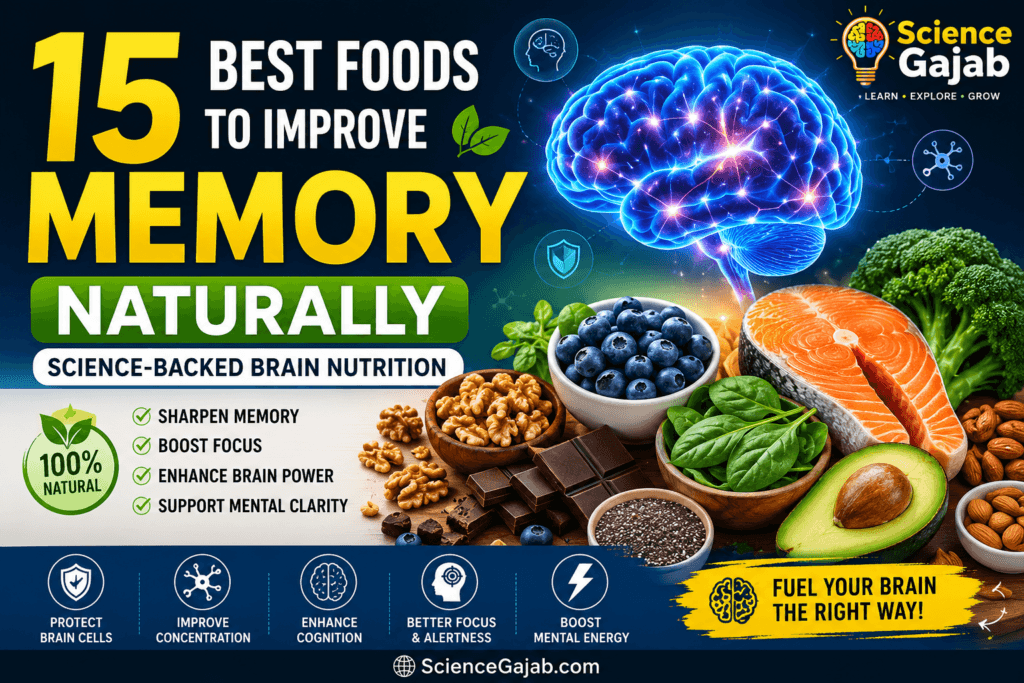

Foods to Improve Memory
Foods to Improve Memory: Eat Smarter for a Healthier Brain
Memory is one of the brain’s most important functions, allowing us to learn, solve problems, and recall information. Although there is no single food that can instantly boost memory, research shows that a balanced diet rich in healthy fats, antioxidants, vitamins, and minerals supports normal brain function throughout life.
Your brain uses around 20% of your body’s daily energy, making good nutrition essential for concentration, learning, and memory.
In this ScienceGajab guide, we’ll explore 15 foods that support memory and brain health, explain why they are beneficial, and share additional lifestyle habits that help keep your mind sharp. Foods to Improve Memory
How Nutrition Supports Memory
The brain depends on nutrients to:
- Build and maintain nerve cells
- Produce neurotransmitters (brain chemical messengers)
- Protect cells from oxidative stress
- Support blood flow to the brain
- Maintain learning and memory functions
A healthy dietary pattern provides these nutrients consistently over time.
How Memories Are Formed in the Brain (Simple Step-by-Step Guide)
15 Best Foods to Improve Memory
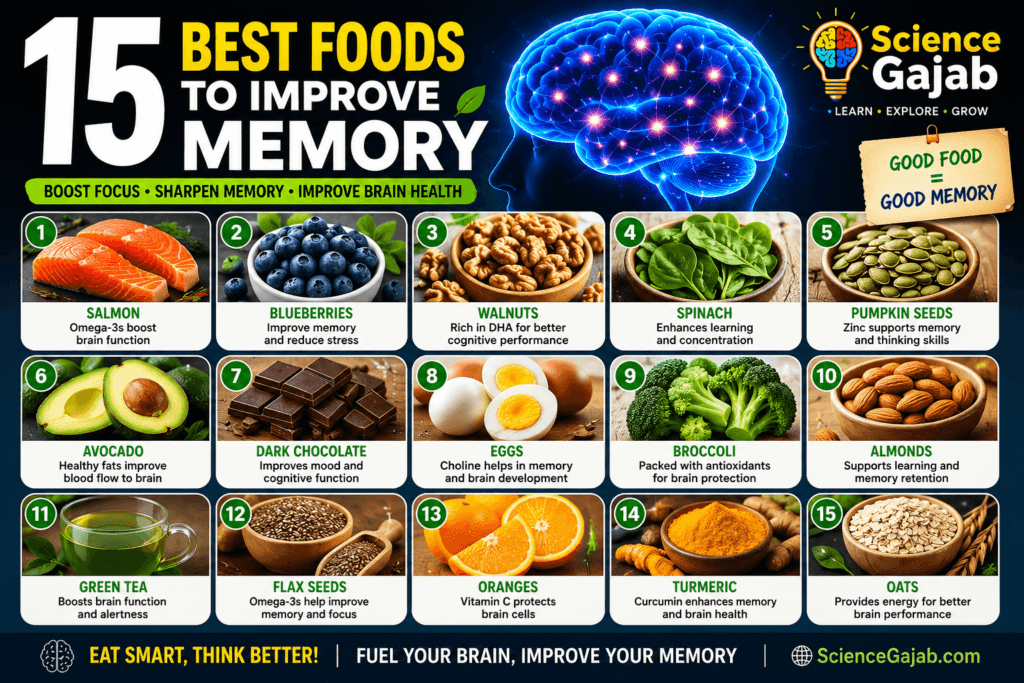
1. Fatty Fish
Examples:
- Salmon
- Sardines
- Mackerel
- Trout
These fish are rich in omega-3 fatty acids (DHA and EPA), which are important components of brain cell membranes.
Potential benefits:
- Supports normal brain function
- Helps maintain healthy nerve cells
- Supports learning and memory
2. Blueberries
Blueberries are packed with anthocyanins, powerful antioxidants that help protect brain cells from oxidative stress.
They may support healthy aging and cognitive function as part of a balanced diet.
3. Walnuts
Walnuts contain:
- Omega-3 fats
- Vitamin E
- Polyphenols
- Healthy fats
These nutrients support overall brain health.
4. Eggs
Eggs provide:
- Choline
- Vitamin B12
- Folate
- Protein
Choline is needed to produce acetylcholine, a neurotransmitter involved in memory and learning.
🚨 10 Signs Your Body Lacks Vitamins You Should Never Ignore
5. Spinach and Other Leafy Greens
Leafy vegetables such as spinach, kale, and fenugreek leaves supply:
- Folate
- Vitamin K
- Lutein
- Antioxidants
These nutrients support healthy brain function.
6. Pumpkin Seeds
Pumpkin seeds are rich in:
- Zinc
- Magnesium
- Iron
- Copper
These minerals play important roles in nerve function and overall brain health.
7. Turmeric
Turmeric contains curcumin, a natural compound with antioxidant and anti-inflammatory properties.
While research is ongoing, curcumin may support brain health when included as part of a healthy diet.
8. Broccoli
Broccoli provides:
- Vitamin K
- Vitamin C
- Fiber
- Antioxidants
These nutrients contribute to overall health, including healthy brain function.
9. Oranges
Oranges are an excellent source of vitamin C, an antioxidant that helps protect cells from oxidative damage.
10. Avocados
Avocados contain:
- Healthy monounsaturated fats
- Folate
- Potassium
- Vitamin E
A healthy cardiovascular system supports good blood flow to the brain.
Signs of Diabetes Visible on Feet: 10 Warning Signs You Should Never Ignore
11. Dark Chocolate
Dark chocolate (with a high cocoa content) provides:
- Flavonoids
- Magnesium
- Antioxidants
Enjoy it in moderation because many products contain added sugar.
The Science of Happiness: How Dopamine Hacks Your Brain
12. Whole Grains
Examples include:
- Oats
- Brown rice
- Whole wheat
- Millets
Whole grains provide a steady source of glucose, which the brain uses as its primary fuel.
13. Green Tea
Green tea contains:
- L-theanine
- Caffeine
- Polyphenols
This combination may improve alertness and attention in some people.
14. Beans and Lentils
Legumes are rich in:
- Plant protein
- Iron
- Folate
- Fiber
They help provide sustained energy, which can support concentration.
15. Yogurt
Unsweetened yogurt supplies:
- Protein
- Calcium
- Vitamin B12
- Probiotics
Research into the gut-brain connection is ongoing, and maintaining a healthy diet that includes fermented foods may support overall well-being.
🧠 Why Does Your Brain Forget Things? The Science Will Surprise You
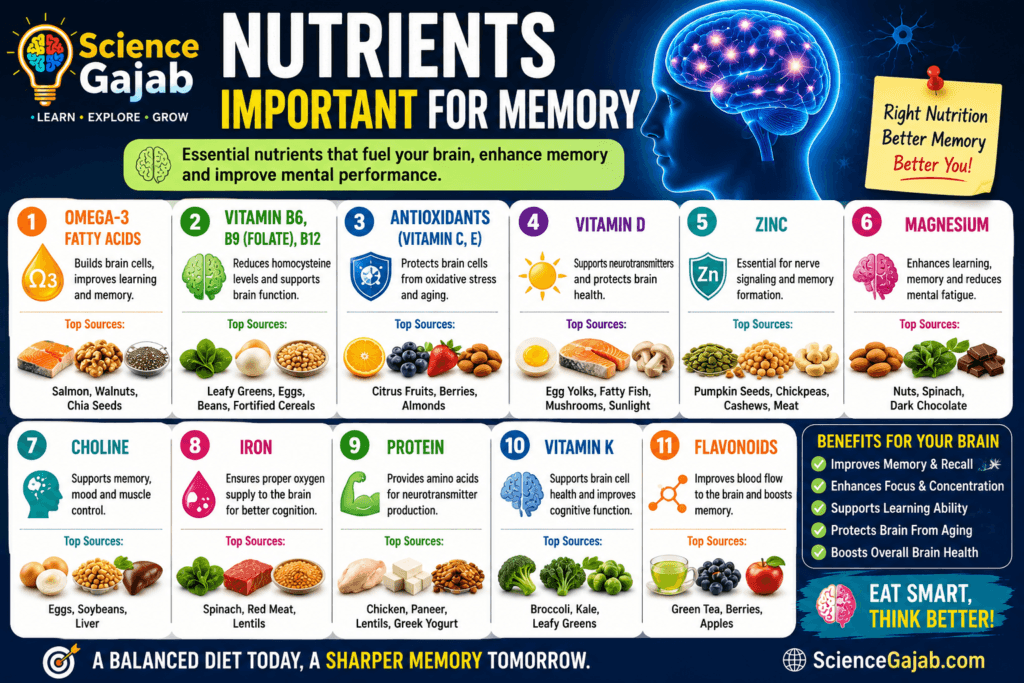
Nutrients Important for Memory
| Nutrient | Food Sources | Role |
|---|---|---|
| Omega-3 fatty acids | Fatty fish, walnuts | Supports brain cell structure |
| Choline | Eggs | Needed to make acetylcholine |
| Vitamin B12 | Dairy, eggs, meat | Supports healthy nerves |
| Folate | Leafy greens, legumes | Supports healthy cell function |
| Vitamin C | Citrus fruits, berries | Antioxidant protection |
| Vitamin E | Nuts, seeds | Protects brain cells from oxidative stress |
| Iron | Beans, lentils, lean meat | Helps deliver oxygen to the brain |
| Magnesium | Pumpkin seeds, nuts | Supports nerve function |
Foods to Limit
For long-term brain health, limit:
- Sugar-sweetened drinks
- Highly processed snacks
- Foods high in trans fats
- Excess alcohol
- Excess sodium
Overall dietary patterns matter more than individual foods.
Parts of the Human Brain and Their Functions Explained | Science Gajab
Lifestyle Habits That Support Memory
Nutrition works best alongside healthy habits:
- Sleep 7–9 hours each night.
- Exercise regularly.
- Stay mentally active by reading, learning, or solving puzzles.
- Manage stress.
- Stay hydrated.
- Avoid smoking.
- Maintain social connections.
Biodiversity Explained (Class 12): Definition, Types & Importance Made Simple
Frequently Asked Questions (FAQs)
There is no single “best” food. A balanced diet including fatty fish, berries, eggs, leafy greens, nuts, seeds, legumes, and whole grains supports healthy brain function.
No. Brain health benefits come from consistent healthy eating over time rather than from a single meal or “superfood.”
Most people can obtain the nutrients needed for brain health from a varied diet. Supplements should only be used when recommended by a healthcare professional.
Yes. Even mild dehydration can reduce attention, concentration, and short-term cognitive performance.
Moderate coffee intake may improve alertness and attention in some adults because of caffeine. However, excessive caffeine can cause side effects such as insomnia or jitteriness.
Key Takeaways
- No food can guarantee a stronger memory, but healthy eating supports normal brain function.
- Fatty fish, berries, eggs, leafy greens, walnuts, seeds, legumes, and whole grains provide nutrients important for cognitive health.
- Long-term brain health also depends on regular exercise, quality sleep, stress management, hydration, and avoiding smoking.
- A balanced dietary pattern is more beneficial than relying on any single “memory-boosting” food.
Why Trust ScienceGajab?
Medical Review Process: This article is based on current nutrition research and guidance from recognized health organizations. It is intended for educational purposes only and should not replace personalized medical or dietary advice.
Author: Sanjay Prajapati (MBBS)
Reviewed by: ScienceGajab Editorial Team
Last Updated: June 2026
References
- Harvard T.H. Chan School of Public Health – Nutrition and Brain Health.
- National Institute on Aging – Cognitive Health.
- World Health Organization (WHO) – Healthy Diet.
- Academy of Nutrition and Dietetics – Brain Health.
- Nutrition Reviews – Diet and Cognitive Function.
https://www.facebook.com/sciencegajab/