🧠 Parts of the Human Brain and Their Functions Explained
The human brain is the control center of your entire body — it manages your thoughts, emotions, memory, and every movement you make. It’s the most complex organ, containing about 86 billion neurons that communicate through electrical signals every second.parts of human brain and their functions
In this post, we’ll explore the main parts of the human brain and their functions, with simple explanations and image suggestions perfect for students and curious readers.
🧩 What Is the Human Brain?
The human brain is part of the central nervous system (CNS) and is protected by the skull.
It coordinates everything — from breathing and heartbeats to thinking, learning, and creativity.
🧭 Major Parts of the Human Brain
The brain is divided into three main parts:
- Cerebrum
- Cerebellum
- Brainstem
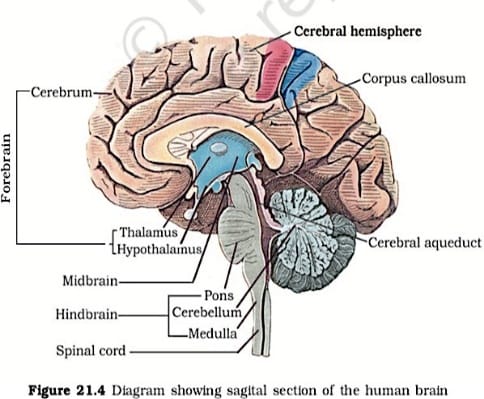
Let’s understand each in detail 👇
🧠 1. Cerebrum – The Thinking Brain
The cerebrum is the largest part of the brain and makes up about 85% of its weight.
It controls higher mental functions like reasoning, memory, speech, emotions, and voluntary movements.
It is divided into two hemispheres (left and right), each controlling the opposite side of the body.
🪐 Lobes of the Cerebrum
Each hemisphere is divided into four lobes, each responsible for specific functions:
| Lobe | Function |
|---|---|
| Frontal Lobe | Controls decision-making, problem-solving, emotions, speech |
| Parietal Lobe | Processes touch, temperature, pain, and spatial awareness |
| Temporal Lobe | Handles hearing, memory, and understanding language |
| Occipital Lobe | Responsible for vision and visual processing |
⚖️ 2. Cerebellum – The Balancing Center
The cerebellum is located below the cerebrum at the back of the brain.
It controls balance, posture, and coordination of movements.
Without the cerebellum, you wouldn’t be able to walk, write, or even stand properly!
🌡️ 3. Brainstem – The Life Support System
The brainstem connects the brain to the spinal cord and manages all involuntary activities, such as breathing, heartbeat, and digestion.
It has three main parts:
- Midbrain – Controls eye movement and reflexes
- Pons – Relays signals between cerebrum and cerebellum
- Medulla Oblongata – Controls heart rate, breathing, and blood pressure
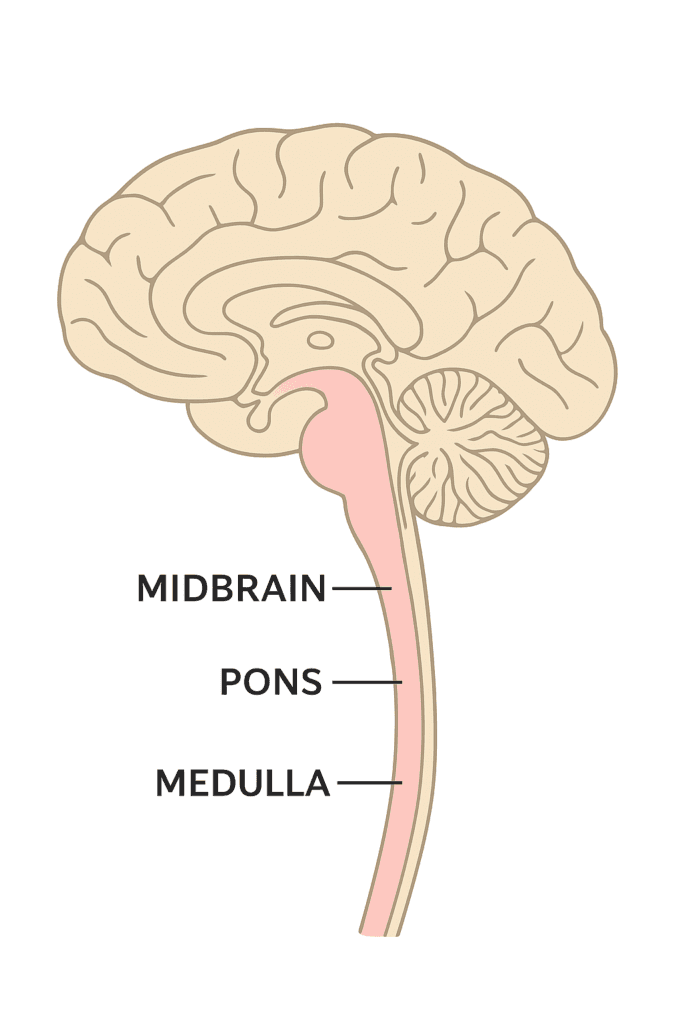
🖼️ Diagram labeling midbrain, pons, and medulla
📌 Brainstem labeled with midbrain, pons, and medulla oblongata
🧬 Additional Important Structures
Besides the three main parts, the brain has other important structures:
- Thalamus: Relays sensory information
- Hypothalamus: Controls hunger, thirst, and temperature
- Pituitary Gland: The “master gland” that controls hormones
- Corpus Callosum: Connects the two hemispheres of the brain
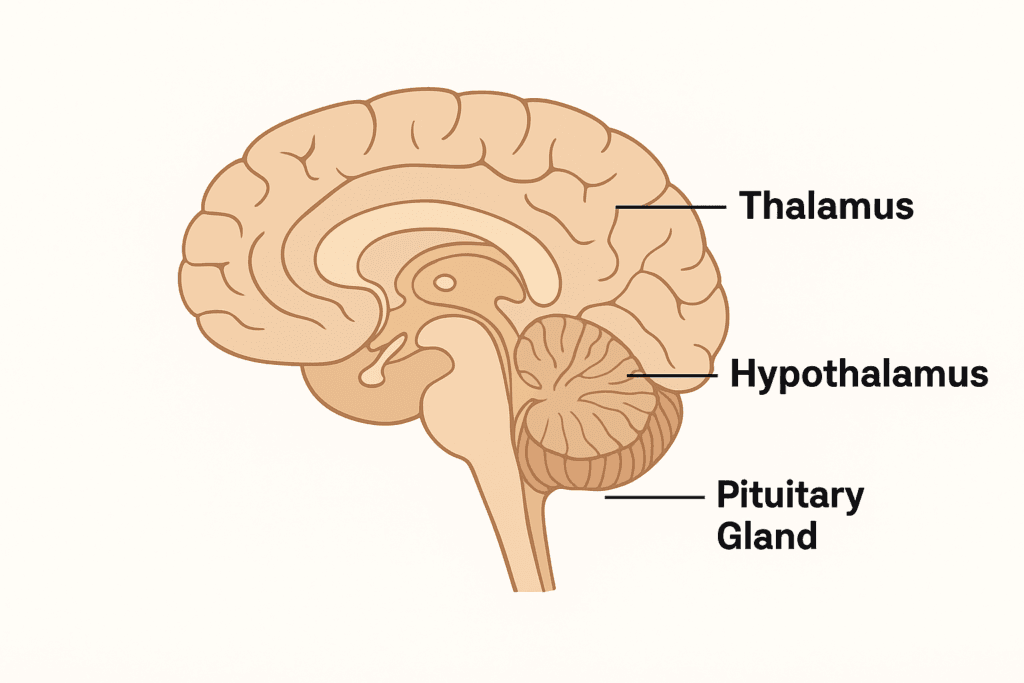
🖼️ Cross-section of brain highlighting thalamus, hypothalamus, pituitary gland
📌 Internal brain structure showing thalamus and hypothalamus functions
🧩 Functions of the Human Brain
The brain is responsible for every action you take — consciously or unconsciously.
✅ Major functions include:
- Thinking, reasoning, and problem-solving
- Movement control and coordination
- Storing and recalling memory
- Managing emotions
- Regulating body temperature, hunger, and thirst
- Processing visual, auditory, and sensory information
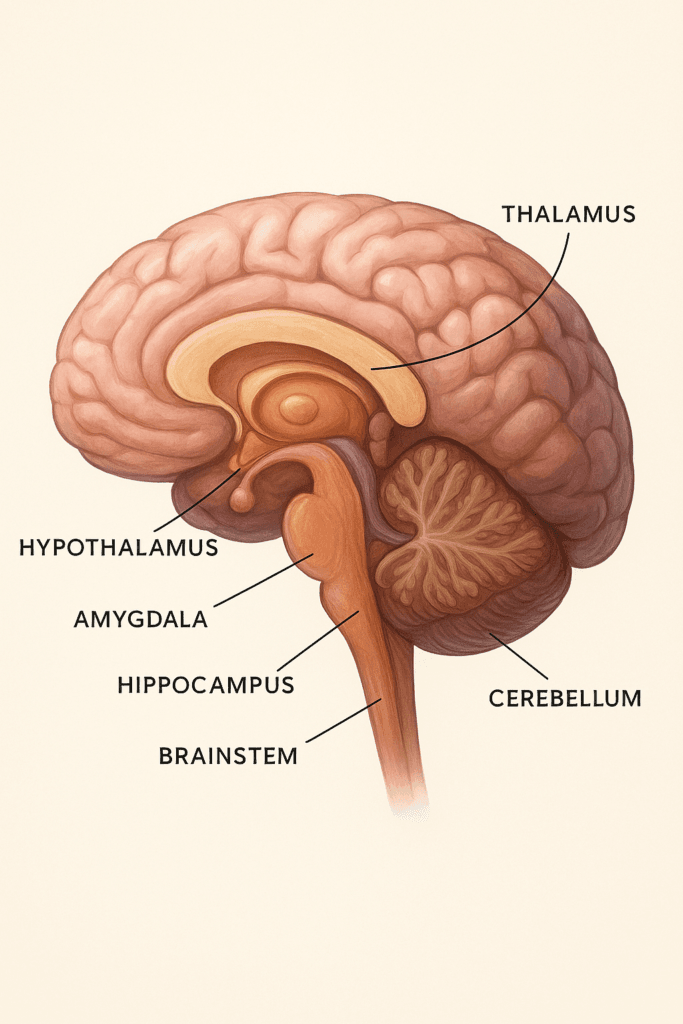
🖼️ Infographic showing brain parts with icons
📌 : Key human brain functions like thinking, memory, and movement
⚡ Amazing Facts About the Brain
- The human brain weighs about 1.3 to 1.4 kg.
- It uses about 20% of the body’s oxygen.
- The brain generates enough electricity to power a small bulb!
- You can’t tickle yourself — your brain knows it’s coming.
💪 How to Keep Your Brain Healthy
- Eat omega-3-rich foods like fish and nuts 🥜
- Exercise regularly 🏃♂️
- Get enough sleep 😴
- Challenge your brain with puzzles and reading 📚
- Stay hydrated and avoid too much sugar 🚫
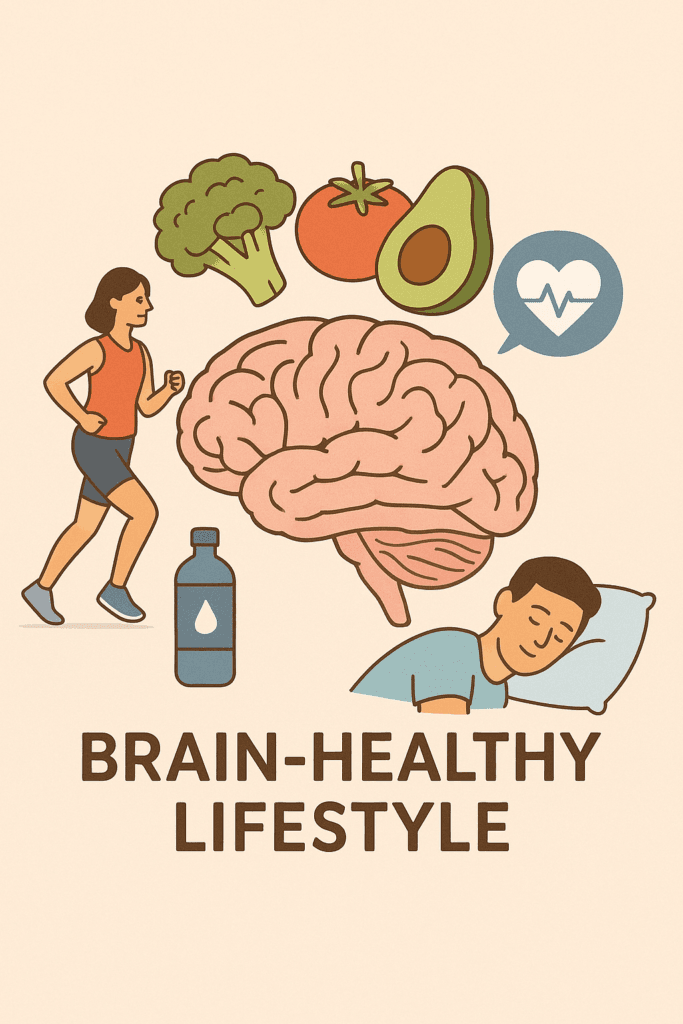
🖼️ Brain-healthy lifestyle illustration
📌 Healthy habits to improve brain function
🧠 Conclusion
The human brain is the most powerful and complex organ in existence.
It controls everything we think, feel, and do.
Understanding its parts and functions helps us appreciate how amazing human biology truly is!
❓ Frequently Asked Questions
The cerebellum controls balance, coordination, and posture.
The cerebellum controls balance, coordination, and posture.
It regulates involuntary functions like heartbeat, breathing, and digestion.
The cerebrum is the largest and handles higher thinking and voluntary actions
Eat healthy, exercise, sleep well, and keep learning new things daily.