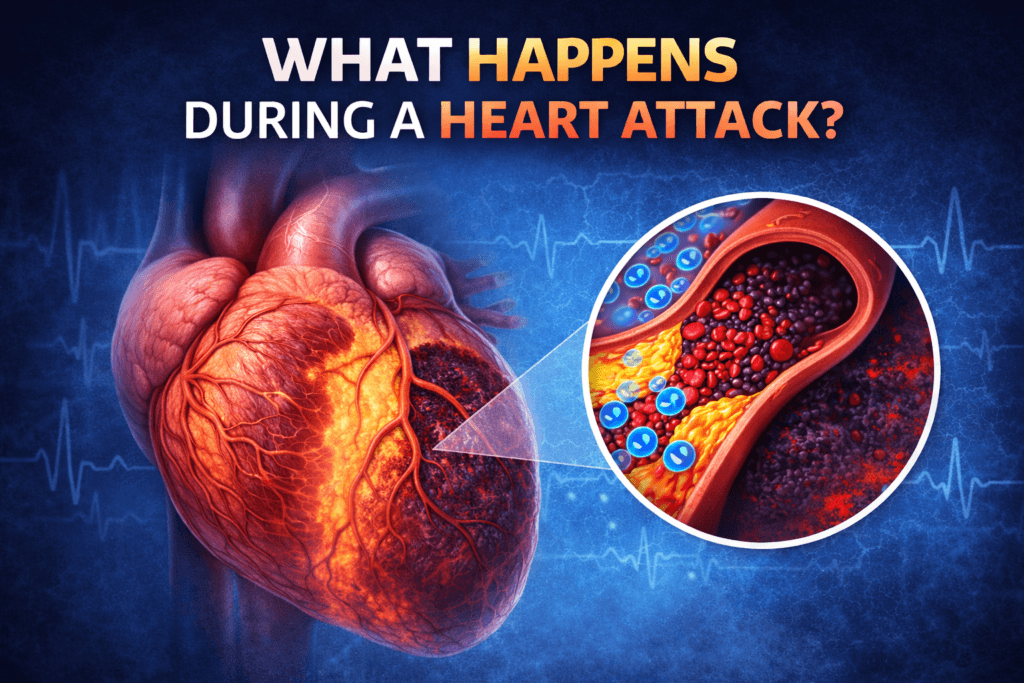

❤️ A Heart Attack Is Not What Most People Think
Many people imagine a heart attack as the heart suddenly “stopping.”what happens during a heart attack
That’s not accurate.
In most cases, the heart is still beating — but part of it is starving of oxygen.
A heart attack, medically called myocardial infarction, happens when blood flow to a section of the heart muscle becomes blocked.
And when heart muscle doesn’t get oxygen?
It begins to die.
Let’s understand exactly how this happens.
Structure and Function of the Human Heart | Circulatory System Explained
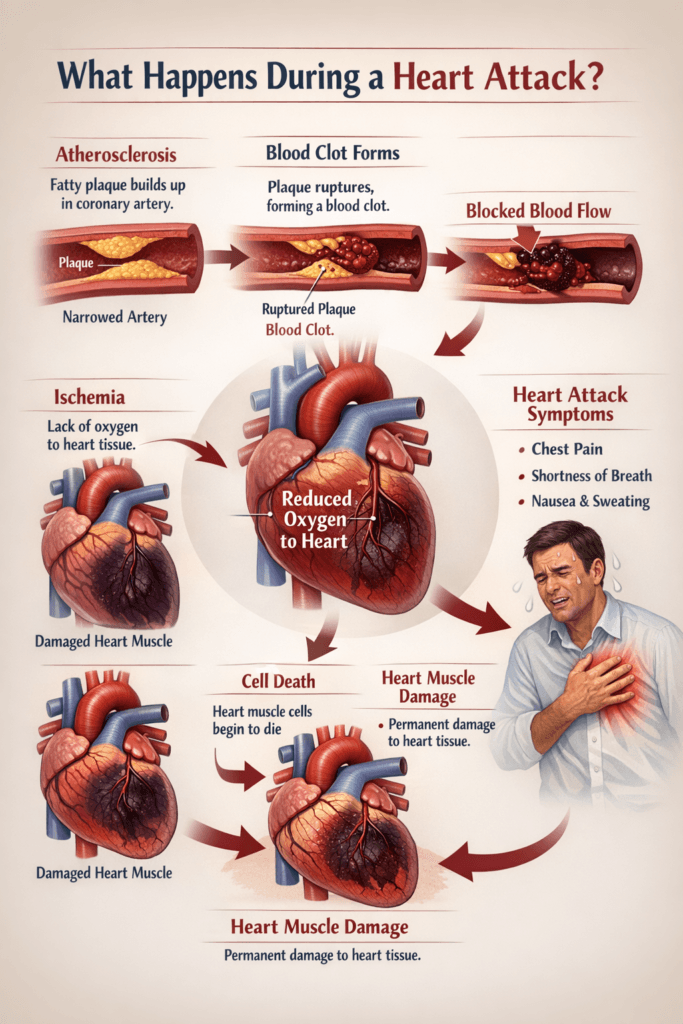
🫀 Step 1: Coronary Arteries Become Narrowed
Your heart has its own blood supply through vessels called coronary arteries.
Over years, these arteries can slowly narrow due to:
- Cholesterol buildup
- Fat deposits
- Inflammation
- Smoking damage
- High blood pressure
This buildup forms what doctors call plaque.
This process is known as atherosclerosis.
It may take decades to develop.
⚠ Step 2: Plaque Ruptures
Here’s where danger begins.
Sometimes, a plaque becomes unstable and ruptures.
When that happens:
- The body sees it as an injury
- A blood clot forms at that spot
This clot can suddenly block the artery.
If the blockage is severe enough, blood flow stops completely.
⛔ Step 3: Oxygen Supply Stops
Heart muscle needs constant oxygen.
Unlike other tissues, it works non-stop.
Within seconds of blockage:
- Oxygen levels drop
- Energy production decreases
- Heart cells begin to struggle
Within minutes:
- Muscle cells begin dying
Time is critical.
🔥 Step 4: Heart Muscle Damage Begins
If blood flow is not restored quickly:
- Cells die permanently
- Scar tissue forms
- Heart pumping ability weakens
The longer the blockage lasts, the more damage occurs.
Doctors often say:
👉 “Time is muscle.”
learn Why Does Your Body Twitch When Falling Asleep? The Strange Sleep Jolt Explained
🚨 What Does a Heart Attack Feel Like?
Symptoms can vary, but common signs include:
- Chest pressure or tightness
- Pain spreading to arm, neck, jaw, or back
- Shortness of breath
- Sweating
- Nausea
- Dizziness
Some people — especially women — may experience:
- Unusual fatigue
- Indigestion-like discomfort
- Mild chest discomfort
Not all heart attacks are dramatic.
Some are subtle.
🧠 What Happens Inside the Body During the Attack?
When the heart struggles:
- Blood pressure may drop
- Heart rhythm may become irregular
- Stress hormones surge
- Breathing becomes faster
The body enters emergency mode.
If the rhythm becomes dangerously abnormal (like ventricular fibrillation), the heart can stop pumping effectively.
That is when cardiac arrest can occur.
Heart attack and cardiac arrest are not the same — but one can lead to the other.
🩸 Why Immediate Treatment Matters
If treated quickly:
- Clot-dissolving drugs can reopen the artery
- Emergency angioplasty can restore blood flow
- Permanent damage can be minimized
If untreated:
- Large sections of heart muscle die
- Heart failure risk increases
- Life-threatening arrhythmias may develop
The first hour is the most critical.
🫁 Importance of Oxygen in Respiration: Why Every Cell Needs It
🧬 What Happens After a Heart Attack?
After the event:
- Dead cells cannot regenerate
- Scar tissue replaces damaged muscle
- Pumping efficiency may reduce
Some patients recover fully.
Others develop long-term complications like:
- Heart failure
- Weak heart muscle
- Recurrent attacks
Rehabilitation and lifestyle change become essential.
How to Read Electrocardiograph (ECG)?
📊 Risk Factors That Increase Heart Attack Risk
Major risk factors include:
- High cholesterol
- High blood pressure
- Diabetes
- Smoking
- Obesity
- Sedentary lifestyle
- Family history
Many of these are preventable or controllable.
🧠 Can Young People Have Heart Attacks?
Yes.
Although more common after age 40, younger adults can experience heart attacks due to:
- Genetic cholesterol disorders
- Smoking
- Drug use
- Severe stress
- Poor diet
Modern lifestyle has lowered the age risk in many populations.
❤️ How the Heart Survives After Damage
The heart cannot regrow muscle cells easily.
Instead:
- Surrounding muscle compensates
- Scar tissue stabilizes the area
- Medications reduce strain
With proper care, many people live long lives after a heart attack.
Why Does the Heart Beat Faster During Exercise? | Science Explained
🏃 Can Heart Attacks Be Prevented?
Prevention focuses on artery health:
✔ Regular exercise
✔ Balanced diet
✔ Avoid smoking
✔ Manage stress
✔ Maintain healthy weight
✔ Control blood pressure
✔ Monitor cholesterol
Small daily habits have massive long-term effects.
💡 The Bigger Truth
A heart attack is not sudden chaos.
It is usually the result of years of silent artery damage.
Your body gives warning signs long before the emergency.
Understanding the science helps reduce fear — and increase prevention.
Your heart beats over 100,000 times per day.
Protecting it is protecting your life.
That’s real Science Gajab.
WHY NOT HEART TIRED ?
❓ FAQ
A heart attack occurs when a coronary artery becomes blocked, stopping oxygen supply to part of the heart muscle, causing tissue damage.
Heart muscle damage can begin within minutes of oxygen loss, and permanent injury may occur within 20–40 minutes if untreated.
No. A heart attack is a blockage of blood flow, while cardiac arrest is when the heart stops beating effectively. One can lead to the other.
Yes. Lifestyle changes such as exercise, healthy diet, avoiding smoking, and controlling blood pressure can significantly reduce risk.