

If you have ever done a plank, squat, or weightlifting exercise, you may have noticed something strange—your muscles begin to shake or tremble. This shaking can happen during intense workouts, especially when the muscles are close to exhaustion.
Although it may feel unusual, muscle shaking during exercise is completely normal. In fact, it is often a sign that your muscles are working hard and adapting to stress.
To understand why muscles shake, we need to explore what happens inside muscle fibers when they are pushed to their limits.
How Muscles Work During Exercise
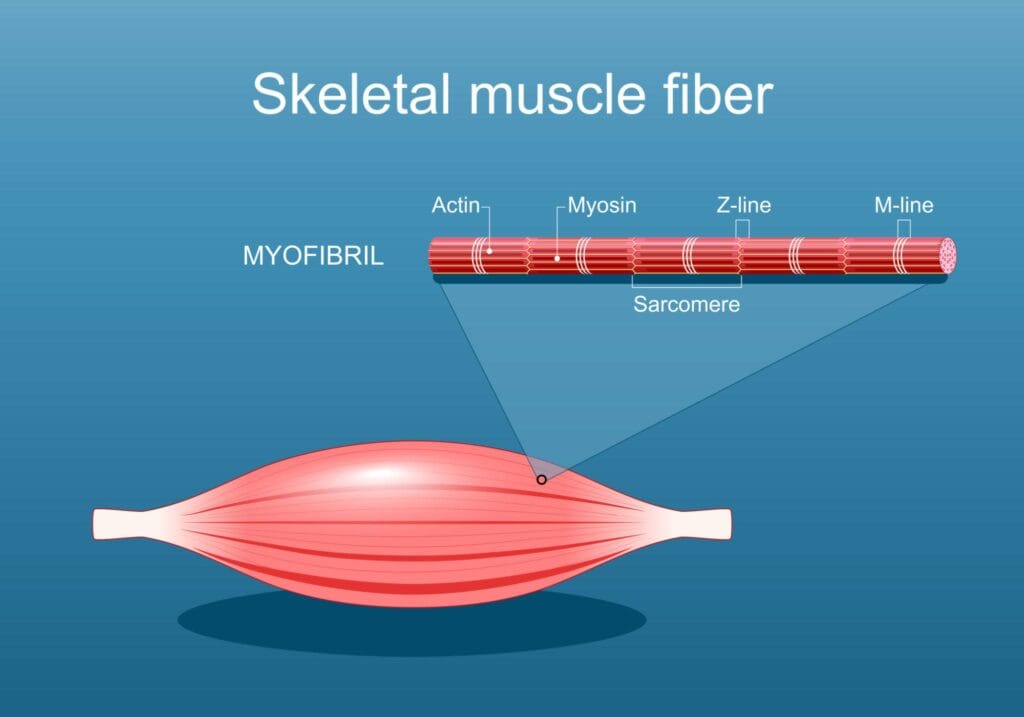
Muscles move your body through a process called muscle contraction.
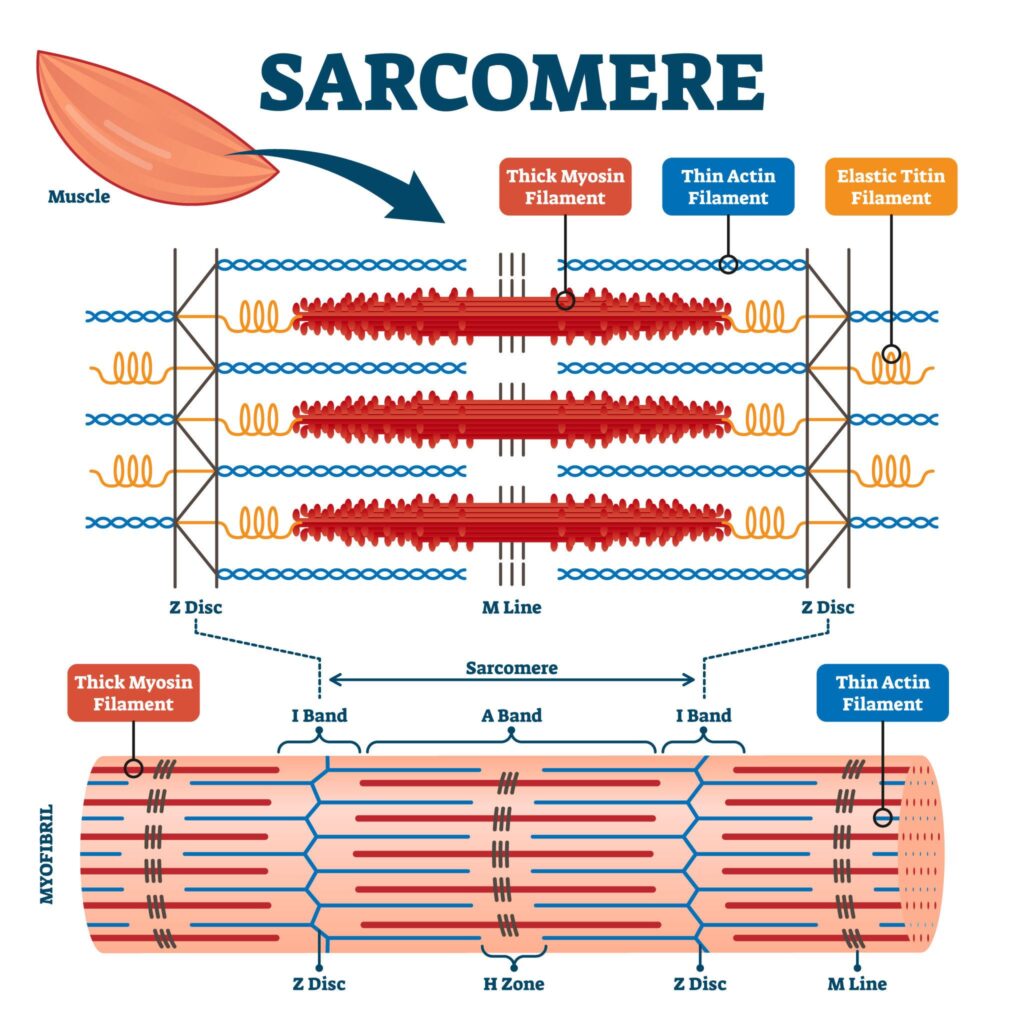
Inside each muscle are tiny structures called muscle fibers. These fibers contain proteins called actin and myosin that slide past each other to produce movement.
When your brain sends signals through nerves, these muscle fibers contract and relax repeatedly, allowing you to lift weights, run, or hold a position.
During exercise, many muscle fibers must work together to produce force.
learn 🏃♂️ Locomotion & Movement in Humans – A Complete Guide
1. Muscle Fatigue
The most common cause of muscle shaking is muscle fatigue.
When muscles work intensely, they use large amounts of energy molecules called ATP (adenosine triphosphate).
As ATP levels decrease, the muscles begin to struggle to maintain smooth contractions. This leads to small, rapid, uncontrolled muscle movements, which appear as shaking.
Muscle fatigue also causes a buildup of metabolic byproducts such as:
- lactic acid
- hydrogen ions
- inorganic phosphate
These substances interfere with muscle contraction and contribute to trembling.
learn Why muscle fatigue & pain
2. Nervous System Overload
Your brain controls muscles through motor neurons, which send electrical signals that activate muscle fibers.
When you perform demanding exercises, your nervous system must recruit more motor units to maintain strength.
As fatigue develops, the nervous system may have difficulty coordinating these signals smoothly.
This can cause irregular muscle activation, resulting in visible shaking.
learn NEURAL CONTROL AND COORDINATION
3. Muscle Fiber Recruitment
Your muscles contain different types of fibers.
During light activity, the body uses slow-twitch muscle fibers, which are resistant to fatigue.
But during intense exercise, the body recruits fast-twitch fibers that generate more force but fatigue quickly.
When many fibers are activated at once, especially near exhaustion, their contractions can become less synchronized, producing shaking.
4. Stabilizer Muscles Working Hard
Certain exercises require stabilizer muscles, which help keep joints and posture stable.
For example:
- planks
- yoga poses
- heavy squats
- push-ups
These exercises force small stabilizing muscles to work continuously.
When these muscles become tired, they may begin to shake as they struggle to maintain control.
5. Low Blood Sugar or Dehydration
Sometimes muscle shaking can occur when the body lacks sufficient energy or fluids.
Low blood sugar reduces the muscles’ ability to generate energy, while dehydration affects electrolyte balance needed for proper muscle contraction.
This can increase the likelihood of trembling during exercise.
Is Muscle Shaking a Good Sign?
In many cases, muscle shaking indicates that your muscles are being challenged.
When muscles experience stress during exercise, they adapt by becoming:
- stronger
- more efficient
- more resistant to fatigue
This process is part of muscle strengthening and training adaptation.
However, excessive shaking combined with pain may signal that the muscles are overworked or injured.
When Should You Stop Exercising?
Muscle shaking alone is usually not harmful, but you should stop exercising if you experience:
- sharp pain
- dizziness
- severe cramps
- loss of muscle control
These symptoms may indicate that the body needs rest or recovery.
How to Reduce Muscle Shaking
You can minimize excessive shaking during workouts with a few simple strategies.
1. Build strength gradually
Progressively increasing workout intensity helps muscles adapt over time.
2. Stay hydrated
Water and electrolytes support proper muscle function.
3. Eat enough energy
Balanced nutrition ensures muscles have enough fuel.
4. Rest between sets
Short recovery periods allow muscles to restore energy.
The Bottom Line
Muscle shaking during exercise occurs because muscles are fatigued, energy levels are decreasing, and the nervous system is working hard to maintain contractions.
This trembling is a natural response when muscles are pushed close to their limits.
In most cases, muscle shaking simply means your body is working hard and building strength. With consistent training, muscles become more stable and the shaking usually decreases over time.