🧠 Why We Feel Dizzy (The Science Behind It)
Have you ever stood up too quickly and suddenly felt the world spinning around you?
That strange sensation is called dizziness, and it happens when the brain temporarily struggles to maintain balance, blood flow, or sensory coordination.
Dizziness is very common and can occur for many different reasons. To understand it, we need to look at how the body normally keeps us balanced.
🧬 Your Brain Uses Multiple Systems to Maintain Balance
Your body depends on three main systems to keep you stable and oriented in space.
These include:
When these systems work together smoothly, your brain knows exactly where your body is positioned.
But when something disrupts this coordination, dizziness can occur.
👂 The Inner Ear Controls Balance
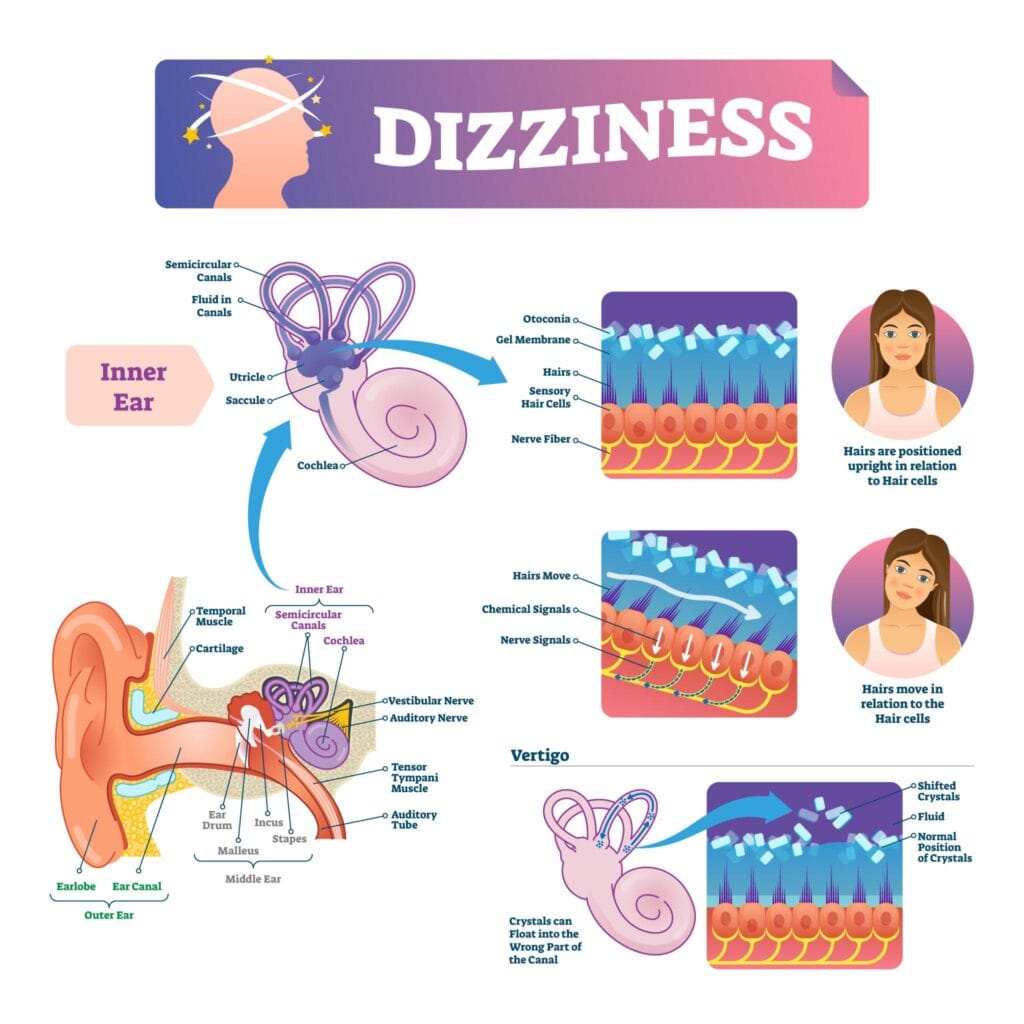
Inside your inner ear is a structure called the vestibular system, which acts like your body’s balance sensor.
This system contains tiny fluid-filled canals that detect head movement.
When you move your head:
- the fluid inside these canals shifts
- special sensors detect the movement
- signals are sent to the brain
Your brain then adjusts body posture to maintain balance.
If the signals from the inner ear become confused, the brain may interpret this as spinning or imbalance.
This produces the sensation of dizziness or vertigo.
🩸 Blood Flow to the Brain Matters
Another common cause of dizziness is a temporary drop in blood pressure.
When you stand up quickly, gravity pulls blood toward your legs.
For a brief moment, less blood reaches your brain.
Since the brain requires a constant oxygen supply, this short decrease in blood flow can cause:
- lightheadedness
- blurred vision
- feeling faint
Your body usually corrects this within seconds by increasing heart rate and tightening blood vessels.
🧠 The Brain Integrates All Balance Signals
The brain constantly receives information from:
- the inner ear
- the eyes
- body position sensors in muscles and joints
It combines these signals to determine your body’s position.
If one signal conflicts with the others, the brain becomes confused.
This mismatch can cause dizziness.
For example, motion sickness occurs when the eyes detect movement but the inner ear senses something different.
🌀 Vertigo vs Dizziness
Not all dizziness feels the same.
Vertigo
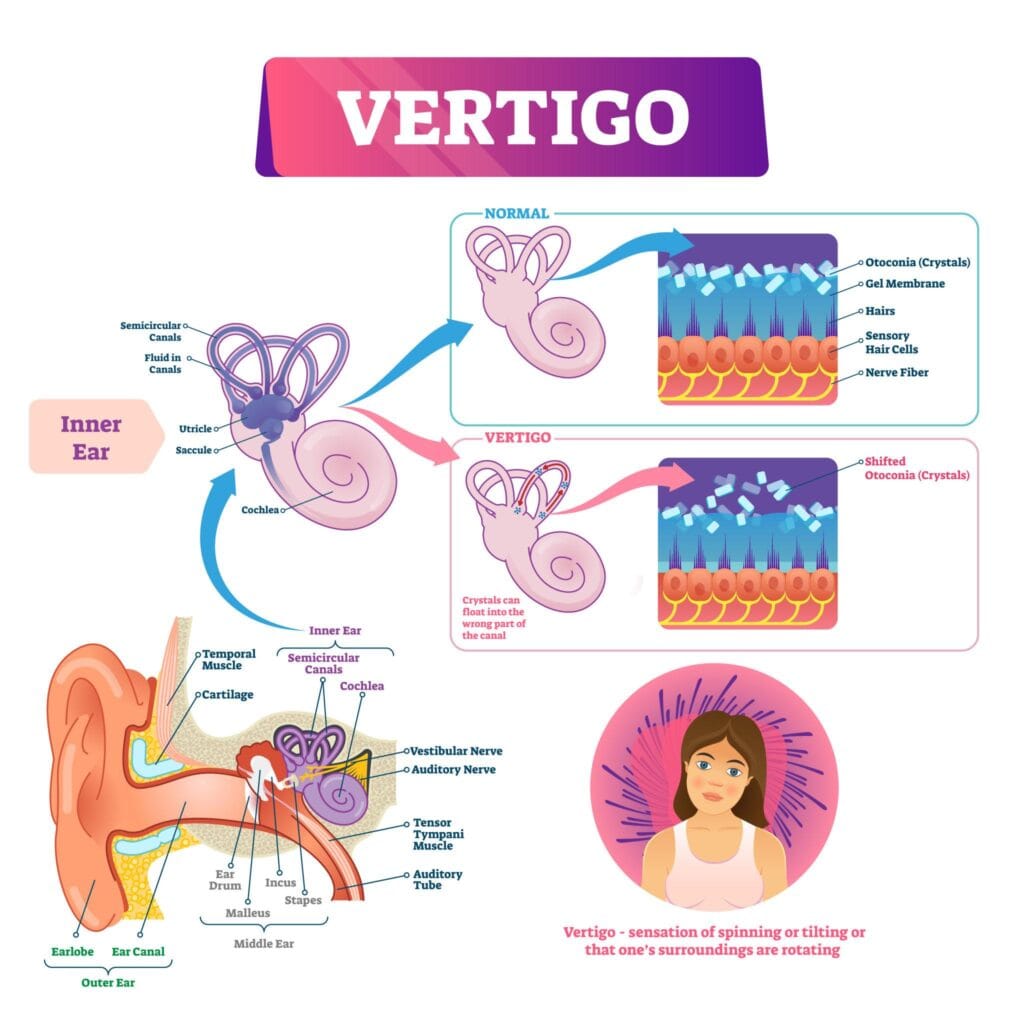
Vertigo is the sensation that the room is spinning or moving.
It is usually caused by problems in the inner ear balance system.
Lightheadedness
Lightheadedness feels like you might faint.
It is often caused by reduced blood flow to the brain.
⚡ Common Causes of Dizziness
Several everyday situations can trigger dizziness.
Some of the most common include:
- standing up too quickly
- dehydration
- low blood sugar
- inner ear problems
- stress or anxiety
- certain medications
In most cases, dizziness is temporary and harmless.
However, frequent or severe dizziness should be evaluated by a doctor.
🧂 Dehydration Can Also Cause Dizziness
Your body needs enough fluid to maintain proper blood pressure and circulation.
When you become dehydrated:
- blood volume decreases
- blood pressure drops
- less oxygen reaches the brain
This can trigger dizziness or weakness.
Drinking enough water helps maintain normal circulation.
🧠 Why Spinning Makes You Dizzy
When you spin around quickly, the fluid inside your inner ear keeps moving even after you stop.
Your brain continues receiving signals that you are still turning.
Meanwhile, your eyes see that the room is not moving.
This conflict between signals confuses the brain and produces dizziness.
Eventually, the fluid settles and the sensation disappears.
🌟 The Bigger Picture
Dizziness is usually the result of a temporary mismatch between the body’s balance systems.
Your brain depends on accurate signals from the inner ear, eyes, and circulation to keep you stable.
When these signals become disrupted — even briefly — your brain struggles to interpret your body’s position.
The result is that familiar sensation of dizziness.
💡 Final Thought
Although dizziness can feel alarming, it is often simply the body adjusting to changes in balance, blood pressure, or movement.
Understanding how the brain and inner ear work together helps explain why this sensation happens and why it usually passes quickly.
Your body is constantly working behind the scenes to keep you upright and balanced.
https://www.instagram.com/sciencegajab/?hl=en