
🧬 Aging Is Not Just Wrinkles — It’s a Cellular Story
Have you ever wondered why we grow old? why do humans age scientifically
Aging is not just about wrinkles—it’s a complex biological process where our cells slowly lose their ability to repair themselves. In this article, we’ll explain the real science behind aging in a simple way.
why do we age .We see aging on the outside:
- Wrinkles
- Gray hair
- Slower movement
- Lower energy
learn The Real Reason Your Hair Turns Gray (It’s Not Just Aging)
But the real story of aging begins deep inside your cells.
Aging is not a sudden event.
It’s a gradual biological process happening every second of your life.
Let’s explore what’s really going on.
🔬 Your Body Is Made of Trillions of Cells
Your body contains around 37 trillion cells.
Every day:
- Millions die
- Millions are replaced
When you’re young, cell repair is fast and efficient.
As you age?
That repair system slowly weakens.
learn 🫁 Importance of Oxygen in Respiration: Why Every Cell Needs It
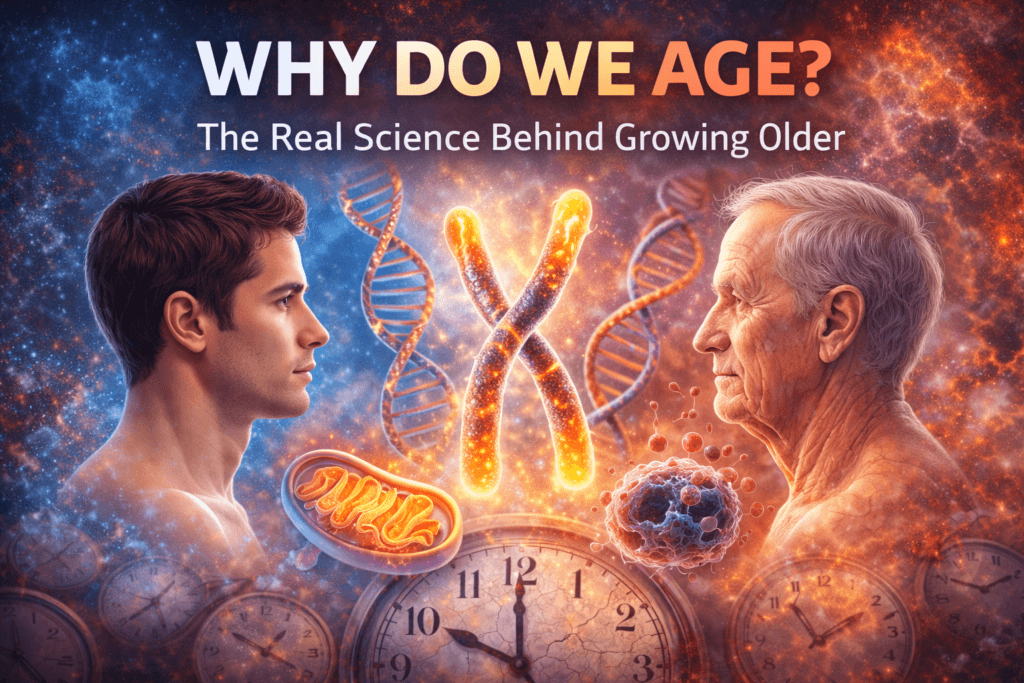
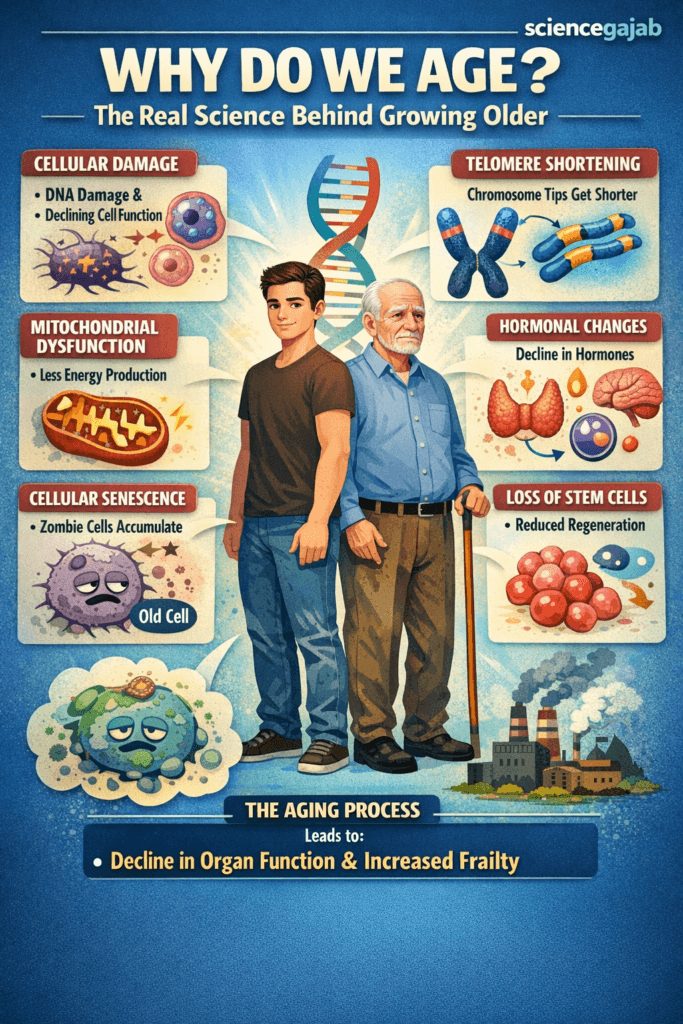
🧬 The Telomere Theory: Your Cellular Countdown Timer
Inside each cell is DNA — your genetic instruction manual.
At the ends of your DNA strands are protective caps called telomeres.
Think of telomeres like the plastic tips at the end of shoelaces.
Every time a cell divides:
👉 Telomeres get slightly shorter.
Eventually, they become too short.
When that happens:
- The cell stops dividing
- It becomes inactive
- Or it dies
This gradual shortening is one major reason we age.
learn Why muscle fatigue & pain
⚡ Cellular Damage Builds Over Time
Throughout your life, your cells face constant damage from:
- Pollution
- UV radiation
- Stress
- Poor diet
- Natural metabolism
Your body repairs most damage.
But not all of it.
Over decades, small damage accumulates.
This buildup leads to aging symptoms.
learn CANCER: NON-INFECTIOUS DISEASE:
🔥 The Role of Free Radicals
Your body produces unstable molecules called free radicals during normal metabolism.
Free radicals can:
- Damage DNA
- Harm proteins
- Disrupt cell membranes
Your body fights them using antioxidants.
But as you age, the balance shifts.
More damage.
Less repair.
🧠 Why Your Brain Changes With Age
As we grow older:
- Neural connections weaken
- Brain volume slightly decreases
- Memory processing slows
However, aging doesn’t always mean memory loss.
Mental activity, learning, and exercise help maintain brain function.
Your brain adapts — but it also changes.
learn Can Brain Cells Really Regrow? The Surprising Science
❤️ What Happens to the Heart?
With age:
- Blood vessels stiffen
- Heart muscle thickens
- Circulation becomes less efficient
This is why heart disease risk increases with age.
But lifestyle plays a major role.
Aging is biological — but speed varies.
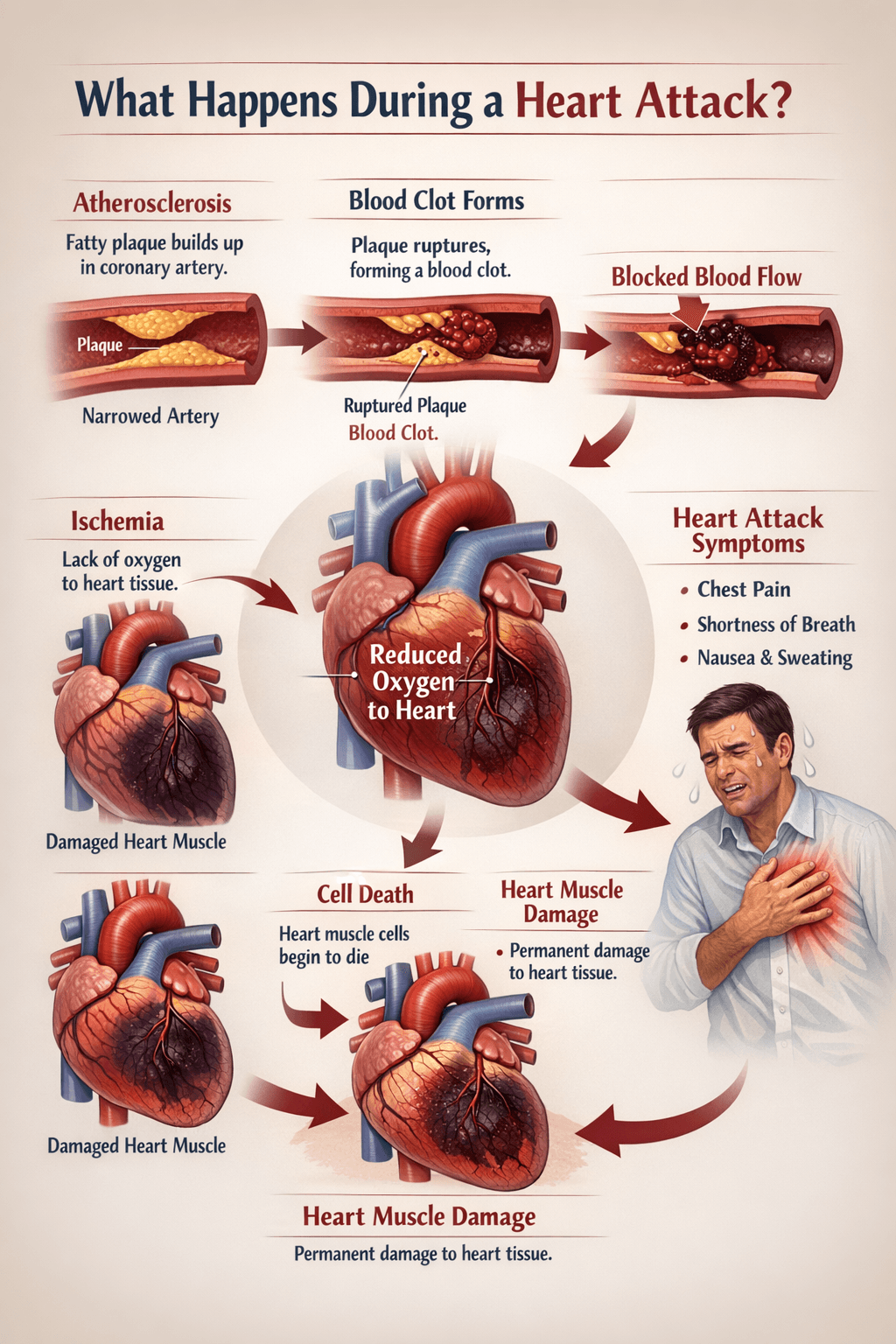
learn what happens during heart attack
Why Does the Heart Beat Faster During Exercise? | Science Explained
Your Heart Beats 100,000 Times a Day—But Never Gets Tired. Here’s Why
🧪 Mitochondria: The Energy Factories Slow Down
Inside your cells are tiny structures called mitochondria.
They produce energy.
Over time:
- Mitochondrial efficiency declines
- Energy production drops
- Cells function less effectively
This contributes to fatigue and reduced stamina.
learn 10 Simple Steps of Glycolysis (Easy Breakdown)
🧬 Is Aging Programmed?
Scientists debate two main theories:
1️⃣ Programmed Aging
Your body follows a biological timetable.
2️⃣ Damage Accumulation
Aging results from gradual wear and tear.
Most researchers believe it’s a combination of both.
🧊 Why Skin Gets Wrinkles
Skin aging happens because:
- Collagen production decreases
- Elasticity reduces
- Fat under the skin decreases
This leads to:
- Sagging
- Wrinkles
- Thinner skin
Sun exposure speeds up this process dramatically.
learn 🌱Difference Between Plant and Animal Cells | Simple Explanation for Students
🧠 Why We Get Gray Hair
Hair color depends on pigment cells called melanocytes.
As you age:
- Melanocytes produce less pigment
- Hair grows without color
Result?
Gray or white hair.
It’s simply pigment loss.
The Real Reason Your Hair Turns Gray (It’s Not Just Aging)
⏳ Why Aging Is Different for Everyone
Two people can be the same age but look very different.
Why?
Because aging depends on:
- Genetics
- Diet
- Sleep
- Exercise
- Stress levels
- Environment
Your biological age may not match your calendar age.
🚀 Can We Slow Aging?
While we cannot stop aging completely, research shows we can slow its effects.
Healthy habits that help:
✔ Regular exercise
✔ Balanced nutrition
✔ Quality sleep
✔ Stress control
✔ Avoid smoking
✔ Protect skin from sun
Lifestyle influences how gracefully you age.
learn Why Do Fingers Wrinkle in Water?
🧬 The Future of Aging Research
Scientists are studying:
- Telomere extension
- Stem cell therapy
- Anti-aging drugs
- Genetic repair
The goal is not immortality.
The goal is healthier aging.
Living longer — but better.
💡 The Bigger Perspective
Aging is not a failure of the body.
It’s a natural biological process.
Your cells have been working nonstop since birth.
Over time, small changes accumulate.
That’s not weakness.
That’s biology.
15 Amazing Human Biology Facts Everyone Should Know
🌟 Final Thought
Every wrinkle tells a story.
Every gray hair marks time lived.
Aging is not just decline.
It is the result of trillions of cellular events happening perfectly for decades.
And that, in itself, is extraordinary.
That’s real ScienceGajab.http://facebook.com/sciencegajab/
❓ FAQ
Humans age due to telomere shortening, cellular damage, and reduced repair mechanisms over time.
Currently, aging cannot be fully reversed, but healthy lifestyle choices can slow its effects.
Telomeres are protective caps at the ends of DNA strands that shorten each time a cell divides.