
🧠 How Brain Cells Regenerate (The Science Explained)
For many years, scientists believed something surprising:how brain cells regenerate
Brain cells could never regenerate.
If brain cells were damaged, they were thought to be gone forever.
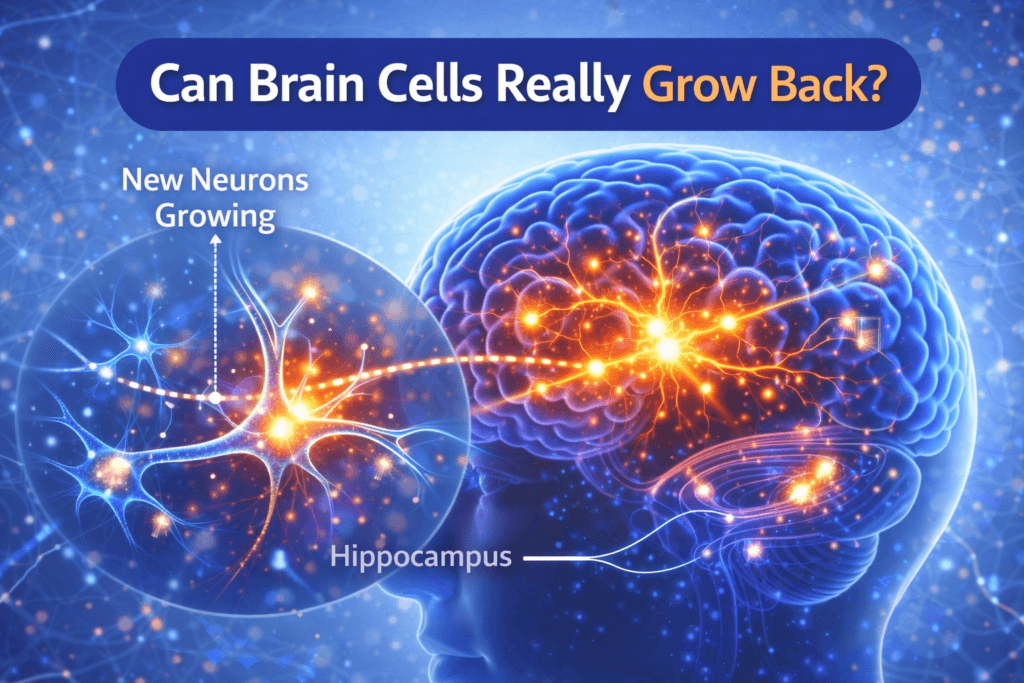
But modern neuroscience has revealed something amazing. The brain can create new neurons, a process known as neurogenesis.
Let’s explore how brain cells regenerate and what helps this process happen.
✅ In Short:
Yes, brain cells can regenerate in certain parts of the brain through a process called neurogenesis, but this ability is limited and cannot fully repair major damage.
learn Parts of the Human Brain and Their Functions Explained | Science Gajab
🧬 What Are Brain Cells?
Brain cells are called neurons.
Neurons are specialized cells that allow the brain to:
- think
- store memories
- control movement
- process emotions
- send signals throughout the body
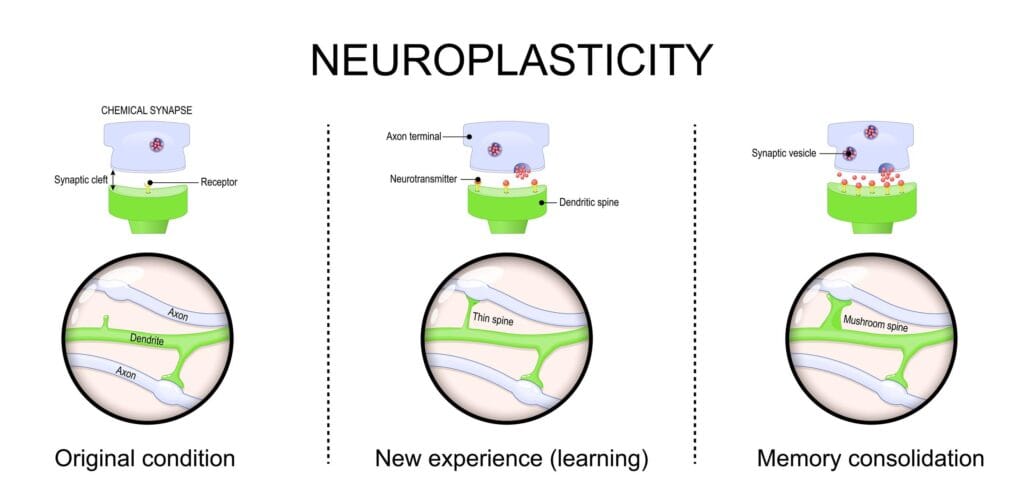
Each neuron communicates with thousands of other neurons through tiny connections called synapses.
Together, these connections form the vast communication network of the brain.
learn 🧠 Blood Supply of the Brain: The Hidden Network That Keeps You Alive (Explained Simply!)
learn 🦎Can Humans Regrow Body Parts? The Truth Will Surprise You
What Does It Mean for Brain Cells to Regenerate?
Brain cell regeneration means the brain can create new neurons or repair existing connections.
There are two important concepts:
- Regeneration → forming new brain cells
- Repair → fixing or reconnecting existing cells
In reality, the brain relies more on repair than full regeneration.
🔬 Can Brain Cells Really Grow Back? (Scientific Truth)
For many years, scientists believed that brain cells could never regenerate.
However, modern research has shown that the brain can produce new neurons even in adulthood through a process called neurogenesis.
This discovery changed our understanding of the human brain completely.
Brain cell regeneration is still a topic of ongoing scientific debate. While many studies show that new neurons can form in the adult brain, some researchers suggest that this process may be extremely limited, especially in humans. In older adults, neurogenesis may decline significantly or even become negligible. Because of these conflicting findings, brain regeneration remains one of the most actively studied areas in neuroscience.
🔬 What Is Neurogenesis?
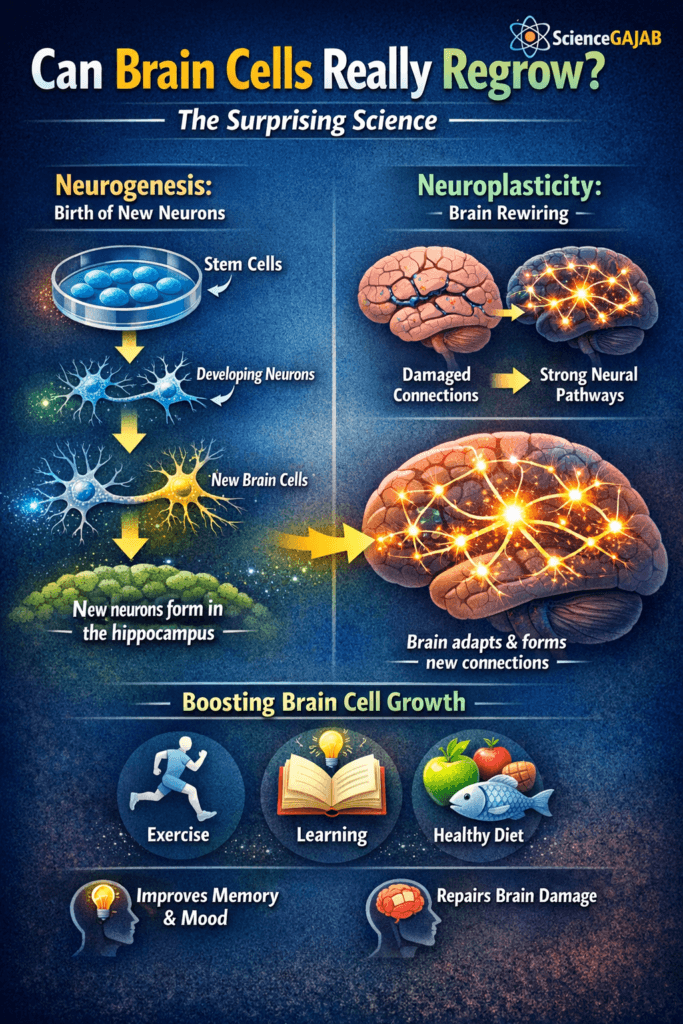
Neurogenesis is the process by which new neurons are created in the brain.
Scientists discovered that neurogenesis occurs mainly in two brain regions:
1️⃣ Hippocampus – involved in learning and memory
2️⃣ Subventricular zone – near the brain’s ventricles
The hippocampus is especially important because it helps form new memories.
New neurons generated here can integrate into existing neural circuits.
learn Why Your Body Twitches When Falling Asleep
🧫 The Role of Stem Cells
New brain cells originate from special cells called neural stem cells.
These stem cells can:
- divide repeatedly
- develop into neurons
- support brain repair
When stem cells divide, some of the daughter cells mature into new neurons.
These neurons then connect with existing brain networks.
learn This 2% Body Organ Controls 20% of Your Energy
🧠 Why Brain Cell Regeneration Matters
The ability to generate new neurons helps the brain:
- maintain learning ability
- adapt to new experiences
- repair minor damage
- support memory formation
Neurogenesis is especially important for learning and emotional regulation.
Scientists believe reduced neurogenesis may be linked to conditions such as depression and cognitive decline.
learn Why Does Your Brain Feel Tired After Studying? The Science Behind Mental Fatigue
⚡ What Stimulates Brain Cell Growth?
Certain lifestyle factors can significantly promote neurogenesis.
🏃 Exercise
Physical activity is one of the strongest stimulators of new neuron growth.
Exercise increases blood flow to the brain and boosts growth factors that support neuron development.
😴 Quality Sleep
Sleep plays an important role in brain repair and neuron formation.
During sleep, the brain strengthens neural connections and clears waste products.
learn Why Your Brain Suddenly Makes You Feel Dizzy
🧠 Learning New Skills
Mental stimulation encourages brain plasticity.
Activities that promote neurogenesis include:
- learning languages
- solving puzzles
- playing musical instruments
- reading and studying
🥗 Healthy Diet
Certain nutrients help support brain health.
Foods that may support neurogenesis include:
- omega-3 fatty acids
- antioxidants
- flavonoids
- leafy green vegetables
🌀Why Your Brain Gets Confused During Motion Sickness
⚠ What Can Damage Brain Cells?
Some factors can slow or damage neuron growth.
These include:
- chronic stress
- sleep deprivation
- excessive alcohol consumption
- brain injury
- certain neurodegenerative diseases
Reducing these risk factors helps protect brain health.
read Pain Isn’t Where You Think — The Brain’s Hidden Role Explained
⚠️ Limitations of Brain Cell Regeneration (Important)
Brain regeneration is much slower compared to other parts of the body because of the complexity of neural networks. Unlike skin or blood cells, brain cells are deeply interconnected, making repair difficult.
The brain cannot fully heal itself because:
- regeneration is limited to certain regions
- most neurons do not regrow after severe damage
- rebuilding complex connections is challenging
The ability of the brain to generate new cells also decreases with age. Younger brains produce more neurons, while older brains show reduced neurogenesis, which can affect memory and learning.
After a serious brain injury, some recovery is possible through adaptation, but complete restoration is rare.
🧠 Brain Plasticity: The Brain’s Adaptability
The brain is remarkably adaptable.
Even when neurons are lost, the brain can sometimes reorganize its connections.
This ability is called neuroplasticity.
Neuroplasticity allows the brain to:
- form new pathways
- strengthen useful connections
- adapt after injury
Together, neurogenesis and neuroplasticity allow the brain to remain flexible throughout life.
read 🧠 Why Does Your Brain Forget Things? The Science Will Surprise You
🌟 The Bigger Picture
Although the brain cannot regenerate massive numbers of neurons like some other tissues, it still has a surprising ability to create new brain cells and form new connections.
This discovery has changed how scientists understand brain health, learning, and aging.
Research into neurogenesis may one day help treat neurological conditions such as Alzheimer’s disease and brain injuries.
learn How Your Brain Turns Moments Into Memories
Can’t Focus? This Brain Hack Fixes It in Minutes
💡 Final Thought
Your brain is not a static organ.
It is constantly changing, adapting, and even creating new cells.
Every time you learn something new, exercise, or sleep well, you may actually be helping your brain grow stronger.
The human brain is far more dynamic and resilient than scientists once believed.
👉 Suggested Reads:
Partially, but not completely. Some areas regenerate, others do not.
Yes, mainly in the hippocampus, but in limited numbers.
Exercise, sleep, and continuous learning.