
❤️ Coronary Artery Blockage Explained Simply (Step-by-Step Guide)
🧠 Introduction
Coronary artery blockage is one of the most common causes of heart problems worldwide. But the concept is actually very simple to understand if we break it down step by step.
Your heart needs a constant supply of oxygen-rich blood to function. This blood is delivered through special blood vessels called coronary arteries. When these arteries become narrowed or blocked, the heart doesn’t get enough oxygen — and that’s when problems begin.
Learn WHY NOT HEART TIRED
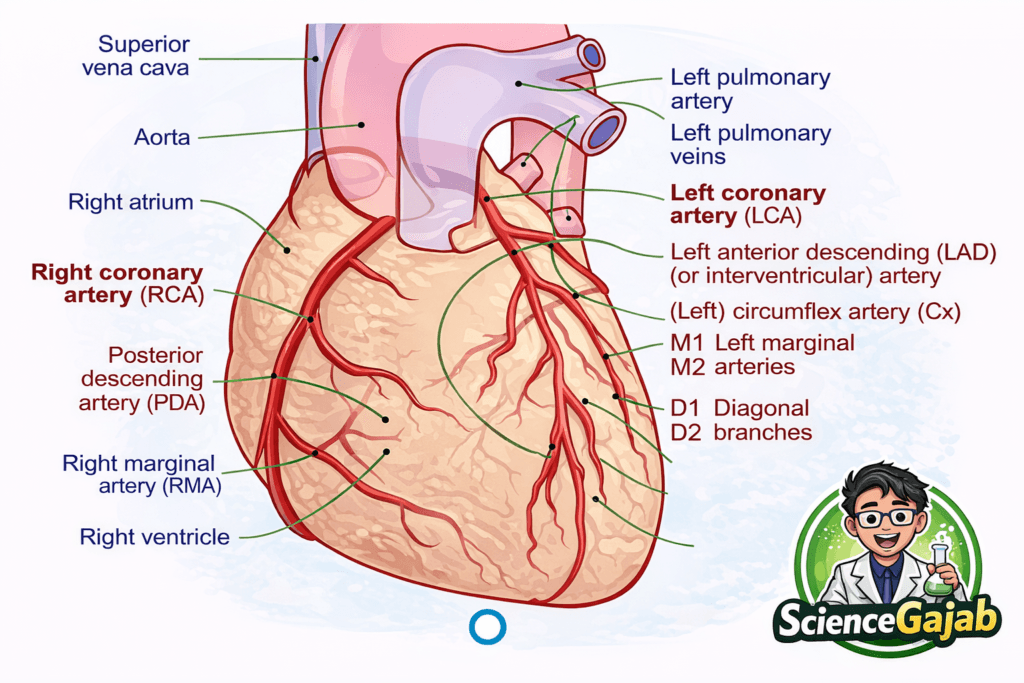
❤️ What Are Coronary Arteries?
Coronary arteries are small but extremely important blood vessels that wrap around your heart like a crown (that’s why they are called coronary).
👉 Their job:
- Deliver oxygen
- Supply nutrients
- Keep heart muscles alive
If these arteries are healthy → your heart works perfectly
If they get blocked → your heart starts struggling
Structure and Function of the Human Heart | Circulatory System Explained
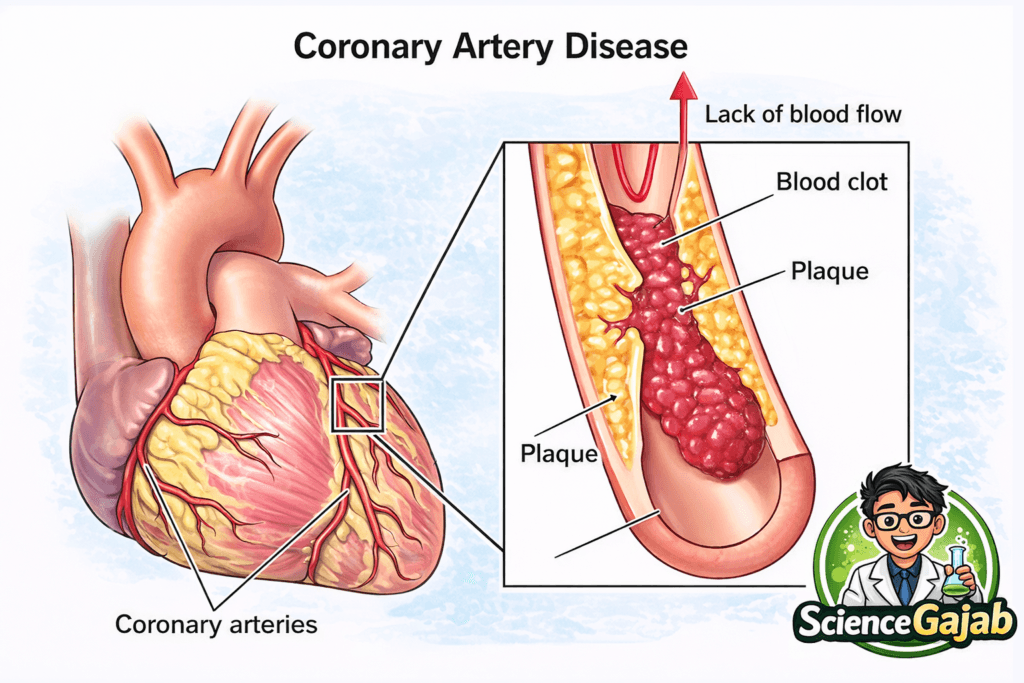
⚠️ What Is Coronary Artery Blockage?
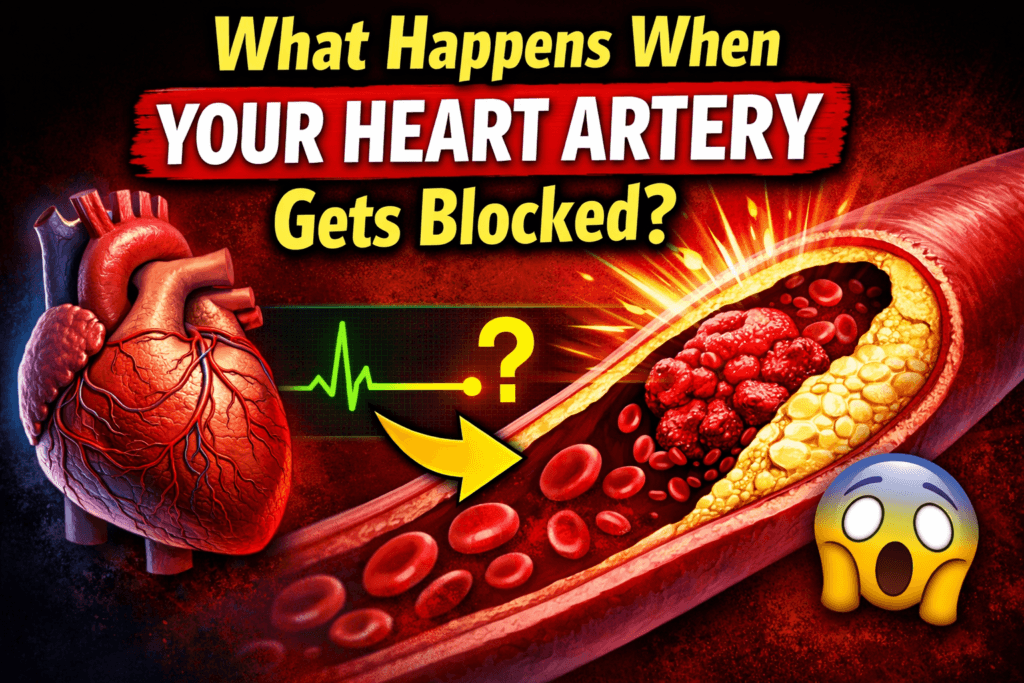
Coronary artery blockage happens when fatty deposits (called plaque) build up inside the artery walls.
This process is known as:
👉 Atherosclerosis
Over time:
- Arteries become narrow
- Blood flow decreases
- Oxygen supply reduces
Why Does the Heart Beat Faster During Exercise? | Science Explained
🧬 How Does the Blockage Form? (Step-by-Step)
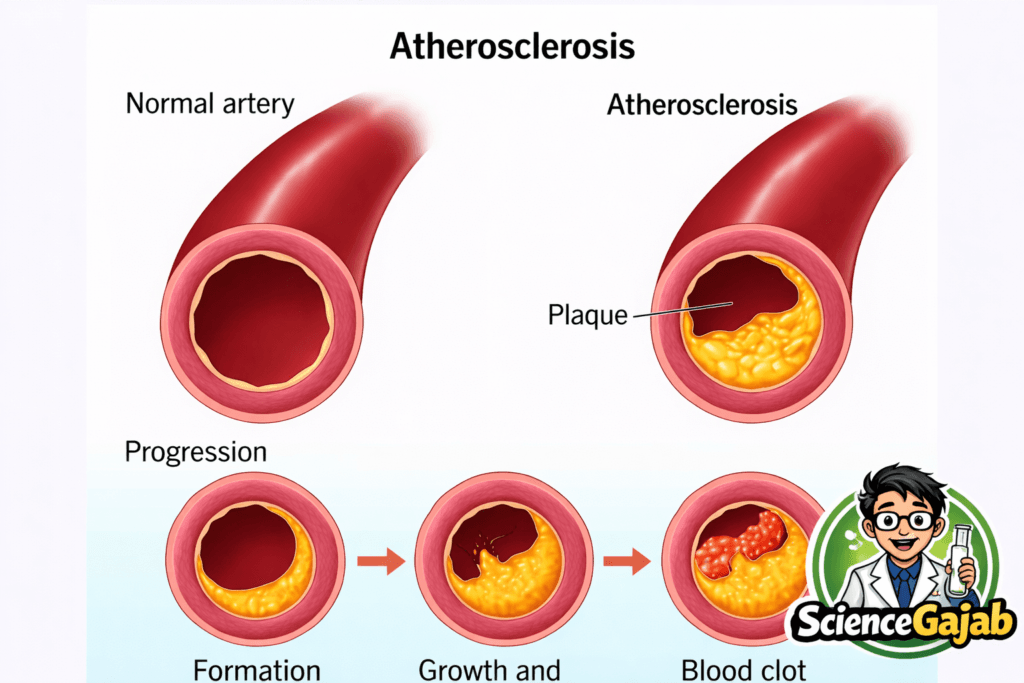
Step 1: Damage to Artery Wall
Things like smoking, high blood pressure, or diabetes damage the inner lining of arteries.
Step 2: Cholesterol Deposition
Bad cholesterol (LDL) starts sticking to the damaged area.
👉 This forms fatty streaks.
Step 3: Plaque Formation
More fat, calcium, and waste materials accumulate → forming a plaque.
Step 4: Narrowing of Artery
The plaque grows larger and reduces the space inside the artery.
👉 Less blood can pass through.
Step 5: Complete Blockage (Danger Stage)
If plaque ruptures, a blood clot forms → suddenly blocking the artery.
👉 This can lead to a heart attack.
❤️ What Happens During a Heart Attack? The Science Explained
💥 What Happens When Artery Gets Blocked?
When blood flow is reduced or stopped:
1. Reduced Oxygen Supply
Heart muscles don’t get enough oxygen.
2. Chest Pain (Angina)
You may feel:
- Tightness
- Pressure
- Burning sensation
3. Heart Muscle Damage
If blockage is severe → heart cells begin to die.
4. Heart Attack
This is called:
👉 Myocardial Infarction
👉 It is a medical emergency.
Your Heart Beats 100,000 Times a Day—But Never Gets Tired. Here’s Why
⚡ Symptoms of Coronary Artery Blockage
Sometimes there are no symptoms early on, but as blockage increases, you may notice:
- Chest pain or discomfort
- Shortness of breath
- Fatigue
- Pain in arm, neck, or jaw
- Sweating
👉 In many cases, the first symptom is a heart attack
🫀 Human Circulatory System Basics: A Complete Guide
🚨 Risk Factors (Why It Happens)
These increase your chances of blockage:
- High cholesterol
- Smoking
- High blood pressure
- Diabetes
- Obesity
- Lack of exercise
- Unhealthy diet
👉 These factors speed up Atherosclerosis
🫁 Hold Your Breath Too Long? Here’s What Happens to Your Brain
🔬 Simple Analogy (Easy to Understand)
Think of coronary arteries like water pipes 🚰
- Clean pipe → smooth water flow
- Dirty pipe → reduced flow
- Blocked pipe → no flow
👉 Your heart = machine
👉 Blood = fuel
If fuel stops → machine stops
🧪 How Doctors Detect Blockage
Doctors use different tests:
- ECG (heart electrical activity)
- Angiography (shows blocked arteries clearly)
- Stress test
- CT scan
🧬 Why Do We Age? The Real Science Behind Growing Older
💊 Treatment Options
Treatment depends on how severe the blockage is.
1. Lifestyle Changes
- Healthy diet
- Exercise
- Quit smoking
2. Medicines
- Cholesterol-lowering drugs
- Blood thinners
- Blood pressure control
3. Medical Procedures
🔧 Angioplasty
A small balloon is used to open the artery.
🧱 Stent Placement
A mesh tube keeps the artery open.
4. Surgery
❤️ Bypass Surgery
Blood is rerouted around the blocked artery.
Why Veins Look Blue But Blood Is Always Red
🛡️ Prevention (Best Strategy)
You can prevent coronary artery blockage by:
- Eating healthy (low fat, high fiber)
- Exercising regularly
- Maintaining healthy weight
- Avoiding smoking
- Managing stress
📌 Quick Summary
- Coronary arteries supply blood to the heart
- Blockage happens due to plaque buildup
- This process is called Atherosclerosis
- Reduced blood flow causes chest pain
- Complete blockage leads to Myocardial Infarction
- Early prevention can save lives
🔥 Final Thought
Coronary artery blockage may sound serious — and it is — but the good news is:
👉 It develops slowly
👉 It is preventable
👉 It is manageable if detected early
Understanding how it works is the first step to protecting your heart ❤️