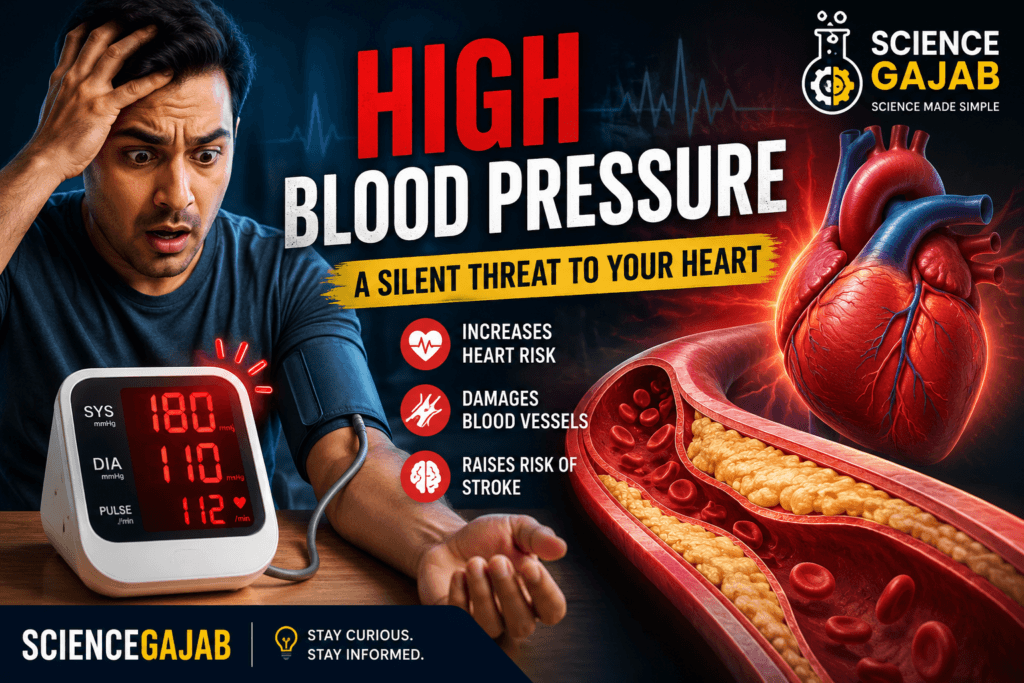

Why blood pressure rises suddenly
Why Does Blood Pressure Suddenly Increase?
Have you ever checked your blood pressure and suddenly found it much higher than normal?
Maybe it happened:
- During stress
- After anger
- At night
- During anxiety
- After drinking coffee
- Without any obvious reason
A sudden rise in blood pressure can feel frightening, especially if it causes:
- Headache
- Dizziness
- Palpitations
- Chest discomfort
Sometimes it is temporary and harmless. But in some cases, it may signal a serious medical condition that needs urgent attention.
In this article, we’ll explain:
- Why blood pressure suddenly increases
- Common causes
- Dangerous warning signs
- Anxiety vs hypertension
- Emergency situations
- Prevention and treatment
Everything is explained in simple human language.
What Is Blood Pressure?
Blood pressure is the force of blood pushing against artery walls.
It is measured using two numbers:
Blood Pressure=Systolic Pressure/Diastolic Pressure
Example:
120/80 mmHg
- Upper number = systolic pressure
- Lower number = diastolic pressure
Your Heart Can Stop in Minutes — Here’s How Artery Blockage Happens
What Is Considered High Blood Pressure?
Generally:
| Category | Blood Pressure |
|---|---|
| Normal | Below 120/80 |
| Elevated | 120–129/<80 |
| High BP | 130/80 or higher |
Very sudden severe elevation may require urgent medical evaluation.
Why Does Blood Pressure Suddenly Rise?
Blood pressure can rise suddenly when:
- Blood vessels narrow
- Stress hormones increase
- Heart pumps harder
- Fluid retention increases
The body responds quickly to physical or emotional triggers.
Difference Between Arteries and Veins (With Easy Diagram) — Simple Language
Common Causes of Sudden Blood Pressure Increase
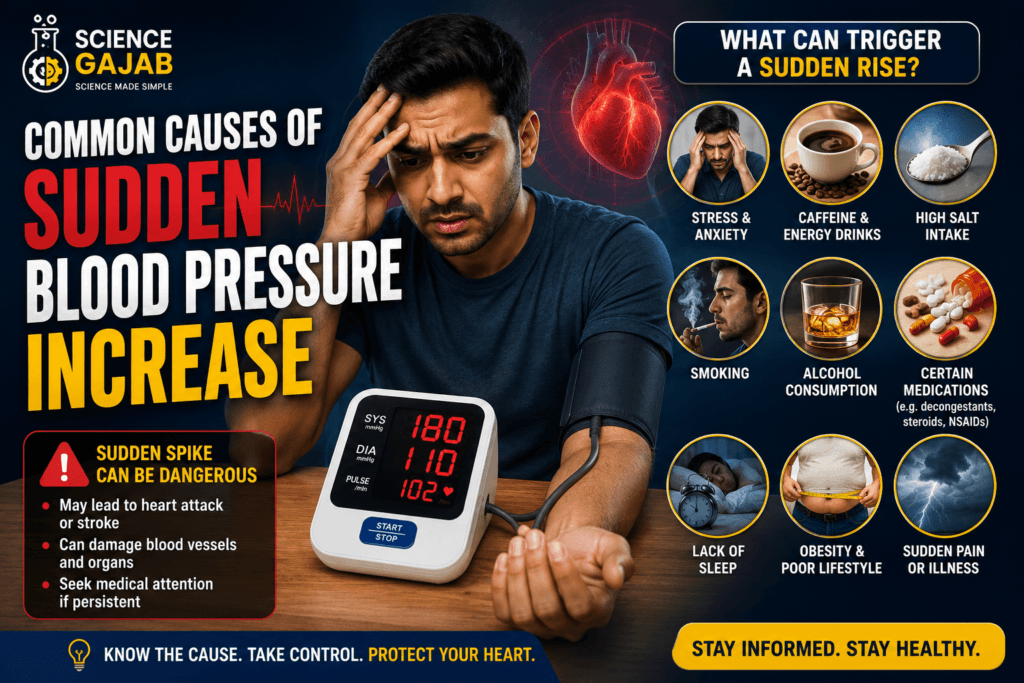
1. Stress and Anxiety
This is one of the most common reasons.
When stressed:
- Adrenaline rises
- Heart beats faster
- Blood vessels tighten
This temporarily increases blood pressure.
Symptoms
- Sweating
- Fast heartbeat
- Trembling
- Restlessness
2. Anger or Emotional Shock
Strong emotions can rapidly increase blood pressure.
Examples:
- Arguments
- Fear
- Panic
- Bad news
The body enters “fight or flight” mode.
Feeling Weak After Fever? Do This to Recover Faster (Doctor-Backed Guide)
3. Excess Salt Intake
Too much salt causes water retention.
This increases:
- Blood volume
- Pressure inside arteries
Common salty foods:
- Chips
- Pickles
- Fast food
- Processed snacks
4. Caffeine
Coffee, tea, and energy drinks may temporarily raise blood pressure.
Sensitive individuals may notice:
- Headache
- Palpitations
- Nervousness
5. Lack of Sleep
Poor sleep affects hormones controlling blood pressure.
Sleep deprivation may cause:
- Stress hormone increase
- Higher heart rate
- Elevated BP
6. Pain
Severe pain activates stress responses.
Examples:
- Tooth pain
- Injury
- Migraine
- Kidney stones
Pain can temporarily increase blood pressure significantly.
7. Smoking and Nicotine
Nicotine causes:
- Blood vessel narrowing
- Faster heartbeat
- Increased BP
Repeated smoking damages arteries over time.
8. Alcohol
Heavy alcohol intake may increase blood pressure suddenly.
Long-term excess drinking also raises chronic hypertension risk.
9. Certain Medicines
Some medicines can increase blood pressure.
Examples:
- Painkillers (NSAIDs)
- Steroids
- Nasal decongestants
- Birth control pills
10. Panic Attacks
During panic attacks:
- Adrenaline surges
- Heart races
- Blood pressure spikes
Many people fear they are having a heart attack.
11. Kidney Problems
Kidneys help regulate blood pressure.
Kidney disease may cause:
- Fluid retention
- Hormonal imbalance
- Severe hypertension
12. Hormonal Disorders
Hormones strongly affect blood pressure.
Examples:
- Thyroid disease
- Adrenal gland tumors
- Cushing syndrome
Chemical Coordination & Integration Explained Simply (Endocrine System, Hormones, Functions)
13. High Blood Pressure Medication Missed
Skipping BP medicines may suddenly increase pressure.
This is especially dangerous in:
- Chronic hypertension patients
- Elderly individuals
14. White Coat Hypertension
Some people develop high BP in hospitals due to nervousness.
This temporary rise is called:
- White coat hypertension
Symptoms of Sudden High Blood Pressure
Sometimes there are no symptoms.
When symptoms occur, they may include:
- Headache
- Dizziness
- Blurred vision
- Chest discomfort
- Palpitations
- Anxiety
- Nosebleed
Dangerous Blood Pressure Levels
Very high readings can become emergencies.
Severe elevation may look like:
≥180/120 mmHg
This may indicate a hypertensive crisis.
What Is Hypertensive Crisis?
A hypertensive crisis is dangerously high blood pressure that may damage organs.
It can affect:
- Brain
- Heart
- Kidneys
- Eyes
Warning Signs of Emergency High BP
Seek urgent medical care if high BP occurs with:
- Chest pain
- Breathlessness
- Confusion
- Severe headache
- Weakness
- Vision loss
- Difficulty speaking
These may indicate:
- Stroke
- Heart attack
- Organ damage
Why Does Blood Pressure Rise at Night?
Possible causes include:
- Stress
- Sleep apnea
- Anxiety
- Late caffeine
- Smoking
- Poor sleep quality
Normally BP slightly decreases during sleep.
Can Anxiety Suddenly Raise Blood Pressure?
Yes.
Stress hormones cause temporary narrowing of blood vessels and increased heart activity.
However, repeated anxiety spikes may contribute to long-term hypertension.
Difference Between Temporary BP Rise and Chronic Hypertension
| Temporary Rise | Chronic Hypertension |
|---|---|
| Short-lasting | Persistent |
| Trigger related | Ongoing |
| Often stress-induced | Usually long-term |
| May normalize quickly | Requires management |
What Happens Inside the Body?
Blood pressure rises because:
- Heart pumps harder
- Blood vessels constrict
- Hormones activate stress pathways
The nervous system and kidneys both play important roles.
Can Dehydration Increase Blood Pressure?
Usually dehydration lowers BP, but severe dehydration may trigger stress hormones that sometimes raise it temporarily.
Can Lack of Exercise Increase Blood Pressure?
Yes.
Inactive lifestyle contributes to:
- Obesity
- Poor circulation
- Artery stiffness
All increase hypertension risk.
🫀 Human Circulatory System Basics: A Complete Guide
Blood Pressure and Age
Blood pressure often increases with age because arteries become less flexible.
Older adults commonly develop hypertension.
How Doctors Diagnose Sudden BP Increase
Doctors may use:
- Repeated BP measurements
- ECG
- Blood tests
- Kidney tests
- Urine analysis
- Echocardiography
How to Read Electrocardiograph (ECG)?
How to Reduce Suddenly Increased Blood Pressure
1. Sit Calmly
Rest quietly for 5–10 minutes.
2. Practice Deep Breathing
Slow breathing helps calm stress responses.
3. Avoid Panic
Anxiety can worsen BP further.
4. Reduce Salt
Limit salty foods.
5. Drink Water
Helpful if dehydration contributed.
6. Take Prescribed Medicines
Never skip BP medications.
Lifestyle Changes for Healthy Blood Pressure
Exercise Regularly
Walking improves circulation.
Maintain Healthy Weight
Obesity strongly increases hypertension risk.
Sleep Properly
Good sleep stabilizes hormones.
Avoid Smoking
Protects blood vessels.
Limit Alcohol
Excess alcohol raises BP.
Reduce Stress
Meditation and relaxation may help.
Foods That May Help Blood Pressure
Helpful foods include:
- Fruits
- Vegetables
- Bananas
- Oats
- Low-salt diet
- Leafy greens
How to Read a Chest X-Ray: Step-by-Step Beginner Guide
Common Myths About Blood Pressure
Myth 1: High BP Always Causes Symptoms
False.
Many people feel normal.
Myth 2: Only Elderly People Get High BP
False.
Young adults can also develop hypertension.
Myth 3: Stress Is the Only Cause
False.
Many medical conditions contribute.
Interesting Facts About Blood Pressure
1. BP Changes Throughout the Day
It naturally fluctuates.
2. Anxiety Can Raise BP Quickly
Even fear of testing may increase readings.
3. Hypertension Is Called a Silent Killer
Because symptoms may be absent.
🔋 How Mitochondria Actually Produce Energy (Simple Explanation)
Frequently Asked Questions (FAQs)
Yes, stress is a very common trigger.
It can be, especially if extremely high or associated with symptoms.
Yes, caffeine temporarily raises BP in some people.
Very high readings with symptoms require urgent care.
Yes, poor sleep affects BP-regulating hormones.
Is sudden high blood pressure dangerous?
It can be, especially if extremely high or associated with symptoms.
Final Thoughts
Sudden blood pressure increase is common and often linked to:
- Stress
- Anxiety
- Salt intake
- Lack of sleep
- Pain
- Caffeine
In many cases, the rise is temporary.
However, repeated or severe BP spikes should never be ignored, especially if accompanied by:
- Chest pain
- Breathlessness
- Neurological symptoms
- Severe headache
Regular monitoring, healthy lifestyle habits, and early medical evaluation can help protect the heart, brain, kidneys, and blood vessels.
Medical Disclaimer
This article is for educational awareness only and does not replace professional medical advice, diagnosis, or treatment.
Sources & References
- American Heart Association
- WHO hypertension resources
- Standard physiology textbooks
- Mayo Clinic educational references
Reviewed Topic
Educational overview of sudden blood pressure increase, hypertension causes, symptoms, and prevention explained in simple language for general readers.
https://www.instagram.com/ScienceGajab/