
The human circulatory system is one of the most vital systems in our body, responsible for transporting blood, oxygen, and nutrients to every cell. Understanding its components and functions is essential for maintaining overall health. This guide covers everything you need to know about human circulatory system basics.
learn Structure and Function of the Human Heart | Circulatory System Explained
Why Does the Heart Beat Faster During Exercise? | Science Explained
🧬 Components of the Circulatory System
- Heart
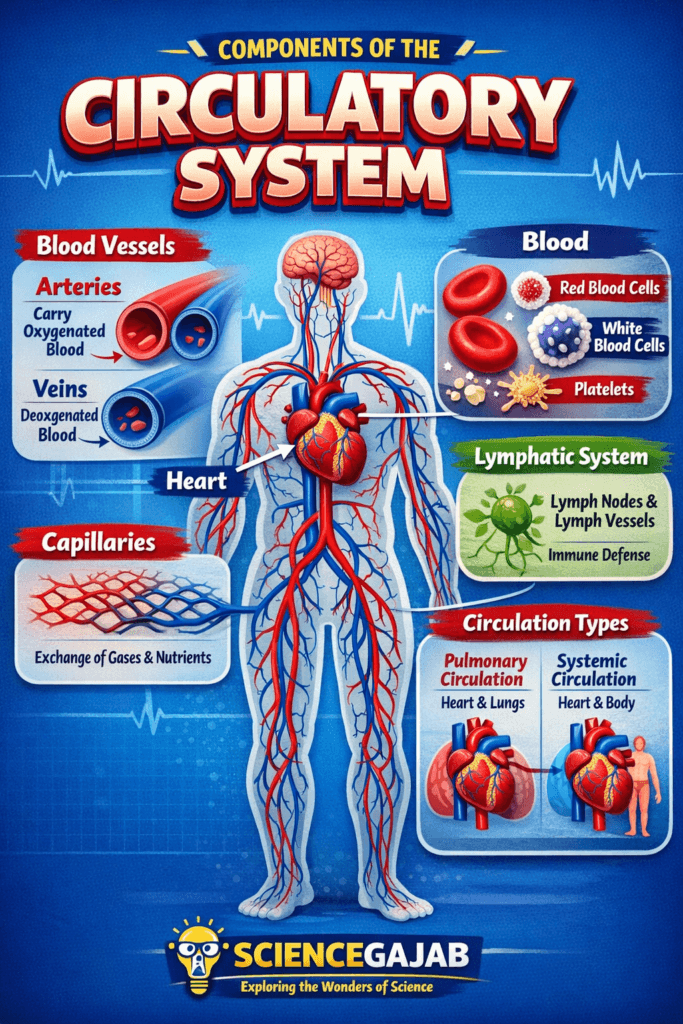
The heart is a muscular organ that acts as a pump, pushing blood throughout the body. It has four chambers: two atria and two ventricles. The right side pumps deoxygenated blood to the lungs, while the left side pumps oxygenated blood to the rest of the body. - Blood Vessels
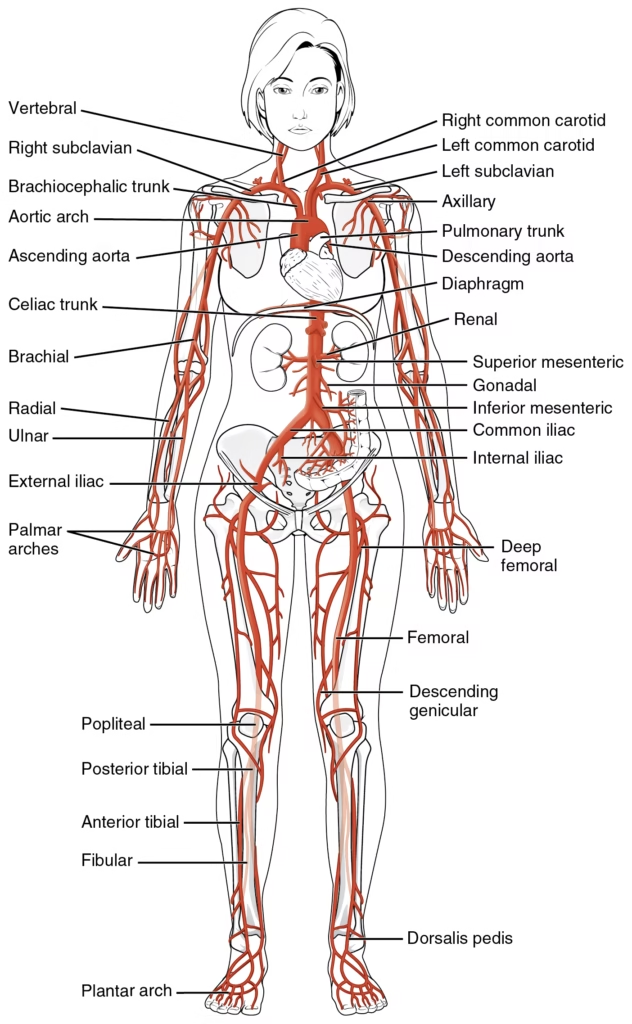
Blood vessels form the network through which blood travels:- Arteries: Carry oxygen-rich blood away from the heart.
- Veins: Return deoxygenated blood back to the heart.
- Capillaries: Tiny vessels where nutrients, oxygen, and waste exchange with tissues occurs.
- Blood
Blood consists of plasma, red blood cells, white blood cells, and platelets. It carries oxygen, nutrients, and immune cells while removing waste products like carbon dioxide.
Your Heart Beats 100,000 Times a Day—But Never Gets Tired. Here’s Why
🔄 Circulatory System Pathways
The circulatory system has two main pathways:
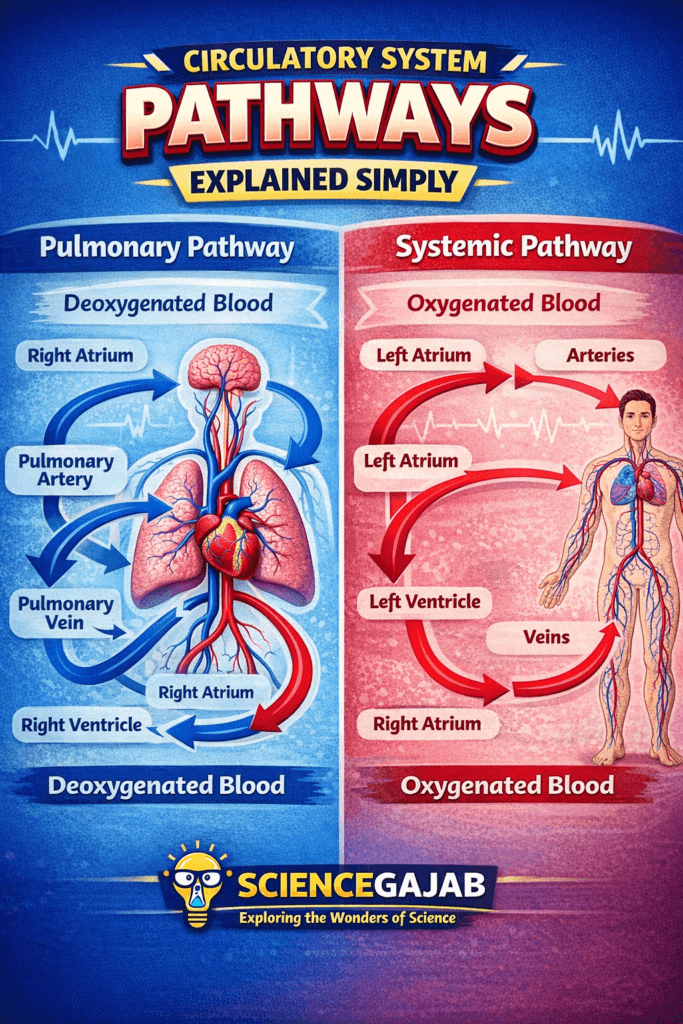
- Pulmonary Circulation: Transports deoxygenated blood from the heart to the lungs to receive oxygen, then returns oxygen-rich blood to the heart.
- Systemic Circulation: Sends oxygenated blood from the heart to the rest of the body and brings deoxygenated blood back.
learn Why Veins Look Blue But Blood Is Always Red
💡 Functions of the Circulatory System
- Oxygen and Nutrient Delivery: Ensures that all body tissues receive oxygen and essential nutrients.
- Waste Removal: Helps remove metabolic wastes like carbon dioxide and urea.
- Immune Defense: Distributes white blood cells and antibodies to fight infections.
- Temperature Regulation: Maintains body temperature by distributing heat throughout the body.
🫁 Importance of Oxygen in Respiration: Why Every Cell Needs It
🩺 Common Circulatory System Disorders
- Hypertension (High Blood Pressure): Can increase the risk of heart attack and stroke.
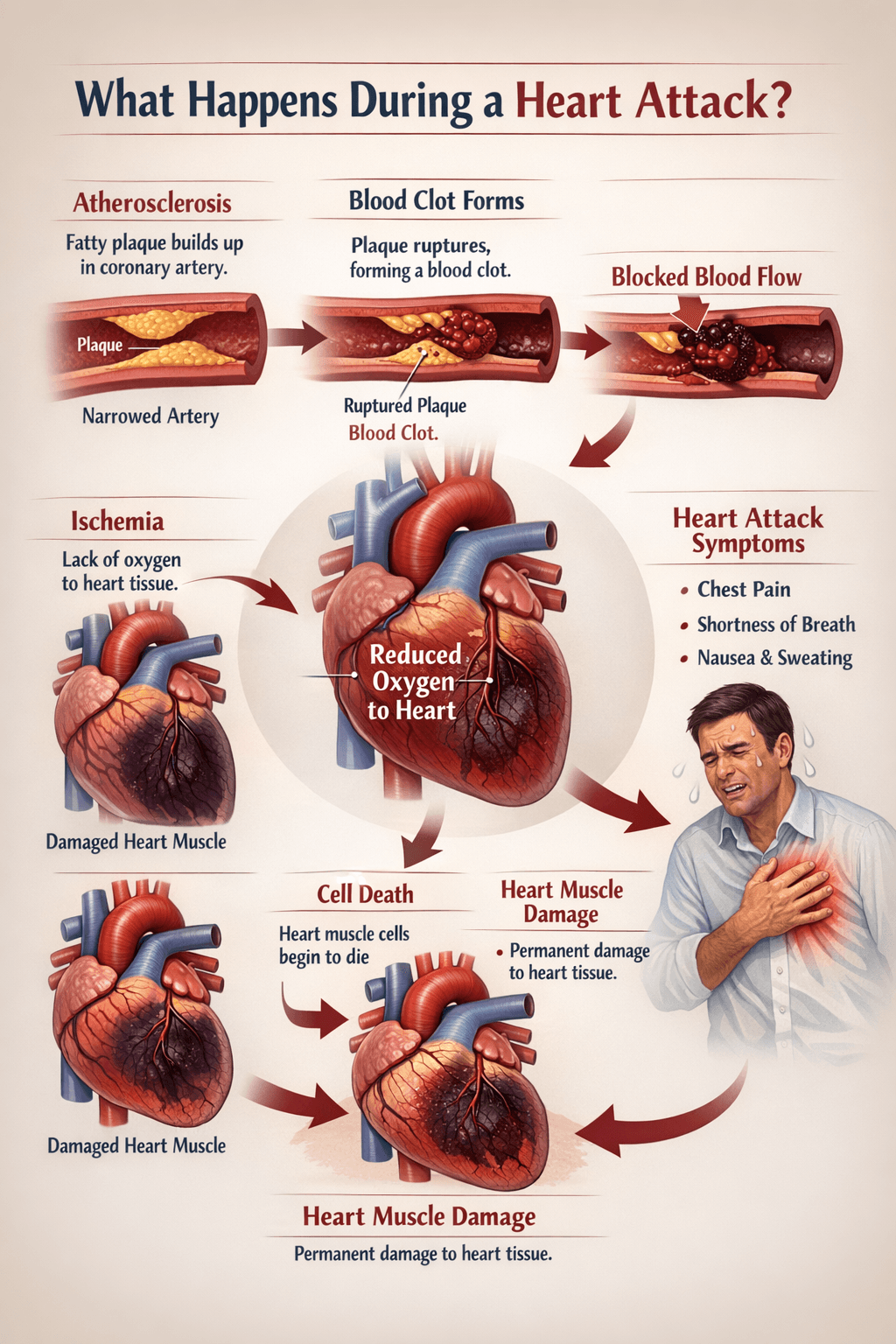
- Atherosclerosis: Fatty deposits narrow the arteries, reducing blood flow.
- Anemia: Low red blood cell or hemoglobin levels impair oxygen transport.
- Heart Failure: The heart cannot pump blood effectively, causing fatigue and swelling.
learn what happens durin heart attack
✅ Tips for a Healthy Circulatory System
- Exercise Regularly: Strengthens the heart and improves blood circulation.
- Eat a Balanced Diet: Include fruits, vegetables, whole grains, and healthy fats.
- Stay Hydrated: Proper water intake supports blood volume and flow.
- Avoid Smoking and Limit Alcohol: Reduces risk of vascular diseases.
- Regular Checkups: Monitor blood pressure and cholesterol levels.
🧬 Why Do We Age? The Real Science Behind Growing Older
learn Why Do We Dream? The Science of Sleep / सपने क्यों आते हैं?