
Author: ScienceGajab Editorial Team
Reviewed For Accuracy: Health & Science Content Review
Last Updated: June 2026
Why Do We Snore?
Have you ever been told that you snore loudly while sleeping? Or perhaps you’ve shared a room with someone whose snoring sounded like a chainsaw? Snoring is incredibly common, affecting millions of people worldwide. While it is often viewed as a harmless annoyance, snoring can sometimes reveal important clues about a person’s health.
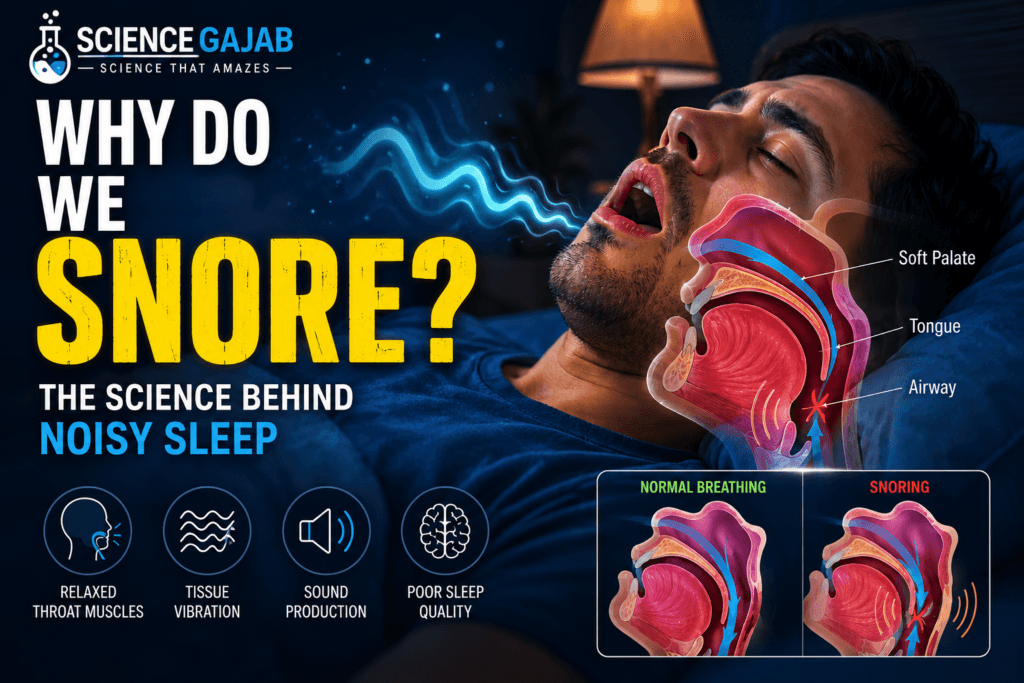
Snoring occurs when airflow is partially blocked during sleep, causing tissues in the throat, mouth, or nose to vibrate. These vibrations create the familiar snoring sound that can range from soft whistles to loud rumbling noises.
But why do some people snore while others sleep silently? The answer lies in the anatomy of the airway, sleep position, lifestyle habits, and overall health.
Let’s explore the fascinating science behind snoring and what it can tell us about the body.
What Exactly Is Snoring?
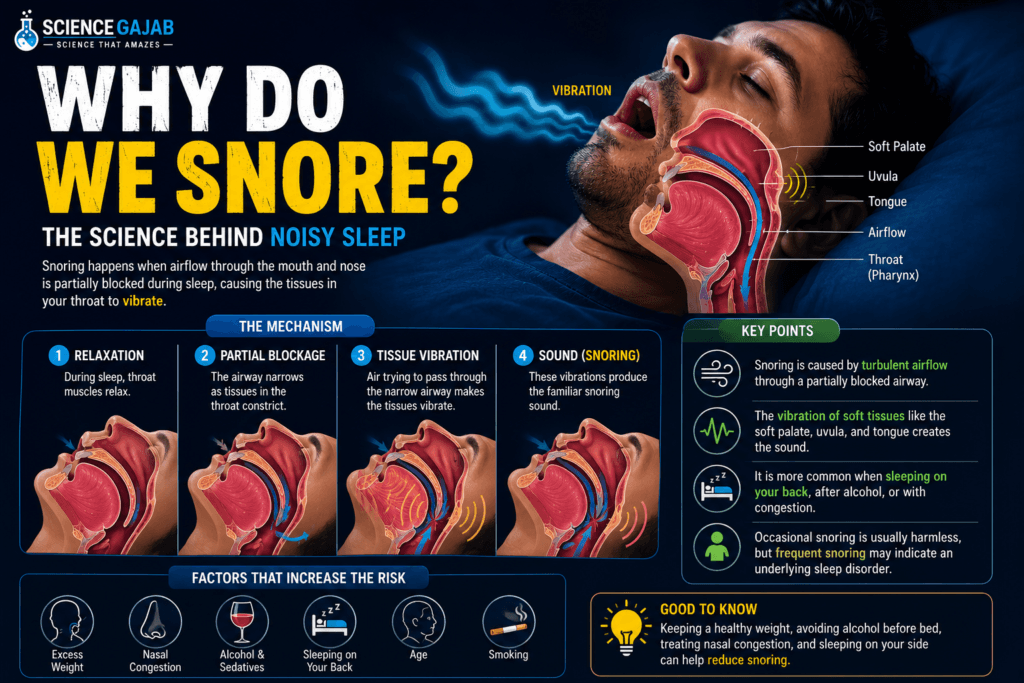
Snoring is the sound produced when air flows through a narrowed airway during sleep.
As you sleep:
- Muscles relax.
- The airway becomes narrower.
- Air struggles to pass through.
- Soft tissues vibrate.
- Snoring sounds are produced.
The louder the vibration, the louder the snoring.
Snoring can occur occasionally or every night, depending on the underlying cause.
Notes of Breathing and Exchange of Gases class 11
How Breathing Changes During Sleep
During wakefulness, the muscles of the throat help keep the airway open.
When you fall asleep:
- Throat muscles relax.
- Tongue muscles relax.
- Soft palate relaxes.
This relaxation is normal and necessary for sleep.
However, in some individuals, relaxation narrows the airway enough to create turbulence in the airflow, leading to snoring.
Why Oxygen Is Important for Cells (Simple Explanation)
Which Body Parts Cause Snoring?
Several structures can vibrate during sleep.
Soft Palate
The soft palate is the soft tissue at the back of the roof of the mouth.
When airflow passes through a narrowed space, it may vibrate and create sound.
Uvula
The uvula is the small tissue that hangs at the back of the throat.
It can contribute to snoring vibrations.
Tongue
A relaxed tongue may partially fall backward during sleep, narrowing the airway.
Nasal Passages
Blocked or congested nasal passages can increase resistance to airflow and worsen snoring.
🚫🌬️ What Happens When Cells Don’t Get Oxygen? (Simple Explanation)
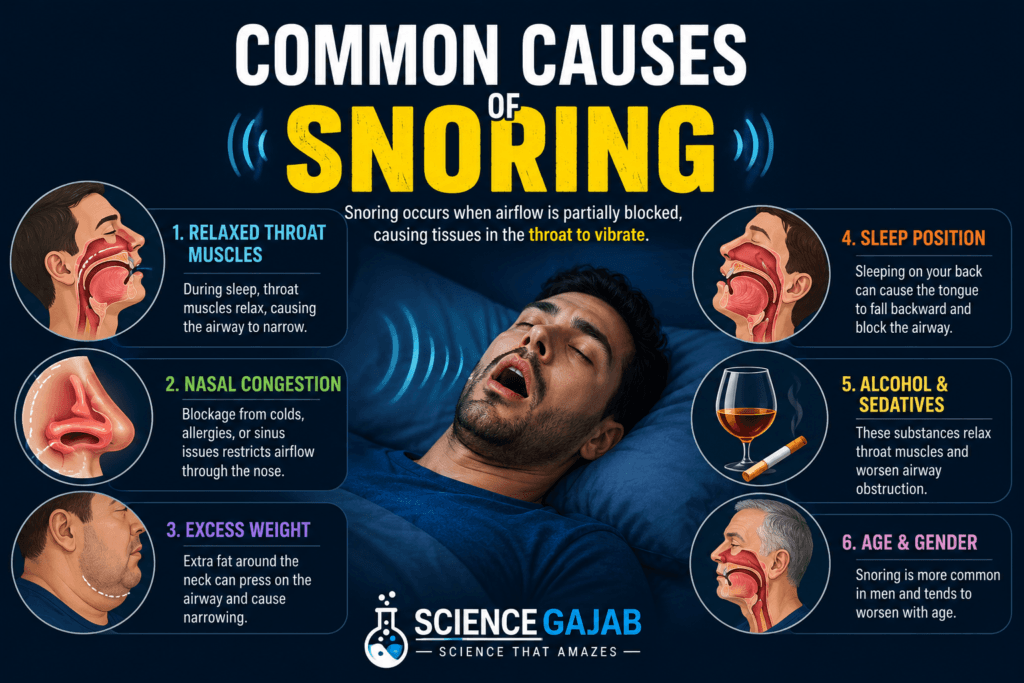
Common Causes of Snoring
1. Sleeping on Your Back
One of the most common causes of snoring is sleeping on your back.
In this position:
- Gravity pulls the tongue backward.
- Airway space decreases.
- Airflow becomes restricted.
Many people snore less when sleeping on their side.
🍞 Why Fermentation Happens Without Oxygen (Simple Explanation)
2. Nasal Congestion
Anything that blocks the nose can contribute to snoring.
Examples include:
- Colds
- Allergies
- Sinus infections
- Nasal polyps
When the nose is blocked, people often breathe through their mouths, increasing the likelihood of snoring.
🫁 Importance of Oxygen in Respiration: Why Every Cell Needs It
3. Excess Body Weight
Extra tissue around the neck and throat can narrow the airway.
This increases airflow resistance and makes tissue vibration more likely.
Research shows that overweight individuals are more likely to experience snoring and sleep-related breathing problems.
oxygenated vs deoxygenated blood
4. Alcohol Consumption
Alcohol relaxes muscles throughout the body.
When consumed before bedtime, it can cause:
- Increased airway relaxation
- Reduced muscle tone
- Louder snoring
Even people who rarely snore may snore after drinking alcohol.
These 10 Symptoms Mean Your Immune System Is Failing 😨
5. Sleep Deprivation
Lack of sleep can make throat muscles relax more deeply.
This may increase the likelihood of airway narrowing and snoring.
🧠 Why Does Your Brain Forget Things? The Science Will Surprise You
6. Age
Snoring becomes more common with age.
As people grow older:
- Muscle tone decreases.
- Airway tissues become less firm.
- The throat becomes more prone to collapse.
This makes snoring more likely.
🧬 Why Do We Age? The Real Science Behind Growing Older
7. Enlarged Tonsils or Adenoids
Children who snore often have enlarged tonsils or adenoids.
These structures can partially block the airway during sleep.
In adults, enlarged tissues may also contribute to snoring.
Why Do We Dream? The Science of Sleep / सपने क्यों आते हैं?
Why Do Men Snore More Often Than Women?
Studies suggest that men tend to snore more frequently than women.
Possible reasons include:
- Different airway anatomy
- Greater neck circumference
- Hormonal differences
However, women can certainly snore as well, particularly after menopause.
Causes of Sudden Blurry Vision (Simple Explanation You Can Trust)
Is Snoring Normal?
Occasional snoring is usually normal.
Many people snore when they:
- Have a cold
- Are extremely tired
- Sleep on their back
- Consume alcohol
In these situations, snoring is generally harmless.
However, persistent loud snoring may sometimes indicate an underlying sleep disorder.
Cracks at Mouth Corners: Causes, Symptoms & Treatment Explained Simply
When Snoring May Be a Sign of Sleep Apnea
One important condition associated with snoring is sleep apnea.
Sleep apnea occurs when breathing repeatedly stops and starts during sleep.
Common signs include:
- Loud snoring
- Gasping during sleep
- Choking sounds
- Excessive daytime sleepiness
- Morning headaches
- Difficulty concentrating
Sleep apnea can affect overall health and should be medically evaluated.
What Your Tongue Says About Your Health (Simple Guide With Tongue Signs)
Why Does Snoring Sound Different in Different People?
The sound depends on several factors:
- Airway size
- Tissue vibration
- Nasal airflow
- Tongue position
- Mouth shape
This is why some people produce soft snoring sounds while others generate extremely loud noises.
No two snoring patterns are exactly alike.
Can Thin People Snore?
Yes.
Although excess weight increases risk, snoring can occur in people of any body size.
Factors such as:
- Nasal congestion
- Jaw structure
- Airway anatomy
- Sleep position
can contribute regardless of weight.
Why Do You Get Chills During Fever? Here’s the Science
Why Does Snoring Get Worse During a Cold?
During a cold:
- Nasal passages swell.
- Mucus production increases.
- Airflow resistance rises.
As breathing becomes more difficult, tissues vibrate more easily, making snoring louder and more frequent.
Interesting Facts About Snoring
- Nearly everyone snores occasionally.
- Snoring can occur at any age.
- Men tend to snore more often than women.
- Sleeping position affects snoring intensity.
- Nasal congestion is a common trigger.
- Loud snoring can sometimes indicate sleep apnea.
symptoms of weak immune system
How Can You Reduce Snoring?
Sleep on Your Side
Changing sleep position often reduces airway obstruction.
Maintain a Healthy Weight
Weight loss may decrease pressure around the airway.
Treat Allergies
Managing allergies can improve nasal airflow.
Avoid Alcohol Before Bed
Reducing alcohol intake near bedtime may lessen snoring.
Stay Hydrated
Adequate hydration helps keep airway tissues healthy.
Establish Good Sleep Habits
Getting sufficient sleep can improve muscle control and reduce snoring.
When Should You See a Doctor?
Consider medical evaluation if snoring is accompanied by:
- Breathing pauses during sleep
- Excessive daytime fatigue
- Morning headaches
- Poor concentration
- High blood pressure
- Frequent nighttime awakenings
These symptoms may suggest sleep apnea or another sleep-related condition.
Why Do We Get “Brain Freeze” When Eating Ice Cream? The Science Behind Ice Cream Headaches 🍦🧠
Frequently Asked Questions
Snoring occurs when airflow causes relaxed tissues in the throat, mouth, or nose to vibrate during sleep.
Occasional snoring is usually harmless, but persistent loud snoring may sometimes indicate sleep apnea.
Gravity can cause the tongue and soft tissues to fall backward, narrowing the airway.
Yes. Enlarged tonsils, adenoids, allergies, and nasal congestion can contribute to snoring in children.
In many cases, yes. Reducing excess tissue around the neck can improve airflow during sleep.
Expert Perspective
Experience
Sleep specialists and ear, nose, and throat (ENT) physicians frequently evaluate patients who experience chronic snoring and sleep-related breathing issues.
Expertise
Current medical understanding shows that snoring results from vibration of soft tissues caused by restricted airflow during sleep.
Authoritativeness
This article is based on established sleep medicine, respiratory physiology, and clinical knowledge regarding airway function during sleep.
Trustworthiness
The information provided is for educational purposes and should not replace professional medical evaluation or treatment.
Final Thoughts
Snoring happens when airflow passes through a partially narrowed airway during sleep, causing tissues in the throat, mouth, or nose to vibrate. While occasional snoring is common and usually harmless, persistent loud snoring can sometimes signal an underlying condition such as sleep apnea.
Factors like sleep position, nasal congestion, alcohol consumption, aging, and airway anatomy all influence whether a person snores. Understanding the science behind snoring can help you identify potential triggers and take steps to improve sleep quality.
The next time you hear someone snoring, remember that the sound is more than just a nighttime nuisance—it’s a fascinating example of how breathing, anatomy, and sleep interact inside the human body.
https://www.facebook.com/sciencegajab/