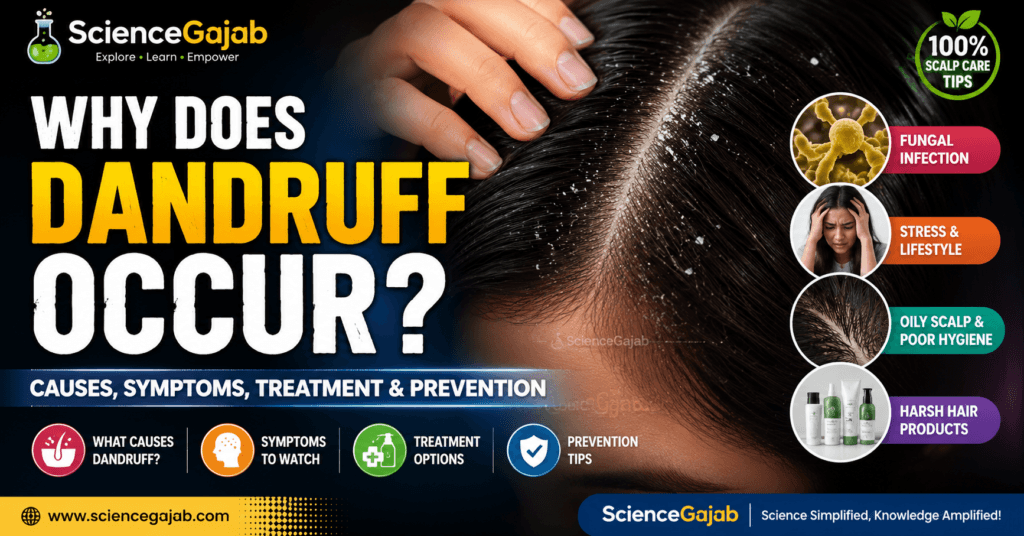

Why Does Dandruff Occur
Why Does Dandruff Occur? The Science Behind Flaky Scalp
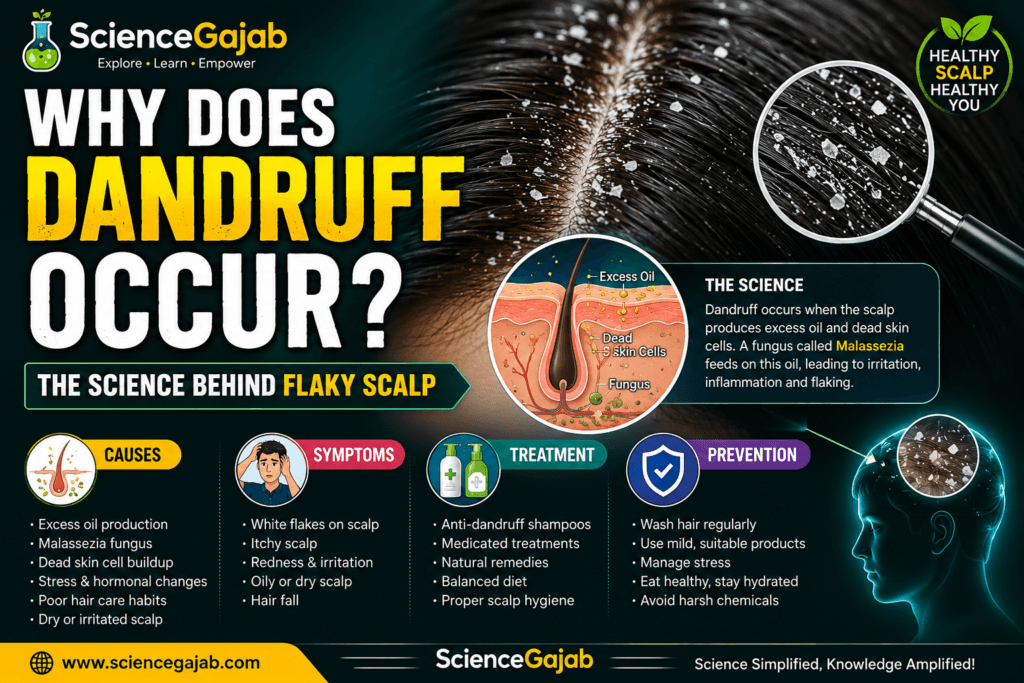
Dandruff is one of the most common scalp conditions, affecting nearly half of adults at some point in their lives. It causes white or yellowish flakes of dead skin to shed from the scalp and may be accompanied by itching or irritation.
Although dandruff is usually harmless, it can be embarrassing and sometimes difficult to control. Understanding why dandruff occurs can help you choose the right treatment and prevent future flare-ups.
What Is Dandruff?
Why Does Dandruff Occur
Dandruff is a condition in which the scalp sheds skin cells more rapidly than normal. While the scalp naturally renews itself, dandruff causes excessive flaking that becomes visible on hair and clothing.
The condition is not contagious and usually does not indicate poor hygiene.
The Real Reason Your Hair Turns Gray (It’s Not Just Aging)
Why Does Dandruff Occur?
Several factors can contribute to dandruff, often acting together.
1. Overgrowth of Malassezia Yeast
The most common cause is an overgrowth of Malassezia, a yeast that normally lives on the scalp. In some people, it breaks down scalp oils into substances that irritate the skin, speeding up skin cell turnover and causing flakes.
2. Oily Scalp (Seborrheic Dermatitis)
Excess oil can promote the growth of Malassezia. This may lead to larger, greasy flakes and redness. Seborrheic dermatitis can also affect the eyebrows, ears, and sides of the nose.
3. Dry Skin
Dry scalp often produces small, white flakes and itching, especially during cold weather or in dry indoor environments.
4. Sensitive Scalp
Some people react to certain shampoos, hair dyes, fragrances, or styling products, leading to irritation and flaking.
5. Infrequent Shampooing
Not washing the hair often enough can allow oil and dead skin cells to accumulate, making dandruff more noticeable. The ideal washing frequency varies depending on hair type and scalp oiliness.
Why Does Skin Become White After Fungal Infection? (Real Reason Doctors Explain)
6. Skin Conditions
Certain skin disorders can cause scalp flaking, including:
- Psoriasis
- Eczema (atopic dermatitis)
- Seborrheic dermatitis
- Contact dermatitis
7. Hormonal Changes
Hormones influence oil production, which may explain why dandruff is more common during adolescence and early adulthood.
Chemical Coordination & Integration Explained Simply (Endocrine System, Hormones, Functions)
8. Stress
Stress does not directly cause dandruff but may worsen it by affecting the immune system and skin barrier.
9. Weather Changes
Cold, dry weather can increase scalp dryness, while heat and humidity may encourage oil production and yeast growth in some individuals.
10. Weakened Immune System
People with weakened immune systems may be more prone to persistent or severe dandruff.
Signs of Anemia: 15 Warning Symptoms You Should Never Ignore
Symptoms of Dandruff
Common symptoms include:
- White or yellow scalp flakes
- Itchy scalp
- Dry scalp
- Oily patches on the scalp
- Mild redness
- Flakes on the shoulders
Why Wounds Itch During Healing and How to Stop It ?
Who Is More Likely to Get Dandruff?
Risk factors include:
- Teenage or young adult age
- Oily scalp
- Male sex
- Stress
- Certain neurological conditions
- Weakened immune system
- Cold weather
How Is Dandruff Diagnosed?
Most cases can be diagnosed through a physical examination of the scalp. If the condition is severe, persistent, or atypical, a dermatologist may evaluate for other scalp disorders such as psoriasis or fungal infections.
Can Low Vitamins Damage Nerves? (Simple Explanation You Can Trust)
How to Treat Dandruff
The treatment depends on the cause and severity.
Medicated Shampoos
Shampoos containing one or more of the following ingredients may help:
- Ketoconazole
- Zinc pyrithione
- Selenium sulfide
- Coal tar
- Salicylic acid
Follow the product instructions or your healthcare provider’s advice regarding frequency of use.
🚨 Early Signs of Vitamin B12 Deficiency — Don’t Ignore These Warning Signals!
Home Care Tips
- Wash your hair regularly with a suitable shampoo.
- Avoid harsh hair products if they irritate your scalp.
- Rinse shampoo thoroughly.
- Eat a balanced diet rich in zinc, B vitamins, and omega-3 fatty acids.
- Manage stress through regular exercise, adequate sleep, or relaxation techniques.
Can Dandruff Be Prevented?
You may reduce your risk by:
- Maintaining good scalp hygiene.
- Choosing hair products appropriate for your scalp type.
- Washing away excess oil if you have an oily scalp.
- Eating a nutritious diet.
- Managing stress.
Not all cases can be completely prevented, especially if you have seborrheic dermatitis or another chronic skin condition.
When Should You See a Doctor?
Seek medical advice if:
- Dandruff does not improve after several weeks of using medicated shampoo.
- Your scalp becomes very red, swollen, or painful.
- You notice thick crusts or significant hair loss.
- Symptoms spread beyond the scalp.
- You have a weakened immune system and persistent scalp problems.
Frequently Asked Questions (FAQs)
No. While infrequent shampooing can make flakes more noticeable, dandruff is most commonly associated with scalp oil, Malassezia yeast, and individual skin sensitivity.
Dandruff itself does not usually cause permanent hair loss. However, persistent scratching or untreated scalp inflammation may contribute to temporary hair shedding.
No. Dandruff cannot spread from one person to another.
A balanced diet supports overall skin health. Although diet alone is not usually the direct cause of dandruff, nutritional deficiencies and poor overall health may contribute in some people.
For many people, dandruff is a recurring condition that can be effectively controlled with regular scalp care and appropriate treatment.
Key Takeaways
- Dandruff occurs when scalp skin cells shed faster than normal.
- The most common contributor is overgrowth of Malassezia yeast on the scalp.
- Dry skin, oily scalp, skin conditions, stress, and certain hair products can also play a role.
- Medicated shampoos and proper scalp care help control most cases.
- Persistent, severe, or painful scalp symptoms should be evaluated by a healthcare professional.
Why Trust ScienceGajab?
Medical Review Process: This article is based on current dermatology references and clinical guidance. It is intended for educational purposes only and should not replace professional medical advice, diagnosis, or treatment.
Author: Sanjay Prajapati (MBBS)
Reviewed by: ScienceGajab Editorial Team
Last Updated: June 2026
References
- American Academy of Dermatology – Dandruff and Seborrheic Dermatitis.
- Mayo Clinic – Dandruff.
- MSD Manual Professional Edition – Seborrheic Dermatitis.
- Fitzpatrick’s Dermatology.
Biological classification definition and types class 11 India