Why Does Heartbeat Increase Suddenly
Why Does Heartbeat Increase Suddenly?
Have you ever felt your heart suddenly beating very fast for no obvious reason?
It may happen:
- While resting
- During stress
- After drinking tea or coffee
- At night before sleep
- During fear or panic
- After climbing stairs
Sometimes it lasts a few seconds. Sometimes several minutes.
This sudden increase in heartbeat can feel scary, but in many cases it is temporary and harmless. However, occasionally it may indicate an underlying health problem that should not be ignored.
In this article, we’ll explain:
- Why heartbeat suddenly increases
- Common harmless causes
- Dangerous warning signs
- Anxiety vs heart disease
- Treatment options
- When to see a doctor
Everything is explained in simple human language.
Body Fluids and Circulation – Complete NCERT + Exam Notes for NEET & Class 11 Biology
What Is a Normal Heartbeat?
The heart pumps blood throughout the body.
A normal resting heart rate for most adults is:
60–100 beats per minute
This means the heart usually beats between 60 and 100 times every minute while resting.
Heart rate naturally changes during:
- Exercise
- Stress
- Sleep
- Emotions
- Illness
Why Does Blood Pressure Suddenly Increase? (Simple Explanation You Can Trust)
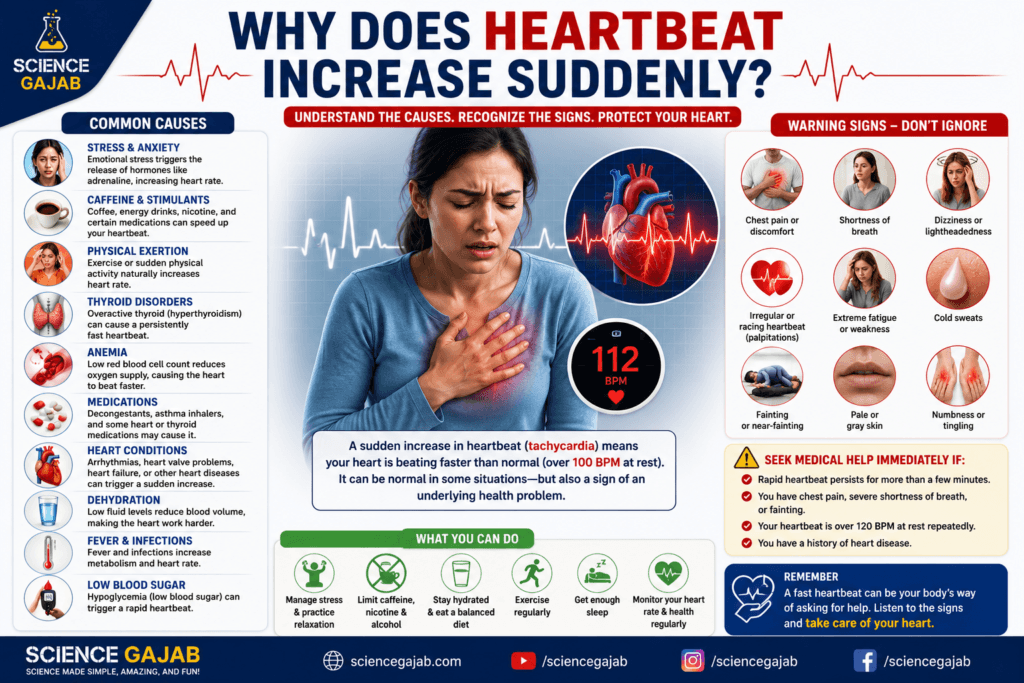
What Is Sudden Increase in Heartbeat Called?
Doctors may call it:
- Palpitations
- Tachycardia
- Rapid heartbeat
Palpitations
You become aware of your heartbeat.
You may feel:
- Racing heart
- Fluttering
- Skipping beats
- Pounding chest
Structure and Function of the Human Heart | Circulatory System Explained
Common Reasons Why Heartbeat Suddenly Increases
1. Stress and Anxiety
This is one of the most common causes.
When you are stressed or anxious:
- The body releases adrenaline
- Heart beats faster
- Blood pressure rises
This is called the “fight or flight” response.
Symptoms
- Fast heartbeat
- Sweating
- Trembling
- Chest tightness
- Restlessness
Many panic attacks feel like heart attacks.
Why Do We Sweat? The Complete Simple Explanation
2. Fear or Sudden Shock
Sudden fear activates stress hormones instantly.
Examples:
- Loud sound
- Bad news
- Horror scene
- Near accident
The body prepares for danger by increasing heartbeat.
3. Exercise or Physical Activity
During exercise, muscles need more oxygen.
The heart pumps faster to supply blood.
This is normal and healthy.
Examples:
- Running
- Climbing stairs
- Gym workout
- Heavy lifting
🏃 What Happens Inside Cells When You Exercise (Simple Explanation)
4. Caffeine
Too much caffeine can stimulate the heart.
Common sources:
- Tea
- Coffee
- Energy drinks
- Cola drinks
Sensitive people may notice:
- Rapid heartbeat
- Restlessness
- Anxiety
- Tremors
5. Fever
When body temperature rises, heart rate also increases.
A common medical observation is:
Heart rate increases with rising body temperature
This happens because the body works harder during infection.
Why Do You Get Chills During Fever? Here’s the Science
6. Dehydration
Low body fluids reduce blood volume.
The heart compensates by beating faster.
Symptoms
- Dry mouth
- Weakness
- Dizziness
- Fast pulse
Hot weather and diarrhea commonly cause dehydration.
Why Do You Feel Sleepy After Eating? The Real Reason Explained
7. Low Blood Sugar
When glucose drops:
- Adrenaline is released
- Heartbeat increases
This is common in:
- Diabetes patients
- Long fasting
- Skipping meals
What Happens If You Stop Drinking Water for 3 Days? (Day-by-Day Breakdown)
8. Smoking and Nicotine
Nicotine stimulates the nervous system.
It can cause:
- Increased heart rate
- High blood pressure
- Blood vessel narrowing
9. Lack of Sleep
Poor sleep stresses the body.
The nervous system becomes overactive, causing:
- Fast heartbeat
- Anxiety
- Palpitations
10. Hormonal Changes
Hormones strongly affect heart rate.
Common examples:
- Pregnancy
- Menopause
- Thyroid disorders
🧬 Human Reproduction: Male & Female Reproductive System Explained
11. Hyperthyroidism (Overactive Thyroid)
Too much thyroid hormone speeds up body metabolism.
Symptoms
- Rapid heartbeat
- Weight loss
- Sweating
- Anxiety
- Tremors
This is a very common medical cause of persistent fast heartbeat.
Understanding Hypothyroidism: Causes and Symptoms
12. Anemia
In anemia, blood carries less oxygen.
The heart compensates by pumping faster.
Symptoms
- Weakness
- Pale skin
- Fatigue
- Breathlessness
13. Certain Medicines
Some medicines may increase heart rate.
Examples:
- Asthma inhalers
- Nasal decongestants
- Weight-loss pills
- Some antidepressants
14. Heart Rhythm Problems (Arrhythmias)
Sometimes sudden heartbeat increase comes from abnormal electrical activity in the heart.
These conditions include:
- SVT (Supraventricular tachycardia)
- Atrial fibrillation
- Ventricular tachycardia
These may require medical treatment.
Symptoms That May Occur Along With Fast Heartbeat
You may notice:
- Chest pounding
- Dizziness
- Sweating
- Breathlessness
- Chest pain
- Weakness
- Fainting sensation
Why Your Brain Suddenly Makes You Feel Dizzy
When Is Fast Heartbeat Dangerous?
Occasional short episodes are often harmless.
But seek medical attention if you have:
- Chest pain
- Severe breathlessness
- Fainting
- Persistent rapid heartbeat
- Very irregular pulse
- Heart disease history
These may indicate serious cardiac problems.
Can Brain Cells Really Regrow? The Surprising Science
Difference Between Anxiety and Heart Disease
Many people confuse panic attacks with heart problems.
| Feature | Anxiety/Panic | Heart Problem |
|---|---|---|
| Trigger | Stress/fear | May occur anytime |
| Chest pain | Common | Common |
| Sweating | Common | Common |
| Duration | Minutes | Variable |
| ECG changes | Usually normal | May be abnormal |
Only proper medical evaluation can confirm the cause.
What Happens Inside the Body?
The heart rate is controlled by:
- Nervous system
- Hormones
- Oxygen demand
- Electrical signals
When the body senses stress or increased demand:
- Adrenaline rises
- Heart beats faster
- Blood circulation increases
This is a survival mechanism.
Can Sudden Heartbeat Increase Be Normal?
Yes.
Normal situations include:
- Exercise
- Excitement
- Fear
- Emotional stress
Temporary increase is part of normal physiology.
🌀Why Your Brain Gets Confused During Motion Sickness
What Is Tachycardia?
Tachycardia means:
Heart rate>100 beats per minute
Not all tachycardia is dangerous.
Some forms are temporary and harmless.
Night-Time Fast Heartbeat
Some people experience racing heart at night.
Possible reasons:
- Anxiety
- Nightmares
- Acid reflux
- Sleep apnea
- Stress
- Caffeine late in evening
❤️ What Happens During a Heart Attack? The Science Explained
Why Does Heartbeat Increase Suddenly While Resting?
Possible causes include:
- Anxiety
- Dehydration
- Excess caffeine
- Thyroid problems
- Arrhythmias
- Stress hormones
Persistent episodes should be evaluated medically.
Why Does the Heart Beat Faster During Exercise? | Science Explained
Why Does Heartbeat Increase After Eating?
After meals:
- Digestion increases blood flow demand
- Heavy meals may trigger palpitations
- Sugar spikes may affect heart rate
Large caffeine-rich meals can worsen symptoms.
Can Gas Cause Fast Heartbeat?
Sometimes bloating and gastric discomfort can stimulate nearby nerves and create awareness of heartbeat.
However, repeated palpitations should not always be blamed on gas.
Your Heart Can Stop in Minutes — Here’s How Artery Blockage Happens
Why Does Heartbeat Increase During Fever?
The body needs:
- More oxygen
- Faster circulation
- Increased metabolism
Therefore heart rate rises naturally during infections.
Diagnosis of Sudden Fast Heartbeat
Doctors may use:
- ECG
- Blood tests
- Thyroid tests
- Holter monitoring
- Echocardiography
These help identify underlying causes.
Your Heart Beats 100,000 Times a Day—But Never Gets Tired. Here’s Why
How to Calm a Sudden Fast Heartbeat
1. Deep Breathing
Slow breathing calms the nervous system.
2. Drink Water
Helpful if dehydration is present.
3. Reduce Caffeine
Avoid excessive tea, coffee, and energy drinks.
4. Sleep Properly
Good sleep stabilizes heart rhythm.
5. Stress Management
Meditation and relaxation may help.
6. Avoid Smoking
Nicotine stimulates the heart.
Medical Treatment
Treatment depends on the cause.
Anxiety-Related
- Stress management
- Counseling
- Anxiety treatment
Thyroid Disease
- Thyroid medicines
Arrhythmias
- Heart rhythm medicines
- Procedures like ablation
Anemia
- Iron and nutritional treatment
🫁Hold Your Breath Too Long? Here’s the Scary Truth
Can Sudden Heartbeat Cause Heart Attack?
Fast heartbeat alone usually does not cause heart attack.
But severe heart rhythm disorders can become dangerous.
Chest pain with sweating and breathlessness needs urgent medical evaluation.
Lifestyle Tips for Healthy Heart Rhythm
- Exercise regularly
- Stay hydrated
- Sleep well
- Reduce stress
- Limit caffeine
- Avoid smoking
- Maintain healthy weight
Interesting Facts About Heartbeat
1. The Human Heart Beats About 100,000 Times Daily
2. Emotions Directly Affect Heart Rate
3. Athletes Often Have Lower Resting Pulse
4. Fever Almost Always Raises Heart Rate
Frequently Asked Questions (FAQs)
Sometimes yes, especially during stress or exercise.
Yes, anxiety is one of the most common causes.
Very high heart rate with chest pain, fainting, or breathlessness needs urgent care.
Yes, dehydration commonly increases heart rate.
Yes, hyperthyroidism often causes rapid pulse.
Final Thoughts
Sudden increase in heartbeat is common and often related to:
- Stress
- Anxiety
- Caffeine
- Fever
- Dehydration
- Lack of sleep
In many people, it is temporary and harmless.
However, repeated or severe episodes should never be ignored, especially if associated with:
- Chest pain
- Dizziness
- Fainting
- Breathlessness
The heart is one of the most important organs in the body, and understanding its signals can help you stay healthier and safer.
https://t.me/mbbspreviousyear
Medical Disclaimer
This article is for educational awareness only and does not replace professional medical advice, diagnosis, or treatment.
Sources & References
- American Heart Association
- Standard physiology textbooks
- Cardiology educational references
- Mayo Clinic educational resources
Reviewed Topic
Educational overview of sudden heartbeat increase, palpitations, tachycardia, and common causes explained in simple language for general readers.
https://www.facebook.com/sciencegajab/