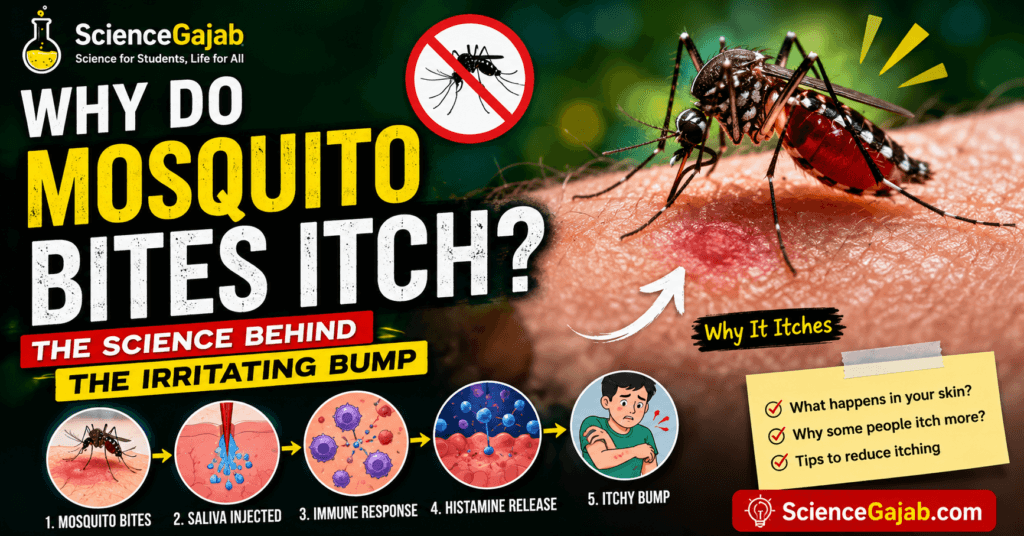

Why Do Mosquito Bites Itch
Why Do Mosquito Bites Itch? The Science Behind the Annoying Bite
Almost everyone has experienced the sudden urge to scratch after a mosquito bite. A tiny insect bite can leave behind an itchy, swollen bump that lasts for several days. But have you ever wondered why mosquito bites itch?
The itching isn’t caused by the mosquito’s bite itself. Instead, it’s your immune system reacting to proteins in the mosquito’s saliva. This natural defense mechanism triggers the release of chemicals such as histamine, leading to redness, swelling, and the familiar itchy sensation.
In this ScienceGajab article, we’ll explain exactly what happens when a mosquito bites you, why some people itch more than others, how to relieve mosquito bite itching, and the best ways to prevent mosquito bites.
What Happens When a Mosquito Bites?
Only female mosquitoes bite humans because they need the protein from blood to develop their eggs. Male mosquitoes feed on plant nectar and do not bite.
When a female mosquito lands on your skin, she uses her specialized mouthparts (called a proboscis) to pierce the skin and reach tiny blood vessels.
Before drawing blood, the mosquito injects a small amount of saliva into your skin. This saliva contains substances that:
- Prevent blood from clotting
- Keep blood flowing smoothly
- Reduce pain while feeding
- Make feeding easier for the mosquito
Although these substances help the mosquito, your immune system recognizes them as foreign, setting off the reaction that causes itching.
🦟 Malaria: The Most Lethal Parasitic Disease Affecting Humans Worldwide
Why Do Mosquito Bites Itch?
The itching is caused by your body’s immune response—not by the physical puncture.
Here’s what happens:
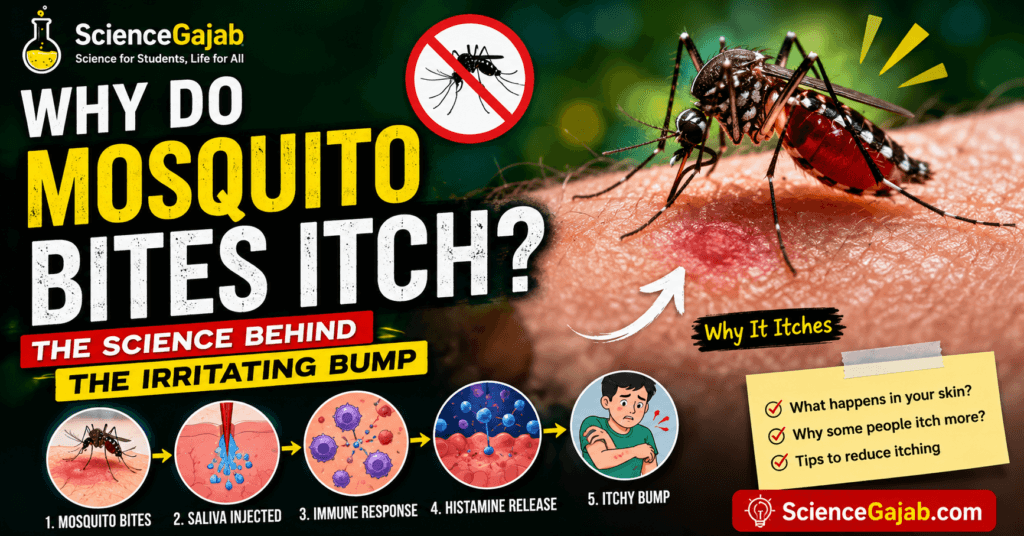
Step 1: Mosquito Saliva Enters the Skin
Mosquito saliva contains proteins and enzymes that help the insect feed efficiently.
Step 2: The Immune System Detects Foreign Proteins
Immune cells identify these saliva proteins as unfamiliar and activate the body’s defense system.
Step 3: Histamine Is Released
Special immune cells called mast cells release histamine, an important chemical involved in allergic reactions and inflammation.
Histamine:
- Widens nearby blood vessels
- Increases blood flow
- Makes blood vessels leak small amounts of fluid
- Stimulates nerve endings in the skin
Step 4: The Itching Begins
The irritated nerve endings send signals to the brain, which interprets them as itching.
At the same time, increased blood flow and fluid leakage produce the characteristic red, raised bump.
Why Wounds Itch During Healing and How to Stop It ?
Why Do Some People Itch More Than Others?
Not everyone reacts to mosquito bites in the same way.
Several factors influence the intensity of itching.
Why Does Skin Become White After Fungal Infection? (Real Reason Doctors Explain)
Immune System Sensitivity
People with stronger allergic responses to mosquito saliva often develop:
- Larger bumps
- More redness
- Longer-lasting itching
Others may barely notice a bite.
Previous Exposure
The immune system “remembers” mosquito saliva.
Repeated exposure may change how strongly you react over time. In some people, reactions become milder, while others continue to experience pronounced itching.
Age
Young children often have stronger reactions because their immune systems are encountering mosquito saliva for the first time.
Adults who have experienced many mosquito bites may react less intensely.
Genetics
Your genes influence how your immune system responds to allergens, including mosquito saliva.
Skin Sensitivity
People with eczema, allergies, or sensitive skin may experience more severe itching.
Why Do Fingers Wrinkle in Water?
Why Does the Bite Become Swollen?
Histamine increases the permeability of small blood vessels, allowing fluid to move into nearby tissues.
This causes:
- Swelling
- Redness
- Warmth
- The raised bump known as a wheal
The swelling is a normal part of the body’s inflammatory response.
Why Does Heartbeat Increase Suddenly? (Simple Explanation You Can Trust)
Why Does Scratching Feel Good?
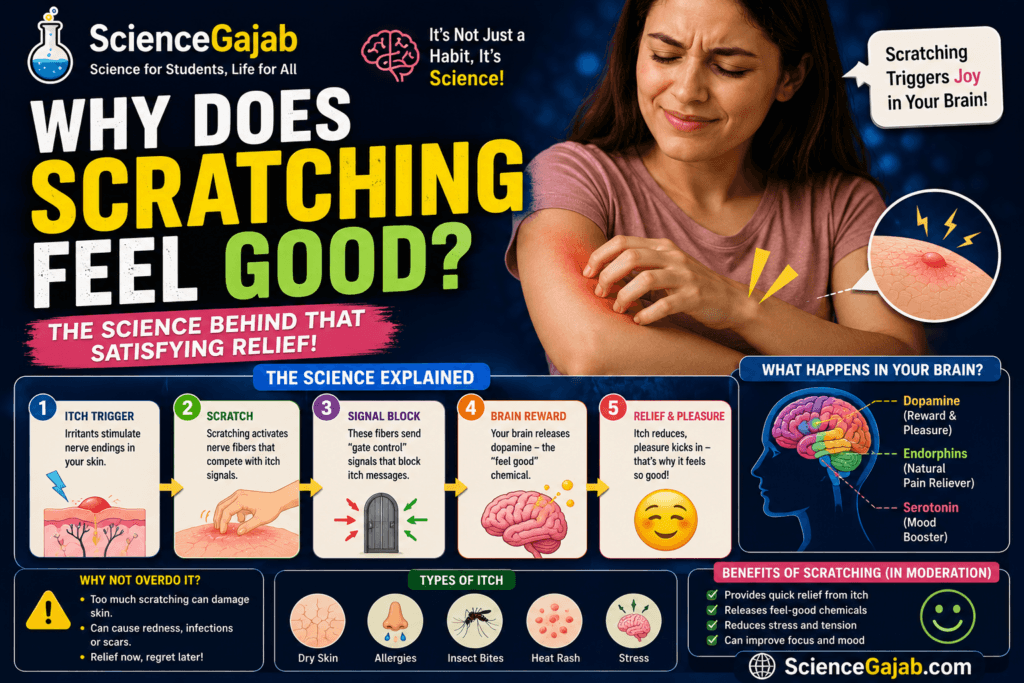
Scratching temporarily interrupts itch signals traveling to the brain.
It activates pain-sensing nerve fibers, which can briefly override itch sensations.
However, excessive scratching:
- Damages the skin
- Increases inflammation
- Delays healing
- Raises the risk of bacterial skin infection
So while scratching provides temporary relief, it usually makes the bite worse in the long run.
How Long Does Mosquito Bite Itching Last?
For most people:
- The bump appears within minutes.
- Itching is often most noticeable during the first 24–48 hours.
- Swelling gradually improves over several days.
In sensitive individuals, itching may persist for up to a week or longer.
Chemical Coordination & Integration Explained Simply (Endocrine System, Hormones, Functions)
Can Mosquito Bites Cause Allergic Reactions?
Yes, although severe reactions are uncommon.
Mild Reaction
Most people develop:
- Small raised bump
- Itching
- Mild redness
Large Local Reaction
Some individuals develop:
- Extensive swelling
- Significant redness
- Warmth
- Intense itching
Severe Allergic Reaction (Rare)
Seek emergency medical care immediately if you experience:
- Difficulty breathing
- Wheezing
- Swelling of the face, lips, tongue, or throat
- Dizziness or fainting
- Widespread hives
These symptoms may indicate anaphylaxis, a medical emergency.
🚨 10 Signs Your Body Lacks Vitamins You Should Never Ignore
Can Mosquito Bites Spread Diseases?
Yes. Mosquitoes can transmit several infectious diseases in different parts of the world, including:
- Malaria
- Dengue fever
- Chikungunya
- Zika virus disease
- West Nile virus
- Yellow fever (in some regions)
Most itchy mosquito bites do not mean you have contracted one of these illnesses, but seek medical evaluation if you develop fever or other concerning symptoms after a bite, especially in areas where mosquito-borne diseases are common.
Body Fluids and Circulation – Complete NCERT + Exam Notes for NEET & Class 11 Biology
How to Relieve Mosquito Bite Itching
Most mosquito bites improve without treatment.
To ease symptoms:
Apply a Cold Compress
A cool cloth or ice pack wrapped in a towel for 10–15 minutes can reduce swelling and numb the itch.
Avoid Scratching
Keeping fingernails short and avoiding scratching helps prevent skin damage and infection.
Use Anti-Itch Creams
Over-the-counter creams containing ingredients such as low-strength hydrocortisone or calamine may help reduce itching. Follow the product instructions and seek medical advice if symptoms are severe or persistent.
Oral Antihistamines
Some people may benefit from oral antihistamines, particularly if itching is widespread or interferes with sleep. Use them according to medical advice or the product label.
Keep the Area Clean
Wash the bite gently with soap and water to reduce the risk of infection if the skin has been scratched.
Why Do We Snore? The Science Behind Noisy Sleep
How to Prevent Mosquito Bites
Preventing bites is the best way to avoid itching and reduce the risk of mosquito-borne diseases.
Use Insect Repellents
Choose repellents containing approved active ingredients such as:
- DEET
- Picaridin
- IR3535
- Oil of lemon eucalyptus (for appropriate age groups, according to product guidance)
Use them exactly as directed on the label.
Why Do We Cry? The Fascinating Science Behind Human Tears
Wear Protective Clothing
- Long-sleeved shirts
- Long trousers
- Socks
- Light-colored clothing
Sleep Under Mosquito Nets
In areas where mosquito-borne diseases are common, insecticide-treated bed nets provide important protection.
Eliminate Standing Water
Mosquitoes breed in stagnant water.
Regularly empty or clean:
- Flower pots
- Buckets
- Bird baths
- Coolers
- Old tires
- Water storage containers
Why Oxygen Is Important for Cells (Simple Explanation)
Install Window and Door Screens
Screens help keep mosquitoes out of your home.
When Should You See a Doctor?
Seek medical advice if:
- Redness continues to spread.
- The bite becomes increasingly painful.
- Pus develops.
- You develop fever after a mosquito bite.
- Swelling is severe.
- Symptoms last longer than about one week or continue to worsen.
- You have signs of a severe allergic reaction.
Common Myths About Mosquito Bites
Myth: Mosquitoes bite everyone equally.
Fact: Mosquitoes are attracted differently to different people. Body odor, carbon dioxide, body heat, pregnancy, and other factors may influence who gets bitten more often.
Myth: Scratching removes mosquito saliva.
Fact: By the time itching begins, the saliva has already triggered the immune response. Scratching does not remove it.
Myth: Every mosquito bite spreads disease.
Fact: Most mosquito bites do not transmit infections. Disease transmission depends on whether the mosquito is carrying a specific pathogen.
Biological classification definition and types class 11 India
Frequently Asked Questions (FAQs)
Why do mosquito bites itch more at night?
The itch may seem more noticeable at night because there are fewer distractions and body temperature changes may increase awareness of skin sensations.
Why do some mosquito bites become very large?
A stronger immune response to mosquito saliva can produce larger areas of swelling and redness.
Can scratching cause infection?
Yes. Breaking the skin through repeated scratching allows bacteria to enter, increasing the risk of a skin infection.
Why don’t I react to every mosquito bite?
Individual immune responses vary, and not every bite triggers the same level of inflammation.
Do mosquitoes prefer certain people?
Research suggests mosquitoes may be more attracted to some individuals because of body odor, carbon dioxide production, body heat, pregnancy, genetics, and other biological factors.
✅Fermentation vs Aerobic Respiration | Differences Made Easy
Key Takeaways
- Mosquito bites itch because your immune system reacts to proteins in mosquito saliva.
- Histamine release causes itching, redness, and swelling.
- Scratching offers only temporary relief and may damage the skin.
- Most bites heal within a few days without complications.
- Preventing mosquito bites through repellents, protective clothing, and reducing breeding sites is the most effective strategy.
- Seek medical care if you develop severe allergic symptoms, signs of infection, or illness after a mosquito bite.
Why Trust ScienceGajab?
Medical Review Process: This article is based on current entomology, immunology, and infectious disease references. It is written for educational purposes and should not replace professional medical advice, diagnosis, or treatment.
Author: Sanjay Prajapati (MBBS)
Reviewed by: ScienceGajab Editorial Team
Last Updated: June 2026
References
- Centers for Disease Control and Prevention (CDC) – Prevent Mosquito Bites.
- World Health Organization (WHO) – Vector-Borne Diseases.
- American Academy of Dermatology – Insect Bites.
- Harrison’s Principles of Internal Medicine.
- Journal of Allergy and Clinical Immunology – Insect Bite Reactions.
🫁Hold Your Breath Too Long? Here’s the Scary Truth