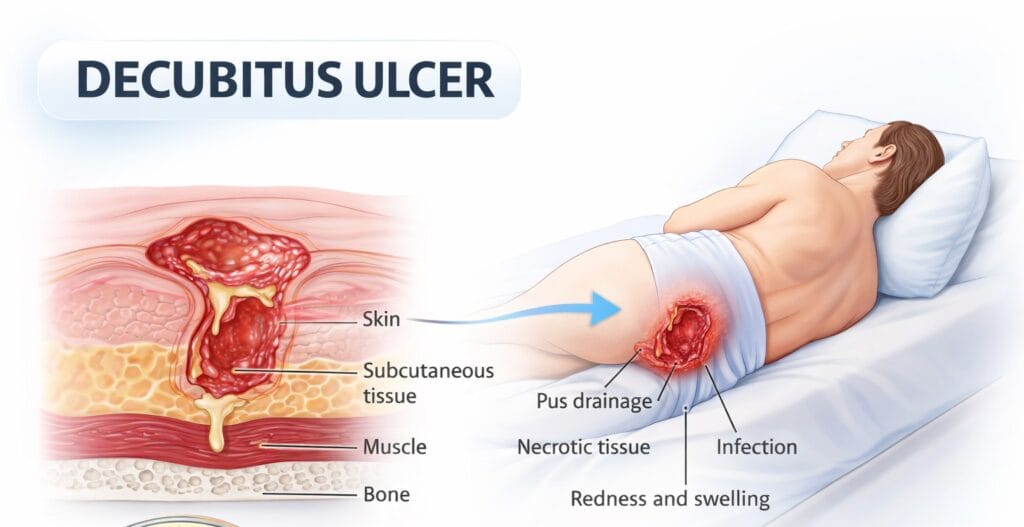

Decubitus Ulcer
Elderly or chronically ill, bedridden patients are prone to
develop decubitus ulcer (also called as bed sore or pressure
sore); the most common site being near the anus or on
the lower extremities. Most frequent organisms infect the
decubitus ulcer are gastrointestinal flora (e.g. Bacteroides fragilis, or nosocomial pathogens (e.g. S. aureus and P.
aeruginosa).
http://facebook.com/sciencegajab/
read also why dreaming happens
decubitus ulcer, also called a pressure ulcer or bed sore, is a skin injury caused by prolonged pressure on one area of the body. It commonly occurs in people who are bedridden, wheelchair-bound, or unable to move for long periods.
Why Does It Happen?
When constant pressure reduces blood flow to the skin and underlying tissues, the cells do not receive enough oxygen. Without oxygen, tissue begins to break down and die. Areas most commonly affected include:
- Lower back (sacrum)
- Hips
- Heels
- Elbows
- Ankles
Stages of Decubitus Ulcer
Stage 1:
- Redness and mild skin irritation
- Skin is intact but painful
Stage 2:
- Blister or shallow open sore
- Partial thickness skin loss
Stage 3:
- Deeper wound reaching fatty tissue
- Visible tissue damage
Stage 4:
- Severe damage extending to muscle or bone
- High risk of infection
Risk Factors
- Limited mobility
- Poor nutrition
- Diabetes
- Advanced age
- Moist skin (sweating or incontinence)
Complications
If untreated, pressure ulcers can lead to:
- Serious infection
- Tissue necrosis
- Bone infection (osteomyelitis)
- Sepsis (life-threatening condition)
Prevention
Prevention is very important. Steps include:
- Repositioning every 2 hours
- Using pressure-relief mattresses
- Keeping skin clean and dry
- Maintaining proper nutrition and hydration
- Regular skin inspection
Final Thought
Decubitus ulcers are preventable in most cases. Early detection and proper care can stop progression and reduce serious complications.


Pingback: Hordeolum - sciencegajab