
What Are Platelets
What Are Platelets? Everything You Need to Know
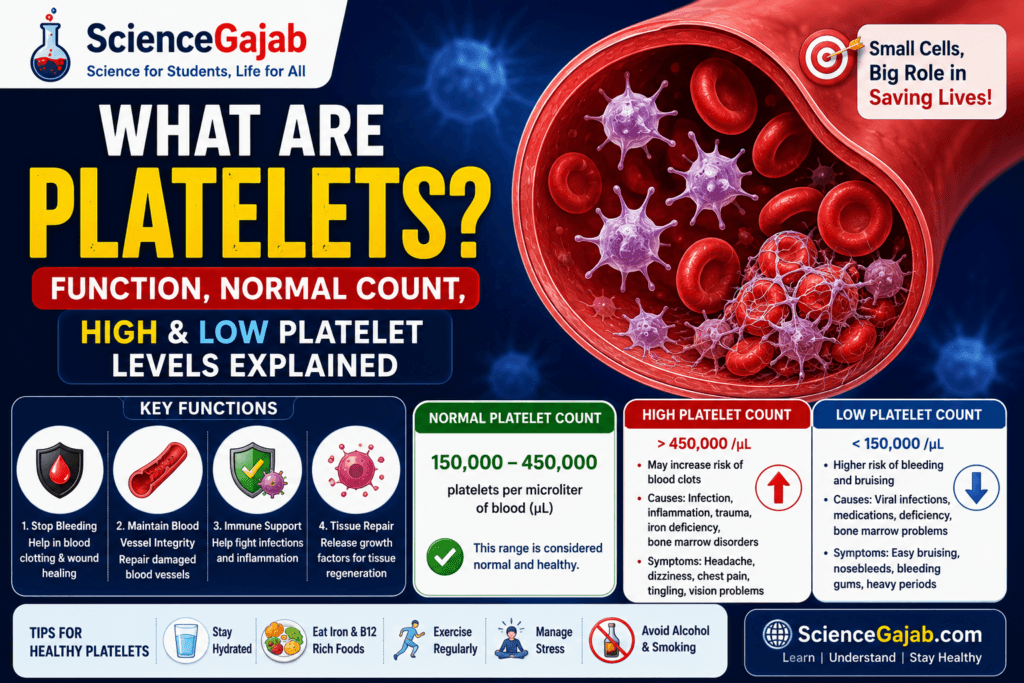
They are tiny, colorless cell fragments in your blood that play a vital role in stopping bleeding. Whenever you get a cut or injury, platelets quickly gather at the damaged blood vessel, stick together, and help form a blood clot to prevent excessive blood loss.
Although they are much smaller than red or white blood cells, platelets are essential for survival. Too few platelets can increase the risk of serious bleeding, while too many may raise the risk of unwanted blood clots.
In this ScienceGajab guide, you’ll learn what platelets are, how they work, their normal range, what causes high or low platelet counts, and when you should seek medical advice.
What Are Platelets?
Platelets, also called thrombocytes, are small fragments of cells found in the bloodstream. Unlike red blood cells and most white blood cells, platelets do not have a nucleus.
They are produced in the bone marrow from large cells called megakaryocytes. Each megakaryocyte breaks apart into thousands of platelets, which are then released into the bloodstream.
A typical thrombocytes survives for about 7–10 days before being removed by the spleen and liver and replaced by newly produced platelets.
What Is the Main Function of Platelets?
The primary role of platelets is blood clotting (hemostasis).
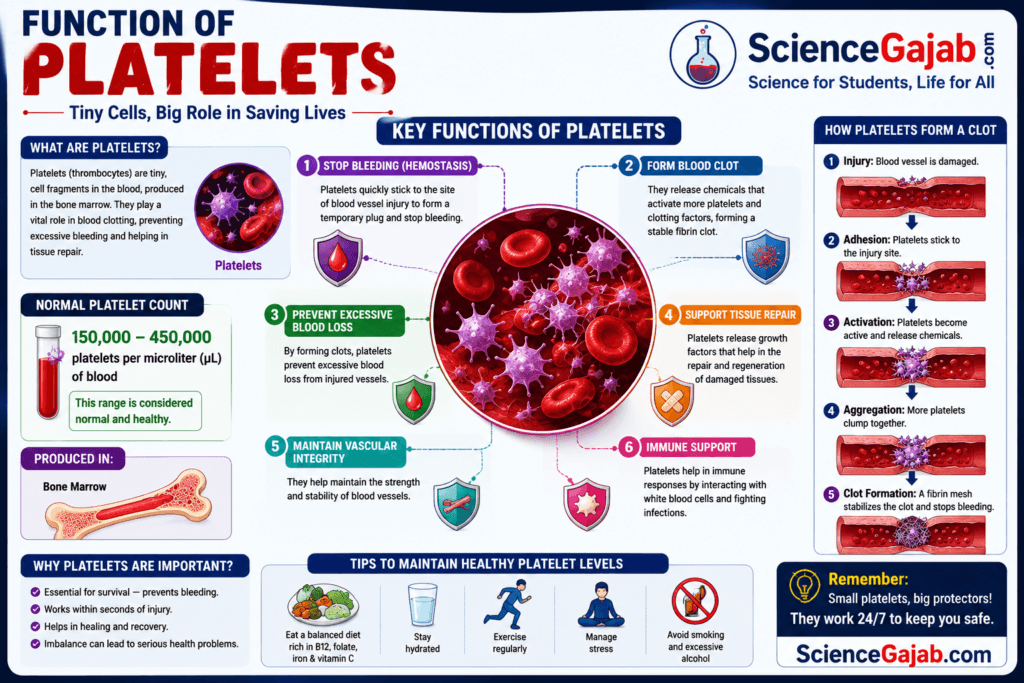
When a blood vessel is injured, platelets respond within seconds by:
- Detecting the damaged blood vessel.
- Sticking to the injured area (adhesion).
- Becoming activated and changing shape.
- Releasing chemical signals that attract more platelets.
- Clumping together (aggregation) to form a temporary platelet plug.
- Supporting the formation of a stable clot with the help of clotting proteins (coagulation factors).
This process helps stop bleeding while the blood vessel heals.
Why Are Platelets Important?
Healthy platelet levels are essential because they help:
- Stop bleeding after injuries.
- Prevent excessive blood loss during surgery.
- Support wound healing.
- Maintain the integrity of blood vessels.
Without enough thrombocytes, even minor injuries can result in prolonged bleeding.
Normal Platelet Count
The normal platelet count for most healthy adults is:
150,000–450,000 platelets per microliter (µL) of blood.
Laboratory reference ranges may vary slightly.
What Happens If Platelet Count Is Low?
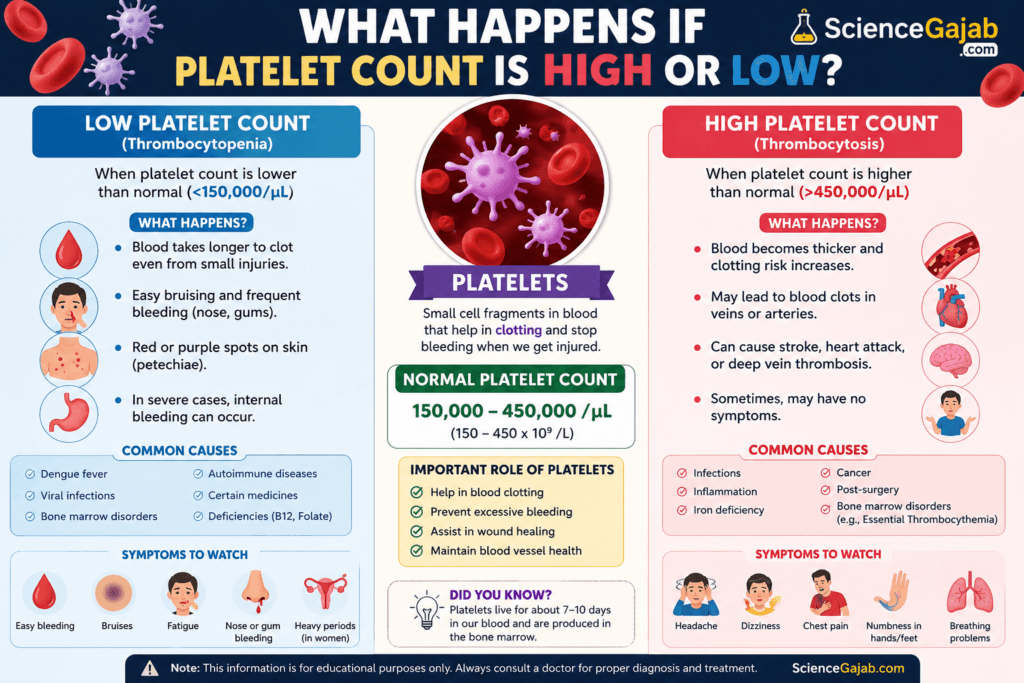
A low platelet count is known as thrombocytopenia.
Common Causes
- Viral infections (such as dengue or influenza)
- Certain medications
- Vitamin B12 or folate deficiency
- Immune thrombocytopenia (ITP)
- Bone marrow disorders
- Chemotherapy
- Liver disease
- Enlarged spleen
Symptoms
- Easy bruising
- Frequent nosebleeds
- Bleeding gums
- Tiny red or purple spots on the skin (petechiae)
- Heavy menstrual bleeding
- Blood in urine or stool
- Prolonged bleeding after cuts
Severely low platelet counts can increase the risk of serious internal bleeding and require urgent medical evaluation.
What Happens If Platelet Count Is High?
A high platelet count is called thrombocytosis.
Possible Causes
- Infection
- Chronic inflammation
- Iron deficiency
- Recovery after major blood loss or surgery
- Removal of the spleen
- Certain bone marrow disorders, such as essential thrombocythemia
Symptoms
Many people have no symptoms.
When symptoms occur, they may include:
- Headaches
- Dizziness
- Vision changes
- Tingling in the hands or feet
- Blood clots (in some cases)
The significance of a high platelet count depends on the underlying cause.
How Are Platelets Measured?
Platelets are measured as part of a Complete Blood Count (CBC).
A CBC also reports:
- Hemoglobin
- Red blood cell count (RBC)
- White blood cell count (WBC)
- Hematocrit
- Mean platelet volume (MPV)
If platelet abnormalities are detected, your doctor may recommend additional tests to determine the cause.
What Is Mean Platelet Volume (MPV)?
Mean Platelet Volume (MPV) measures the average size of platelets.
- High MPV may indicate that the bone marrow is producing larger, younger platelets, often after increased platelet destruction or blood loss.
- Low MPV may occur in some bone marrow disorders or conditions affecting platelet production.
MPV should always be interpreted alongside the platelet count and clinical findings.
Platelets vs Red Blood Cells vs White Blood Cells
| Feature | Platelets | Red Blood Cells | White Blood Cells |
|---|---|---|---|
| Main Function | Blood clotting | Carry oxygen | Fight infections |
| Normal Count | 150,000–450,000/µL | Millions/µL | 4,000–11,000/µL |
| Have a Nucleus? | No | No | Yes (most types) |
| Produced In | Bone marrow | Bone marrow | Bone marrow |
Can You Increase Platelet Count Naturally?
If a low platelet count is due to a nutritional deficiency, improving your intake of vitamin B12, folate, or iron may help under medical guidance.
However, many causes of thrombocytopenia require specific medical treatment. There is no evidence that home remedies alone can safely treat significantly low platelet counts.
Always follow your healthcare provider’s advice rather than relying on unproven remedies.
When Should You See a Doctor?
Seek medical attention if you experience:
- Unexplained bruising
- Frequent nosebleeds
- Bleeding gums
- Blood in urine or stool
- Heavy or prolonged bleeding
- Numerous tiny red or purple skin spots
- Persistent fatigue together with abnormal CBC results
Emergency care is needed if bleeding is severe or difficult to stop.
Frequently Asked Questions (FAQs)
For most adults, the normal range is 150,000–450,000 platelets per microliter of blood.
Platelets are cell fragments produced from megakaryocytes in the bone marrow rather than complete cells.
Yes. Very low platelet counts can increase the risk of serious bleeding and should be evaluated promptly.
Some causes of high platelet counts, particularly certain bone marrow disorders, can increase the risk of blood clots. A doctor can determine whether treatment is needed.
A Complete Blood Count (CBC) includes the platelet count and other important blood parameters.
Key Takeaways
- Platelets are tiny blood cell fragments that help stop bleeding by forming blood clots.
- They are produced in the bone marrow and normally survive about 7–10 days.
- A normal platelet count is 150,000–450,000/µL.
- Low platelets may increase the risk of bleeding, while high platelets may increase the risk of clotting in some conditions.
- A CBC is the standard test used to measure platelet count.
Why Trust ScienceGajab?
Medical Review Process: This article is based on standard hematology textbooks and current clinical guidance. It is intended for educational purposes only and should not replace professional medical advice, diagnosis, or treatment.
Author: Dr. Sanjay Prajapati (MBBS)
MBBS Graduate | Medical Content Writer | Founder of ScienceGajab
Reviewed by: ScienceGajab Editorial Team
Last Updated: June 2026
References
- Harrison’s Principles of Internal Medicine.
- Henry’s Clinical Diagnosis and Management by Laboratory Methods.
- American Society of Hematology – Patient Education.
- World Health Organization (WHO) – Hematology Resources.
This article is for educational purposes only and should not be used as a substitute for professional medical advice. Always consult a qualified healthcare professional.
https://www.instagram.com/sciencegajab/