Cracked Heels and Health Conditions: What Your Feet May Be Telling You
Cracked heels are often considered a cosmetic problem, but in some cases, they may reveal important information about your overall health. While dry skin is the most common cause, persistent, painful, or deep heel cracks can sometimes be linked to underlying medical conditions.
Your heels support much of your body weight every day. Constant pressure combined with dry skin can cause the skin around the heel to split. When these cracks become deep, they may lead to pain, bleeding, infection, and difficulty walking.
Understanding the possible causes of cracked heels can help you determine whether simple home care is enough or if medical attention is needed.
In this article, we’ll explore the connection between cracked heels and health conditions, common symptoms, treatment options, and prevention strategies.
What Are Cracked Heels?
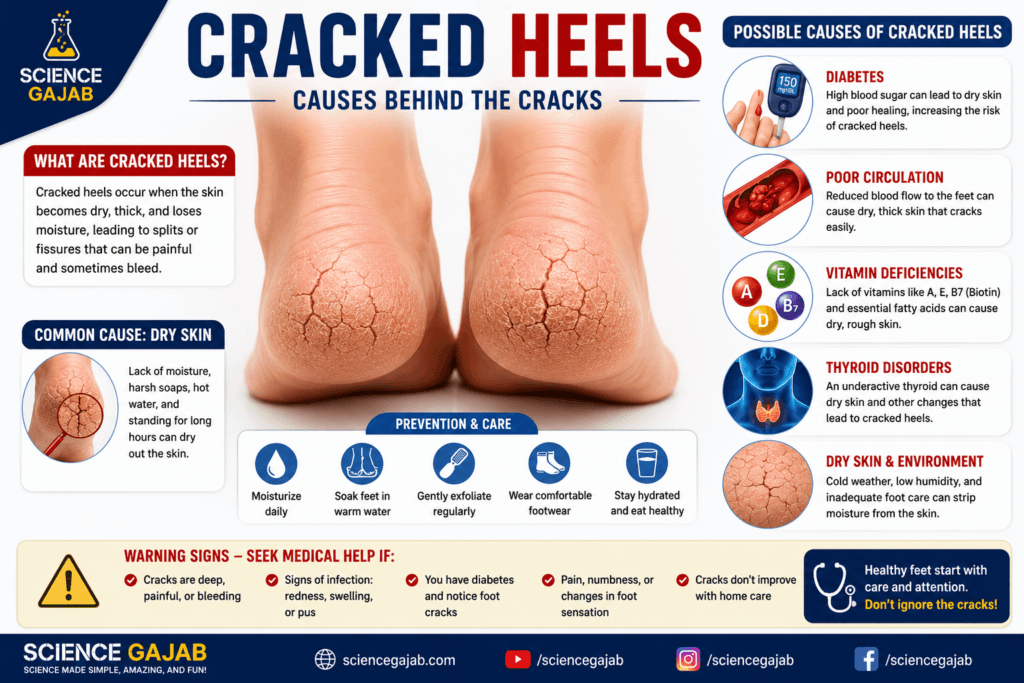
Cracked heels, also called heel fissures, occur when the skin around the heel becomes dry, thickened, and loses elasticity.
As pressure is placed on the heel during walking and standing, the skin may split and form visible cracks.
Common Symptoms
- Dry skin
- Rough heels
- Thickened skin
- Pain while walking
- Deep fissures
- Bleeding cracks
- Itching
Mild cracks are common, but severe fissures may require medical care.
Why Do Lips Become Pale? (Simple Explanation You Can Trust)
Why Do Heels Crack?
The skin naturally contains moisture and oils that help maintain flexibility.
When the skin becomes excessively dry, it loses its ability to stretch and withstand pressure.
Factors that increase the risk include:
- Dry climate
- Aging
- Standing for long periods
- Obesity
- Poor foot care
- Certain health conditions
Cracks at Mouth Corners: Causes, Symptoms & Treatment Explained Simply
1. Simple Dry Skin
The most common cause of cracked heels is dry skin.
Risk Factors
- Cold weather
- Low humidity
- Hot showers
- Harsh soaps
- Inadequate moisturizing
Symptoms
- White flaky skin
- Mild cracks
- Rough texture
Most cases improve with proper moisturizing.
Why Does Skin Become White After Fungal Infection? (Real Reason Doctors Explain)
2. Diabetes
Diabetes is one of the most important medical conditions associated with cracked heels.
High blood sugar levels can damage nerves and affect sweating.
Reduced sweating causes excessive dryness.
Warning Signs
- Deep cracks
- Slow-healing skin
- Numbness
- Tingling
- Foot ulcers
People with diabetes should inspect their feet daily.
Signs of Diabetes Visible on Feet: 10 Warning Signs You Should Never Ignore
3. Poor Blood Circulation
Healthy circulation helps nourish skin tissues.
When blood flow is reduced, the skin may become dry and heal more slowly.
Symptoms
Use up and down arrow keys to resize the meta box pane.
- Cold feet
- Purple discoloration
- Slow wound healing
- Thin skin
- Cracked heels
Circulation problems are particularly common in older adults.
Why Does Blood Pressure Suddenly Increase? (Simple Explanation You Can Trust)
4. Hypothyroidism
An underactive thyroid slows many body functions, including skin renewal.
Symptoms
- Dry skin
- Cracked heels
- Fatigue
- Weight gain
- Hair thinning
- Sensitivity to cold
Treating thyroid disease often improves skin health.
Understanding Hypothyroidism: Causes and Symptoms
5. Vitamin Deficiencies
Several nutrient deficiencies may contribute to skin problems.
Common Deficiencies
Vitamin B3 (Niacin)
May cause rough and cracked skin.
Vitamin E
Important for skin protection.
Vitamin C
Supports collagen production.
Zinc
Helps maintain healthy skin repair.
Symptoms
- Dry skin
- Slow healing
- Cracked heels
- Skin irritation
A balanced diet helps support skin health.
Can Low Vitamins Damage Nerves? (Simple Explanation You Can Trust)
6. Obesity
Excess body weight places additional pressure on the heels.
Why It Matters
The fat pad beneath the heel expands outward under pressure.
This increases stress on the surrounding skin and may contribute to cracking.
Additional Risk Factors
- Standing for long periods
- Inadequate footwear
Weight management may help reduce symptoms.
Watch Your Shadow Today… Here’s Why It Keeps Changing Size
7. Eczema
Eczema can affect the feet and cause severe dryness.
Symptoms
- Itching
- Redness
- Cracked skin
- Skin irritation
Proper treatment may reduce flare-ups.
8. Psoriasis
Psoriasis accelerates skin cell growth, creating thick patches of skin.
Symptoms
- Thick scales
- Deep cracks
- Dry heels
- Painful fissures
The heels are a common location for psoriasis-related cracking.
9. Athlete’s Foot
This fungal infection often affects the skin of the feet.
Symptoms
- Peeling skin
- Cracking
- Itching
- Burning sensation
Without treatment, cracks may worsen.
10. Aging
As we age, the skin naturally becomes thinner and less elastic.
Age-Related Changes
- Reduced oil production
- Reduced moisture retention
- Increased dryness
Older adults are more likely to develop heel fissures.
🧬 Why Do We Age? The Real Science Behind Growing Older
When Are Cracked Heels Serious?
Many cracked heels are harmless.
However, certain warning signs should not be ignored.
Seek Medical Advice If You Notice
- Bleeding cracks
- Severe pain
- Infection
- Swelling
- Redness
- Persistent wounds
- Diabetes-related foot problems
Complications are more likely when cracks become deep.
🚨 Early Signs of Vitamin B12 Deficiency — Don’t Ignore These Warning Signals!
Can Cracked Heels Lead to Infection?
Yes.
Deep fissures create openings in the skin.
Bacteria and fungi may enter through these openings and cause infection.
Signs of Infection
- Increased redness
- Warm skin
- Swelling
- Pus
- Fever
Prompt treatment helps prevent complications.
How Doctors Diagnose Heel Problems
Diagnosis typically involves:
Physical Examination
Assessment of:
- Skin condition
- Crack depth
- Infection signs
Medical History
Doctors may ask about:
- Diabetes
- Thyroid disease
- Circulation problems
- Skin disorders
Additional Testing
In some cases:
- Blood sugar tests
- Thyroid testing
- Nutritional assessments
Modes of Virus Transmission with Examples (Airborne, Vector, Contact) – Easy Guide for Students
Best Treatments for Cracked Heels
Daily Moisturizing
Apply thick moisturizers containing:
- Urea
- Glycerin
- Lactic acid
Gentle Exfoliation
Removing dead skin helps improve moisturizer absorption.
Proper Footwear
Supportive shoes reduce pressure on the heels.
Hydration
Drinking enough water supports healthy skin.
Managing Underlying Conditions
Treatment of diabetes, thyroid disease, or circulation problems is essential.
🩸 What Happens When You Transfuse Blood to a Normal Person?
How to Prevent Cracked Heels
Daily Foot Care Routine
1✔ Moisturize heels every day
2✔ Wear supportive shoes
3✔ Avoid walking barefoot
4✔ Stay hydrated
5✔ Maintain healthy weight
6✔ Inspect feet regularly
7✔ Control blood sugar levels
8✔ Treat fungal infections promptly
These habits can greatly reduce the risk of heel fissures.
Frequently Asked Questions
Sometimes. Diabetes can reduce sweating and impair healing, increasing the risk of cracked heels.
Yes. Deficiencies in vitamins and minerals involved in skin health may contribute.
Persistent cracks may be related to medical conditions such as diabetes, hypothyroidism, eczema, or psoriasis.
Yes. Reduced blood flow may impair skin health and healing.
Seek medical attention if cracks become painful, infected, bleeding, or fail to improve with home treatment.
Plant Kingdom Made EASY: Algae → Angiosperms in One Simple Trick 🌱
Expert Health Note
This article is based on established medical information regarding dermatology, diabetes-related foot care, circulation disorders, and skin health. It is intended for educational purposes only and should not replace professional medical advice. Individuals with diabetes or persistent heel fissures should consult a healthcare professional for evaluation.
Conclusion
Cracked heels are often caused by dry skin, but they can sometimes signal underlying health conditions such as diabetes, poor circulation, thyroid disease, vitamin deficiencies, eczema, or psoriasis.
Paying attention to persistent dryness, deep fissures, slow healing, and other warning signs can help identify problems early. With proper foot care and management of underlying conditions, most cases of cracked heels can be successfully treated and prevented.
Healthy heels are more than a cosmetic concern—they may provide important clues about your overall health.