
🔬 What Happens During Cellular Respiration (Step-by-Step, Easy)
🔥 What Happens During Cellular Respiration
Every time you breathe and eat, your body is secretly making energy.
But how exactly does this happen?
👉 Inside your cells, a process called cellular respiration turns food into energy you can actually use.
Let’s break it down in the simplest way possible 👇
⚡ The Big Idea (In One Line)
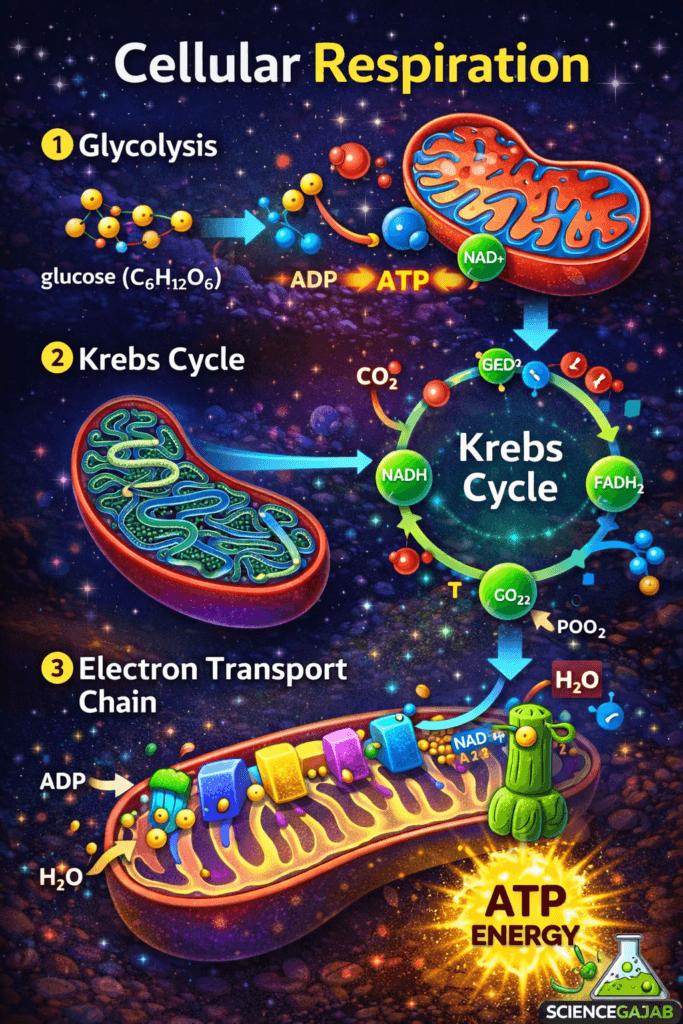
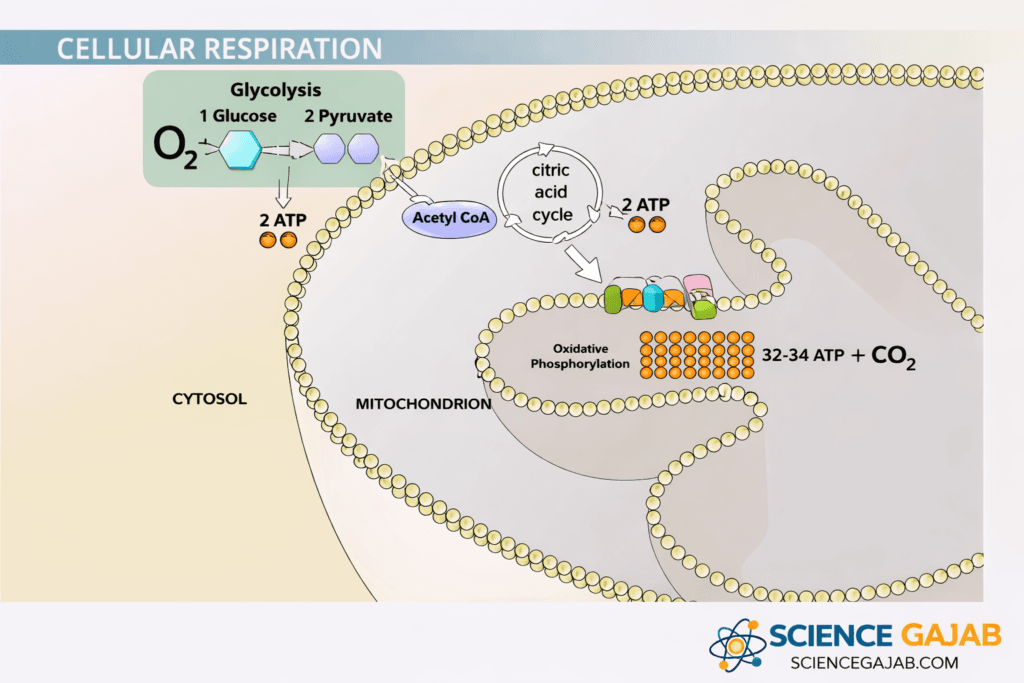
👉 Glucose (food) + Oxygen → Energy (ATP) + Carbon dioxide + Water
This energy (ATP) powers everything in your body.
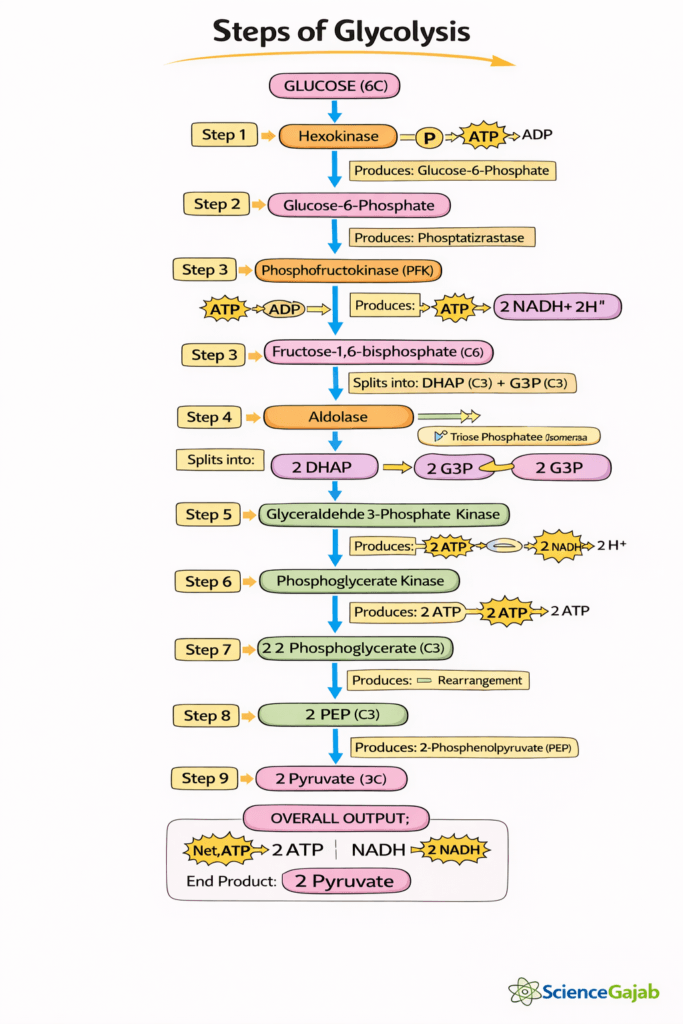
🧬 Step 1: Glycolysis (Breaking Sugar)
learn Why is Glycolysis Important?
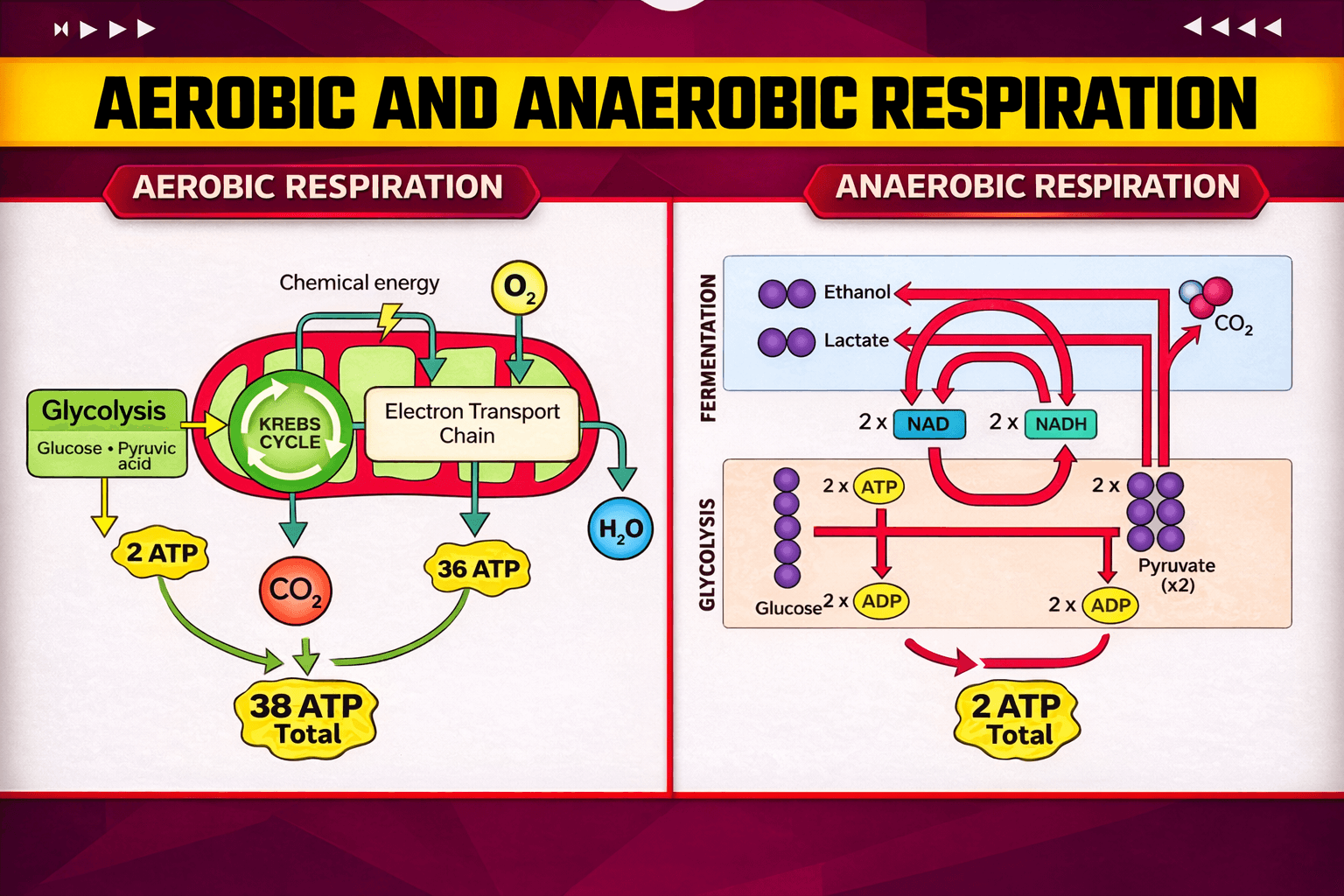
learn Aerobic vs anaerobic respiration breakdown
📍 Happens in: Cytoplasm (outside mitochondria)
What happens:
- Glucose (sugar) is split into 2 smaller molecules (pyruvate)
- A small amount of energy is released
👉 Output:
- 2 ATP (small energy)
- Pyruvate (goes to next step)
💡 Think of it like:
Breaking a big log into smaller pieces to burn later
🔥 Step 2: Krebs Cycle (Energy Extraction)
🧬krebs cycle Step-by-Step Reactions with Enzymes
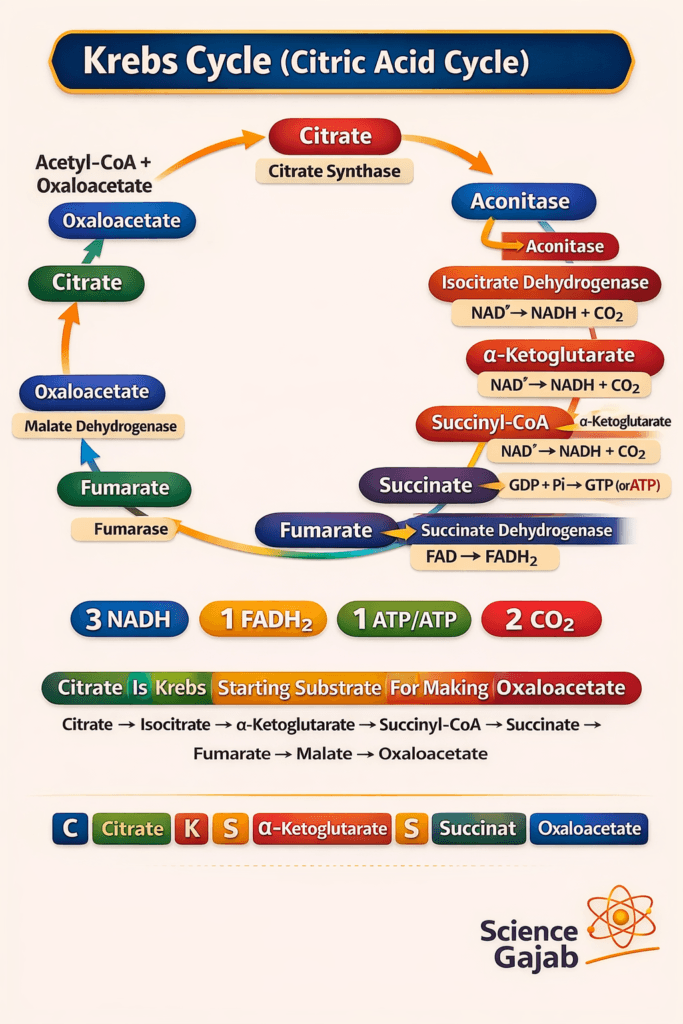
- Acetyl-CoA + Oxaloacetate → Citrate
🔹 Enzyme: Citrate synthase - Citrate → Isocitrate
🔹 Enzyme: Aconitase - Isocitrate → α-Ketoglutarate
🔹 Enzyme: Isocitrate dehydrogenase
🔹 Produces: NADH + CO₂ - α-Ketoglutarate → Succinyl-CoA
🔹 Enzyme: α-Ketoglutarate dehydrogenase
🔹 Produces: NADH + CO₂ - Succinyl-CoA → Succinate
🔹 Enzyme: Succinyl-CoA synthetase
🔹 Produces: GTP (or ATP) - Succinate → Fumarate
🔹 Enzyme: Succinate dehydrogenase
🔹 Produces: FADH₂ - Fumarate → Malate
🔹 Enzyme: Fumarase - Malate → Oxaloacetate
🔹 Enzyme: Malate dehydrogenase
🔹 Produces: NADH
⚡ Energy Yield per Cycle
- 3 NADH
- 1 FADH₂
- 1 ATP (or GTP)
- 2 CO₂
learn 🔋 How Mitochondria Actually Produce Energy (Simple Explanation)
📍 Key Points
- Occurs in mitochondrial matrix
- Final common pathway for carbohydrates, fats, proteins
- Succinate dehydrogenase is located in inner mitochondrial membrane
- Cycle regenerates oxaloacetate
🧠 Quick Memory Trick
👉 “Citrate Is Krebs Starting Substrate For Making Oxaloacetate”
(Citrate → Isocitrate → α-KG → Succinyl-CoA → Succinate → Fumarate → Malate → Oxaloacetate)
📍 Happens in: Mitochondria
What happens:
- Pyruvate is further broken down
- Carbon dioxide is released (you breathe this out)
- Energy carriers are created
👉 Output:
- CO₂
- NADH & FADH₂ (energy carriers)
💡 Think of it like:
Extracting all possible energy from the fuel
⚡ Step 3: Electron Transport Chain (Main Energy Production)
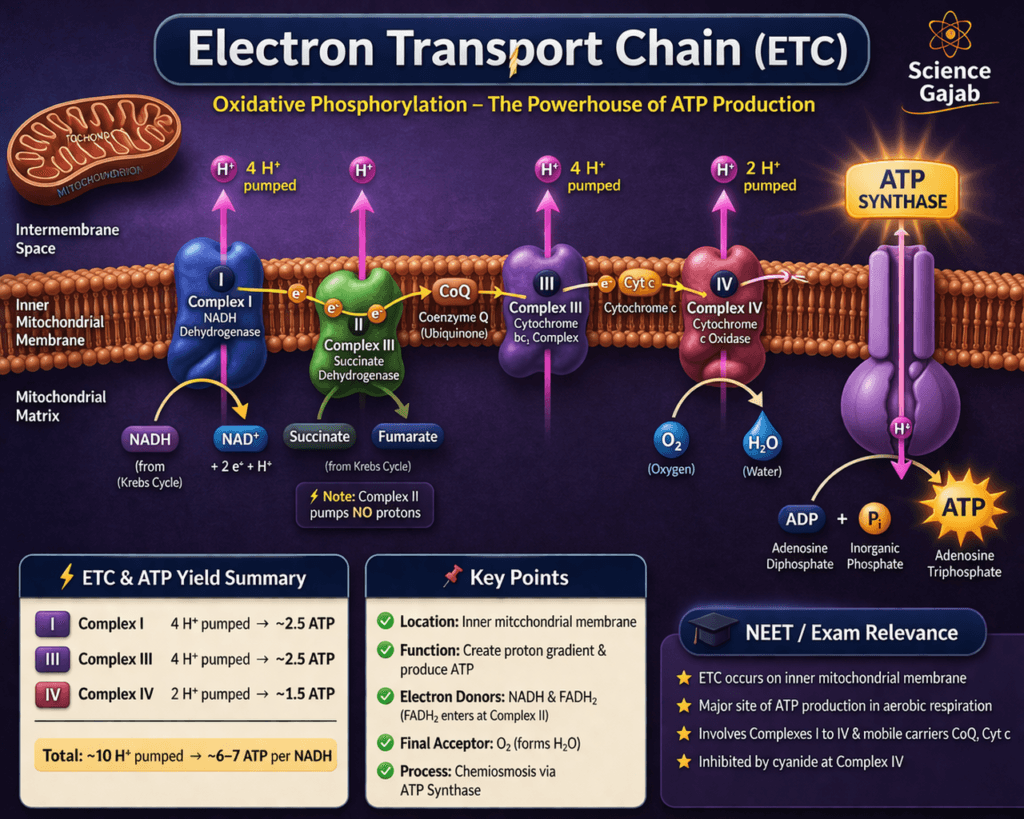
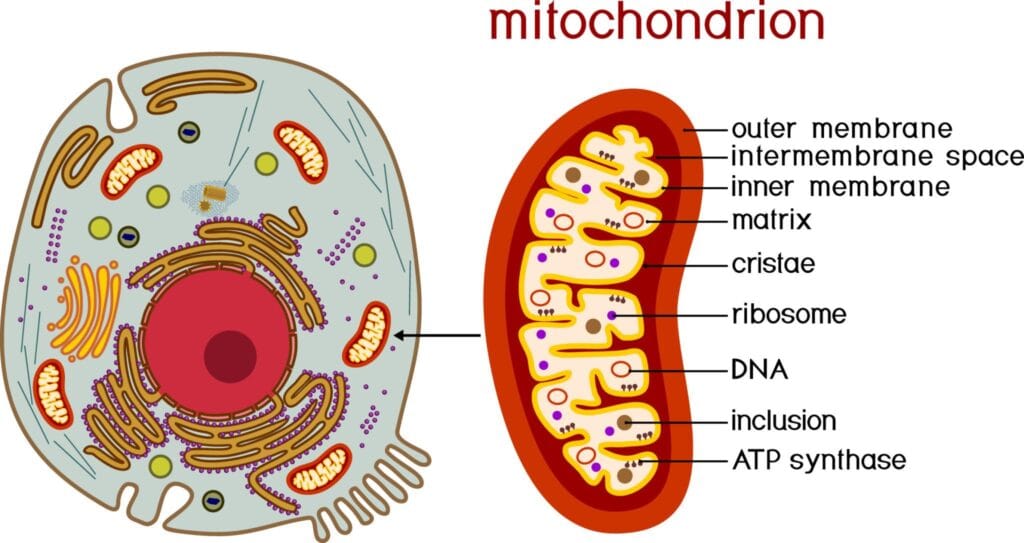
📍 Happens in: Inner membrane of mitochondria
What happens:
- Energy carriers (NADH, FADH₂) deliver energy
- Oxygen is used
- A large amount of ATP is produced
👉 Output:
- ~30+ ATP (MAIN energy)
- Water
💡 Think of it like:
A power plant generating electricity from fuel
🧠 Super Simple Summary
| Step | What Happens | Energy Produced |
|---|---|---|
| Glycolysis | Glucose splits | Small (2 ATP) |
| Krebs Cycle | Fuel processed | Medium |
| Electron Transport | Energy generated | Huge (30+ ATP) |
🔄 Why Oxygen Is So Important
👉 Without oxygen:
- The final step stops
- ATP production drops
- Cells can’t function properly
That’s why breathing is essential for life.
learn Plant Kingdom Made EASY: Algae → Angiosperms in One Simple Trick 🌱
⚡ Real-Life Example
- Eating food = providing fuel
- Breathing = providing oxygen
- Cells = power plants
👉 Result: Energy to move, think, live
🧩 Easy Analogy
Think of cellular respiration like cooking:
- Cut ingredients → Glycolysis
- Cook them → Krebs Cycle
- Serve energy → Electron Transport Chain
learn BIOLOGICAL CLASSIFICATION EXAMPLES
🔥 Final Thought
You don’t see it…
You don’t feel it…
But every second:
👉 Billions of cells are converting food into energy to keep you alive.
🔋 You are powered by microscopic energy factories working nonstop.
How is Plant Respiration Different from Photosynthesis?
📌 Factors affecting plant photosynthesis
to