
⚡ Quick Answer
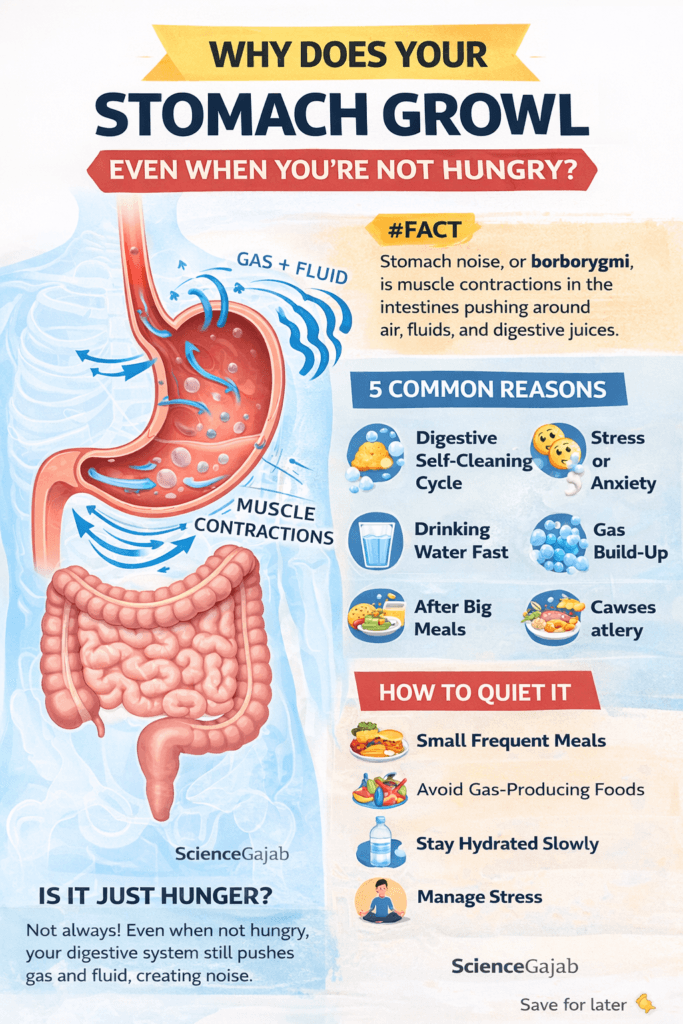
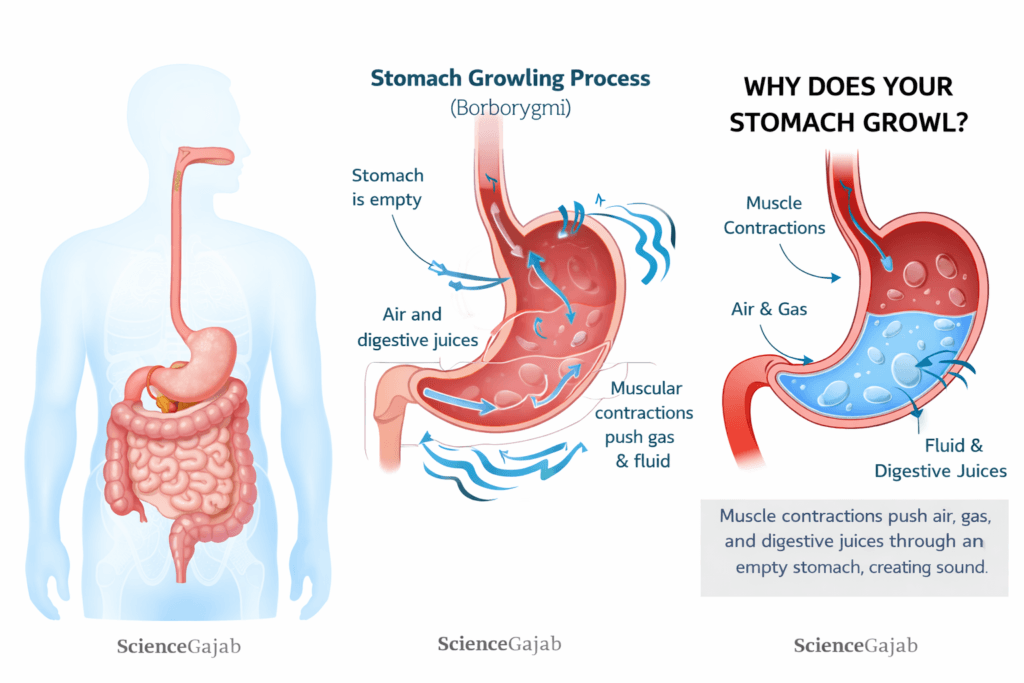
Your stomach makes noise—even when you’re not hungry—because of muscle contractions in your digestive system called borborygmi. These movements push air, fluids, and leftover food through your intestines, creating rumbling sounds. It’s a completely normal sign that your digestive system is active.
😮 Ever Noticed This?
why does my stomach growl even when i’m not hungry
You’re sitting quietly in class, office, or a meeting…
And suddenly—
GRRRRRR… 😳
👉 Embarrassing, right?
But here’s the surprising truth:
It doesn’t always mean you’re hungry.
Let’s break down the real science in the simplest way possible 👇
learn Why do hiccups come suddenly and won’t stop?
🧠 What Actually Causes Stomach Noise?
The sound you hear is called borborygmi (pronounced bor-bo-rig-mee).This process, known as borborygmi, is explained by experts at the Cleveland Clinic as a normal digestive activity.
It happens due to:
🔹 1. Continuous Movement in Your Gut
Your digestive system never really stops working.
Even when you’re not eating:
- Your stomach and intestines contract and relax
- This movement pushes:
- Gas
- Liquids
- Digestive juices
👉 When these move around, they create vibrations = sound
🔹 2. The “Cleaning Mode” of Your Stomach
Between meals, your body activates something called the
👉 Migrating Motor Complex (MMC)
Think of it as:
🧹 “self-cleaning cycle” of your stomach
It:
- Clears leftover food
- Pushes waste forward
- Prepares your gut for the next meal
👉 This process is one of the main reasons your stomach growls when empty
Research from the National Institute of Diabetes and Digestive and Kidney Diseases explains how digestive muscle contractions continue even when the stomach is empty.
🔹 3. Gas + Liquid = Sound Amplifier
When your stomach is full:
- Food absorbs sound → quieter
When empty:
- Only gas + liquid present → louder noise
👉 That’s why:
Empty stomach = louder growling
discover why do we yawn
🍽️ If You’re Not Hungry, Why Does It Feel Like Hunger?
Good question.
Sometimes, your brain gets confused because:
🔸 Hormone Signal (Ghrelin)
Your body releases a hormone called ghrelin before meals.
It:
- Signals hunger to your brain
- Triggers stomach contractions
👉 Result:
You may hear sound + feel mild hunger, even if you recently ate
🔸 Habit-Based Timing
If you eat daily at:
- 9 AM
- 2 PM
Your body expects food at that time.
👉 Even without real hunger:
Your stomach may start making noise.
learn Why Do You Feel Sleepy After Eating? The Real Reason Explained
🔍 5 Common Situations When Stomach Growls (Without Hunger)
1. Long Gap Between Meals
Even if you’re not “feeling hungry,” your gut is still active.
2. Stress or Anxiety 😰
Stress can:
- Increase gut movement
- Trigger unusual stomach sounds
👉 Ever noticed stomach noise before exams?
3. Drinking Water Quickly 💧
Water moving through an empty stomach can create:
👉 sloshing + rumbling sounds
4. After Digestion Ends
Once food is processed:
👉 your stomach switches to cleaning mode (MMC)
5. Gas Build-Up
Gas from digestion or swallowed air can:
👉 amplify internal sounds
⚠️ When Should You Be Concerned?
Most stomach noises are completely normal.
But watch out if you also have:
- Severe abdominal pain
- Persistent bloating
- Diarrhea or constipation
- Unusual weight loss
These could indicate:
- Digestive disorders
- Food intolerance
- Gut infection
👉 In that case, consult a doctor.
learn Why do we sneeze suddenly?
🧪 Interesting Science Facts🚀
- Your stomach growling can be heard from several feet away in a quiet room 😳
- Even animals experience borborygmi 🐶
- The sound comes mostly from your intestines, not just stomach
discover why do muscles shakes during exercise
🧘 How to Reduce Stomach Noise (Practical Tips)
✅ 1. Eat Small Frequent Meals
Prevents long empty gaps
✅ 2. Stay Hydrated
But avoid gulping water too fast
✅ 3. Avoid Excess Gas Foods
Like:
- Soda
- Beans
- Fried food
✅ 4. Manage Stress
Try:
- Deep breathing
- Light exercise
✅ 5. Don’t Skip Meals
Even small snacks help stabilize gut activity
🧠 Real-Life Example
Imagine your digestive system like a washing machine:
- When full → clothes absorb sound → quiet
- When empty → only water + air → noisy
👉 Same happens in your stomach!
❓ FAQs
👉 Yes! It often means your digestive system is active and healthy.
👉 Because surroundings are quiet + stomach is empty
👉 Yes, due to digestion and gas movement
👉 Not necessarily, but reduced movement can sometimes indicate slower digestion
🔥 Conclusion
So next time your stomach makes noise…
👉 Don’t panic
👉 Don’t feel embarrassed
Because:
It’s not just hunger — it’s your body doing its job perfectly.
Your digestive system is:
- Cleaning
- Moving
- Preparing
👉 That rumbling sound?
That’s the sound of life inside you.
When Is It Normal vs When to See a Doctor?
Stomach noises are usually harmless and a normal part of digestion. However, medical attention may be needed if these sounds are accompanied by:
- Persistent abdominal pain
- Severe bloating
- Changes in bowel habits
- Unexplained weight loss
In such cases, consulting a qualified healthcare professional is recommended.
👨⚕️ Real-Life Observation
In everyday situations, stomach growling often becomes noticeable in quiet environments like classrooms, meetings, or at night. This is not because the stomach suddenly becomes more active, but because external noise is reduced, making internal digestive sounds easier to hear.
Many people report increased stomach noises during long gaps between meals or during stress, which aligns with how the digestive system responds to hormonal and neural signals.
This article is for educational purposes only and is based on trusted medical sources.
📚 References
- National Institute of Diabetes and Digestive and Kidney Diseases
- Mayo Clinic
- Cleveland Clinic
- Johns Hopkins Medicine
- Britannica
This article is medically reviewed and based on trusted sources.
About author Dr sanjay prajapati
About Sciencegajab, Editorial Policy ,Privacy policy