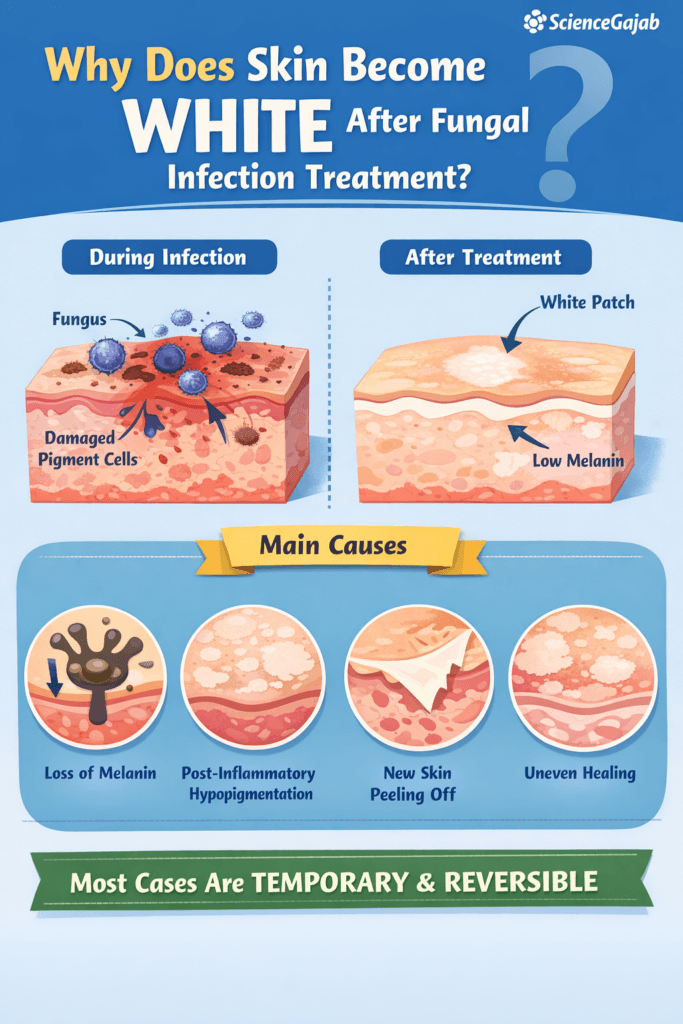

why does skin become white after fungal infection treatment
🔍Introduction
Have you ever noticed that after treating a fungal infection, your skin looks white, lighter, or patchy compared to the surrounding area?
Don’t panic—this is actually very common and usually not dangerous.
In this article, we’ll explain:
- The real scientific reason behind white skin after fungal infection
- Whether it’s permanent or temporary
- And how to restore your natural skin color faster
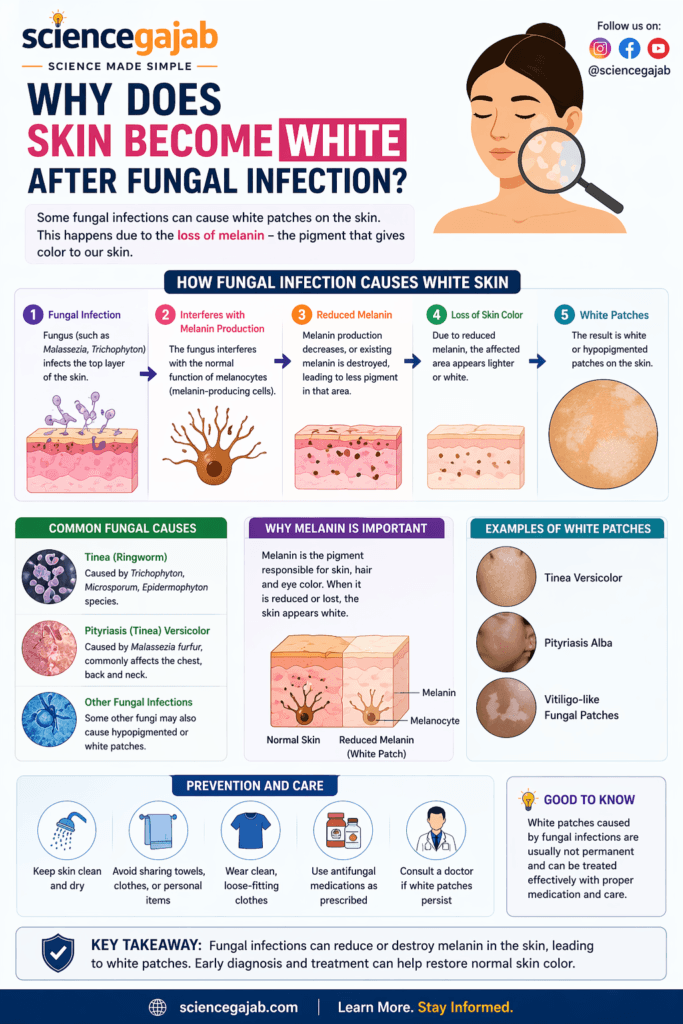
White Patches After Fungal Infection Treatment
- Caused by temporary loss of melanin (skin pigment)
- Fungus damages pigment-producing cells (melanocytes)
- Skin heals first, color returns later
- Patches appear white or lighter than surrounding skin
- Usually fades within 2–8 weeks
🔥 Skin Discoloration After Fungal Infection Cure
- Occurs due to uneven skin healing
- Inflammation disrupts normal pigmentation
- Skin may look lighter, darker, or patchy
- Common after infection treatment
- Improves gradually with time
Post-Inflammatory Hypopigmentation (Fungal Infection)
- Caused by inflammation affecting melanocytes
- Leads to reduced melanin production
- Skin appears lighter in affected areas
- Not harmful or permanent
- Recovers naturally over weeks
Q .Why Skin Becomes Lighter After Fungal Infection
- Fungus interferes with melanin production
- Damaged skin layers peel off
- New skin underneath is lighter
- Pigment takes time to normalize
- Temporary condition in most cases
🔥 Does Antifungal Cream Cause Skin Whitening?
- ❌ Does NOT bleach or whiten skin
- ✔ Removes fungus from infected area
- ✔ Causes peeling of damaged skin
- ✔ New skin may appear lighter
- Effect is temporary, not permanent
How to Restore Skin Color After Fungal Infection
- ☀️ Get 10–15 minutes sunlight daily
- 🧴 Use moisturizers (aloe vera, coconut oil)
- 🥕 Eat foods rich in vitamin A, E, zinc
- 🚫 Avoid harsh soaps and chemicals
- ⏳ Be patient—skin heals naturally
why does skin become white after fungal infection treatment
🔥 Is White Skin After Fungal Infection Permanent?
- ❌ Usually NOT permanent
- ✔ Pigment returns gradually
- ⏳ Takes 2 weeks to 3 months
- Severe cases may take longer
- Consult doctor if no improvement
Luliconazole(Antifungal drug) Side Effects (Skin Whitening)
- ❌ Does NOT cause true whitening
- ✔ Treats fungal infection effectively
- ✔ May cause temporary light patches
- ✔ Due to healing and skin renewal
- Color normalizes over time
🔥 How Long Does Hypopigmentation Last After Infection?
- ⏳ Typically lasts 2–8 weeks
- Severe cases: up to 2–3 months
- Depends on skin healing speed
- Proper care speeds recovery
- Usually resolves without treatment
⚡ Quick Featured Summary
- White patches after fungal infection are due to temporary hypopigmentation
- Caused by reduced melanin production
- Skin heals first, color returns later
- Recovery time: 2 weeks to 3 months
- Condition is normal and reversible
How Vaccines Train Your Immune System to Fight Dangerous Viruses
🦠 What Happens During a Fungal Infection?
A fungal infection (like ringworm or tinea) affects the outer layer of your skin.
Common symptoms include:
- Itching
- Redness
- Circular rashes
- Skin scaling
The fungus damages the skin and disrupts normal pigment production.
⚪ Why Does Skin Turn White After Treatment?
1. Loss of Melanin (Main Reason)
Melanin is the pigment responsible for your skin color.
👉 During infection:
- Fungus interferes with melanocytes (cells that produce melanin)
👉 After treatment:
- The infection is gone
- BUT melanin production is still slow
➡️ Result: White or lighter patches
2. Post-Inflammatory Hypopigmentation
After any skin inflammation, your body needs time to recover.
This condition is called:
👉 Post-inflammatory hypopigmentation
It means:
- Skin heals
- But pigment hasn’t returned yet
3. Dead Skin Peeling Effect
Antifungal creams (like Luliconazole) remove infected layers.
👉 This reveals:
- Fresh new skin underneath
- Which appears lighter
4. Uneven Skin Recovery
Healthy skin = even tone
Healing skin = uneven tone
So patches may look:
- White
- Pink
- Slightly different from surrounding skin
How antibiotics block bacterial processes
📌 Is This Permanent?
👉 NO (in most cases)
White patches are usually:
- Temporary
- Reversible
Skin color returns in:
- 2–6 weeks (mild cases)
- 2–3 months (deeper infection)
⚠️ When Should You Worry?
Consult a doctor if:
- White patches are increasing
- No improvement after 3 months
- No sensation or numbness
- Sharp borders like vitiligo
💊 Does Treatment Cause This?
Yes, indirectly.
Common antifungals like:
- Luliconazole
- Clotrimazole
- Ketoconazole
👉 Kill fungus but don’t instantly restore pigment
Immune System: How Your Body Fights Diseases
🌿 How to Restore Normal Skin Color Faster
1. Sunlight Exposure (Very Important)
- Helps stimulate melanin production
- 10–15 minutes daily is enough
2. Moisturize Regularly
Use:
- Aloe vera gel
- Coconut oil
👉 Keeps skin healthy and supports recovery
3. Avoid Harsh Soaps
Harsh chemicals delay healing
Use:
- Mild, pH-balanced cleansers
4. Continue Medication (If Advised)
Stopping early can:
- Cause recurrence
- Delay pigment recovery
5. Eat Skin-Healthy Foods
Include:
- Vitamin A (carrots)
- Vitamin E (nuts)
- Zinc (seeds)
💉 How Vaccines Work (The Science Explained)
🚫 What NOT to Do
- ❌ Don’t scratch the area
- ❌ Don’t overuse steroid creams
- ❌ Don’t panic (this is normal)
🧠 Scientific Explanation (Simple)
Fungus damages:
👉 Melanocytes
Treatment removes fungus but:
👉 Melanocytes need time to recover
So:
➡️ Skin heals first
➡️ Color comes later
📊 Quick Summary Table
| Condition | Cause | Duration |
|---|---|---|
| White patches | Low melanin | Temporary |
| Uneven tone | Healing phase | Few weeks |
| Normal skin | Full recovery | 1–3 months |
❓ FAQs
👉 No. Vitiligo is autoimmune. This is temporary pigment loss.
👉 No, they don’t bleach skin.
👉 Usually 2–8 weeks depending on severity.
👉 Not recommended. Focus on healing instead.
🔗 Suggestions must read
📢 Final Verdict
White skin after fungal infection treatment is:
✔ Normal
✔ Temporary
✔ Treatable
Your skin is simply healing and rebuilding pigment.
⚠️ Medical Disclaimer
This article is for educational purposes only and does not replace professional medical advice. Always consult a qualified doctor for diagnosis and treatment.
📚 References
World Health Organization
General information on skin diseases and infections.
American Academy of Dermatology
Information on fungal skin infections, treatment, and skin discoloration after healing.
National Health Service
Guides on fungal infections (tinea) and post-inflammatory skin changes.
Mayo Clinic
Medical insights on skin conditions, hypopigmentation, and recovery processes.
DermNet NZ
Detailed explanation of post-inflammatory hypopigmentation and skin healing.
Centers for Disease Control and Prevention
Overview of fungal infections and general skin health.
About author Dr Sanjay Prajapati
Editorial Policy, About Sciencegajab,Privacy policy
https://www.instagram.com/sciencegajab/?hl=en