Why Do Feet Become Cold
Why Do Feet Become Cold?
Have you ever noticed your feet feeling unusually cold even when the weather is normal?
Some people experience:
- Cold toes at night
- Freezing feet during winter
- One foot colder than the other
- Cold feet despite wearing socks
Sometimes cold feet are completely normal. But in other cases, they may signal:
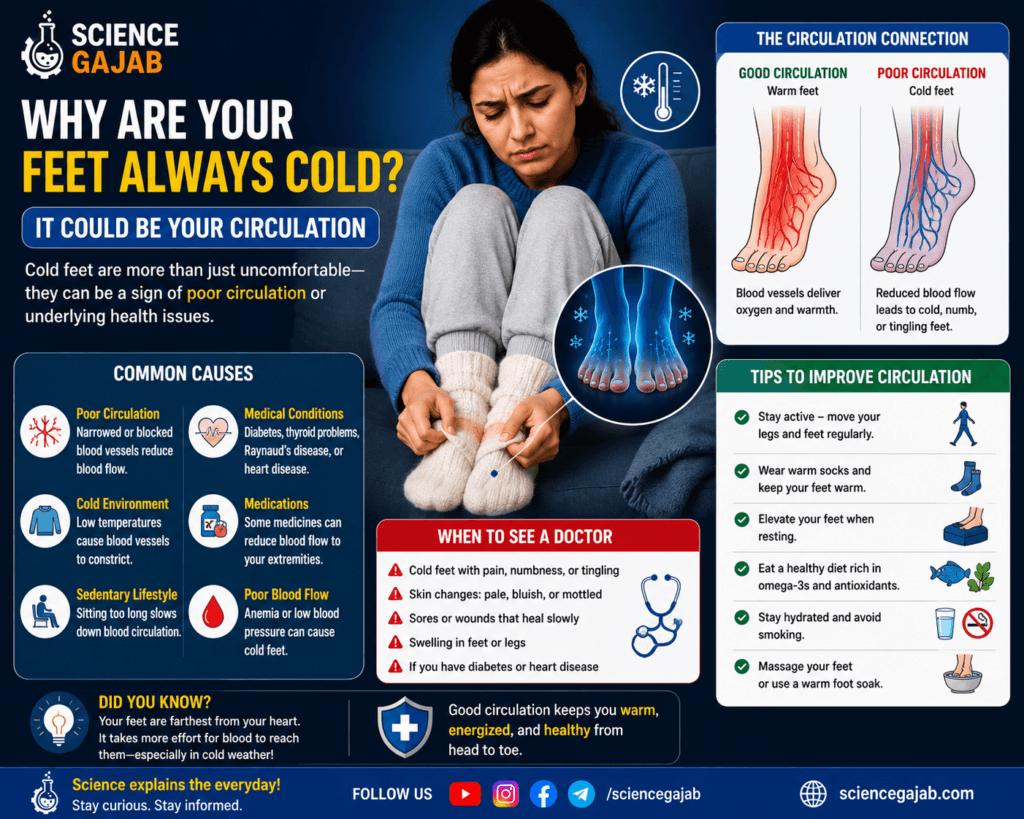
- Poor blood circulation
- Nerve problems
- Diabetes
- Anxiety
- Thyroid disease
In this article, we’ll explain:
- Why feet become cold
- Common harmless causes
- Medical conditions linked to cold feet
- Warning signs
- Treatment and prevention
Everything is explained in simple human language.
Is It Normal for Feet to Feel Cold?
Yes — sometimes.
Feet often feel colder because they are far from the heart and lose heat easily.
Cold feet commonly happen due to:
- Cold weather
- Sitting still for long periods
- Poor insulation
- Reduced movement
Temporary cold feet are usually harmless.
Why Do Feet Burn at Night? Causes, Warning Signs, and When to Worry
How the Body Keeps Feet Warm
The body uses blood circulation to maintain temperature.
Warm blood travels from the heart through arteries to:
- Legs
- Feet
- Toes
When circulation decreases, feet may feel cold.
Common Causes of Cold Feet
1. Cold Weather
This is the most common cause.
In cold environments:
- Blood vessels narrow
- Heat is preserved for vital organs
- Feet receive less warm blood
This is a normal body response.
2. Poor Blood Circulation
Reduced blood flow is a major reason for cold feet.
When circulation decreases:
- Less warm blood reaches feet
- Toes become cold
- Skin may appear pale or bluish
Common Signs
- Cold toes
- Numbness
- Tingling
- Weak pulses
- Leg pain while walking
3. Anxiety and Stress
Stress activates the “fight or flight” response.
The body narrows blood vessels in hands and feet to protect vital organs.
This may cause:
- Cold feet
- Sweaty feet
- Fast heartbeat
Why Do You Feel Sleepy After Eating? The Real Reason Explained
4. Sitting Too Long
Long sitting reduces blood circulation to legs and feet.
Common examples:
- Office work
- Long travel
- Watching TV for hours
Movement usually improves symptoms.
5. Diabetes
Diabetes is a very important medical cause.
High blood sugar can damage:
- Blood vessels
- Nerves
This may cause:
- Cold feet
- Burning sensation
- Numbness
- Tingling
This nerve damage is called diabetic neuropathy.
Signs of Diabetes Visible on Feet: 10 Warning Signs You Should Never Ignore
6. Anemia
In anemia, the body carries less oxygen.
The body may reduce circulation to extremities, causing:
- Cold hands
- Cold feet
- Weakness
- Fatigue
Signs of Anemia: 15 Warning Symptoms You Should Never Ignore
7. Hypothyroidism (Low Thyroid)
Low thyroid hormone slows metabolism.
This can cause:
- Cold intolerance
- Weight gain
- Dry skin
- Cold feet
Understanding Hypothyroidism: Causes and Symptoms
8. Raynaud’s Phenomenon
This condition causes sudden narrowing of blood vessels.
Usually triggered by:
- Cold weather
- Stress
What Happens
Fingers or toes may turn:
- White
- Blue
- Red
They may feel:
- Very cold
- Painful
- Numb

9. Peripheral Artery Disease (PAD)
This is reduced blood flow due to narrowed arteries.
It is more common in:
- Smokers
- Diabetics
- Elderly people
Symptoms
- Cold feet
- Leg pain while walking
- Slow wound healing
- Weak pulses
This condition should not be ignored.
10. Nerve Problems
Nerves help detect temperature.
Damage to nerves may create abnormal sensations like:
- Coldness
- Burning
- Tingling
Even when the feet are physically warm.
11. Smoking
Smoking damages blood vessels and reduces circulation.
Nicotine causes:
- Blood vessel narrowing
- Reduced oxygen supply
- Cold extremities
12. Low Body Weight
Very thin people may have less body fat insulation.
They lose heat more easily.
13. Heart Problems
Weak heart pumping reduces circulation.
This may cause:
- Cold feet
- Swelling
- Fatigue
- Breathlessness
Numb Feet: Common Causes Explained – Symptoms, Warning Signs, and Treatment
Symptoms That May Occur Along With Cold Feet
Cold feet may occur with:
- Numbness
- Tingling
- Pain
- Color changes
- Swelling
- Burning sensation
Associated symptoms help doctors identify the cause.
Why Do Feet Become Cold at Night?
Possible reasons include:
- Reduced nighttime circulation
- Cold room temperature
- Anxiety
- Diabetes
- Nerve problems
Night symptoms are common in circulation disorders.
Why Is One Foot Colder Than the Other?
One-sided coldness may suggest:
- Blood flow blockage
- Nerve compression
- Artery narrowing
Sudden severe one-sided cold foot needs urgent medical attention.
Cold Feet and Poor Circulation
Poor circulation is one of the most important causes.
Blood circulation may decrease due to:
- Diabetes
- Smoking
- High cholesterol
- Peripheral artery disease
Signs of Dangerous Poor Circulation
Seek medical evaluation if you have:
- Severe pain
- Blue or black toes
- Non-healing wounds
- Leg cramps while walking
- Sudden cold foot
These may indicate serious artery problems.
Your Heart Can Stop in Minutes — Here’s How Artery Blockage Happens
Can Anxiety Really Cause Cold Feet?
Yes.
Stress hormones narrow blood vessels temporarily.
This reduces blood flow to:
- Hands
- Feet
Many people notice cold feet during anxiety attacks.
Why Do Diabetics Get Cold Feet?
Diabetes damages:
- Small blood vessels
- Peripheral nerves
This causes:
- Reduced circulation
- Altered sensation
- Neuropathy
Diabetic foot care is extremely important.
Difference Between Cold Feet From Weather vs Disease
| Normal Cold Feet | Disease-Related Cold Feet |
|---|---|
| Improves with warmth | Persistent |
| Occurs in winter | Can happen anytime |
| No major symptoms | Pain/numbness may occur |
| Both feet equally | Sometimes one-sided |
Can Vitamin Deficiency Cause Cold Feet?
Yes.
Low levels of:
- Vitamin B12
- Iron
- Folate
may contribute to nerve and circulation problems.
Can Low Vitamins Damage Nerves? (Simple Explanation You Can Trust)
How Doctors Diagnose Cold Feet Causes
Doctors may use:
- Physical examination
- Blood sugar tests
- Thyroid tests
- Blood circulation tests
- Doppler ultrasound
- Nerve studies
How to Improve Cold Feet
1. Keep Feet Warm
Wear socks and proper footwear.
2. Exercise Regularly
Walking improves circulation.
3. Stop Smoking
Smoking worsens circulation dramatically.
4. Control Diabetes
Stable blood sugar protects nerves and vessels.
5. Avoid Sitting Too Long
Move legs regularly.
6. Manage Stress
Relaxation may reduce vessel constriction.
Foods That Support Better Circulation
Helpful foods include:
- Fruits
- Vegetables
- Nuts
- Whole grains
- Iron-rich foods
Hydration is also important.
Can Cold Feet Be Dangerous?
Usually not.
But cold feet may become concerning if associated with:
- Severe pain
- Color changes
- Numbness
- Wounds
- One-sided symptoms
These may indicate circulation problems.
Interesting Facts About Cold Feet
1. Feet Lose Heat Quickly
Because they are far from the body core.
2. Stress Changes Blood Flow
Emotions directly affect circulation.
3. Smoking Is a Major Cause
Nicotine severely narrows blood vessels.
Frequently Asked Questions (FAQs)
Possible causes include poor circulation, anxiety, diabetes, or thyroid problems.
Yes, diabetes commonly damages nerves and blood vessels.
Sometimes yes, especially if associated with pain or numbness.
Yes, stress hormones can reduce blood flow temporarily.
Seek medical help if symptoms are severe, one-sided, painful, or associated with wounds or discoloration.
Final Thoughts
Cold feet are very common and often harmless, especially during cold weather or inactivity.
However, persistent cold feet may sometimes signal:
- Poor circulation
- Diabetes
- Thyroid disease
- Nerve damage
- Peripheral artery disease
Understanding the cause is important because early treatment can prevent complications.
If cold feet are associated with pain, numbness, color changes, or non-healing wounds, medical evaluation is strongly recommended.
HEART FUNCTIONING AND PROBLEMS
Medical Disclaimer
This article is for educational awareness only and does not replace professional medical advice, diagnosis, or treatment.
Sources & References
- American Diabetes Association
- Mayo Clinic educational resources
- Standard physiology textbooks
- Vascular medicine educational references
Reviewed Topic
Educational overview of cold feet causes, circulation problems, diabetes, nerve disorders, and prevention explained in simple language for general readers.
https://www.facebook.com/sciencegajab/