Purple Feet and Poor Circulation: Causes, Warning Signs, and When to Seek Medical Help
Have you ever noticed your feet turning purple, blue, or dark red? While temporary color changes may occur due to cold temperatures, persistent purple feet can sometimes indicate poor circulation or an underlying medical condition.
Healthy feet typically appear pink or flesh-colored because oxygen-rich blood flows continuously through the tissues. When circulation becomes impaired, oxygen delivery may decrease, causing noticeable color changes.
Although purple feet are not always dangerous, they should never be ignored, especially if they occur with pain, swelling, numbness, or slow-healing wounds.
In this article, we’ll explore why feet turn purple, how poor circulation affects foot color, common causes, warning signs, treatment options, and when to seek medical care.
Why Do Feet Turn Purple?
Blood carries oxygen throughout the body.
When blood flow slows or oxygen levels decrease, the color of the skin may change.
Purple feet often occur because:
- Blood pools in the veins
- Oxygen levels are reduced
- Blood vessels narrow
- Circulation becomes impaired
The exact shade may vary from reddish-purple to dark blue depending on the cause.
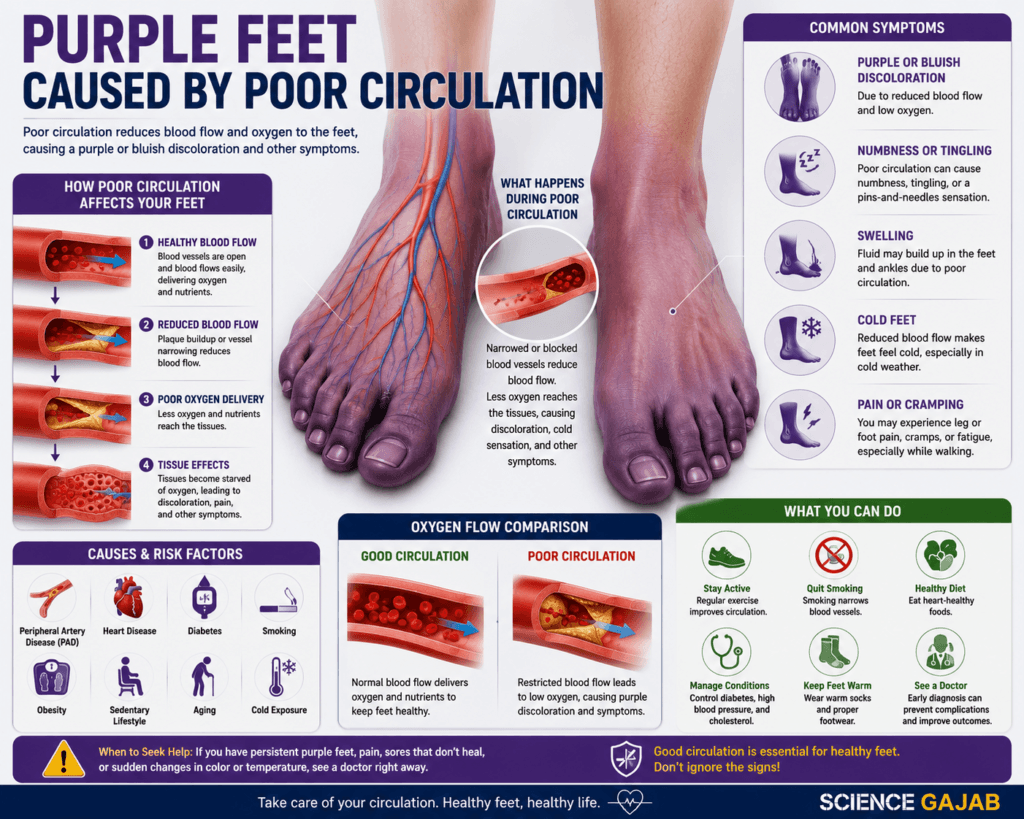
What Does Poor Circulation Mean?
Poor circulation occurs when blood does not flow efficiently through the blood vessels.
Since the feet are the farthest body part from the heart, circulation problems often appear there first.
Common Symptoms of Poor Circulation
- Cold feet
- Purple discoloration
- Numbness
- Tingling
- Leg cramps
- Slow-healing wounds
- Hair loss on the legs
Poor circulation may affect one foot or both feet.
Why Do Feet Burn at Night? Causes, Warning Signs, and When to Worry
1. Peripheral Artery Disease (PAD)
One of the most serious causes of purple feet is peripheral artery disease.
PAD develops when fatty deposits narrow the arteries supplying blood to the legs and feet.
Symptoms
- Purple or pale feet
- Cold feet
- Leg pain while walking
- Weak pulses
- Slow wound healing
Risk Factors
- Smoking
- Diabetes
- High cholesterol
- High blood pressure
- Advanced age
PAD increases the risk of heart attack and stroke.
2. Chronic Venous Insufficiency
Veins contain one-way valves that help blood return to the heart.
When these valves weaken, blood may pool in the legs and feet.
Symptoms
- Purple discoloration
- Swelling
- Leg heaviness
- Varicose veins
- Skin changes
The discoloration often becomes more noticeable after standing for long periods.
3. Raynaud’s Phenomenon
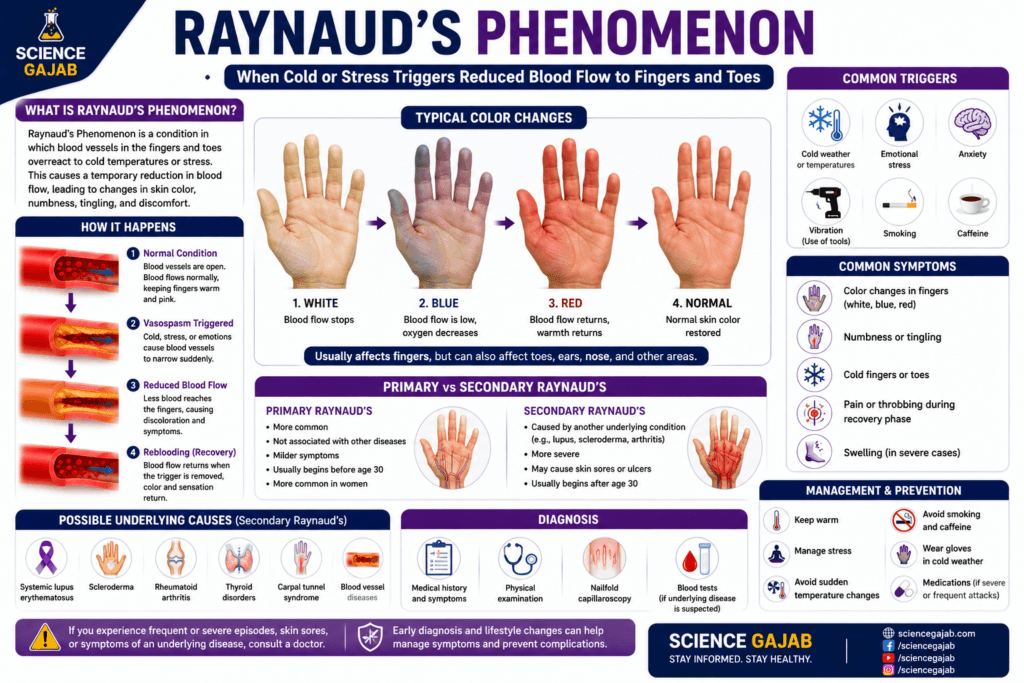
Raynaud’s phenomenon causes small blood vessels to narrow temporarily.
This often occurs after exposure to cold temperatures or emotional stress.
Typical Color Changes
- White
- Blue
- Purple
- Red
Additional Symptoms
- Numbness
- Tingling
- Cold sensation
- Pain during warming
Most cases are manageable with lifestyle changes.
4. Cold Exposure
Cold weather naturally causes blood vessels to constrict.
This response helps preserve heat for vital organs.
Temporary Symptoms
- Purple toes
- Cold feet
- Mild numbness
Normal color usually returns once the feet warm up.
Persistent discoloration after warming should be evaluated.
Why Do Feet Become Cold? (Simple Explanation You Can Trust)
5. Diabetes and Vascular Disease
Diabetes can damage both blood vessels and nerves.
Reduced circulation combined with nerve damage increases the risk of foot complications.
Symptoms
- Purple feet
- Numbness
- Tingling
- Slow-healing wounds
- Foot ulcers
Diabetic foot complications require prompt medical attention.
Signs of Diabetes Visible on Feet: 10 Warning Signs You Should Never Ignore
6. Blood Clots
A blood clot may block blood flow and cause sudden discoloration.
Warning Signs
- One purple foot
- Sudden swelling
- Pain
- Warm skin
- Tenderness
A blood clot can become life-threatening if it travels to the lungs.
Seek immediate medical care if these symptoms develop.
7. Heart Failure
Heart failure reduces the heart’s ability to pump blood effectively.
This may cause blood and fluid to accumulate in the lower limbs.
Symptoms
- Purple feet
- Swelling
- Fatigue
- Shortness of breath
- Rapid weight gain
Heart-related circulation problems require medical evaluation.
❤️ What Happens During a Heart Attack? The Science Explained
8. Acrocyanosis
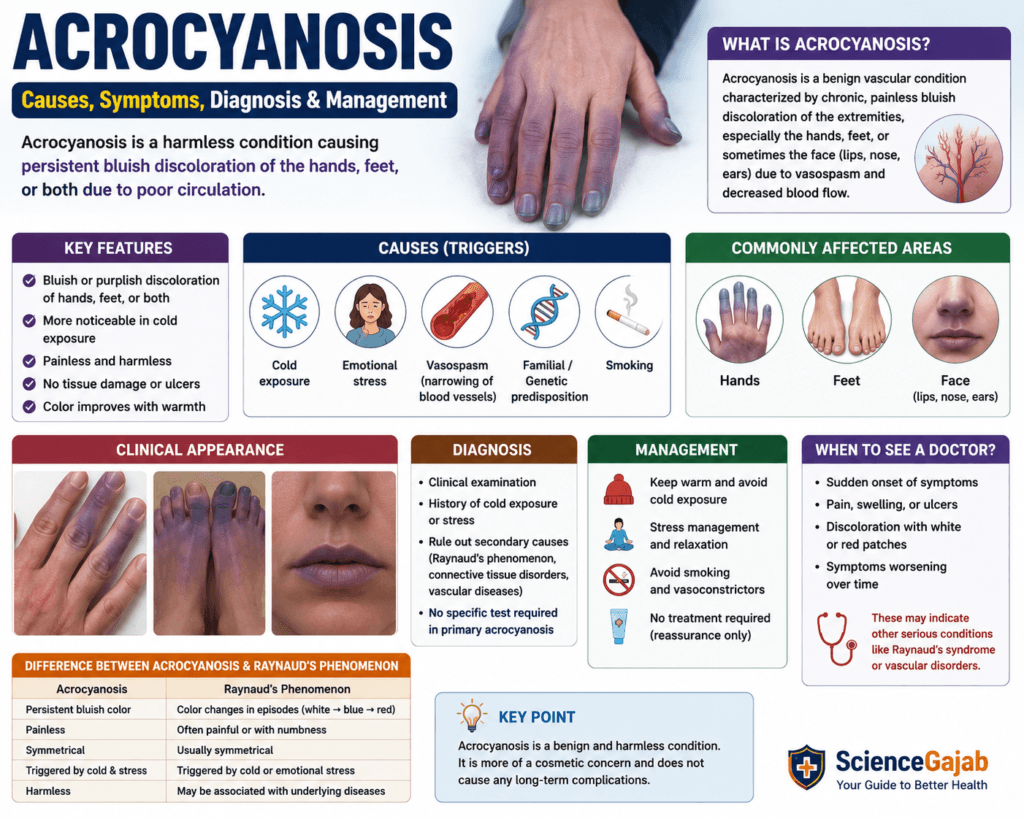
Acrocyanosis is a condition characterized by persistent bluish-purple discoloration of the hands and feet.
Features
- Usually painless
- Often affects both feet
- More common in cold weather
- Color improves slightly with warming
Although often harmless, medical assessment may be recommended.
9. Vasculitis
Vasculitis involves inflammation of blood vessels.
Inflamed vessels may restrict blood flow and cause discoloration.
Symptoms
- Purple patches
- Pain
- Skin ulcers
- Fatigue
- Fever
Treatment depends on the underlying cause.
10. Severe Infection
Certain infections may affect circulation and tissue oxygenation.
Symptoms
- Purple skin
- Swelling
- Warmth
- Fever
- Increasing pain
Prompt treatment is essential to prevent complications.
Modes of Virus Transmission with Examples (Airborne, Vector, Contact) – Easy Guide for Students
Purple Feet in One Foot vs Both Feet
One Purple Foot
May indicate:
- Blood clot
- Injury
- Localized circulation problem
- Infection
Both Purple Feet
May indicate:
- Poor circulation
- Raynaud’s phenomenon
- Heart disease
- Venous insufficiency
- Acrocyanosis
The pattern of discoloration often helps identify the underlying cause.
Numb Feet: Common Causes Explained – Symptoms, Warning Signs, and Treatment
Warning Signs You Should Never Ignore
Seek medical attention if purple feet occur with:
- Severe pain
- Sudden onset
- Swelling
- Foot ulcers
- Numbness
- Difficulty walking
- Cold feet that don’t improve
- Shortness of breath
These symptoms may indicate serious vascular disease.
Can Poor Circulation Cause Purple Toes?
Yes.
Poor circulation is one of the most common reasons feet or toes appear purple.
When oxygen delivery decreases, tissues may develop a bluish-purple appearance.
Additional signs often include:
- Cold feet
- Leg cramps
- Tingling
- Reduced pulses
- Slow wound healing
Early treatment may help prevent complications.
🫀 Human Circulatory System Basics: A Complete Guide
How Doctors Diagnose Purple Feet
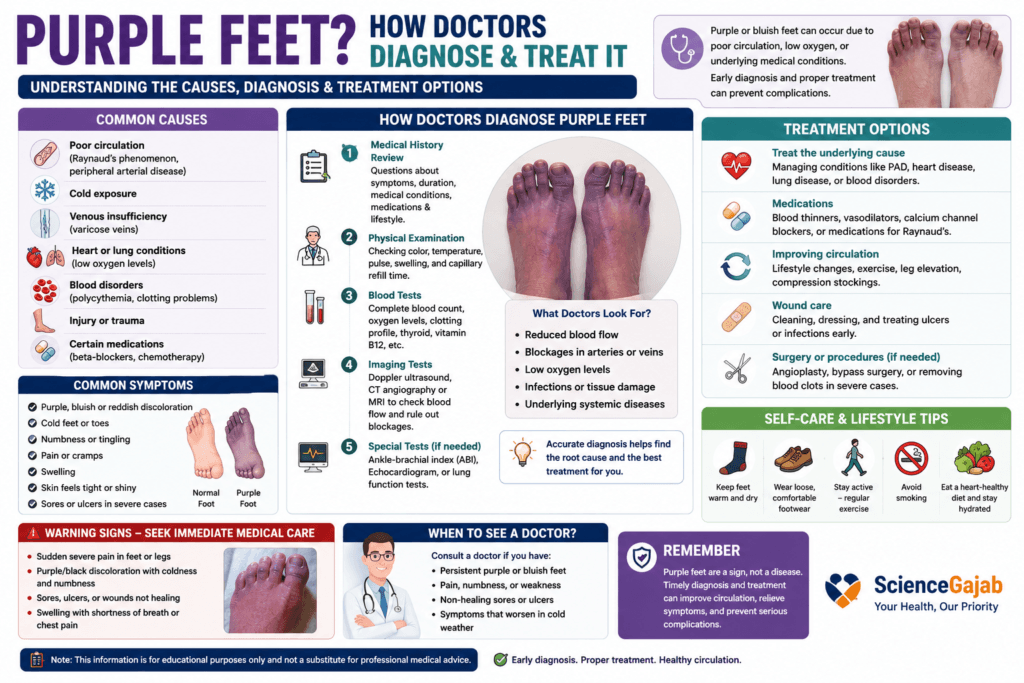
Healthcare providers may perform:
Physical Examination
- Skin color assessment
- Pulse checks
- Temperature evaluation
Blood Tests
- Diabetes screening
- Cholesterol testing
- Infection markers
Imaging Studies
- Doppler ultrasound
- Vascular imaging
- CT angiography
These tests help identify circulation problems.
Treatment for Purple Feet
Treatment depends on the underlying cause.
Improve Circulation
- Walking regularly
- Staying active
- Maintaining healthy weight
Stop Smoking
Smoking damages blood vessels and worsens circulation.
Manage Medical Conditions
- Diabetes
- High blood pressure
- High cholesterol
Compression Therapy
May help in cases of venous insufficiency.
Medications
Sometimes prescribed to improve circulation or treat underlying disease.
How to Prevent Circulation Problems
Healthy Habits
1✔ Exercise regularly
2✔ Avoid prolonged sitting
3✔ Control blood sugar
4✔ Maintain healthy cholesterol levels
5✔ Stay hydrated
6✔ Avoid smoking
7✔ Wear comfortable footwear
8✔ Monitor foot health
Signs of Anemia: 15 Warning Symptoms You Should Never Ignore
Frequently Asked Questions
No. Cold temperatures, Raynaud’s phenomenon, infections, and certain vascular conditions can also cause purple feet.
Yes. Diabetes can damage blood vessels and nerves, contributing to discoloration
Persistent purple toes should be evaluated, especially if accompanied by pain, swelling, or numbness.
In some cases, lifestyle changes and medical treatment can improve circulation significantly.
Seek medical attention if discoloration is persistent, worsening, painful, or associated with ulcers or swelling.
Expert Health Note
This article is based on current medical knowledge regarding vascular health, circulation disorders, diabetes-related complications, and foot health. It is intended for educational purposes only and should not replace professional medical advice. Any persistent foot discoloration should be evaluated by a qualified healthcare provider.
Conclusion
Purple feet may sometimes result from cold weather or temporary blood vessel changes, but they can also indicate poor circulation, diabetes, venous disease, peripheral artery disease, or other serious health conditions.
Because circulation problems often appear in the feet before other symptoms develop, paying attention to color changes may help identify health issues early. If purple feet occur alongside pain, swelling, numbness, or slow-healing wounds, medical evaluation is strongly recommended.
Healthy circulation is essential for healthy feet, and recognizing warning signs early can help protect both foot health and overall well-being.
Author
Dr Sanjay Prajapati
MBBS | Medical Content Writer | Founder of ScienceGajab
Why Trust ScienceGajab?
Medical Review Process: This article is based on current guidelines and standard medical references. It is intended for educational purposes only and should not replace professional medical advice, diagnosis, or treatment.
Medical Disclaimer
This article is for educational awareness only and does not replace professional medical advice, diagnosis, or treatment.
References
- American Heart Association (AHA). Peripheral Artery Disease (PAD): Symptoms, Diagnosis, and Treatment.
- National Heart, Lung, and Blood Institute (NHLBI). Peripheral Artery Disease.
- Mayo Clinic. Raynaud’s Disease: Symptoms and Causes.
- Cleveland Clinic. Acrocyanosis: Causes, Symptoms & Treatment.
- MedlinePlus (U.S. National Library of Medicine). Peripheral Vascular Disease.
- Merck Manual Professional Edition. Peripheral Arterial Disease.
- National Institute for Health and Care Excellence (NICE). Peripheral Arterial Disease: Diagnosis and Management.
- Society for Vascular Surgery (SVS). Clinical Practice Guidelines for Peripheral Arterial Disease.
- American Academy of Family Physicians (AAFP). Lower Extremity Peripheral Artery Disease.
- Centers for Disease Control and Prevention (CDC). Heart Disease and Vascular Health.
- European Society of Cardiology (ESC). Guidelines on Peripheral Arterial Diseases.
- National Organization for Rare Disorders (NORD). Acrocyanosis.