
what causes varicose veins
Varicose Veins Stages Explained Simply
Varicose veins are swollen, twisted, enlarged veins that usually appear in the legs and feet. They develop when vein valves become weak and blood starts pooling inside the veins instead of flowing properly toward the heart.
At first, varicose veins may look like a small cosmetic issue. But over time, they can progress into serious circulation problems causing pain, swelling, skin changes, and even ulcers.
Understanding the stages of varicose veins helps in:
- Early diagnosis
- Preventing complications
- Choosing the right treatment
- Avoiding permanent vein damage
In this article, we’ll explain every stage in simple human language with pictures, symptoms, risks, and treatments.
Difference Between Arteries and Veins (With Easy Diagram) — Simple Language
what causes varicose veins
What Are Varicose Veins?
Varicose veins occur when:
- Vein valves stop working properly
- Blood flows backward (venous reflux)
- Pressure builds inside veins
- Veins become enlarged and twisted
They commonly affect:
- Legs
- Calves
- Ankles
- Feet
Why Do Varicose Veins Happen?
Common causes include:
- Standing for long hours
- Obesity
- Pregnancy
- Aging
- Family history
- Lack of exercise
- Weak vein walls
Early Warning Signs of Varicose Veins
Before large veins appear, many people notice:
- Leg heaviness
- Mild swelling
- Itching
- Burning sensation
- Night cramps
- Tired legs
Ignoring these early symptoms may allow disease progression.
CEAP Classification of Varicose Veins
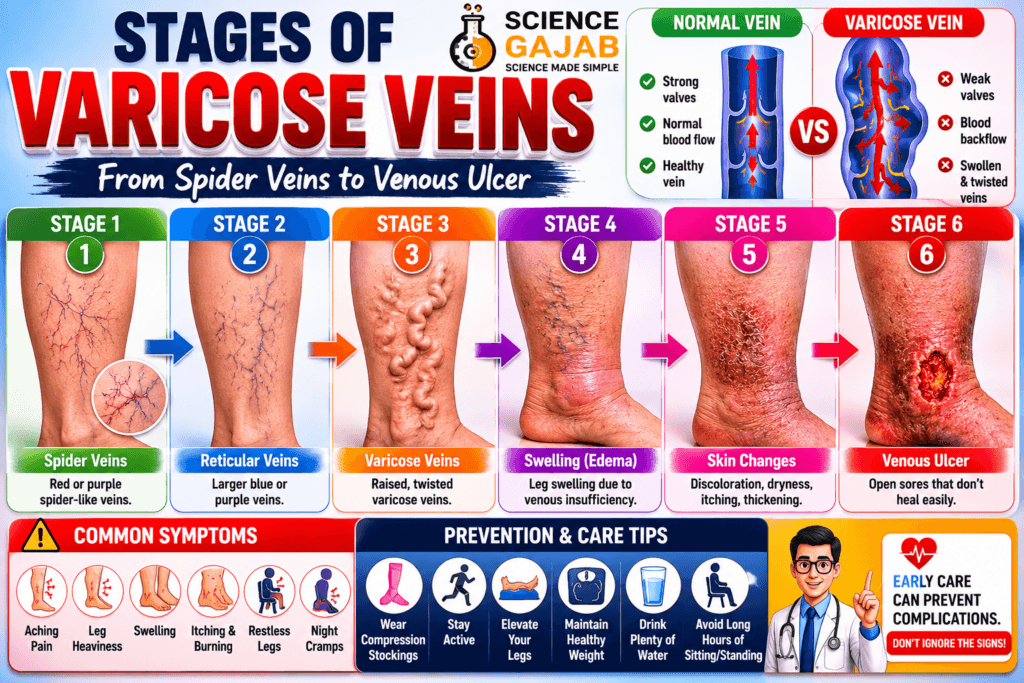
Doctors commonly divide varicose veins into stages called CEAP classification.
The stages range from C0 to C6.
Stage C0 — Symptoms Without Visible Veins
At this stage:
- Veins may look normal
- Patient still experiences symptoms
Common Symptoms
- Leg pain
- Heaviness
- Fatigue
- Restlessness
- Mild swelling after standing
Why It Happens
Vein pressure starts increasing internally before visible changes appear.
Treatment
- Exercise
- Weight control
- Leg elevation
- Avoid prolonged standing
These 10 Symptoms Mean Your Immune System Is Failing 😨
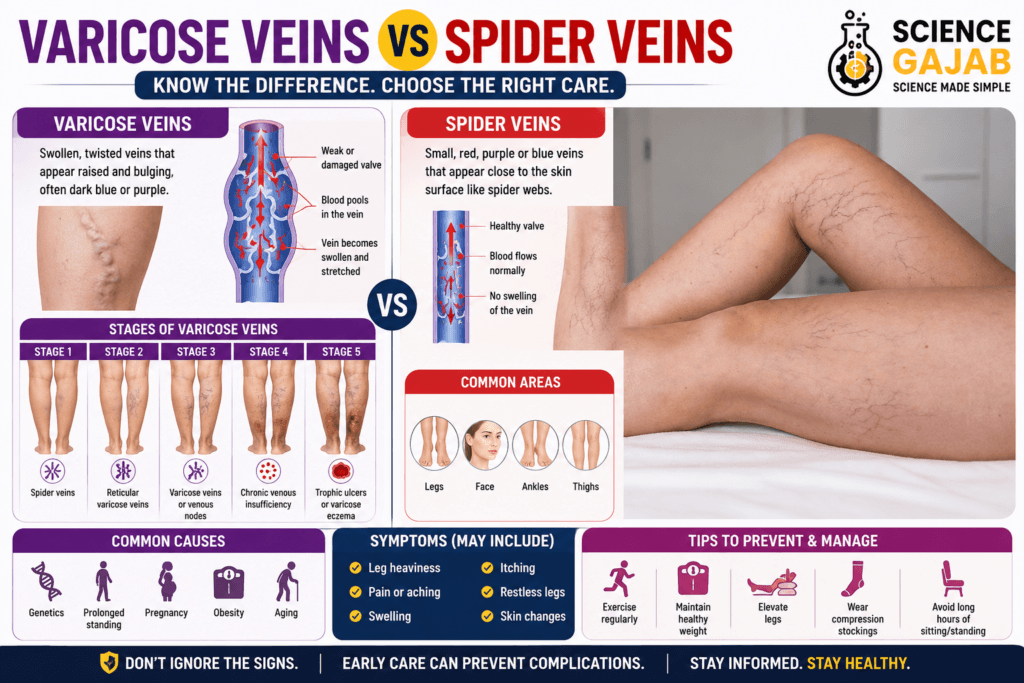
Stage C1 — Spider Veins & Reticular Veins
This is the earliest visible stage.
What You See
- Tiny red, blue, or purple veins
- Web-like appearance
- Small superficial veins
These are called:
- Spider veins
- Thread veins
Symptoms
- Cosmetic concern
- Mild itching
- Burning sensation
- Slight discomfort
Risk Factors
- Hormonal changes
- Pregnancy
- Genetics
Treatment Options
- Compression stockings
- Walking
- Sclerotherapy
- Lifestyle changes
Stage C2 — True Varicose Veins
This is the classic stage most people recognize.
What Happens
Veins become:
- Enlarged
- Bulging
- Twisted
- Raised above skin level
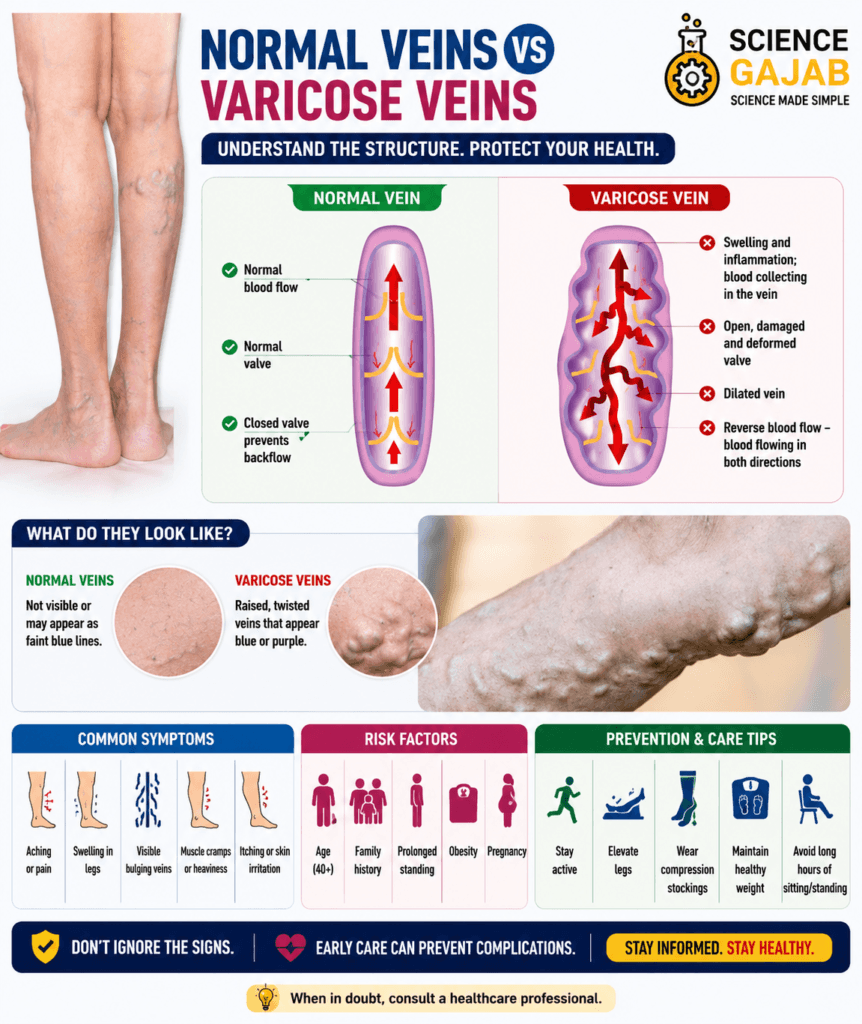
Common Symptoms
- Aching legs
- Throbbing pain
- Leg heaviness
- Night cramps
- Itching
- Burning sensation
Symptoms worsen after:
- Long standing
- Sitting for hours
- Hot weather
🚨 10 Signs Your Body Lacks Vitamins You Should Never Ignore
Why This Stage Matters
This stage indicates valve failure and venous reflux.
Treatment Options
- Compression stockings
- EVLT (Endovenous Laser Treatment)
- Radiofrequency ablation
- Sclerotherapy
- Exercise
Stage C3 — Swelling (Edema Stage)
Now circulation problems become more serious.
Main Feature
Persistent leg swelling develops.
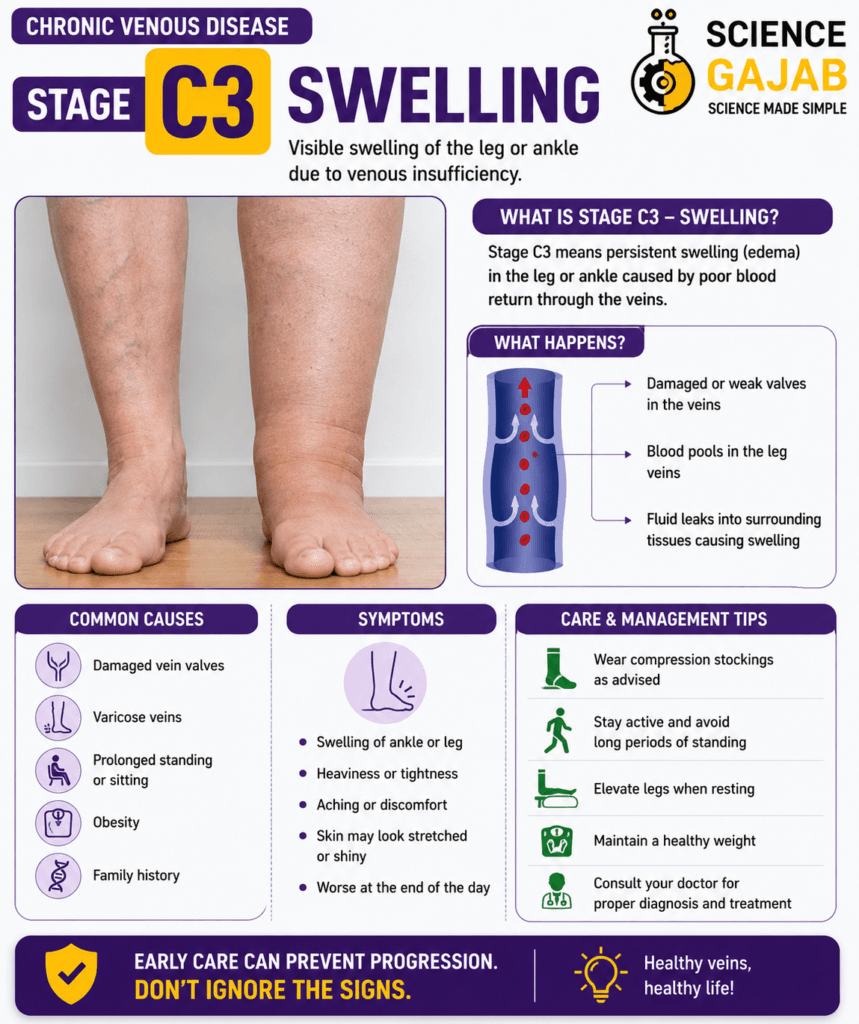
Symptoms
- Swollen feet
- Tight skin
- Puffy ankles
- Heavy legs
- Pain while standing
Why Swelling Happens
Blood and fluid leak into tissues because veins cannot return blood efficiently.
Risks
Without treatment:
- Skin damage begins
- Chronic venous insufficiency develops
Treatment
- Compression therapy
- Leg elevation
- Walking
- EVLT or RFA
- Weight reduction
Stage C4 — Skin Changes Begin
At this stage, the skin starts getting damaged due to poor blood circulation.
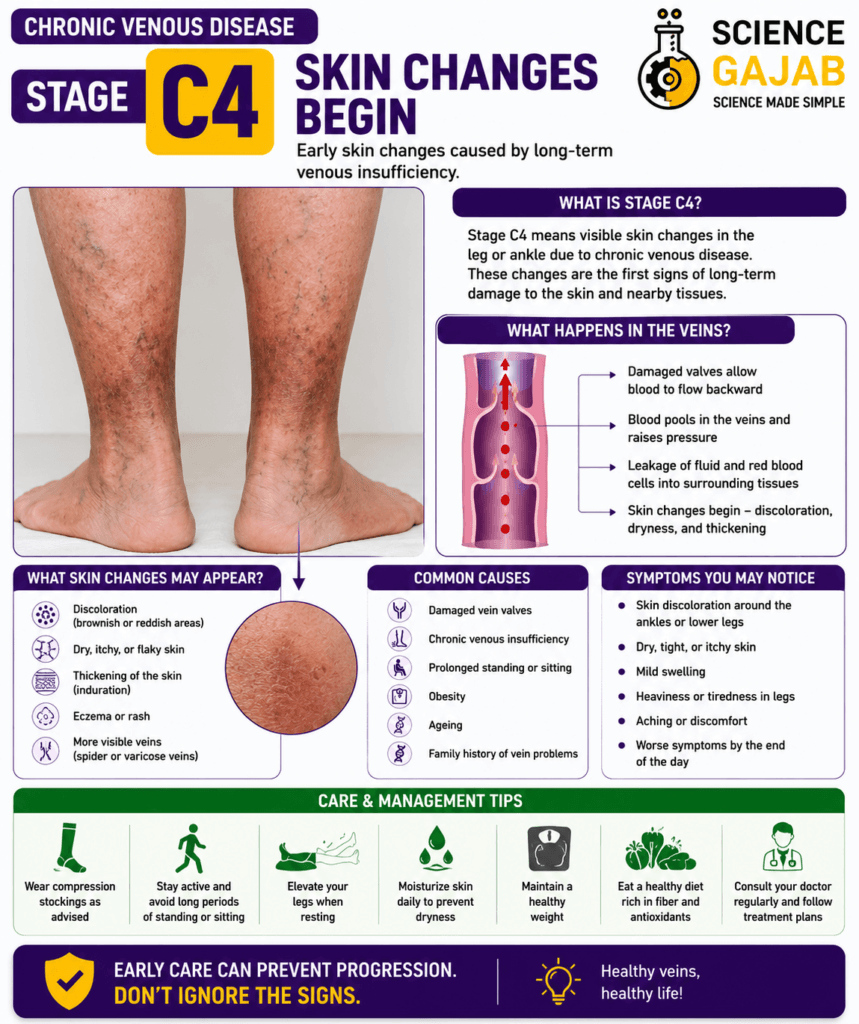
What You May Notice
- Dark brown skin
- Hard skin
- Thickened skin
- Itching
- Eczema-like patches
Types of Skin Changes
1. Pigmentation
Brown or dark discoloration.
2. Venous Eczema
Dry itchy inflamed skin.
3. Lipodermatosclerosis
Hard painful skin due to chronic inflammation.
Why Does Skin Become White After Fungal Infection? (Real Reason Doctors Explain)
Why It’s Dangerous
Skin becomes fragile and poorly nourished.
Treatment
- Compression stockings
- Moisturizers
- Treat underlying reflux
- Laser treatment
- Medical supervision
Stage C5 — Healed Venous Ulcer
This means:
- A leg ulcer developed earlier
- It has healed now
Signs
- Scarred skin
- Previous ulcer marks
- Severe vein disease history
Important Warning
Even healed ulcers can return if treatment is delayed.
Symptoms
- Tight skin
- Persistent swelling
- Chronic pain
- Weak skin
Treatment
- Compression therapy
- Venous surgery
- EVLT/RFA
- Ulcer prevention care
🚨 Early Signs of Vitamin B12 Deficiency — Don’t Ignore These Warning Signals!
Stage C6 — Active Venous Ulcer
This is the most advanced and serious stage.
What Happens
Open wounds develop due to poor blood circulation.
These ulcers usually occur:
- Near ankles
- Lower leg
- Around medial malleolus
Symptoms
- Open painful wound
- Fluid discharge
- Swelling
- Infection risk
- Difficulty walking
Why Ulcers Form
Long-term venous pressure damages skin and tissues.
Complications
- Infection
- Cellulitis
- Chronic pain
- Reduced mobility
Treatment
- Ulcer dressing
- Compression bandaging
- EVLT or surgery
- Antibiotics if infected
- Specialized wound care
Simple Summary of All Stages
| Stage | Main Finding |
|---|---|
| C0 | Symptoms only |
| C1 | Spider veins |
| C2 | Bulging varicose veins |
| C3 | Leg swelling |
| C4 | Skin discoloration |
| C5 | Healed ulcer |
| C6 | Active ulcer |
Which Stage Is Dangerous?
The most concerning stages are:
- C4
- C5
- C6
Because they indicate:
- Chronic venous insufficiency
- Skin damage
- Risk of ulcers and infection
When Should You See a Doctor?
Consult a vascular surgeon if you have:
- Persistent swelling
- Bulging painful veins
- Skin darkening
- Leg ulcers
- Bleeding veins
- Severe night cramps
Cracks at Mouth Corners: Causes, Symptoms & Treatment Explained Simply
Best Treatments for Varicose Veins
Treatment depends on the stage.
1. Compression Stockings
Improve blood flow and reduce swelling.
2. Walking & Exercise
Calf muscles help pump blood upward.
3. EVLT (Endovenous Laser Treatment)
Laser closes diseased veins.
Advantages
- Minimally invasive
- Fast recovery
- Less pain
4. Radiofrequency Ablation (RFA)
Uses heat energy to seal veins.
5. Sclerotherapy
Chemical injection closes smaller veins.
6. Surgery
Needed in severe cases.
🔋 How Energy Is Released in the Body (Step-by-Step, Simple)
Can Varicose Veins Be Prevented?
You can reduce risk by:
- Exercising regularly
- Avoiding prolonged standing
- Maintaining healthy weight
- Elevating legs
- Wearing compression stockings
- Staying active
Common Myths About Varicose Veins
Myth 1: Only Old People Get Varicose Veins
False.
Young adults can also develop them.
Myth 2: They Are Only Cosmetic
False.
Advanced disease can cause ulcers and chronic pain.
Myth 3: Crossing Legs Causes Varicose Veins
Not directly proven.
Are Varicose Veins Dangerous?
Early stages may mainly cause discomfort.
But advanced stages can lead to:
- Blood clots
- Skin damage
- Venous ulcers
- Bleeding
- Chronic venous insufficiency
Frequently Asked Questions (FAQs)
Stage C1 with spider veins is usually the first visible stage.
Stage C3 commonly causes leg swelling.
Mild symptoms may improve, but damaged valves usually do not repair completely.
EVLT and RFA are modern minimally invasive treatments commonly preferred today.
Yes, especially with family history, obesity, or prolonged standing jobs.
Final Thoughts
Varicose veins are not just a cosmetic issue. They are a progressive vein disease that can worsen over time if ignored.
Recognizing the stages early can help:
- Prevent complications
- Reduce pain
- Improve circulation
- Avoid ulcers and skin damage
Modern treatments like EVLT and RFA now allow faster recovery with less pain compared to older surgeries.
If you notice swelling, visible veins, or skin discoloration, early medical consultation can make a big difference.
Why Veins Look Blue But Blood Is Always Red
🧬 Why Do We Age? The Real Science Behind Growing Older
Medical Disclaimer
This article is for educational awareness only and does not replace professional medical advice, diagnosis, or treatment.
Sources & References
- Standard vascular surgery textbooks
- Clinical CEAP classification guidelines
- Society for Vascular Surgery references
- Medical physiology and venous disease literature
Reviewed Topic
Educational content on chronic venous disease and varicose vein staging explained in simple language for general readers and students.
https://www.instagram.com/ScienceGajab/