
back pain causes
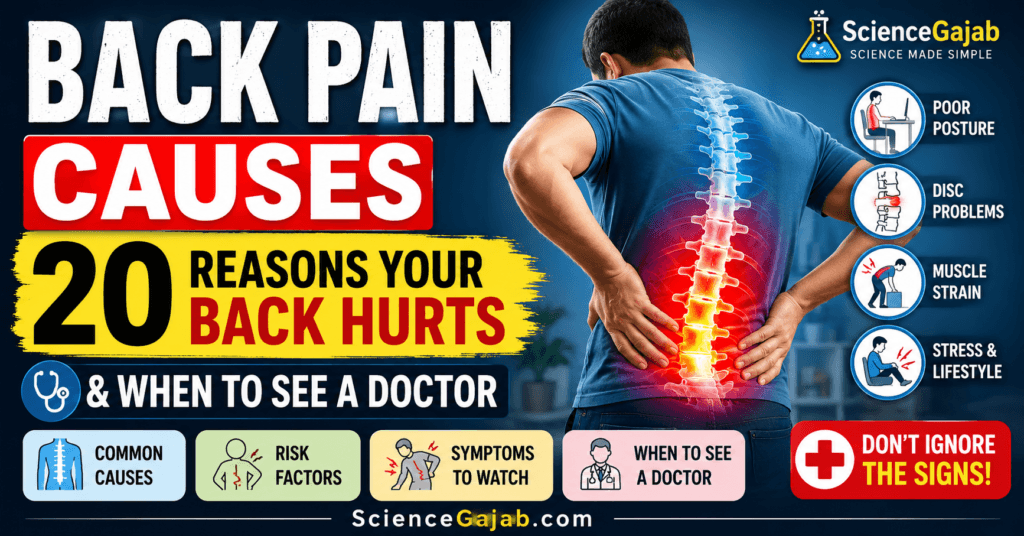
Back Pain Causes: 20 Reasons Your Back Hurts & When to See a Doctor
Reviewed by: Sanjay Prajapati (Medical Content Reviewer)
Last Updated: July 2026
Quick Answer
Back pain is one of the world’s most common health problems and can affect people of any age. Most cases result from muscle strain, poor posture, or prolonged sitting, but back pain may also be caused by conditions such as a herniated disc, arthritis, osteoporosis, kidney stones, spinal infections, or, in rare cases, cancer. While many episodes improve with rest and simple treatments, severe or persistent pain should be evaluated by a healthcare professional.
Table of Contents
- What is Back Pain?
- Types of Back Pain
- 20 Common Causes of Back Pain
- Symptoms
- Warning Signs
- Risk Factors
- Diagnosis
- Treatment
- Prevention
- Frequently Asked Questions
- Key Takeaways
What Is Back Pain?
Back pain is discomfort occurring anywhere along the spine, including the neck, upper back, middle back, or lower back. The lower back is affected most often because it supports much of the body’s weight and is involved in daily movements such as lifting, bending, and walking.
Numb Feet: Common Causes Explained – Symptoms, Warning Signs, and Treatment
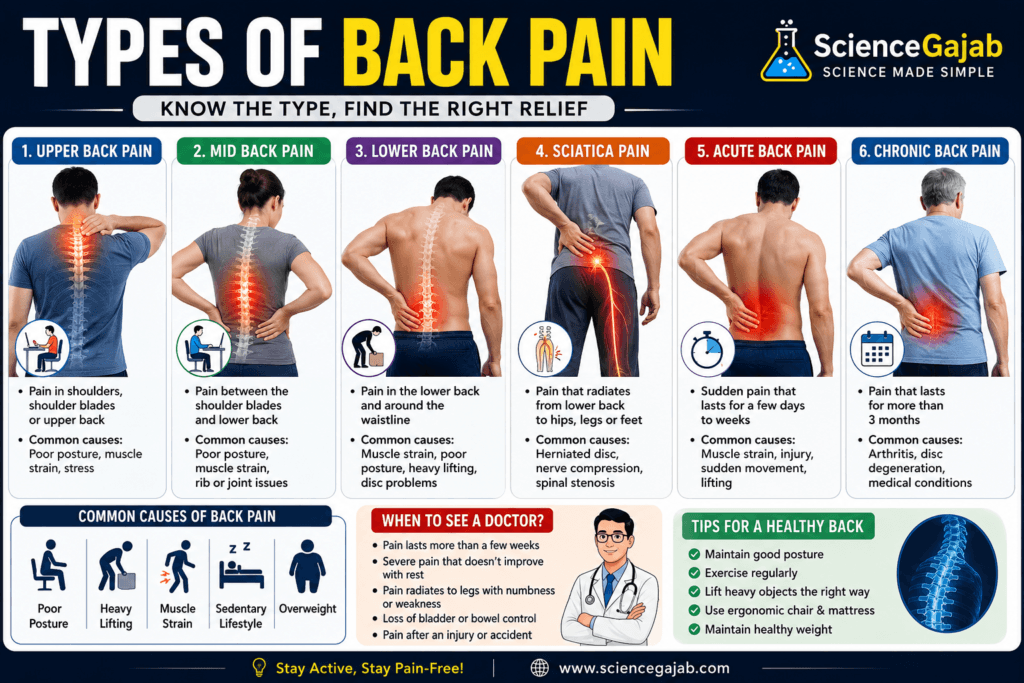
Types of Back Pain
Acute Back Pain
- Lasts less than 6 weeks
- Often caused by muscle strain or injury
Subacute Back Pain
- Lasts 6–12 weeks
Chronic Back Pain
- Persists for more than 12 weeks
- May require ongoing medical evaluation and treatment
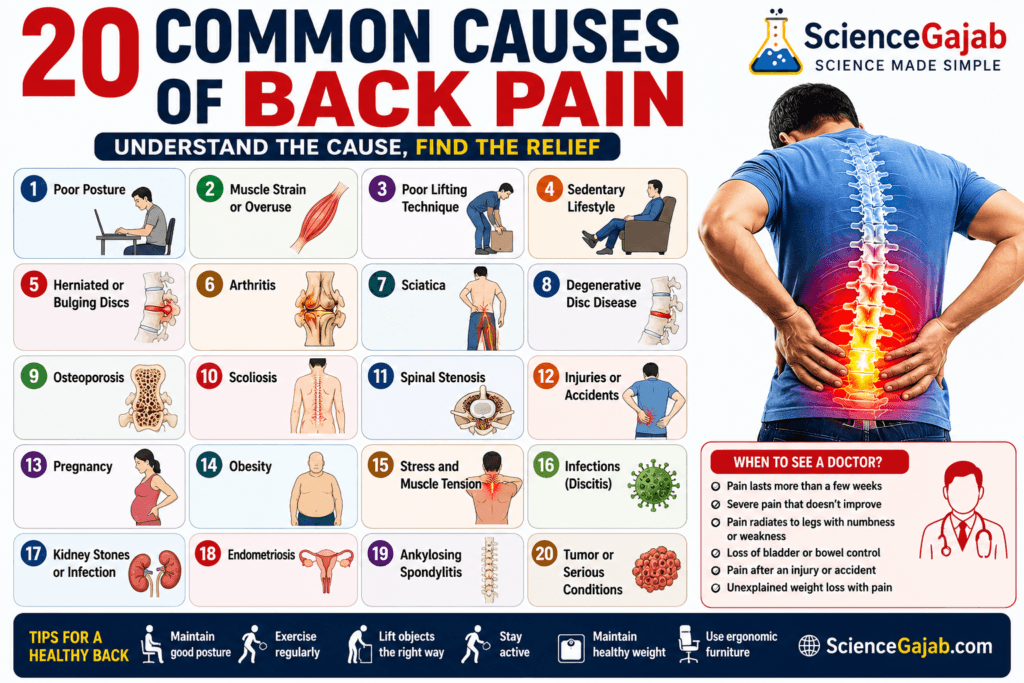
20 Common Causes of Back Pain
1. Muscle or Ligament Strain
Heavy lifting, sudden movements, or overuse can overstretch muscles and ligaments, leading to pain and stiffness.
Symptoms
- Muscle spasm
- Pain with movement
- Tenderness
2. Poor Posture
Long hours sitting at a desk or looking down at a phone can place extra stress on the spine.
3. Herniated Disc
A spinal disc may bulge or rupture, putting pressure on nearby nerves.
Symptoms include:
- Sharp leg pain (sciatica)
- Numbness
- Tingling
- Weakness
4. Sciatica
Compression of the sciatic nerve causes pain that radiates from the lower back down the leg.
5. Degenerative Disc Disease
As people age, spinal discs lose water and flexibility, reducing their ability to cushion the vertebrae.
6. Osteoarthritis
Wear and tear of the joints in the spine can cause pain and stiffness, particularly in older adults.
7. Spinal Stenosis
Narrowing of the spinal canal may compress nerves, causing pain, numbness, or difficulty walking.
8. Osteoporosis
Weak, fragile bones increase the risk of compression fractures in the spine.
9. Scoliosis
An abnormal curvature of the spine can contribute to chronic back pain.
10. Kidney Stones
Pain from kidney stones can mimic back pain but usually occurs on one side and may be accompanied by urinary symptoms.
11. Kidney Infection
A kidney infection may cause back or flank pain along with fever, chills, and painful urination.
12. Pregnancy
Hormonal changes and the growing uterus place extra strain on the back.
Is it safe to eat papaya while pregnant India?
13. Obesity
Excess body weight increases mechanical stress on the spine.
14. Lack of Exercise
Weak core muscles provide less support for the spine, increasing the risk of injury.
15. Stress
Emotional stress can lead to muscle tension, especially in the neck and upper back.
16. Compression Fracture
More common in older adults with osteoporosis, these fractures can cause sudden, severe back pain.
17. Ankylosing Spondylitis
A chronic inflammatory disease that primarily affects the spine, leading to pain and stiffness.
18. Spinal Infection
Although uncommon, infections involving the spine require urgent medical evaluation.
19. Spinal Tumor
Rarely, tumors involving the spine can cause persistent back pain, particularly if associated with unexplained weight loss or neurological symptoms.
20. Cancer
Back pain can occasionally be related to cancer that has spread to the spine or, less commonly, originated there. Persistent pain that is worse at night or associated with other concerning symptoms should be assessed by a doctor.
How Cancer Actually Begins Inside Your Body
Symptoms Associated With Back Pain
Symptoms vary depending on the underlying cause and may include:
- Dull ache
- Sharp or stabbing pain
- Muscle stiffness
- Reduced flexibility
- Pain radiating to the leg
- Numbness or tingling
- Weakness in the legs
Why Do Feet Burn at Night? Causes, Warning Signs, and When to Worry
Warning Signs (Red Flags)
Seek urgent medical care if back pain is accompanied by:
- Loss of bladder or bowel control
- Numbness around the groin (saddle anesthesia)
- Progressive leg weakness
- High fever
- Recent major trauma
- Unexplained weight loss
- Pain that is constant and worse at night
- History of cancer
- Severe pain after a fall in an older adult
Risk Factors
- Increasing age
- Poor posture
- Sedentary lifestyle
- Obesity
- Smoking
- Heavy lifting
- Pregnancy
- Osteoporosis
Fever Isn’t Your Enemy – Here’s What Your Body Is Actually Doing
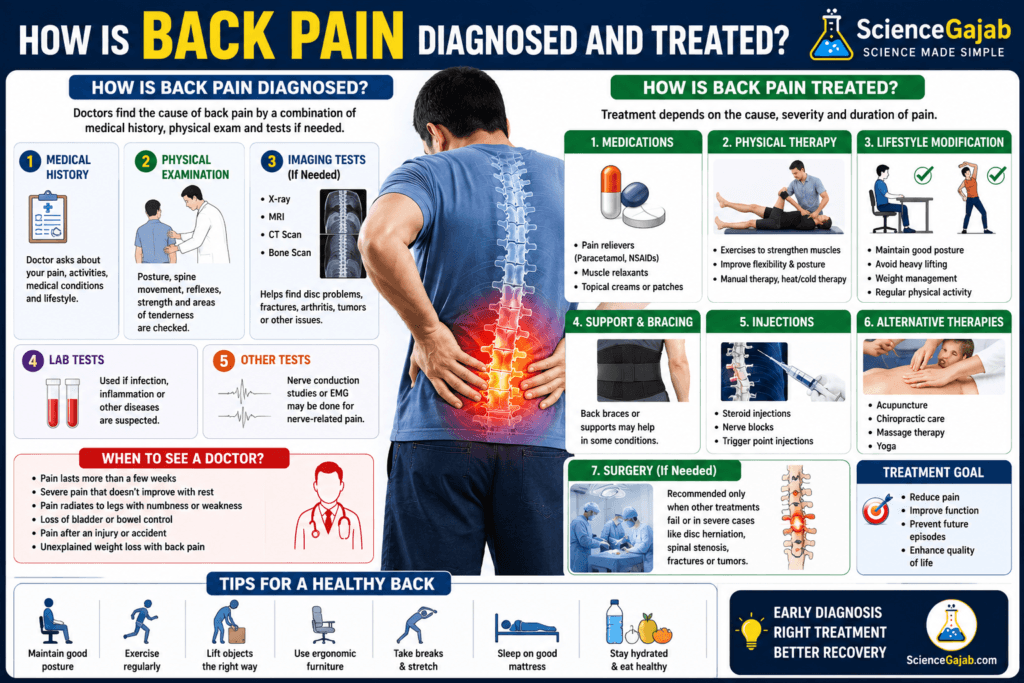
How Is Back Pain Diagnosed?
A healthcare professional may use:
- Medical history
- Physical examination
- Neurological examination
- X-rays
- MRI
- CT scan
- Blood tests (if infection or inflammatory disease is suspected)
Treatment
Treatment depends on the underlying cause but may include:
Home Care
- Stay as active as possible within comfort limits
- Heat or cold therapy
- Gentle stretching
- Good posture
Medications
- Pain relievers (as advised by a healthcare professional)
- Muscle relaxants in selected cases
- Topical pain relief products
Physical Therapy
Exercises to strengthen the core and improve flexibility can reduce pain and prevent recurrence.
Surgery
Reserved for selected conditions such as severe nerve compression, spinal instability, or certain fractures when conservative treatment is unsuccessful.
🚨 Early Signs of Vitamin B12 Deficiency — Don’t Ignore These Warning Signals!
Prevention
- Maintain a healthy weight
- Exercise regularly
- Strengthen core muscles
- Lift objects correctly
- Avoid prolonged sitting
- Use an ergonomic workstation
- Stop smoking
- Sleep on a supportive mattress
Frequently Asked Questions
Muscle strain and poor posture are among the most common causes.
Yes. Kidney stones and kidney infections can cause pain in the flank or back, often with urinary symptoms or fever.
Seek medical evaluation if pain lasts longer than a few weeks, follows significant trauma, is associated with weakness or numbness, or occurs with fever, weight loss, or bowel/bladder changes.
Stress can contribute to muscle tension and may worsen existing back pain.
Key Takeaways
- Most back pain is caused by muscle strain, poor posture, or age-related changes.
- Serious causes are less common but require prompt recognition.
- Regular exercise, maintaining a healthy weight, and good posture can help prevent many cases.
- Red-flag symptoms such as leg weakness, fever, or bowel/bladder dysfunction require urgent medical assessment.
Why Trust ScienceGajab?
This article was created by ScienceGajab to provide accurate, easy-to-understand, and evidence-based health information. The content is thoroughly researched using trusted medical sources and reviewed for factual accuracy. It is intended for educational purposes only and should not replace professional medical advice, diagnosis, or treatment.
Medical Review Process
- Researched using peer-reviewed medical literature and trusted health organizations.
- Reviewed for medical accuracy and readability before publication.
- Updated regularly to reflect current clinical recommendations and scientific evidence.
Trusted References
- World Health Organization (WHO)
- Centers for Disease Control and Prevention
- Mayo Clinic
- National Institute of Arthritis and Musculoskeletal and Skin Diseases
- American Academy of Orthopaedic Surgeons
Author
Dr Sanjay Prajapati
MBBS | Medical Content Writer | Founder of ScienceGajab
Medical Disclaimer
This content is for informational and educational purposes only. If you have severe back pain, weakness, numbness, loss of bladder or bowel control, fever with back pain, unexplained weight loss, or pain after a major injury, seek immediate medical attention. Always consult a qualified healthcare professional for diagnosis and treatment recommendations tailored to your individual condition.