
🍷 Introduction
Have you ever wondered how yeast makes alcohol? Or why your muscles feel sore after intense exercise?
Both are due to a process called fermentation, which is very different from aerobic respiration. In this post, we’ll break down the difference between these two energy-making processes in simple language.
🧪 What is Fermentation?
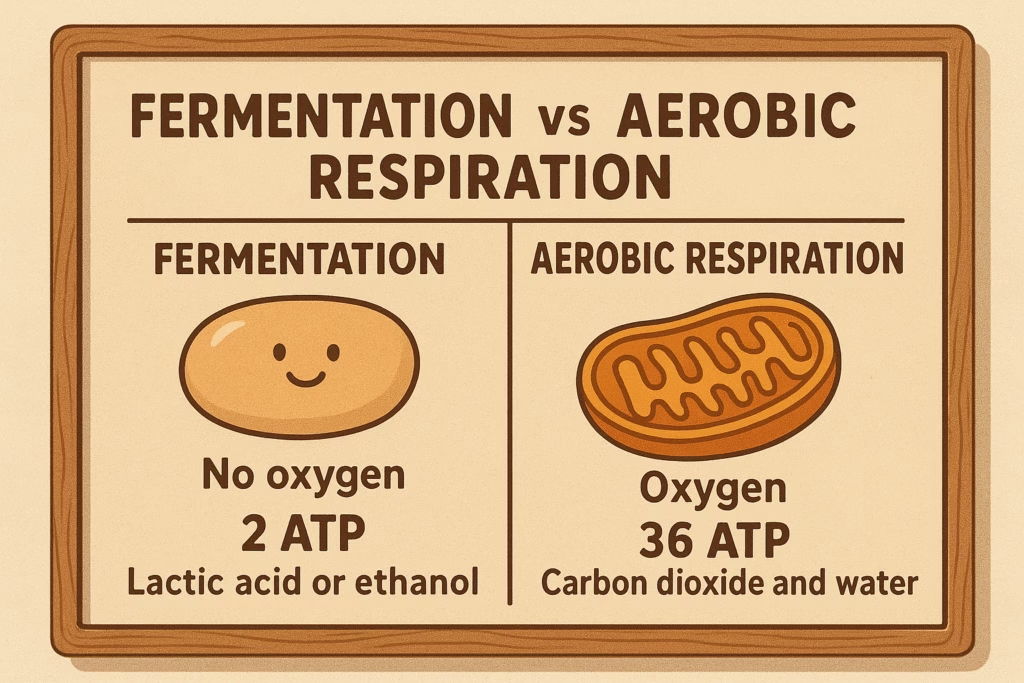
Fermentation is an anaerobic process — it happens without oxygen.
- It starts with glycolysis, which breaks glucose into pyruvate
- Pyruvate is then converted into lactic acid (in animals) or ethanol + CO₂ (in yeast)
- It produces only 2 ATP per glucose molecule
🧬 Used by:
- Yeast (makes alcohol)
- Bacteria (makes yogurt)
- Muscle cells (during exercise)
🌬️ What is Aerobic Respiration?
Aerobic respiration needs oxygen to completely break down glucose into carbon dioxide (CO₂) and water (H₂O).
- Happens in mitochondria
- Goes through: Glycolysis → Krebs Cycle → Electron Transport Chain
- Produces up to 36 ATP per glucose molecule
🧬 Used by:
- All plants
- Most animals
- Many fungi and protozoa
🔍 Fermentation vs Aerobic Respiration (Comparison Table)
| Feature | Fermentation | Aerobic Respiration |
|---|---|---|
| Oxygen required? | ❌ No | ✅ Yes |
| Location in cell | Cytoplasm | Cytoplasm & Mitochondria |
| End products | Ethanol + CO₂ or Lactic acid | CO₂ + H₂O |
| ATP yield per glucose | Only 2 ATP | About 36 ATP |
| Type of process | Incomplete breakdown | Complete breakdown |
| Used by | Yeast, bacteria, muscle cells | Most plants and animals |
| Speed of energy release | Quick | Slower but more efficient |
🍞 Real-Life Examples
- 🥖 Bread-making: Yeast ferments sugars → releases CO₂ → makes dough rise
- 🍷 Alcohol: Ethanol is produced by yeast fermentation
- 💪 Muscle fatigue: Lactic acid builds up during hard exercise when oxygen is low
- 🌿 Plants: Use aerobic respiration day and night to release energy from stored sugars
⚡ Energy Output Comparison
| Process | ATP Produced (per glucose) |
|---|---|
| Fermentation | 2 ATP |
| Aerobic Resp. | 36 ATP |
👉 Aerobic respiration produces 18x more energy than fermentation!
🧠 Quick Summary
- Fermentation = No oxygen, low ATP, faster
- Aerobic Respiration = Needs oxygen, high ATP, efficient
- Both start with glycolysis
- Used by different organisms in different conditions
💬 FAQs: Fermentation vs Respiration
Q: Why do cells do fermentation instead of respiration?
A: When oxygen is not available, cells switch to fermentation to keep making energy.
Q: Is fermentation always bad?
A: No! It’s used to make bread, yogurt, wine, and beer.
Q: Can humans do fermentation?
A: Yes — your muscle cells do it when oxygen runs low, producing lactic acid.
📚 Next Topic:
✅ Krebs Cycle (TCA Cycle) Made Easy | With Steps & Diagram
Let me know if you’d like: