
Author: ScienceGajab Editorial Team
Reviewed For Accuracy: Health & Science Content Review
Last Updated: June 2026
Why Do We Laugh?
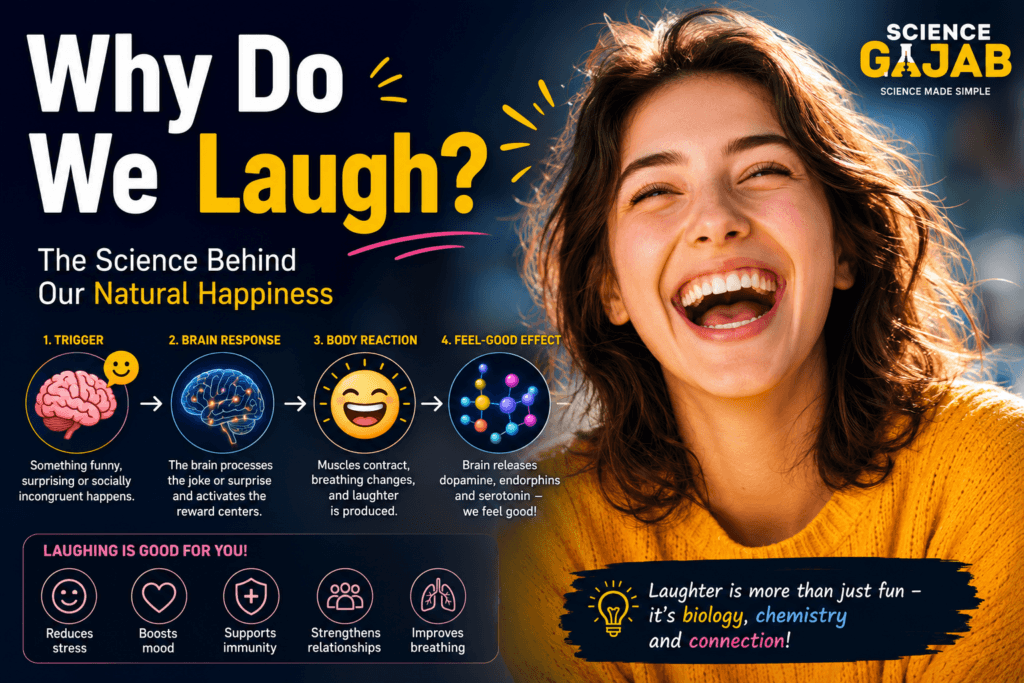
Laughter is one of the most recognizable human behaviors. A funny joke, an amusing mistake, a playful conversation, or even nervousness can trigger laughter. It can spread through a group within seconds and often brings people closer together.
But have you ever wondered why we laugh? Why does something funny cause us to make sounds, smile, and sometimes even lose control of our breathing?
Scientists have studied laughter for decades and discovered that it is much more than a reaction to humor. Laughter involves the brain, nervous system, emotions, social connections, and even physical health.
Let’s explore the surprising science behind why humans laugh.
What Is Laughter?
Laughter is a natural physical response that usually occurs when we experience amusement, joy, surprise, or social connection.
It typically includes:
- Facial expressions
- Vocal sounds
- Changes in breathing
- Muscle contractions
Although laughter often follows something funny, it can also occur in situations that have nothing to do with humor.
Parts of the Human Brain and Their Functions Explained | Science Gajab
For example, people may laugh when they are:
- Nervous
- Embarrassed
- Relieved
- Surprised
- Excited
This suggests laughter serves multiple purposes beyond simply reacting to jokes.
Watch Your Shadow Today… Here’s Why It Keeps Changing Size
What Happens in the Brain When We Laugh?
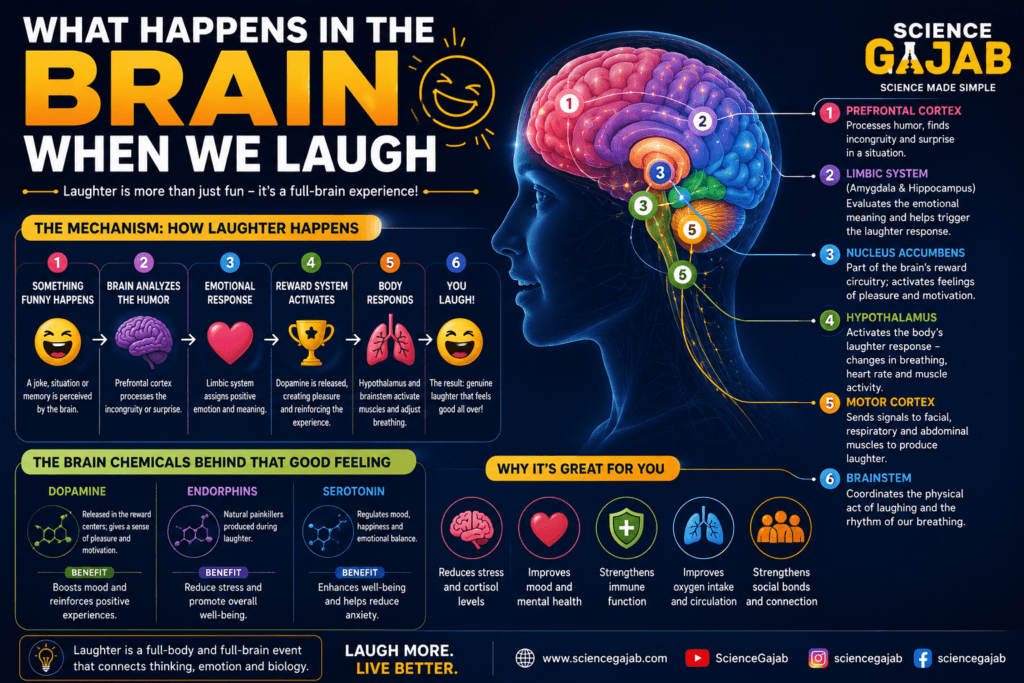
Laughter is controlled by several interconnected brain regions.
These include:
- The frontal lobe
- The limbic system
- The amygdala
- The hypothalamus
Together, these areas help process:
- Emotions
- Social cues
- Humor
- Rewards
When something is perceived as funny, the brain rapidly analyzes the situation and activates pathways that trigger laughter.
The result is a coordinated response involving emotions, muscles, and breathing patterns.
Why Did Humans Evolve Laughter?
Scientists believe laughter evolved as a social tool.
Long before modern language developed, laughter may have helped humans communicate important information.
For example, laughter could signal:
- Safety
- Friendship
- Cooperation
- Playfulness
When someone laughs, it often communicates:
“Everything is okay.”
This may explain why laughter remains such a powerful bonding mechanism today.
🧠 Blood Supply of the Brain: The Hidden Network That Keeps You Alive (Explained Simply!)
Laughter Helps Build Social Connections
One of the strongest scientific theories is that laughter strengthens relationships.
Research shows people laugh far more often when they are with others than when they are alone.
Laughter can:
- Increase trust
- Improve communication
- Strengthen friendships
- Reduce social tension
In fact, many laughs occur during ordinary conversations rather than in response to jokes.
This suggests laughter functions as a social glue that helps groups stay connected.
Chemical Coordination & Integration Explained Simply (Endocrine System, Hormones, Functions)
Why Do We Laugh at Funny Things?
Humor often involves unexpected outcomes.
The brain constantly makes predictions about what will happen next.
When something violates those expectations in a harmless way, the result may be laughter.
For example:
A joke often creates one expectation and then delivers a surprising ending.
The brain recognizes the mismatch and interprets it as humorous.
This sudden realization can trigger laughter.
Why Is Laughter Contagious?
Have you ever started laughing simply because someone else was laughing?
This phenomenon is surprisingly common.
Scientists believe it may involve special brain systems associated with imitation and social behavior.
When we hear laughter:
- The brain automatically pays attention.
- Emotional regions become active.
- We become more likely to laugh ourselves.
This is why laughter spreads so easily through groups.
Even hearing laughter on television can increase the likelihood of laughing.
Why do hiccups come suddenly and won’t stop?
Why Do We Laugh When We’re Nervous?
Not all laughter comes from happiness.
People often laugh during uncomfortable situations.
Examples include:
- Public speaking
- Meeting new people
- Embarrassing moments
- Stressful situations
This type of laughter may help regulate emotions and reduce tension.
In some cases, nervous laughter acts as a coping mechanism when the brain experiences conflicting emotions.
Why Do We Yawn? The Real Reason Behind Yawning
Why Do We Laugh During Tickling?
Tickling creates a unique response involving touch, anticipation, and surprise.
Researchers believe laughter during tickling evolved as a social signal during play.
Interestingly:
Most people cannot effectively tickle themselves.
This is because the brain predicts self-generated sensations and reduces the surprise element that contributes to the tickling response.
What Happens to the Body During Laughter?
Laughter affects multiple systems throughout the body.
During a genuine laugh:
- Facial muscles contract.
- The diaphragm moves rhythmically.
- Heart rate may increase temporarily.
- Breathing patterns change.
- Stress hormones may decrease.
These changes demonstrate that laughter is a full-body experience rather than simply a sound.
The Hidden Science Behind Hunger
Can Laughter Be Good for Your Health?
Research suggests laughter may offer several health benefits.
Stress Reduction
Laughter can help reduce feelings of stress and tension.
Improved Mood
Laughing often promotes positive emotions and feelings of well-being.
Social Benefits
Strong social relationships are linked to better overall health.
Because laughter strengthens social bonds, it may indirectly support well-being.
Physical Relaxation
Many people experience muscle relaxation after a good laugh.
While laughter is not a medical treatment, it can contribute positively to emotional health.
🏃♂️ How Your Body Moves: The Science of Locomotion & Movement in 5 Minutes– A Complete Guide
Why Do Some People Laugh More Than Others?
Several factors influence laughter frequency.
Personality
Some individuals are naturally more expressive and outgoing.
Culture
Different cultures vary in how openly people express emotions.
Social Environment
People often laugh more in groups that encourage humor and interaction.
Mood
Emotional state strongly influences how frequently a person laughs.
Why Do Babies Laugh?
Babies begin smiling before they learn to speak.
Laughter often appears within the first few months of life.
For infants, laughter may help:
- Strengthen bonds with caregivers
- Encourage social interaction
- Promote learning through play
Parents naturally respond positively to a baby’s laughter, reinforcing social connections.
Reflex Action Explained Simply: How Your Body Reacts Before You Even Think
Why Do We Sometimes Laugh at Inappropriate Times?
Occasionally, people laugh during situations that are serious or emotional.
This can happen because:
- The brain feels overwhelmed.
- Emotions become difficult to regulate.
- Nervous energy seeks release.
In these situations, laughter does not necessarily reflect amusement.
Instead, it may serve as an emotional coping mechanism.
👄 Why Do Mouth Ulcers Happen? (Kids + Adults) — Causes, Treatment & Prevention
Can Animals Laugh?
Some animals display behaviors that resemble laughter.
Researchers have observed laughter-like vocalizations in:
- Chimpanzees
- Gorillas
- Rats
- Dolphins
However, human laughter remains far more complex because it is closely linked to language, culture, humor, and social interaction.
Interesting Facts About Laughter
- Humans laugh far more in social settings than when alone.
- Genuine laughter activates multiple brain regions simultaneously.
- Babies often laugh before they speak their first words.
- Laughter is contagious.
- Tickling usually doesn’t work when performed on yourself.
- People from every known culture laugh.
Why Does Your Brain Feel Tired After Studying? The Science Behind Mental Fatigue
When Is Excessive Laughter a Concern?
Most laughter is completely normal.
However, medical evaluation may be appropriate if laughter becomes:
- Uncontrollable
- Inappropriate
- Unrelated to emotional context
- Associated with neurological symptoms
Rare neurological conditions can occasionally affect emotional expression.
The Science of Happiness: How Dopamine Hacks Your Brain
Frequently Asked Questions
Humans laugh for many reasons, including humor, social bonding, emotional regulation, and communication.
The brain naturally responds to social cues, making people more likely to laugh when others are laughing.
Nervous laughter may help release tension and regulate emotional discomfort.
Research suggests laughter can reduce stress, improve mood, and strengthen social relationships.
The brain predicts self-generated sensations, reducing the surprise needed for the tickling response.
Why Do We Snore? The Science Behind Noisy Sleep
Expert Perspective
Experience
Psychologists, neuroscientists, and behavioral researchers have extensively studied laughter’s role in social interaction and emotional health.
Expertise
Current scientific evidence indicates that laughter involves complex interactions among the brain, emotions, social behavior, and physiology.
Authoritativeness
This article is based on established findings from neuroscience, psychology, evolutionary biology, and social behavior research.
Trustworthiness
This content is intended for educational purposes only and should not replace professional medical or psychological advice.
Final Thoughts
Laughter is much more than a reaction to jokes. It is a powerful biological and social tool that helps humans connect, communicate, manage emotions, and strengthen relationships. Whether triggered by humor, surprise, relief, or nervousness, laughter plays an important role in daily life.
Scientists continue to study laughter, but one thing is clear: it is deeply woven into what makes us human. From babies sharing their first giggles to friends laughing together over a funny story, laughter remains one of the most universal and meaningful forms of human expression.
The next time you laugh, remember that your brain, body, and social instincts are all working together in one of humanity’s most remarkable behaviors.
Why Does Your Body Twitch When Falling Asleep? The Strange Sleep Jolt Explained
Watch Your Shadow Today… Here’s Why It Keeps Changing Size