
what causes hiccups suddenly
Why Do We Get Hiccups? Explained Simply
🫁 Introduction
Have you ever been talking, eating, or laughing when suddenly “hic!” interrupts everything? Almost everyone experiences hiccups at some point, but few people know why they happen.
Hiccups are usually harmless and disappear within a few minutes. However, if they last for more than 48 hours, they may signal an underlying medical problem and should be evaluated by a healthcare professional.
In this article, you’ll learn:
- What hiccups are
- Why they happen
- Common triggers
- How to stop hiccups quickly
- When they may indicate a medical condition
- Myths and facts about hiccups
Hiccups come suddenly — during eating, laughing, or drinking cold water.
But what causes them? Let’s understand the science.
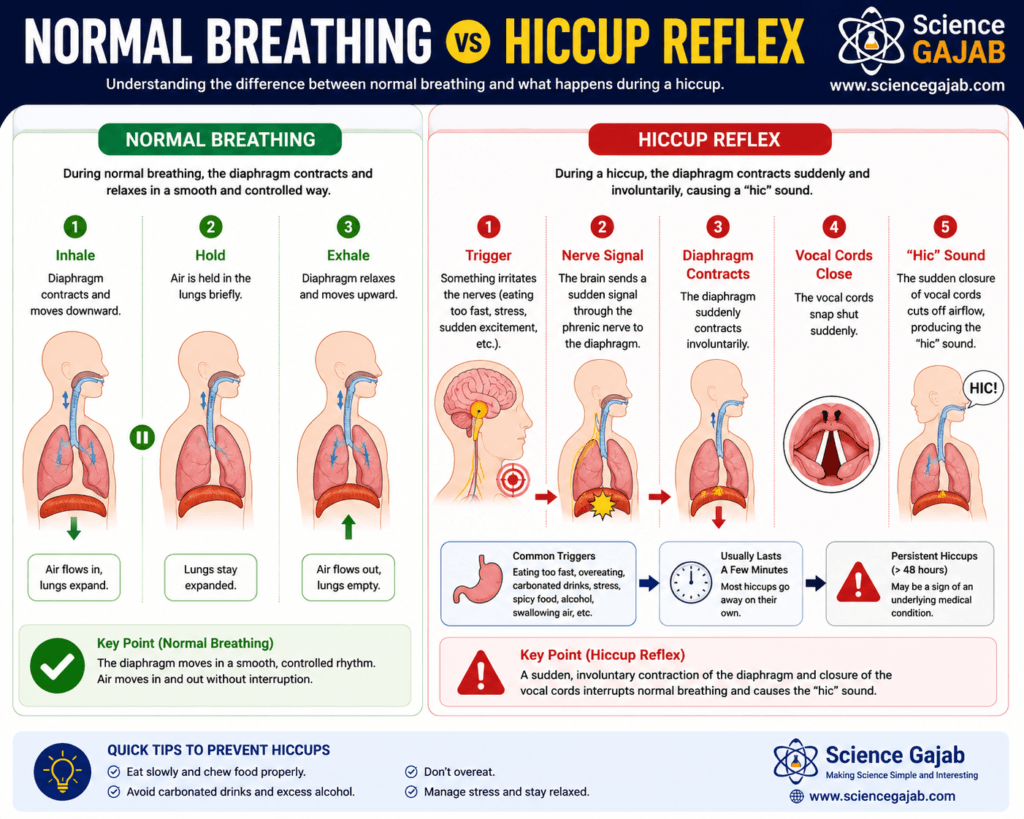
Why Do We Get Hiccups? (Simple Explanation with Science)
⭐ Hiccups? (Quick Answer)
Hiccups are sudden, involuntary contractions of the diaphragm muscle followed by the rapid closure of the vocal cords, which produces the characteristic “hic” sound. (Mayo Clinic)
🧠 Hiccups? (Simple Explanation)
Hiccups happen when your diaphragm (breathing muscle) suddenly contracts without control. This causes a quick intake of air, and your vocal cords close immediately, producing the “hic” sound. (Scientific American)
👉 In simple terms:
Muscle spasm + sudden air intake + vocal cord closure = hiccup
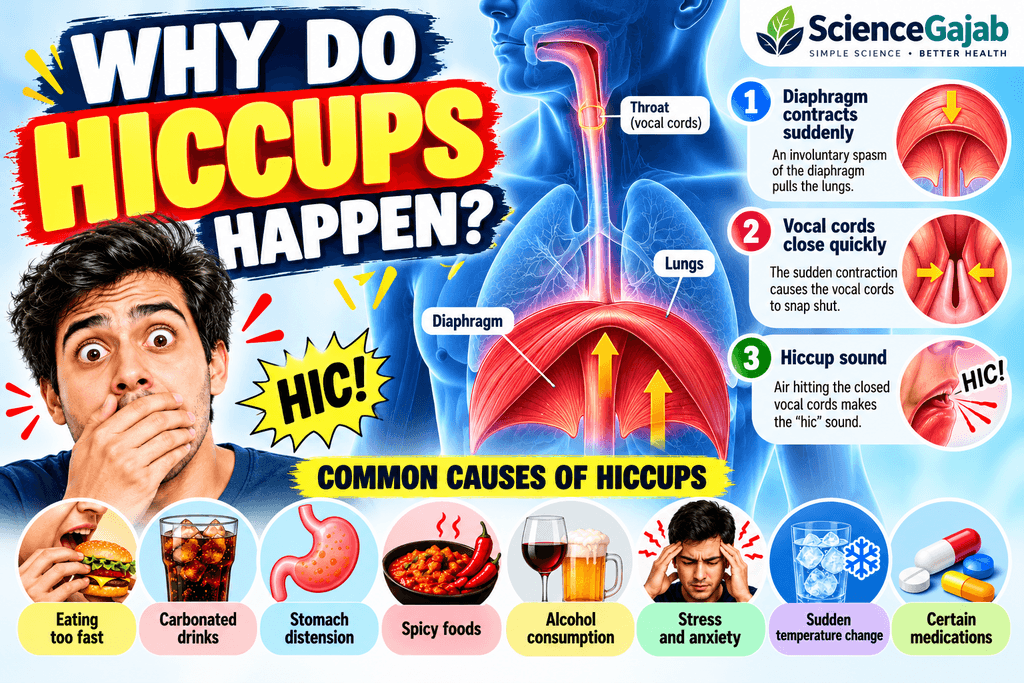
⚙️ What Happens in Your Body During Hiccups?
- Diaphragm contracts suddenly
- Air rushes into lungs
- Vocal cords close quickly
- “Hic” sound is produced
This is actually a reflex action controlled by the brain and nerves. (News-Medical)
How Do Hiccups Happen?what causes hiccups suddenly
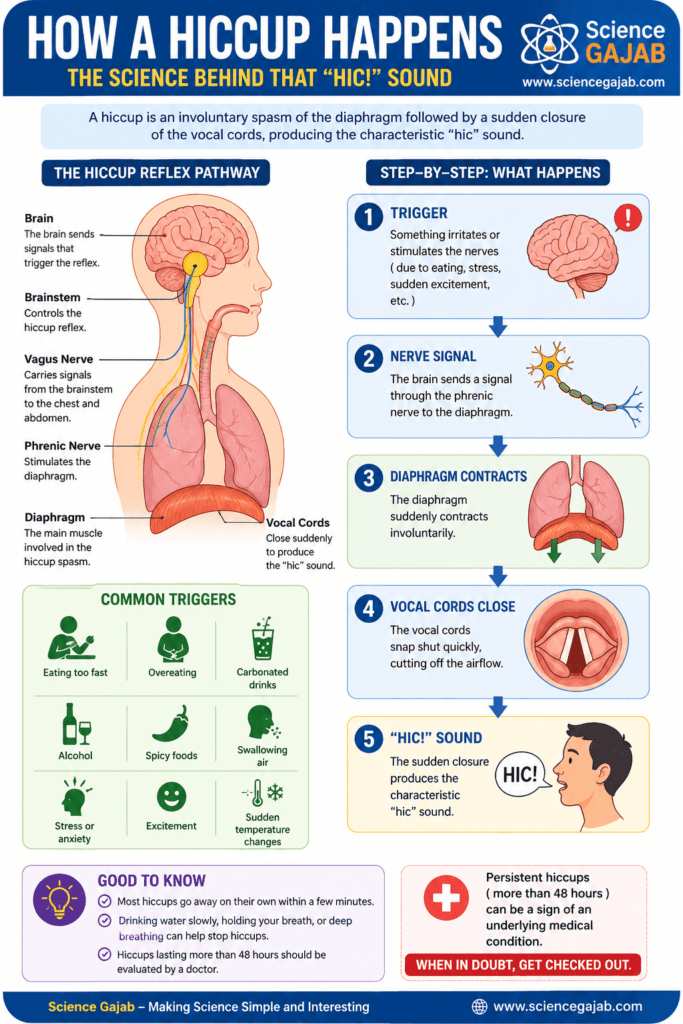
The hiccup reflex involves several parts of the body working together.
Step 1
A trigger stimulates the phrenic nerve, vagus nerve, or areas of the brain involved in the hiccup reflex.
↓
Step 2
The diaphragm suddenly contracts.
↓
Step 3
Air rushes into the lungs.
↓
Step 4
The vocal cords close almost instantly.
↓
Step 5
The characteristic “hic” sound is produced.
This entire sequence occurs in a fraction of a second.
The Science Behind Hiccups
Scientists believe hiccups are controlled by a reflex arc, a pathway involving the brain, nerves, and diaphragm.
The reflex includes:
- Brainstem
- Phrenic nerve
- Vagus nerve
- Diaphragm
- Intercostal muscles
- Vocal cords
Although the exact evolutionary purpose remains uncertain, researchers have proposed several theories. One suggests hiccups may be a leftover reflex from early vertebrate ancestors, while another proposes they helped infants remove swallowed air after feeding. Neither explanation has been definitively proven.
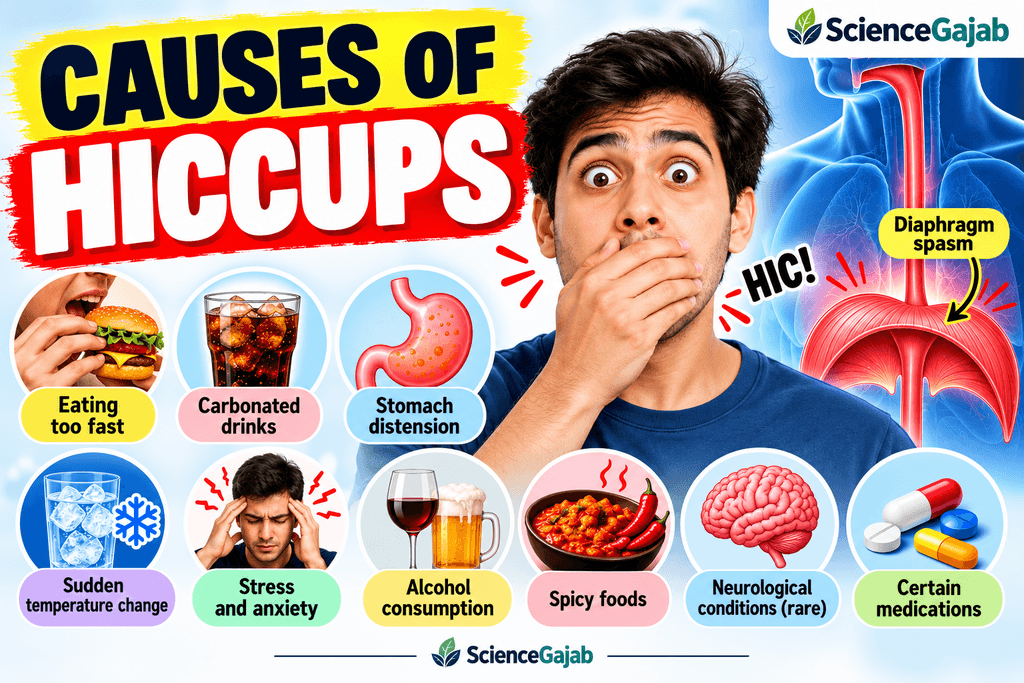
⚠️ Common Causes of Hiccups
🍽️ Eating & Drinking
- Eating too fast
- Overeating
- Drinking carbonated drinks
- Alcohol consumption
🌡️ Physical Triggers
- Sudden temperature changes
- Swallowing air (gum, smoking)
😮 Emotional Factors
- Excitement
- Stress
- Nervousness
👉 All these factors irritate the diaphragm, triggering hiccups. (MedlinePlus)
🧪 Scientific Reason (Advanced Concept)
Hiccups are caused by a reflex arc involving nerves (phrenic & vagus nerves) and the brainstem. (PMC)
This reflex:
- Sends signals to the diaphragm
- Causes sudden contraction
- Produces repeated hiccups
⏱️ How Long Do Hiccups Last?
- Usually last a few minutes
- Most go away on their own
- If they last more than 48 hours, it may need medical attention (Mayo Clinic)
🚨 When Should You Worry?
See a doctor if hiccups:
- Last more than 2 days
- Affect eating or sleeping
- Occur very frequently
🧠 Interesting Fact
Some scientists believe hiccups may be related to swallowed air in the stomach, which triggers the reflex. (PMC)
📊 Quick Summary Table
| Factor | Explanation |
|---|---|
| Cause | Diaphragm spasm |
| Sound | Vocal cord closure |
| Type | Reflex action |
| Duration | Usually short |
| Concern | >48 hours |
📢 Conclusion
Hiccups are a common and harmless reflex caused by sudden contractions of the diaphragm. While they can be annoying, they usually resolve on their own and are rarely serious.
visit facebook.com/sciencegajab/
🎯 Hiccups in simple way
A hiccup occurs when your diaphragm (breathing muscle) suddenly contracts.
This sudden contraction closes your vocal cords → producing the “hic” sound.
🧠 What Triggers Hiccups?
1. Eating Too Fast
Air gets trapped in your stomach → irritating the diaphragm.
2. Drinking Cold or Carbonated Drinks
Temperature changes can trigger diaphragm spasms.
3. Eating Spicy Foods
Spices irritate nerves connected to breathing muscles.
4. Stress or Excitement
Emotional triggers can cause short-term hiccups.
5. Sudden Temperature Change
Cold to hot or hot to cold can cause diaphragm reflex.
⌛ How Long Do Hiccups Last?
Most hiccups last a few minutes.
If they last longer than 48 hours, medical evaluation is needed.
🧪 How To Stop Hiccups Quickly
Simple methods that work:
- Hold your breath for a few seconds
- Drink cold water slowly
- Swallow a teaspoon of sugar
- Take controlled deep breaths
These methods relax the diaphragm.
Like our page at https://www.facebook.com/sciencegajab
🖼️ How diaphragm spasms cause hiccups

Read also Why Do We Sneeze? The Simple Science Explained
❓ FAQ
Because your stomach expands quickly → irritating the diaphragm.
No, most are harmless and temporary.
Yes, emotional stress can trigger diaphragm spasms.
Most hiccups are harmless and disappear within a few minutes. However, hiccups lasting more than 48 hours may indicate an underlying medical condition, such as gastroesophageal reflux disease (GERD), nervous system disorders, chest infections, kidney disease, or, in rare cases, brain disorders. If hiccups persist or interfere with eating, sleeping, or daily activities, seek medical evaluation.
Overeating stretches the stomach, which can irritate the diaphragm and stimulate the vagus nerve. This may trigger involuntary contractions of the diaphragm, resulting in hiccups.
Babies commonly develop hiccups because their diaphragm is still developing and they tend to swallow air during feeding. In most cases, infant hiccups are normal, painless, and resolve without treatment.
Although no method works for everyone, the following techniques may help:
Hold your breath for 10–20 seconds.
Sip cold water slowly.
Breathe into a paper bag for a short period (avoid if you have breathing or heart problems).
Swallow small amounts of water repeatedly.
Pull your knees gently toward your chest while sitting.
Persistent hiccups should be evaluated by a healthcare pr
Yes. Emotional stress, anxiety, excitement, and sudden laughter can stimulate the nerves controlling the diaphragm, increasing the likelihood of hiccups in some individuals.
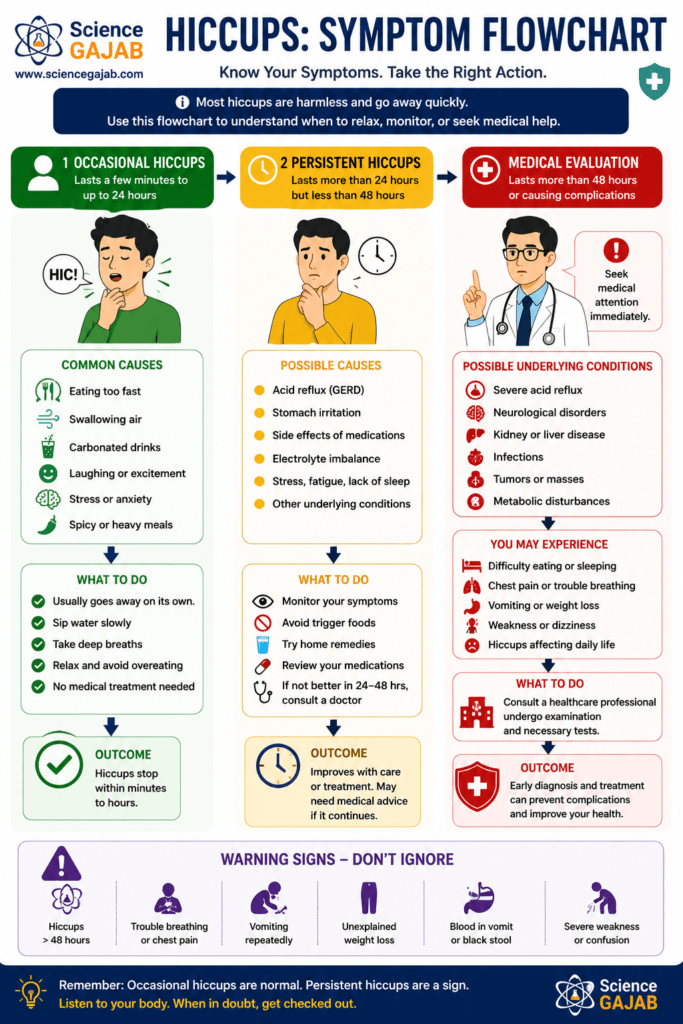
When Should You See a Doctor?
Although most hiccups are temporary, medical attention is recommended if you experience:
- Hiccups lasting longer than 48 hours
- Frequent episodes that keep returning
- Difficulty eating or drinking
- Trouble sleeping because of hiccups
- Weight loss or dehydration
- Severe chest pain, difficulty breathing, weakness, confusion, or persistent vomiting along with hiccups
Early evaluation helps identify any underlying medical condition that may require treatment.
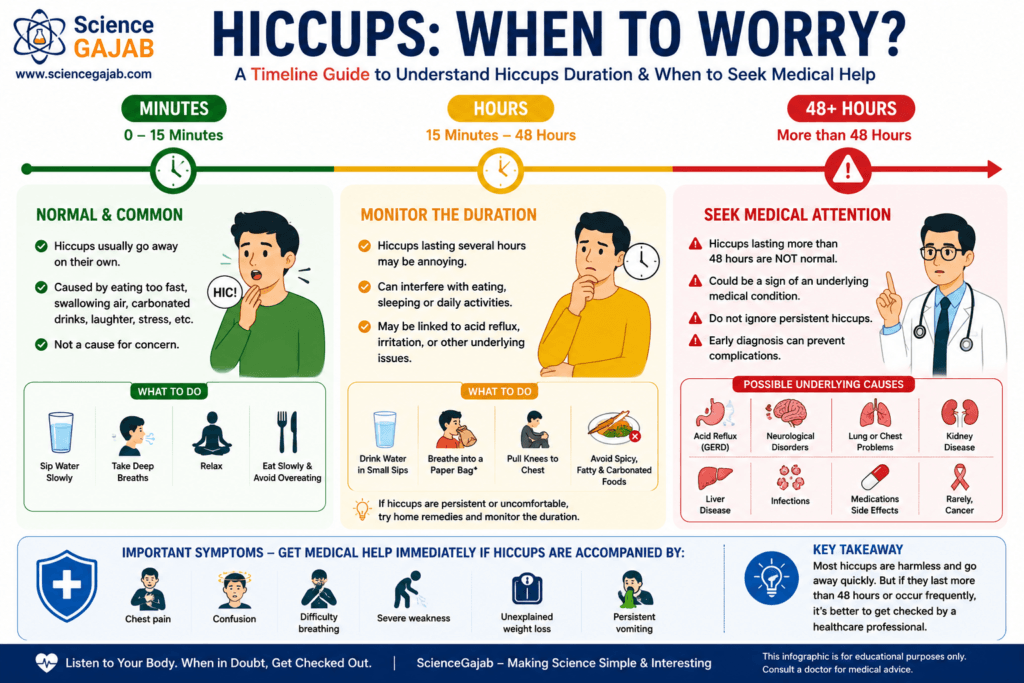
How Can You Reduce the Risk of Hiccups?
While hiccups cannot always be prevented, these healthy habits may reduce your risk:
- Eat slowly and chew food thoroughly.
- Avoid overeating.
- Limit carbonated drinks and excessive alcohol.
- Reduce very spicy foods if they trigger symptoms.
- Avoid talking while eating to reduce swallowed air.
- Manage stress through relaxation techniques, regular exercise, and adequate sleep.
- Treat acid reflux if recommended by your healthcare provider.
Interesting Facts About Hiccups
- Everyone can get hiccups, including unborn babies in the womb.
- Most hiccup episodes last only a few minutes.
- The medical term for hiccups is singultus.
- Hiccups occur because of sudden involuntary contractions of the diaphragm.
- Some people experience hiccups after laughing, excitement, or sudden temperature changes.
- The longest recorded case of hiccups lasted for several decades, although such cases are extremely rare.
Key Takeaways
1✔ Hiccups are caused by sudden involuntary contractions of the diaphragm.
2✔ Eating too quickly, overeating, carbonated drinks, stress, and swallowing excess air are common triggers.
3✔ Most hiccups resolve on their own without treatment.
4✔ Home remedies such as slow breathing and drinking water may help relieve hiccups.
5✔ Hiccups lasting more than 48 hours should be evaluated by a healthcare professional.
6✔ Maintaining healthy eating habits and managing stress may help reduce recurring hiccups.
References
The information in this article is based on guidance and educational resources from:
- Mayo Clinic – Hiccups: Symptoms and Causes.
- MedlinePlus – Hiccups.
- National Institute of Diabetes and Digestive and Kidney Diseases – Digestive Diseases Information.
- National Center for Biotechnology Information – Clinical research on persistent hiccups.
Reviewed for Medical Accuracy
Author: Sanjay Prajapati, MBBS
Medical Topic: Human Physiology and Digestive Health
Last Updated: July 2026
Disclaimer: This article is intended for educational purposes only and should not replace professional medical advice, diagnosis, or treatment. If you have persistent or severe hiccups, consult a qualified healthcare professional.
People Also Ask (PAA)
Why do hiccups happen suddenly?
Hiccups happen suddenly when the diaphragm contracts involuntarily. Common triggers include eating too quickly, overeating, drinking carbonated beverages, swallowing excess air, emotional stress, or sudden excitement. These contractions cause the vocal cords to close quickly, creating the familiar “hic” sound.
Why do we get hiccups after eating?
Eating too quickly or consuming a large meal stretches the stomach and irritates the diaphragm. This stimulation can trigger the hiccup reflex. Carbonated drinks, spicy foods, and swallowing air while eating may also contribute.
Why do babies get hiccups?
Babies frequently get hiccups because their diaphragm is still developing. Swallowing air during feeding and a full stomach are common triggers. In most cases, baby hiccups are harmless and stop naturally within a few minutes.
Can stress cause hiccups?
Yes. Emotional stress, anxiety, excitement, and even excessive laughter may stimulate the nerves controlling the diaphragm, increasing the likelihood of hiccups.
Are hiccups dangerous?
Most hiccups are harmless and disappear within a few minutes. However, hiccups lasting longer than 48 hours may indicate an underlying medical condition and should be evaluated by a healthcare professional.
Can dehydration cause hiccups?
Although dehydration is not a common direct cause, inadequate fluid intake may contribute to irritation of the throat or digestive system in some individuals, potentially increasing the likelihood of hiccups.
Why do hiccups hurt sometimes?
Repeated diaphragm contractions can cause temporary soreness in the chest or upper abdomen, especially during prolonged episodes.
Can acid reflux cause hiccups?
Yes. Gastroesophageal reflux disease (GERD) can irritate the esophagus and vagus nerve, increasing the risk of persistent or recurrent hiccups.
Myths vs Facts About Hiccups
| Myth | Fact |
|---|---|
| Everyone gets hiccups for the same reason. | Hiccups have many different triggers, including eating habits, stress, and certain medical conditions. |
| Holding your breath always cures hiccups. | It may help some people, but there is no guaranteed cure. |
| Hiccups are always harmless. | Most are harmless, but persistent hiccups require medical evaluation. |
| Babies should be treated every time they hiccup. | Baby hiccups are usually normal and do not require treatment. |
| Drinking water upside down is scientifically proven. | Scientific evidence supporting this method is limited. |
| Only adults get hiccups. | People of all ages, including unborn babies, can experience hiccups. |
Hiccups in Babies vs Adults
| Feature | Babies | Adults |
|---|---|---|
| Frequency | Very common | Common |
| Main Cause | Developing diaphragm and feeding | Eating habits, stress, stomach irritation |
| Serious? | Rarely | Usually harmless |
| Treatment | Usually none | Home remedies or medical treatment if persistent |
| When to See a Doctor | Poor feeding, vomiting, or persistent symptoms | Hiccups lasting more than 48 hours |
Home Remedies vs Medical Treatments
| Home Remedies | Medical Treatments |
|---|---|
| Hold your breath | Prescription medications for persistent hiccups |
| Sip cold water | Treatment of underlying conditions such as GERD |
| Slow, deep breathing | Nerve block procedures (rare cases) |
| Pull knees to chest | Specialist evaluation for neurological causes |
| Avoid overeating | Surgery only in exceptional situations |
Quick Summary
If you only remember five things from this article, remember these:
1✅ Hiccups occur because the diaphragm suddenly contracts involuntarily.
2✅ Eating too quickly, overeating, carbonated drinks, stress, and swallowing air are the most common triggers.
3✅ Most hiccups disappear on their own within a few minutes.
4✅ Home remedies such as drinking water slowly and controlled breathing may provide relief.
5✅ Persistent hiccups lasting longer than 48 hours should always be evaluated by a healthcare professional.
Did You Know?
- The medical term for hiccups is singultus.
- Babies can hiccup even before birth while still in the womb.
- Most hiccups last only a few minutes and resolve without treatment.
- Men are slightly more likely than women to experience persistent hiccups.
- Scientists still do not know the exact evolutionary purpose of hiccups.
Common Mistakes People Make
Avoid these mistakes if you frequently experience hiccups:
- Eating meals too quickly.
- Drinking large amounts of carbonated beverages.
- Overeating until the stomach feels overly full.
- Ignoring persistent hiccups that last more than 48 hours.
- Relying only on home remedies when symptoms are severe or recurrent.
Expert Tip
For most people, hiccups are harmless and temporary. If you experience frequent episodes, keeping a diary of possible triggers—such as certain foods, drinks, stress, or eating habits—can help you identify patterns and reduce future episodes.
Final Conclusion
Hiccups are one of the body’s most common reflexes and are usually nothing to worry about. They occur when the diaphragm contracts suddenly, causing the vocal cords to close and produce the familiar “hic” sound. Most episodes are triggered by simple factors such as eating too quickly, overeating, carbonated drinks, stress, or swallowing air.
Although hiccups typically disappear within a few minutes, persistent hiccups lasting more than 48 hours should not be ignored, as they may indicate an underlying medical condition that requires evaluation. By understanding the common causes, recognizing warning signs, and following healthy eating and lifestyle habits, you can reduce the likelihood of recurring hiccups and know when it is appropriate to seek medical care.
📌 Disclaimer
This content is for informational and educational purposes only and should not replace professional medical advice.
Author: Dr. Sanjay Prajapati (MBBS)
MBBS Graduate | Medical Content Writer | Founder of ScienceGajab


