
Inside your body, millions of chemical reactions happen every second.
But here’s the amazing part:
👉 Most of them would be too slow to keep you alive…
That’s where enzymes come in.
They act like tiny helpers — working fast, precise, and perfectly.
🧬 What Are Enzymes?
Enzymes are special proteins that:
- Speed up chemical reactions
- Help your body function properly
👉 Without enzymes, digestion, breathing, and even thinking would be too slow!
learn bacteria vs virus
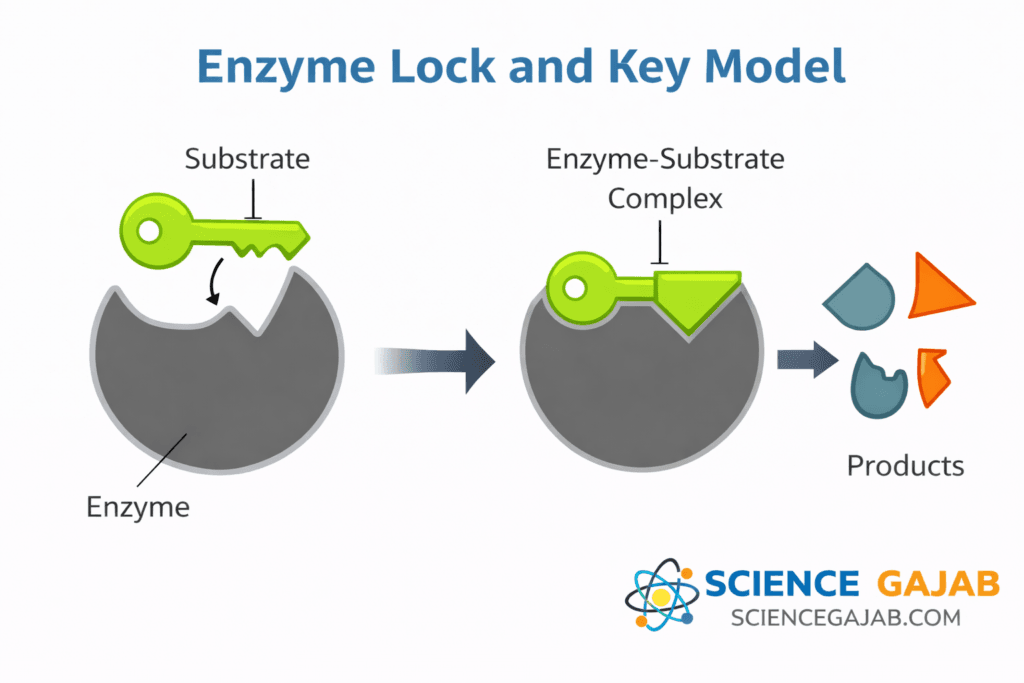
🔑 The Lock and Key Idea (Super Simple)
Think of it like this:
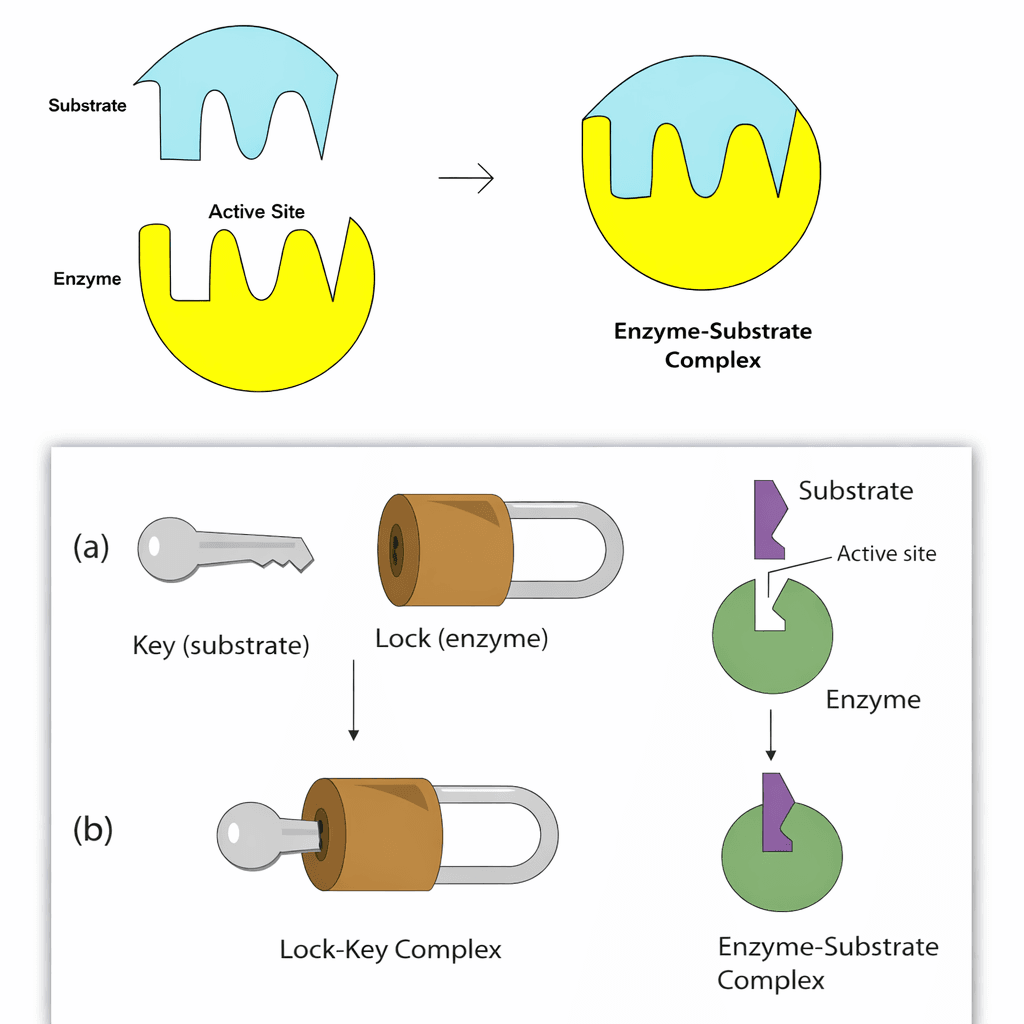
- 🔒 Enzyme = Lock
- 🔑 Substrate (molecule) = Key
👉 Only the correct key fits the lock
🔋 How Energy Is Released in the Body (Step-by-Step, Simple)
🔋 How Mitochondria Actually Produce Energy (Simple Explanation)
⚙️ Step-by-Step: How It Works
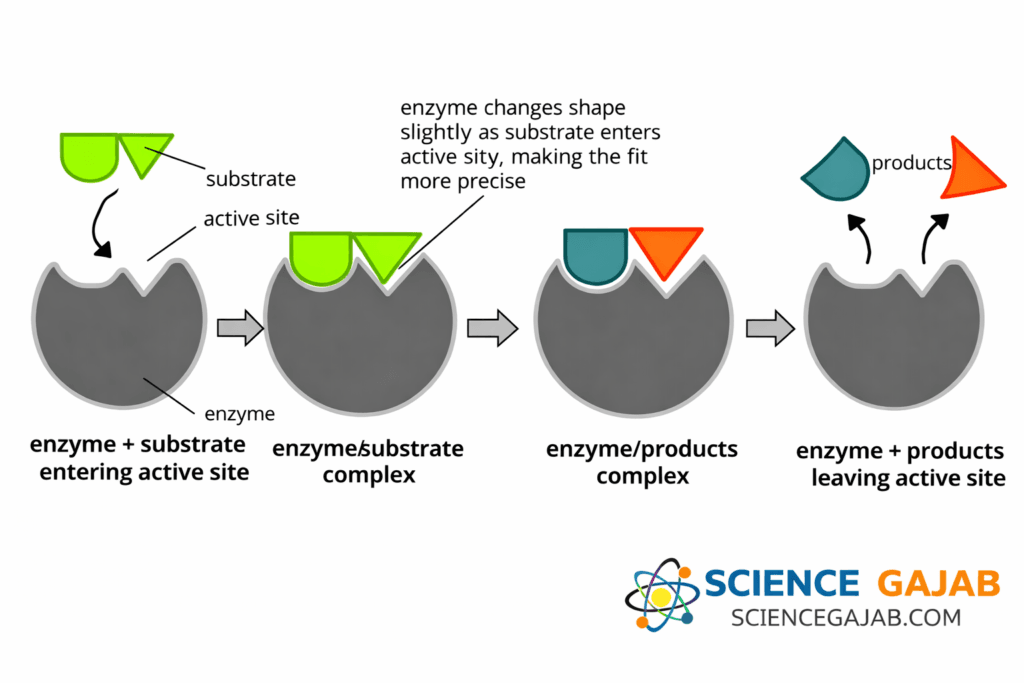
1. The Substrate Approaches
A molecule (called substrate) comes near the enzyme
2. Perfect Fit Happens
The substrate fits exactly into a special part of enzyme called:
👉 Active Site
Just like a key fits into a lock
3. Reaction Happens
The enzyme:
- Breaks the substrate
OR - Joins molecules together
👉 Reaction happens very fast
4. Product Is Released
After the reaction:
- The new molecule (product) leaves
- The enzyme stays unchanged
👉 It can be reused again and again
⚡ Why “Lock and Key” Is Important
This model explains:
✅ Specificity → Each enzyme works on one type of molecule
✅ Efficiency → Reactions happen quickly
✅ Reusability → Enzymes are not used up
🧠 Simple Real-Life Example
👉 Digestion
- Enzyme: Amylase
- Substrate: Starch
Amylase only works on starch (its “key”)
👉 It breaks it into simple sugars
10 Simple Steps of Glycolysis (Easy Breakdown)
⚠️ Important Note
The lock-and-key model is a simple explanation.
In reality:
👉 Enzymes can slightly change shape (called induced fit)
But for beginners, lock-and-key is the easiest way to understand.
🧩 Fun Facts
- Enzymes can work millions of times per second
- Your body has thousands of different enzymes
- Each enzyme has a specific job
✅Fermentation vs Aerobic Respiration | Differences Made Easy
🔥 Final Thought
Your body is like a massive factory…
And enzymes are the workers that keep everything running smoothly.
🔑 Without enzymes, life would slow down — or stop completely.
Why Oxygen Is Important for Cells (Simple Explanation)