
💧 Day 0: Your Body Is 60% Water
what happens if you stop drinking water
Your body depends on water for:
- Blood circulation
- Temperature control
- Brain function
- Kidney filtration
- Digestion
Without water, every system begins to struggle.
And it starts faster than you think.
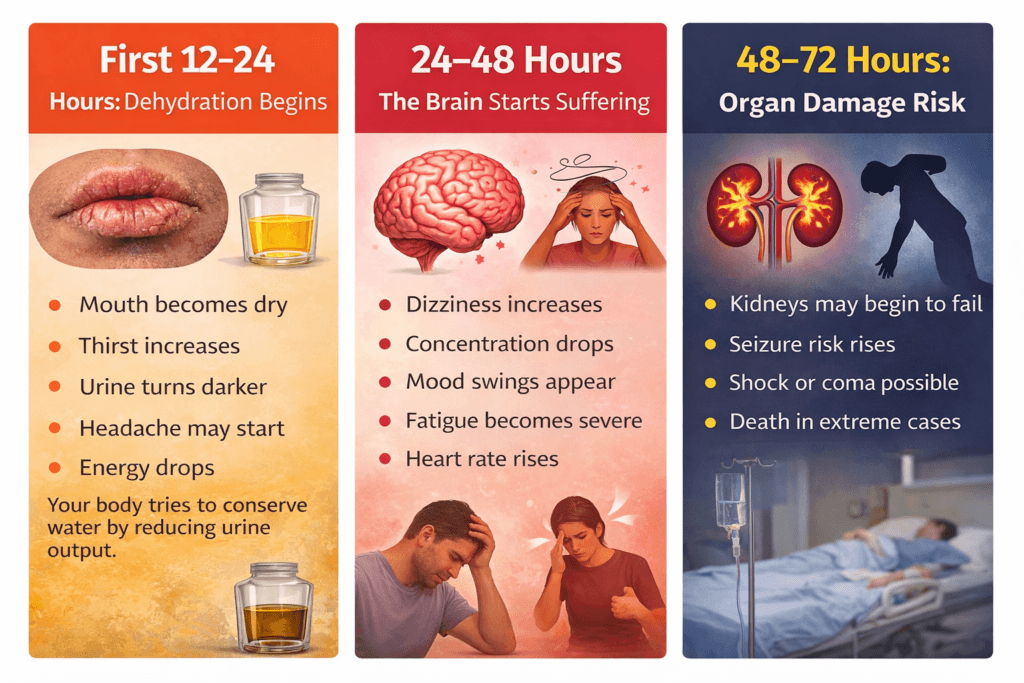
⏳ First 12–24 Hours: Dehydration Begins
Within hours of not drinking water:
- Mouth becomes dry
- Thirst increases
- Urine turns darker
- Headache may start
- Energy drops
Your body tries to conserve water by reducing urine output.
The brain triggers thirst through the hypothalamus. Blood becomes slightly thicker.
At this stage, symptoms are uncomfortable — but still reversible.
🧠 24–48 Hours: The Brain Starts Suffering
After one full day:
- Dizziness increases
- Concentration drops
- Mood swings appear
- Fatigue becomes severe
- Heart rate rises
Your blood pressure may fall.
Electrolyte imbalance begins. Sodium levels can rise dangerously.
The brain shrinks slightly due to fluid loss — which can cause confusion and poor coordination.
This is when dehydration becomes medically risky.
⚠️ 48–72 Hours: Organ Damage Risk
By the third day:
- Kidneys struggle to filter waste
- Blood volume drops significantly
- Body temperature regulation fails
- Risk of heat stroke rises
- Fainting or shock may occur
Severe dehydration can lead to:
- Kidney failure
- Seizures
- Loss of consciousness
- Death (in extreme conditions)
Survival depends on climate, health status, and activity level.
In hot environments, survival time may be shorter.
🧊 Why Water Is More Important Than Food
You can survive:
- Around 3 weeks without food
- Only about 3 days without water
Water maintains:
- Blood circulation
- Oxygen delivery
- Waste removal
- Joint lubrication
- Brain electrical activity
Without it, cells literally begin to malfunction.
🧬 What’s Happening Inside Your Body?
When water intake stops:
- Blood thickens
- Heart works harder
- Kidneys conserve fluid
- Electrolytes become imbalanced
- Cells shrink
Eventually, organs cannot function properly.
This isn’t just thirst.
It’s a biological emergency.
❓ Frequently Asked Questions
Can you survive 3 days without water?
Some people can — but it is extremely dangerous, especially in hot weather.
Does drinking other liquids count?
Yes. Fluids like juice, milk, and even fruits contribute to hydration.
What are early signs of dehydration?
Dark urine, dry mouth, headache, dizziness, fatigue.
How much water should you drink daily?
On average:
- Men: ~3–3.7 liters
- Women: ~2–2.7 liters
(Varies by climate and activity)
🚨 Warning Signs You Should Never Ignore
Seek medical help if someone has:
- No urination for 8+ hours
- Extreme confusion
- Rapid heartbeat
- Sunken eyes
- Fainting
Severe dehydration can become fatal quickly.
Read also 💧 Science Behind Drinking Water – How Much Is Enough for the Human Body?
🧠 The Bigger Lesson
Most people don’t drink enough water daily.
Even mild dehydration can:
- Reduce focus
- Lower productivity
- Increase headaches
- Affect mood
Your body is constantly losing water through:
- Sweat
- Breathing
- Urination
Hydration isn’t optional.
It’s survival.
🙏 If ScienceGajab helped you learn something new, please support us — even a small contribution makes a big difference.Your small contribution helps us create more free, quality science content for everyone.
Even ₹10 (0.11$) makes a difference.
You can support us instantly by scanning the UPI QR code below .

Thank you for being part of the ScienceGajab family ❤️