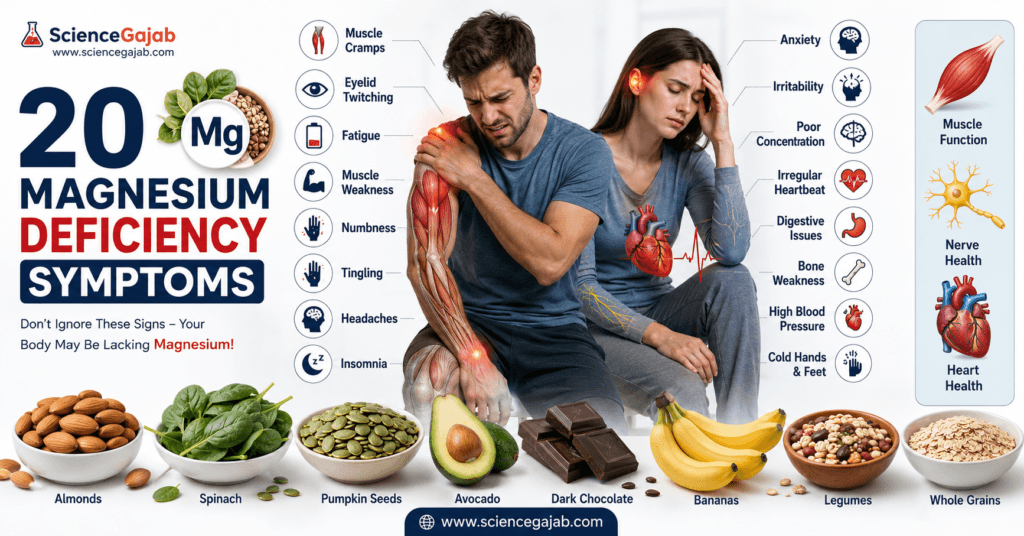

Focus Keyword
magnesium deficiency symptoms
20 Magnesium Deficiency Symptoms You Should Never Ignore (Early Warning Signs)
Reviewed by: ScienceGajab Medical Content Team
Reading Time: 13 Minutes
Last Updated: Oct 2026
Quick Answer
Magnesium deficiency, also known as hypomagnesemia, occurs when the body does not have enough magnesium to support normal muscle, nerve, heart, and bone function. Early symptoms often include muscle cramps, eyelid twitching, fatigue, weakness, numbness, tingling, headaches, poor sleep, and irregular heartbeat. Severe magnesium deficiency can lead to muscle spasms (tetany), seizures, abnormal heart rhythms, and low calcium or potassium levels.
Early diagnosis and treatment through a balanced diet, correcting the underlying cause, and magnesium supplements (when prescribed) can usually restore normal magnesium levels and reduce symptoms.
Magnesium deficiency (hypomagnesemia) may cause muscle cramps, eyelid twitching, fatigue, weakness, numbness, headaches, poor sleep, and irregular heartbeat. Most cases improve with magnesium-rich foods, treatment of the underlying cause, and supplements when prescribed by a healthcare professional.
Table of Contents
- What Is Magnesium?
- Why Is Magnesium Important?
- Who Is at Risk?
- 20 Magnesium Deficiency Symptoms
- Causes
- Risk Factors
- Diagnosis
- Treatment
- Best Magnesium-Rich Foods
- Prevention
- FAQs
- Key Takeaways
18 Zinc Deficiency Symptoms You Should Never Ignore (Early Warning Signs)
What Is Magnesium?
Magnesium is an essential mineral involved in more than 300 enzyme reactions in the human body. It helps convert food into energy, supports healthy muscles and nerves, regulates blood sugar, maintains normal heart rhythm, and contributes to strong bones.
About 50–60% of the body’s magnesium is stored in bones, while the rest is found in muscles, soft tissues, and body fluids. Because magnesium is required for so many biological processes, even a mild deficiency can affect overall health.
Why Is Magnesium Important?
Magnesium helps the body:
- Maintain normal muscle function
- Support healthy nerve signaling
- Regulate heartbeat
- Produce energy (ATP)
- Build and maintain strong bones
- Help regulate blood sugar
- Support normal blood pressure
- Assist in protein and DNA synthesis
- Activate vitamin D for healthy bones
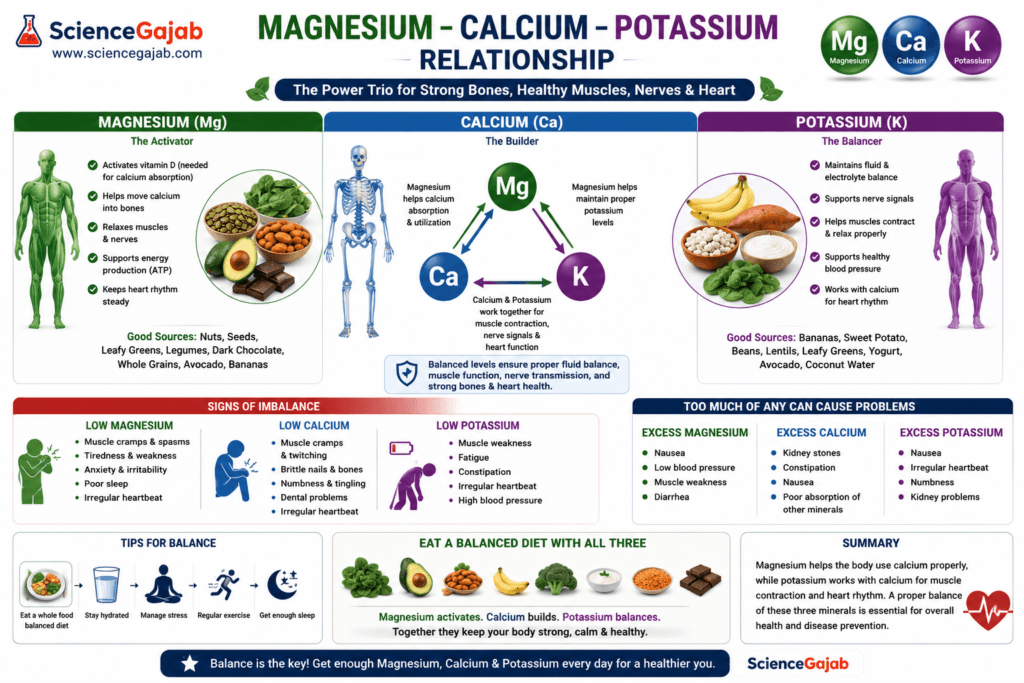
Magnesium also works closely with calcium, potassium, and vitamin D. A deficiency in one mineral may influence the balance of the others.
🚨 Early Signs of Vitamin B12 Deficiency — Don’t Ignore These Warning Signals!
Who Is Most at Risk?
Although magnesium deficiency is uncommon in healthy people with balanced diets, certain groups have a higher risk.
People at increased risk include:
- Older adults
- People with type 2 diabetes
- Individuals with chronic diarrhea
- People with Crohn’s disease or celiac disease
- Those with alcohol use disorder
- People taking long-term diuretics or proton pump inhibitors (PPIs)
- Individuals with kidney disorders that increase magnesium loss
- People with poor dietary intake
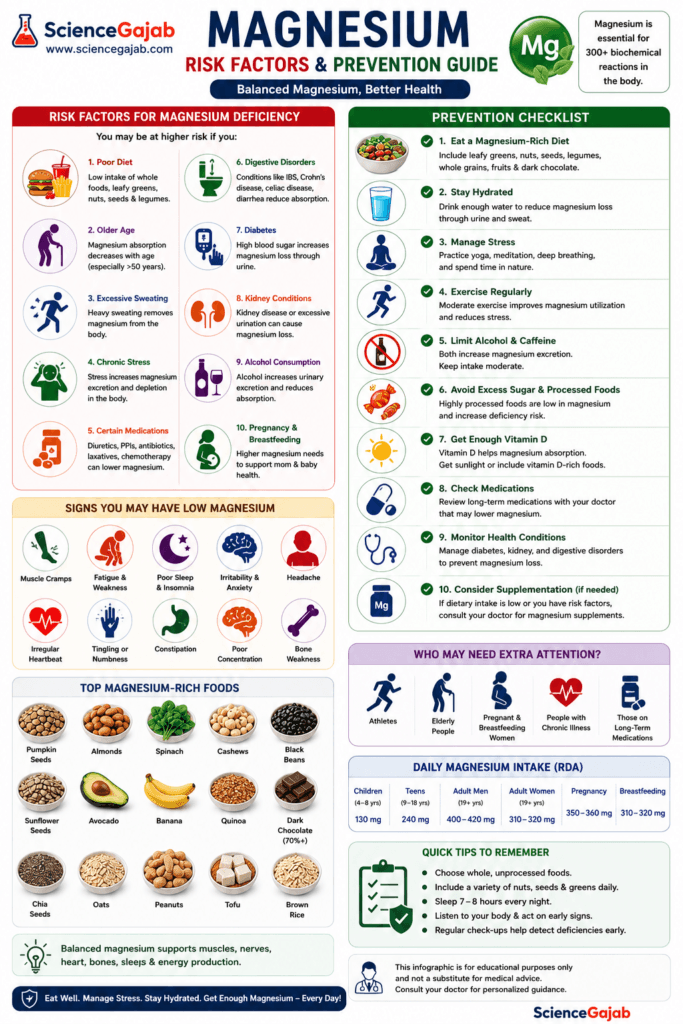
Early Magnesium Deficiency Symptoms
Many symptoms develop gradually and may be mistaken for stress, lack of sleep, or other nutritional deficiencies.
1. Muscle Cramps
Muscle cramps are one of the earliest and most common signs of magnesium deficiency.
They often affect:
- Calves
- Feet
- Hands
- Thighs
The cramps may occur:
- During exercise
- At night
- After prolonged standing
🏃♂️ How Your Body Moves: The Science of Locomotion & Movement in 5 Minutes– A Complete Guide
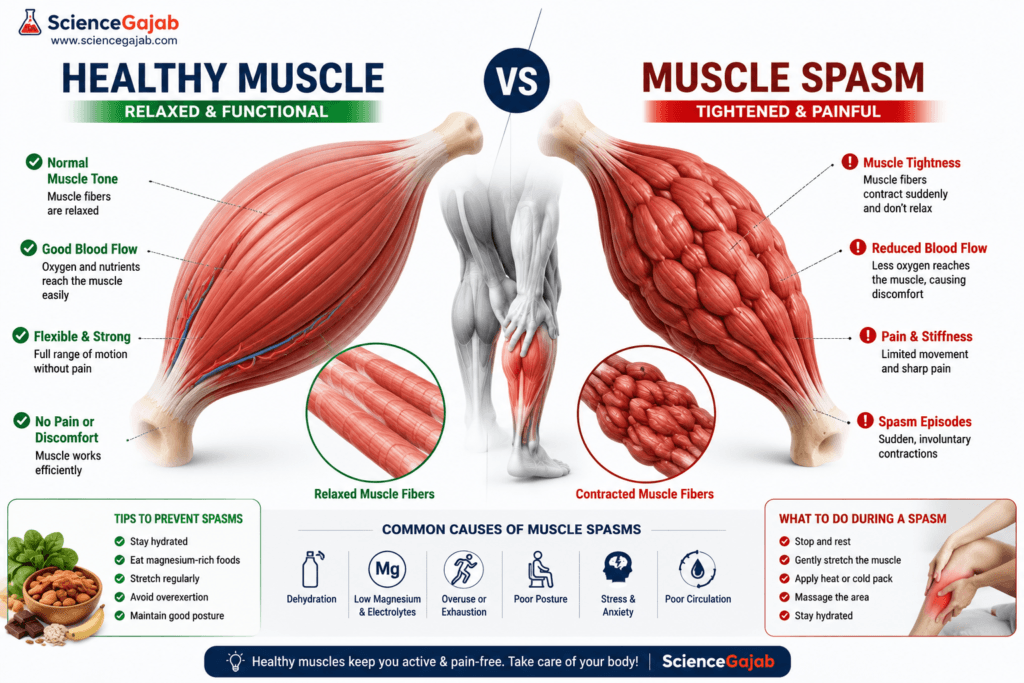
2. Eyelid Twitching
Persistent eyelid twitching (myokymia) is commonly linked with fatigue and stress, but it can also occur in magnesium deficiency.
The twitching is usually:
- Painless
- Temporary
- More noticeable during periods of stress or tiredness
Why Do Eyes Twitch? (Simple Explanation You Can Trust)
3. Muscle Weakness
Without enough magnesium, muscles may not contract and relax normally.
Symptoms include:
- Difficulty climbing stairs
- Reduced grip strength
- Feeling weak after minor activities
- Poor exercise performance
4. Fatigue
Low magnesium may interfere with normal energy production, leading to:
- Constant tiredness
- Low energy
- Difficulty concentrating
- Feeling exhausted despite adequate sleep
Fatigue has many possible causes, so blood tests may be needed to identify the underlying problem.
Signs of Anemia: 15 Warning Symptoms You Should Never Ignore
5. Numbness and Tingling
Magnesium helps nerves send signals correctly.
Low levels may cause:
- Tingling in the fingers
- Tingling in the toes
- Numbness around the mouth
- Pins-and-needles sensation
Persistent numbness should always be evaluated by a healthcare professional.
tingling due to vitamin deficiency
Did You Know?
Your body cannot produce magnesium on its own. It must be obtained through foods such as nuts, seeds, legumes, whole grains, and green leafy vegetables.
Doctor’s Tip
Muscle cramps and eyelid twitching do not always mean magnesium deficiency. They can also occur because of dehydration, excessive exercise, calcium deficiency, potassium deficiency, medication side effects, or neurological conditions. Blood tests and medical evaluation help identify the true cause.
Loss of Appetite
One of the earliest but often overlooked symptoms of magnesium deficiency is a reduced appetite.
People may notice:
- Eating less than usual
- Feeling full quickly
- Mild nausea
- Unintentional weight loss if the deficiency persists
Because appetite loss can occur with many illnesses, it should be evaluated in the context of other symptoms.
15 Best Foods to Improve Memory Naturally: Science-Backed Brain Nutrition
7. Nausea
Low magnesium levels may affect normal digestive function.
Some individuals experience:
- Mild nausea
- Upset stomach
- General discomfort after meals
Persistent nausea should always be assessed by a healthcare professional.
🧠 What Happens During a Migraine? (Science Explained)
8. Headaches
Magnesium plays an important role in nerve function and blood vessel regulation.
Some people with magnesium deficiency experience:
- Frequent headaches
- Tension-type headaches
- Increased susceptibility to migraines
Headaches have many causes, so magnesium deficiency is only one possible explanation.
Early Signs of Serious Disease You Should Never Ignore
9. Difficulty Sleeping (Insomnia)
Magnesium helps regulate the nervous system and supports muscle relaxation.
Low magnesium may contribute to:
- Difficulty falling asleep
- Frequent nighttime awakenings
- Poor sleep quality
- Feeling unrefreshed in the morning
Why Do Dark Circles Suddenly Appear? (Simple Explanation You Can Trust)
10. Anxiety
Some people with low magnesium report:
- Feeling nervous
- Increased anxiety
- Restlessness
- Difficulty relaxing
These symptoms are not specific to magnesium deficiency and can have many medical or psychological causes.
What Causes Phantom Smells? Understanding Phantosmia and Why You Smell Things That Aren’t There
11. Irritability
Changes in mood may include:
- Irritability
- Reduced patience
- Mood swings
- Feeling emotionally overwhelmed
What Causes a Crawling Sensation on the Skin? (Simple Explanation You Can Trust)
12. Difficulty Concentrating
Magnesium supports healthy nerve and brain function.
Deficiency may contribute to:
- Brain fog
- Poor concentration
- Forgetfulness
- Reduced productivity
13. Tremors
Persistent magnesium deficiency may cause:
- Fine hand tremors
- Shaking during movement
- Difficulty performing precise tasks
Why Do My Hands Shake Sometimes? Understanding Hand Tremors and Their Causes
14. Muscle Spasms (Tetany)
Severe magnesium deficiency can cause painful muscle spasms known as tetany.
Symptoms include:
- Tight muscles
- Hand spasms
- Foot spasms
- Facial muscle contractions
Tetany requires prompt medical evaluation.
15. Seizures
Very low magnesium levels may affect brain activity and, in rare cases, trigger seizures.
Seek emergency medical care immediately if a seizure occurs.
16. Irregular Heartbeat
Magnesium is essential for normal electrical activity in the heart.
Deficiency may contribute to:
- Palpitations
- Fast heartbeat
- Irregular heartbeat
- Dizziness associated with heart rhythm changes
Urgent medical assessment is recommended for new or severe heart rhythm symptoms.
Your Heart Beats 100,000 Times a Day—But Never Gets Tired. Here’s Why
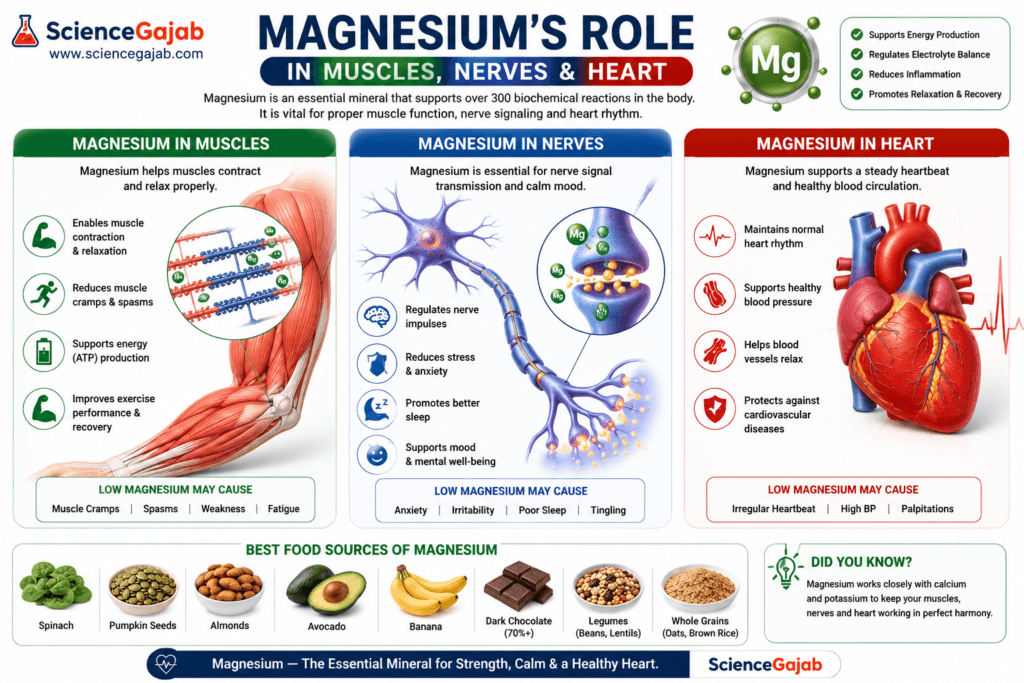
17. High Blood Pressure
Some studies suggest magnesium plays a role in blood pressure regulation. Low magnesium may be associated with high blood pressure in some individuals, although many factors influence blood pressure.
Why Does Blood Pressure Suddenly Increase? (Simple Explanation You Can Trust)
18. Low Calcium Levels
Magnesium helps regulate calcium balance.
Severe magnesium deficiency may contribute to low calcium (hypocalcemia) because it can affect parathyroid hormone function.
19. Low Potassium Levels
Magnesium deficiency may also make it difficult to correct low potassium (hypokalemia) until magnesium levels are restored.
This is one reason doctors often check magnesium when potassium is unexpectedly low.
20. Osteoporosis
Long-term magnesium deficiency may contribute to poor bone health because magnesium helps maintain bone structure and supports vitamin D function.
It is one of several nutrients important for healthy bones.
Back Pain Causes: 20 Reasons Your Back Hurts & When to See a Doctor
Common Causes of Magnesium Deficiency
1. Poor Dietary Intake
Eating too few magnesium-rich foods is a common cause.
Foods low in magnesium include highly processed diets with few:
- Nuts
- Seeds
- Whole grains
- Beans
- Green vegetables
2. Chronic Diarrhea
Long-term diarrhea can reduce magnesium absorption and increase losses.
3. Crohn’s Disease and Celiac Disease
Digestive disorders may reduce the body’s ability to absorb magnesium effectively.
4. Type 2 Diabetes
People with poorly controlled diabetes may lose more magnesium through the urine.
5. Alcohol Use Disorder
Excessive alcohol intake may:
- Reduce magnesium absorption
- Increase magnesium loss
- Contribute to poor nutrition
6. Certain Medications
Some medicines may increase the risk of magnesium deficiency, including:
- Loop and thiazide diuretics
- Proton pump inhibitors (when used long term)
- Certain chemotherapy drugs
- Some antibiotics
Never stop prescribed medication without discussing it with your healthcare provider.
Risk Factors
People at increased risk include:
- Older adults
- Individuals with diabetes
- People with digestive disorders
- Those with chronic diarrhea
- People with alcohol use disorder
- Individuals taking certain long-term medications
- People with diets low in whole foods
Silent Signs of Heart Disease You Should Never Ignore
Magnesium Deficiency vs Calcium Deficiency
| Magnesium Deficiency | Calcium Deficiency |
|---|---|
| Eyelid twitching | Muscle cramps |
| Tremors | Tingling around the mouth |
| Anxiety | Muscle spasms (tetany) |
| Irregular heartbeat | Irregular heartbeat |
| Low potassium may occur | Low calcium confirmed on blood tests |
| May contribute to low calcium | Often associated with vitamin D deficiency |
Both deficiencies can cause muscle cramps and tingling, so laboratory testing is often needed to distinguish between them.
How Is Magnesium Deficiency Diagnosed?
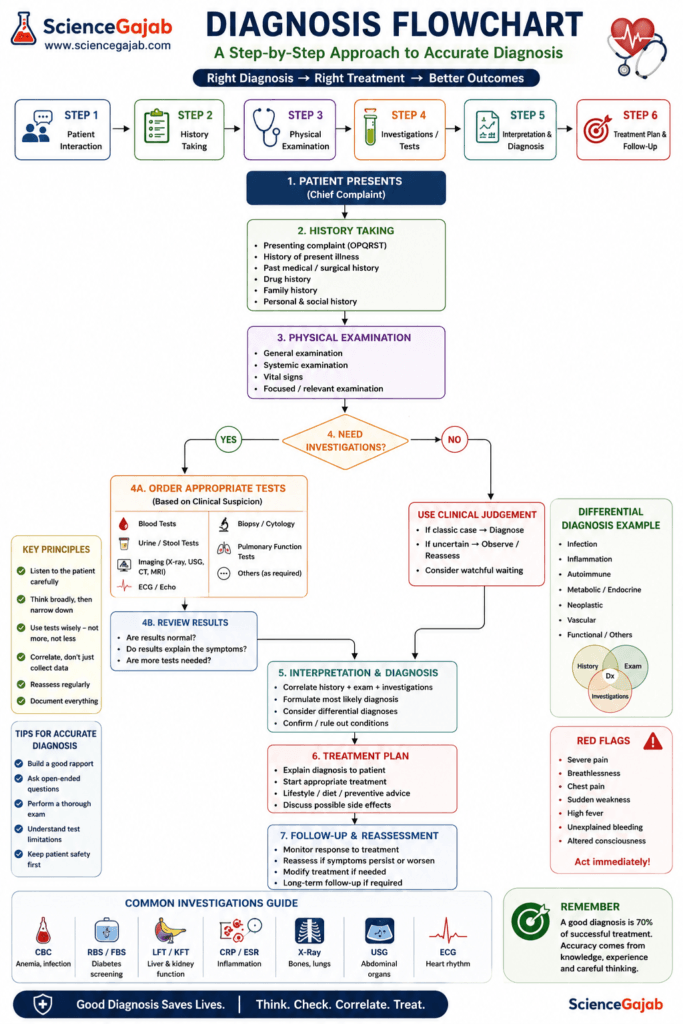
A healthcare professional may recommend:
Medical History
Questions about:
- Diet
- Alcohol intake
- Digestive symptoms
- Medications
- Diabetes
- Kidney disease
Physical Examination
The doctor may check for:
- Muscle weakness
- Tremors
- Abnormal reflexes
- Muscle spasms
- Signs of dehydration
Blood Tests
Common investigations include:
- Serum magnesium
- Serum calcium
- Serum potassium
- Kidney function tests
- Blood glucose
- Vitamin D level (when appropriate)
Because only a small percentage of magnesium is found in the blood, test results should be interpreted alongside symptoms and the clinical picture.
Possible Complications
If untreated, magnesium deficiency may lead to:
- Persistent muscle cramps
- Chronic fatigue
- Cardiac rhythm abnormalities
- Low calcium levels
- Low potassium levels
- Osteoporosis
- Seizures (severe cases)
Early diagnosis and treatment usually lead to a good recovery.
Can Magnesium Deficiency Be Treated?
Yes. Magnesium deficiency is usually treatable once the underlying cause is identified. Treatment depends on:
- Severity of magnesium deficiency
- Dietary magnesium intake
- Kidney function
- Presence of calcium or potassium deficiency
- Digestive disorders
- Medications
Mild deficiency often improves with dietary changes, while moderate or severe deficiency may require magnesium supplements or, in some cases, intravenous magnesium under medical supervision.
What is living world and characteristics of living beings biology india
Treatment Options
1. Eat More Magnesium-Rich Foods
The first step for many people is increasing magnesium intake through food.
Excellent sources include:
- Pumpkin seeds
- Almonds
- Spinach
- Black beans
- Lentils
- Cashews
- Avocados
- Whole grains
- Dark chocolate
Eating a variety of magnesium-rich foods is generally the best approach.
2. Magnesium Supplements
A healthcare professional may recommend supplements when dietary intake is not enough or blood magnesium levels are low.
Common forms include:
- Magnesium citrate
- Magnesium glycinate
- Magnesium chloride
- Magnesium oxide
Different formulations vary in absorption and gastrointestinal side effects. Follow your healthcare provider’s recommendations.
3. Correct Other Nutrient Deficiencies
Magnesium works closely with:
- Calcium
- Potassium
- Vitamin D
Correcting these deficiencies together may be necessary, depending on the underlying cause.
4. Treat the Underlying Cause
Long-term management focuses on treating conditions such as:
- Diabetes
- Chronic diarrhea
- Crohn’s disease
- Celiac disease
- Alcohol use disorder
- Medication-related magnesium loss
30 Best Magnesium-Rich Foods
Seeds
| Food | Magnesium (Approx./100 g) |
|---|---|
| Pumpkin seeds | 592 mg |
| Chia seeds | 335 mg |
| Sesame seeds | 351 mg |
| Flaxseeds | 392 mg |
| Sunflower seeds | 325 mg |
Nuts
| Food | Magnesium |
|---|---|
| Almonds | 270 mg |
| Cashews | 292 mg |
| Brazil nuts | 376 mg |
| Peanuts | 168 mg |
| Walnuts | 158 mg |
Legumes
| Food | Magnesium |
|---|---|
| Black beans | 171 mg |
| Kidney beans | 140 mg |
| Lentils | 122 mg |
| Chickpeas | 115 mg |
| Soybeans | 280 mg |
Green Vegetables
| Food | Magnesium |
|---|---|
| Spinach | 79 mg |
| Swiss chard | 81 mg |
| Kale | 47 mg |
| Broccoli | 21 mg |
| Okra | 57 mg |
Whole Grains
- Oats
- Brown rice
- Quinoa
- Whole wheat
- Barley
15 Vitamin E Deficiency Symptoms You Should Never Ignore (Early Warning Signs)
Other Good Sources
- Avocados
- Bananas
- Dark chocolate (70% cocoa or higher)
- Yogurt
- Tofu
- Edamame
- Mackerel
- Salmon
- Figs
- Coconut water (contains magnesium and potassium)
Why Do Fingers Wrinkle in Water?
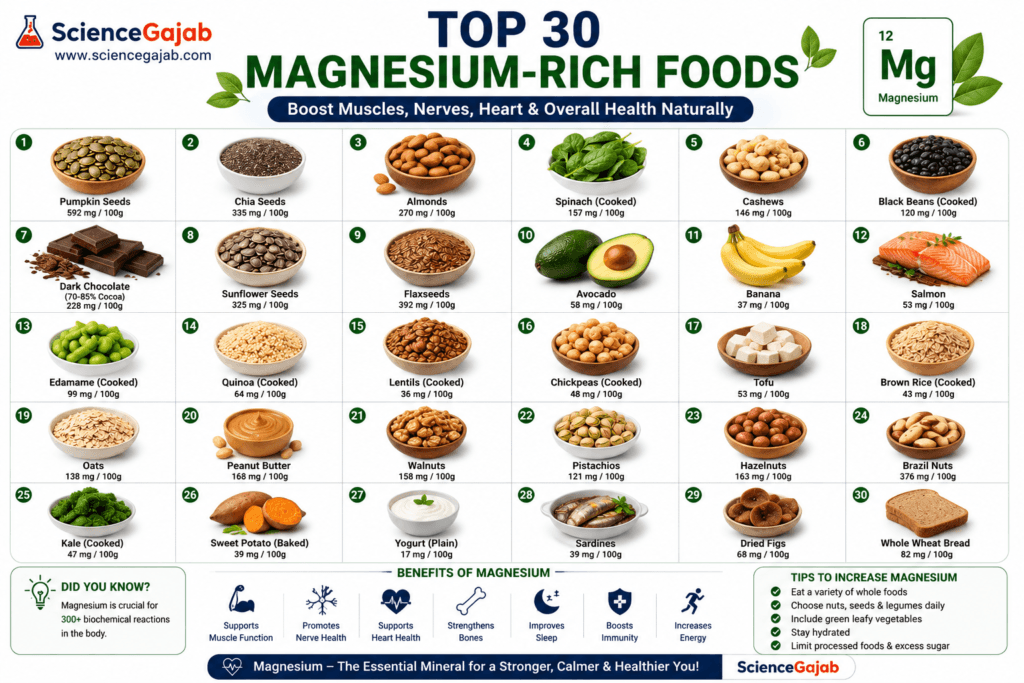
Top 30 Magnesium-Rich Foods
- Pumpkin seeds
- Flaxseeds
- Brazil nuts
- Sesame seeds
- Chia seeds
- Sunflower seeds
- Cashews
- Soybeans
- Almonds
- Black beans
- Kidney beans
- Lentils
- Chickpeas
- Spinach
- Swiss chard
- Kale
- Broccoli
- Okra
- Oats
- Brown rice
- Quinoa
- Whole wheat
- Barley
- Avocado
- Banana
- Dark chocolate
- Yogurt
- Tofu
- Salmon
- Mackerel
Foods That Improve Magnesium Status
Although no food dramatically increases magnesium absorption, these habits help maintain healthy levels:
- Eat a balanced diet with whole foods.
- Include legumes, nuts, seeds, and leafy greens regularly.
- Correct vitamin D deficiency if present.
- Stay hydrated.
- Manage chronic medical conditions with your healthcare provider.
What Your Tongue Says About Your Health (Simple Guide With Tongue Signs)
Foods and Habits That May Lower Magnesium
Magnesium levels may be affected by:
- Heavy alcohol consumption
- Diets high in ultra-processed foods
- Long-term diarrhea
- Certain medications (under medical supervision)
- Poor overall dietary intake
These factors should be addressed as part of an overall treatment plan.
Why Do We Cry? The Fascinating Science Behind Human Tears
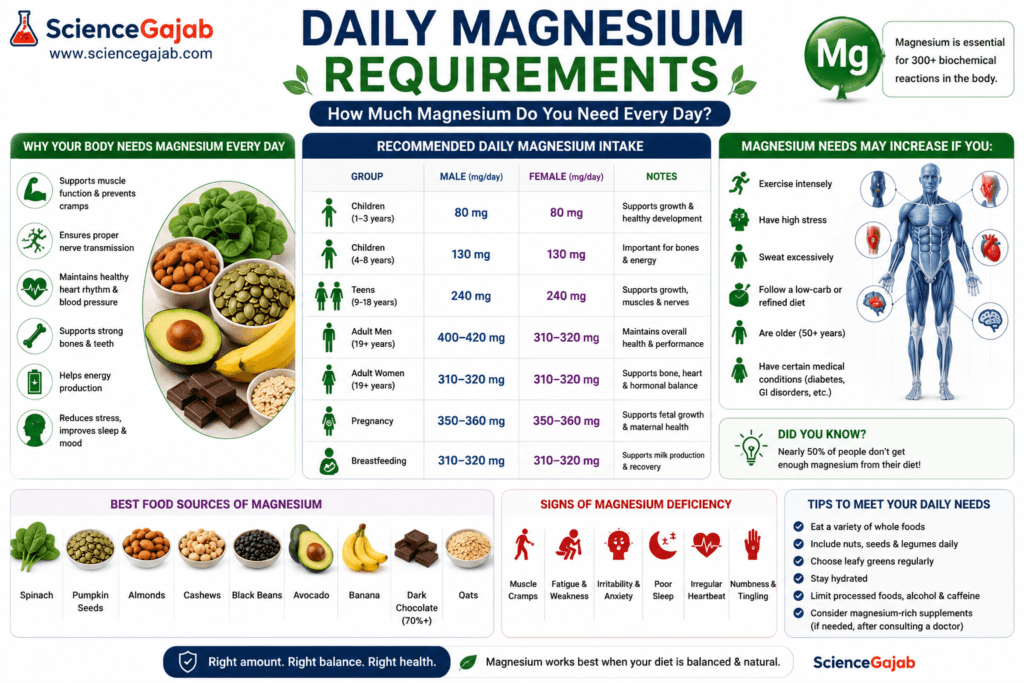
Daily Magnesium Requirements
| Group | Recommended Daily Intake |
|---|---|
| Adult Men | 400–420 mg |
| Adult Women | 310–320 mg |
| Pregnant Women | 350–360 mg |
| Breastfeeding Women | 310–320 mg |
| Teen Boys (14–18 years) | 410 mg |
| Teen Girls (14–18 years) | 360 mg |
Daily requirements may vary slightly depending on the health authority.
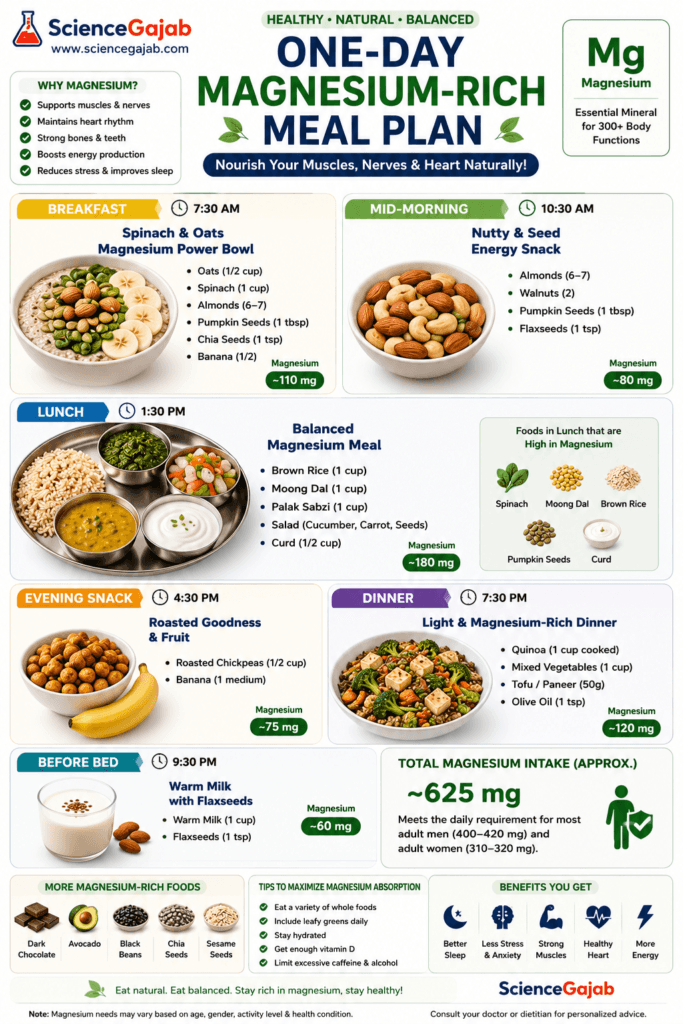
Sample One-Day Magnesium-Rich Meal Plan
Breakfast
- Oatmeal topped with almonds and chia seeds
- Banana
- Low-fat milk or fortified soy milk
Mid-Morning Snack
- Pumpkin seeds
- Fresh fruit
Lunch
- Brown rice
- Lentil curry
- Spinach salad
- Yogurt
Evening Snack
- Handful of cashews
- Dark chocolate (small portion)
Dinner
- Grilled salmon (or tofu)
- Steamed broccoli
- Quinoa
- Avocado salad
Can You Get Too Much Magnesium?
Magnesium obtained from food is generally safe for healthy people.
High doses of magnesium supplements may cause:
- Diarrhea
- Nausea
- Abdominal cramping
People with kidney disease should not take magnesium supplements unless advised by a healthcare professional because excess magnesium may accumulate in the body.
Prevention Tips
1✔ Eat magnesium-rich foods regularly.
2✔ Include whole grains, legumes, nuts, and leafy vegetables in your diet.
3✔ Limit excessive alcohol consumption.
4✔ Manage chronic digestive disorders.
5✔ Review long-term medications with your healthcare provider if magnesium deficiency is suspected.
6✔ Have regular health check-ups if you are at higher risk.
Doctor’s Advice
Persistent muscle cramps, eyelid twitching, or irregular heartbeats should never be ignored. These symptoms may be caused by magnesium deficiency, calcium deficiency, potassium imbalance, thyroid disorders, medication side effects, or neurological conditions. Proper diagnosis requires medical assessment and appropriate laboratory testing.
Why Do We Snore? The Science Behind Noisy Sleep
Frequently Asked Questions (FAQs)
1. What is the first sign of magnesium deficiency?
Early symptoms commonly include:
- Muscle cramps
- Eyelid twitching
- Fatigue
- Weakness
- Numbness or tingling
These symptoms can have many causes, so medical evaluation may be needed to determine whether magnesium deficiency is responsible.
2. Which foods are highest in magnesium?
Some of the richest natural sources include:
- Pumpkin seeds
- Chia seeds
- Sesame seeds
- Almonds
- Cashews
- Spinach
- Soybeans
- Black beans
- Dark chocolate
- Quinoa
Including a variety of these foods in your diet can help maintain healthy magnesium levels.
3. Can magnesium deficiency cause muscle cramps?
Yes.
Magnesium helps muscles contract and relax normally. Deficiency may contribute to muscle cramps, twitching, or spasms. However, dehydration, overuse, calcium deficiency, and other conditions can also cause muscle cramps.
4. Can magnesium deficiency affect sleep?
Some people with magnesium deficiency report difficulty sleeping or poor sleep quality. While magnesium supports normal nerve and muscle function, insomnia has many possible causes and should be evaluated if persistent.
5. Can magnesium deficiency cause anxiety?
Magnesium plays a role in nervous system function, and low levels may be associated with anxiety or irritability in some people. Anxiety is a complex condition with many contributing factors, so symptoms should not be attributed to magnesium deficiency without proper evaluation.
6. Is magnesium important for heart health?
Yes.
Magnesium helps maintain a normal heart rhythm. Severe magnesium deficiency may contribute to abnormal heart rhythms, especially in people with underlying heart disease or other electrolyte imbalances.
7. Can vegetarians get enough magnesium?
Yes.
Many plant foods are naturally rich in magnesium, including:
- Nuts
- Seeds
- Legumes
- Whole grains
- Green leafy vegetables
- Tofu
A varied vegetarian diet can usually provide enough magnesium.
8. Do magnesium supplements have side effects?
Some people may experience:
- Diarrhea
- Nausea
- Stomach discomfort
People with kidney disease should use magnesium supplements only under medical supervision because excess magnesium may accumulate in the body.
9. How is magnesium deficiency diagnosed?
Healthcare professionals may recommend:
- Serum magnesium
- Serum calcium
- Serum potassium
- Kidney function tests
- Blood glucose
- Additional investigations based on symptoms
Test results are interpreted together with symptoms and medical history.
10. Can magnesium deficiency be cured?
In many cases, yes.
Treatment usually involves improving dietary magnesium intake, correcting the underlying cause, and using magnesium supplements when medically indicated.
Key Takeaways
1✔ Magnesium is essential for healthy muscles, nerves, bones, heart rhythm, and energy production.
2✔ Early symptoms include muscle cramps, eyelid twitching, fatigue, weakness, headaches, and tingling.
3✔ Severe deficiency may lead to muscle spasms, seizures, abnormal heart rhythms, and low calcium or potassium levels.
4✔ Nuts, seeds, legumes, leafy vegetables, whole grains, and dark chocolate are excellent dietary sources of magnesium.
5✔ Persistent symptoms should be evaluated by a healthcare professional because many conditions can mimic magnesium deficiency.
References
When publishing, support the article with current guidance from trusted organizations such as:
- World Health Organization (WHO)
- National Institutes of Health (NIH) Office of Dietary Supplements
- National Health Service (NHS)
- Academy of Nutrition and Dietetics
Review these sources periodically to keep the article accurate and up to date.
Medical Disclaimer
This article is for educational purposes only and should not replace professional medical advice, diagnosis, or treatment. If you have symptoms of magnesium deficiency or concerns about your health, consult a qualified healthcare professional. Never begin or stop supplements without medical advice.
“Could You Be Low in Magnesium?” Checklist
Add a reader-friendly self-check:
- □ Frequent muscle cramps
- □ Eyelid twitching
- □ Fatigue despite adequate sleep
- □ Tingling in hands or feet
- □ Poor sleep quality
- □ Frequent headaches
- □ Diet low in nuts, seeds, and leafy greens
If several boxes are checked, advise readers to consult a healthcare professional rather than self-diagnose.
Myth vs Fact
| Myth | Fact |
|---|---|
| Magnesium deficiency only affects muscles. | It can affect muscles, nerves, heart rhythm, and bone health. |
| Only older adults need magnesium. | People of all ages require magnesium for normal body function. |
| Supplements are always better than food. | A balanced diet is usually the preferred source of magnesium. |
| Muscle cramps always mean magnesium deficiency. | Cramps can also result from dehydration, calcium or potassium deficiency, nerve disorders, or overuse. |
Comparison Table
| Feature | Magnesium Deficiency | Calcium Deficiency | Potassium Deficiency |
|---|---|---|---|
| Muscle cramps | ✔ Common | ✔ Common | ✔ Common |
| Eyelid twitching | ✔ Common | Less common | Less common |
| Tingling or numbness | ✔ | ✔ | Sometimes |
| Muscle spasms (tetany) | Severe cases | Severe cases | Rare |
| Irregular heartbeat | ✔ | ✔ | ✔ |
| Weakness | ✔ | ✔ | ✔ |
| Low blood level confirmed by test | ✔ | ✔ | ✔ |