Why Does Cutting Onions Make Us Cry? The Surprising Science Behind It
Cutting onions feels like emotional damage… but it’s actually chemistry.
Your eyes react to a gas released by onions — and it’s surprisingly powerful. why cutting onions makes you cry
Have you ever noticed that cutting onions almost always brings tears to your eyes? You might start chopping them calmly, but within seconds your eyes begin to burn and water uncontrollably.why cutting onions makes you cry
This common kitchen experience happens to millions of people every day. But have you ever wondered why onions make us cry while other vegetables don’t?
The answer lies in a fascinating chemical defense mechanism inside onions. Scientists have discovered that onions release a special gas when they are cut, which irritates our eyes and triggers tears.
Let’s explore the simple science behind onion tears and why your body reacts this way.
😳 Ever noticed this?
You’re happily chopping onions…
and suddenly — your eyes start burning and tears flow like you’re heartbroken!
👉 But here’s the twist:
You’re not emotional — your body is defending itself.
⚡ The Real Reason (Simple + Powerful)
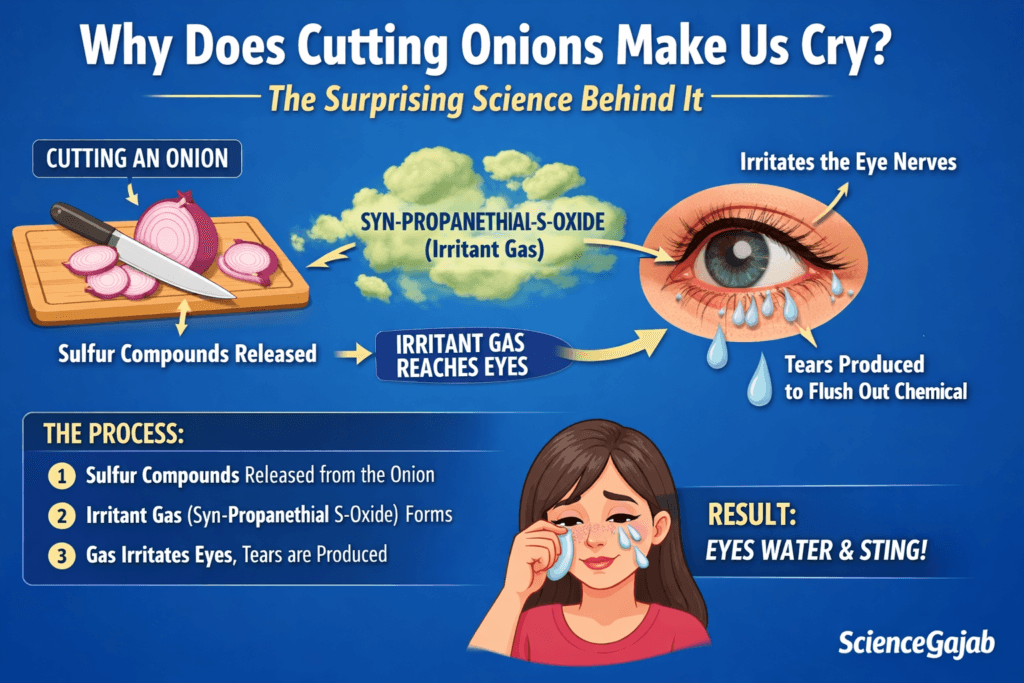
When you cut an onion:
👉 It releases a chemical gas called syn-Propanethial-S-oxide
👉 This gas reaches your eyes
👉 It forms a mild acid
👉 Your eyes panic and produce tears to wash it away
📌 Result → You cry without being sad
➡️ This is a defense mechanism of onions to protect themselves from animals
🧪 Step-by-Step Science (Easy Trick to Remember)
🧠 CUT → GAS → EYES → TEARS
- You cut onion → cells break
- Enzymes react → create irritating gas
- Gas reaches eyes
- Eyes release tears to flush it out
📌 That’s it. No emotion. Just chemistry.
🧠 EASY TRICK BOX (Exam Booster)
👉 Remember this keyword:
“Lachrymatory factor” = Tear-causing chemical
✔ Scientific name: syn-Propanethial-S-oxide
✔ Function: Irritates eyes → causes tears
💡 EXAM TIP (High Scoring Line)
👉 “Onions cause tears due to release of lachrymatory factor which stimulates lacrimal glands.”
Use this line in exams = Full marks potential
🤯 Why Some Onions Make You Cry MORE?
Not all onions are equal 👇
| Onion Type | Tears Level |
|---|---|
| Red onion | 🔥 High |
| Yellow onion | 🔥 High |
| White onion | ⚠ Medium |
| Sweet onion | 😌 Low |
👉 More sulfur = more tears
🚫 How To Stop Crying (Scientifically Proven)
✔ 1. Use a sharp knife
Less damage → less gas release
✔ 2. Cut near ventilation / fan
Gas moves away from eyes
✔ 3. Don’t cut root first
Root has highest chemicals
✔ 4. Wear goggles 😎
Best protection (blocks gas completely)
❌ Myth vs Reality
| Myth | Reality |
|---|---|
| Keep onion in mouth | ❌ Useless |
| Hold spoon in mouth | ❌ Fake |
| Refrigerate onion | ⚠ Slight effect |
👉 Best method = Sharp knife + airflow
🚀 Why This Article Matters
Next time you cry while cutting onions…
👉 Remember:
It’s not sadness — it’s science protecting your eyes.
What Happens When You Cut an Onion?
An onion may look simple, but inside it contains hundreds of tiny cells filled with chemicals.
When the onion is intact, these chemicals stay separated and harmless. But the moment you slice or chop the onion, its cells break open.
This starts a chain reaction:
- Onion cells are damaged by the knife.
- Enzymes mix with sulfur-containing compounds inside the onion.
- A chemical reaction occurs.
- A gas called syn-propanethial-S-oxide is released into the air.
This gas is the real reason why your eyes start to sting.
Your Lungs Are Cleaning Themselves Right Now
🌶️ Why Do Onions Make You Cry?
🧪 Sulfur Compounds: The Real Culprit
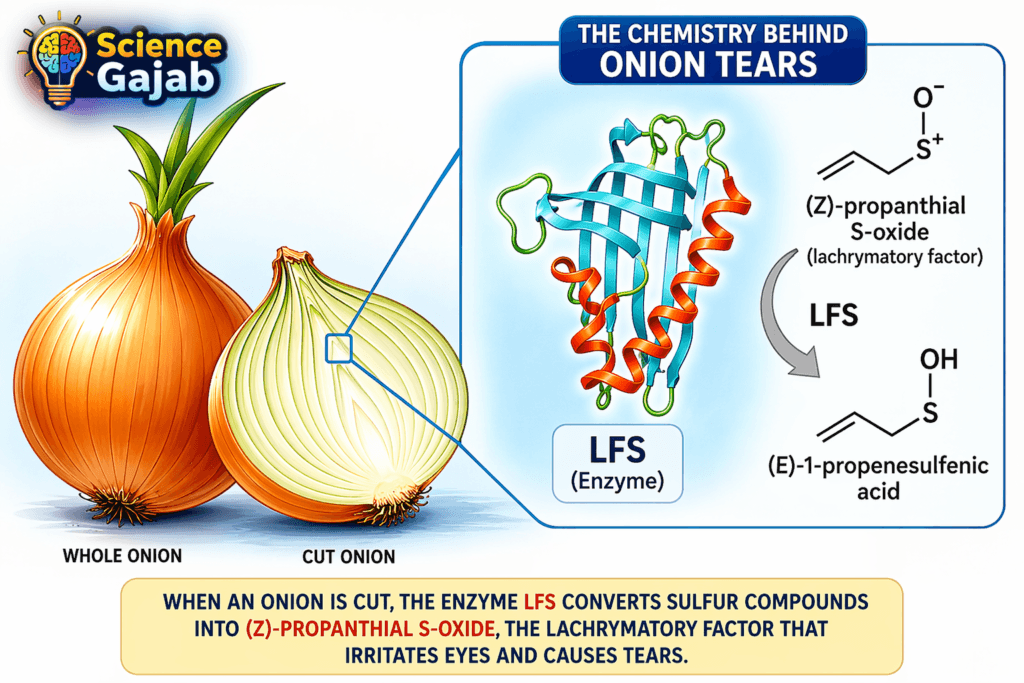
Onions contain sulfur-rich amino acids stored inside their cells. When you cut an onion:
- Cells break open
- Enzymes mix with sulfur compounds
- A chemical reaction starts instantly
This produces a gas called:
👉 Syn-propanethial-S-oxide (the tear-causing chemical)
This compound is known as a lachrymatory factor — meaning it triggers tears.
👁️ Gas Reaction in Your Eyes
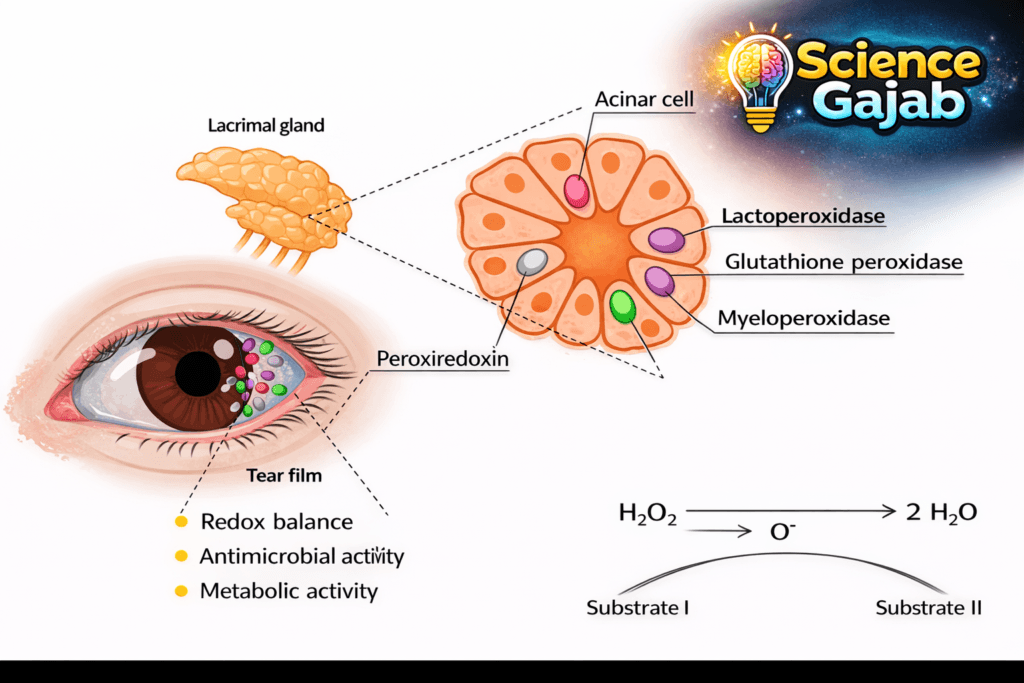
When the onion gas reaches your eyes:
- It reacts with moisture (water in your eyes)
- Forms a mild sulfuric acid-like substance
- Irritates nerve endings in the eye
Your brain detects this irritation as danger.
👉 So it activates tear glands to flush it out.
💧 Why Tears Protect You
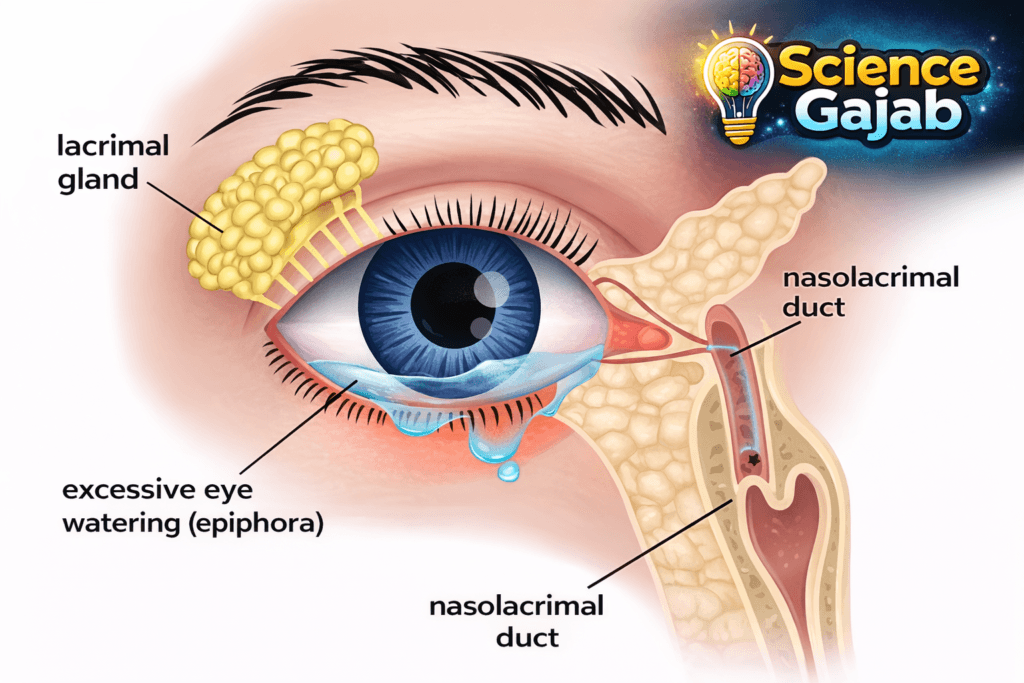
Tears are not just emotional — they are a defense mechanism.
They help to:
- Wash away harmful chemicals
- Protect delicate eye tissues
- Maintain eye lubrication
This is controlled by your lacrimal glands, which act quickly to protect your vision.
👉 Basically, crying while cutting onions = your eyes saving themselves.
🧠 Tips to Stop Crying While Cutting Onions
Here are proven hacks:
✅ 1. Chill the Onion
Cold slows the chemical reaction → less gas released
✅ 2. Use a Sharp Knife
Fewer crushed cells → fewer chemicals released
✅ 3. Cut Near Running Water
Water absorbs the gas before it reaches your eyes
✅ 4. Wear Goggles 😄
Blocks gas completely (weird but effective)
✅ 5. Don’t Cut the Root Last
The root has the highest concentration of sulfur compounds
FAQ
❓Why do onions make some people cry more?
Some people have more sensitive eyes or produce stronger tear responses.
❓ Are tearless onions real?
Yes! Scientists have developed low-sulfur onions that produce less irritant gas.
The Chemical That Makes You Cry
The gas released by onions is known as a lachrymatory factor. The word “lachrymatory” simply means tear-producing.
When you cut an onion, this gas rises into the air and eventually reaches your eyes.
Once it touches the moisture on the surface of your eyes, it forms a mild sulfuric acid.
This irritates the sensitive nerve endings in your eyes.
Your brain immediately detects the irritation and sends a signal to your tear glands.
The result?
Your eyes produce lots of tears to wash away the irritant.
So in simple terms:
Onions make us cry because our eyes are trying to protect themselves.
learn Eye
Why Onions Have This Defense Mechanism
You might wonder why onions evolved such a strange chemical reaction.
The answer is survival.
Plants cannot run away from animals or insects that try to eat them. So many plants developed chemical defense systems.
Onions produce irritating chemicals to discourage predators.
When animals or insects bite into the onion, the chemical reaction creates a strong irritating sensation, making the plant less appealing as food.
For humans, this reaction mainly affects our eyes while cutting the onion, not when eating it.
Interestingly, cooking onions destroys the chemicals responsible for tears, which is why cooked onions don’t make us cry.
Why Some Onions Make You Cry More Than Others
Not all onions cause the same amount of tears. Some varieties are much stronger than others.
Several factors influence this.
1. Onion Variety
Different types of onions contain different amounts of sulfur compounds.
Examples:
- Yellow onions often cause the most tears
- White onions cause moderate irritation
- Sweet onions usually cause fewer tears
Sweet onions have lower sulfur levels, which means they produce less of the irritating gas.
2. Freshness of the Onion
Fresh onions tend to release more chemicals because their cells are intact and full of enzymes.
Older onions may cause fewer tears because the chemicals slowly break down over time.
3. Storage Conditions
Onions grown in sulfur-rich soil tend to contain more tear-producing compounds.
This is why onions grown in different regions may cause different levels of eye irritation.
Why Your Eyes Burn When Cutting Onions
The burning sensation in your eyes is caused by nerve receptors that detect irritation.
Your eyes are extremely sensitive organs designed to detect even tiny threats.
When the onion gas reaches your eyes:
- The gas reacts with moisture on the eye surface.
- It forms a mild acid.
- Nerve endings detect the irritation.
- The brain triggers tear production.
The tears act like a natural washing system, flushing the irritant out of your eyes.
Within a few minutes, the burning sensation disappears.
learn Eye
🌀Why Your Brain Gets Confused During Motion Sickness
Why Some People Cry More Than Others
You may have noticed that some people cry heavily while cutting onions, while others barely react.
This difference happens because of several reasons.
Eye Sensitivity
Some individuals have more sensitive eyes, making them react strongly to irritants.
Distance from the Onion
The closer you are to the onion, the more gas reaches your eyes.
Cutting Speed
Cutting onions quickly can release more gas into the air.
Airflow
Good airflow in the kitchen can blow the gas away before it reaches your eyes.
🫁 What Happens When You Hold Your Breath Too Long? The Science Behind Oxygen Starvation
How to Prevent Tears While Cutting Onions
Although onion tears are harmless, they can be annoying.
Fortunately, there are several simple tricks that can help reduce the irritation.
1. Chill the Onion
Placing onions in the refrigerator for 30 minutes before cutting slows down the chemical reaction.
This reduces the amount of gas released.
2. Use a Sharp Knife
A sharp knife causes less damage to onion cells.
This means fewer chemicals mix together and less irritating gas is produced.
3. Cut Onions Under Running Water
Water can wash away some of the chemicals before they reach your eyes.
However, this method may slightly affect the onion’s flavor.
4. Improve Kitchen Ventilation
Using a fan or exhaust hood can blow the onion gas away from your face.
This simple step often reduces tearing significantly.
5. Wear Protective Glasses
Some chefs wear kitchen goggles to block the gas from reaching their eyes.
While it may look funny, it works surprisingly well.
Why So Many People Need Glasses Today
Do Contact Lenses Help?
Interestingly, people who wear contact lenses often experience fewer onion tears.
Contact lenses create a thin barrier that prevents the irritating gas from reaching the eye surface.
However, this does not always eliminate irritation completely.
Scientists Actually Studied Onion Tears
The chemistry behind onion tears fascinated scientists for many years.
In 2002, Japanese researchers discovered the enzyme responsible for producing the tear-inducing gas.
This enzyme is called lachrymatory factor synthase.
Understanding this enzyme helped scientists explain exactly how onions produce the irritating gas.
This discovery even led to an interesting innovation.
learn Why So Many People Need Glasses Today
The “No-Tear Onion”
Scientists later developed a special onion variety known as the tearless onion.
By modifying the enzyme responsible for the irritating gas, researchers created onions that produce far fewer tear-inducing chemicals.
These onions still taste similar but cause much less eye irritation.
However, they are not yet widely available in most markets.
learn How the Internet Actually Works – Simple Explanation | ScienceGajab
Are Onion Tears Harmful?
The good news is that onion tears are completely harmless.
The irritation lasts only a short time and does not damage your eyes.
Your tear glands quickly wash away the chemical irritant.
In fact, this reaction shows how efficiently your body protects your eyes from potential threats.
Fun Facts About Onions
Here are some interesting facts you may not know about onions.
- Onions have been cultivated for more than 5,000 years.
- Ancient Egyptians considered onions a symbol of eternal life.
- Onions contain antioxidants that may support heart health.
- India is one of the largest onion producers in the world.
Despite causing tears in the kitchen, onions remain one of the most important ingredients in cooking worldwide.
read why dreaming happens
Fever Isn’t Your Enemy – Here’s What Your Body Is Actually Doing
FAQ: Common Questions About Onion Tears
Garlic contains sulfur compounds but does not produce the same tear-inducing gas that onions release.
Professional chefs often use sharp knives, fast cutting techniques, and proper ventilation, which reduces exposure to the gas.
Some people believe chewing gum forces you to breathe through your mouth, reducing eye irritation. However, scientific evidence for this trick is limited.
Heat destroys the enzymes responsible for producing the tear-inducing gas.
That’s why fried or cooked onions do not irritate your eyes.
Some people have more sensitive eyes or produce stronger tear responses.
Yes! Scientists have developed low-sulfur onions that produce less irritant gas.
The Amazing Science Hidden in Everyday Cooking
Cutting onions may seem like a small and annoying part of cooking, but it reveals a fascinating interaction between plant chemistry and human biology.
A simple vegetable uses a clever chemical defense mechanism, while your body responds instantly to protect your eyes.
The next time you start tearing up while chopping onions, remember that you’re witnessing a tiny but remarkable scientific reaction happening right in your kitchen.
And perhaps those tears are just a reminder that even everyday foods hide incredible science inside them.
https://www.instagram.com/sciencegajab/?hl=en
learn What is the main cause of mumps?