Many people experience weaker vision at some point in their lives. Some need glasses to read books, others struggle to see distant objects clearly, and some experience blurry vision both near and far.
Weak eyesight is extremely common worldwide. According to health research, billions of people have vision problems such as nearsightedness, farsightedness, or age-related vision changes.
To understand why vision becomes weaker, we need to look at how the eye works and what can interfere with clear vision.
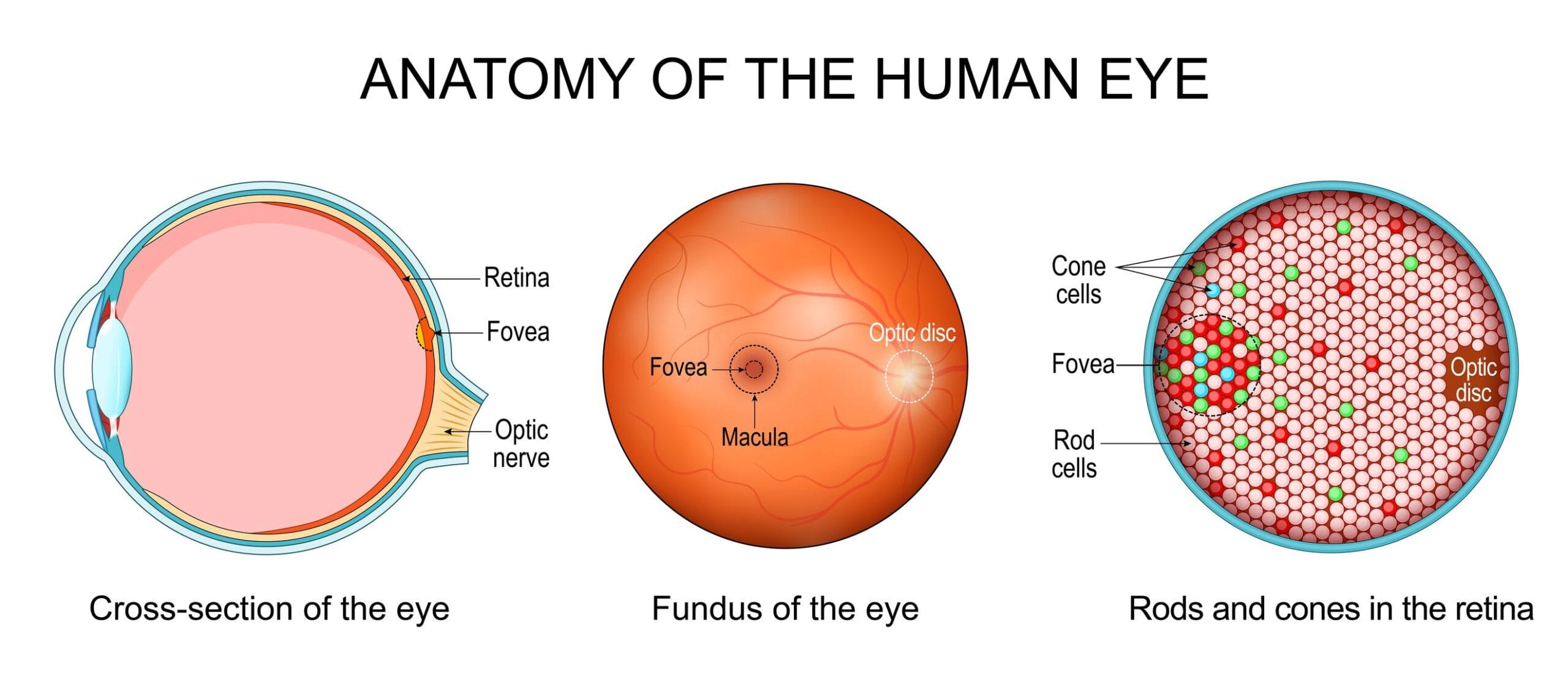
learn Human eye anatomy. Cells of Retina and Fundus of the eye sciencegajab
How the Eye Creates Clear Vision
The human eye works similarly to a camera.
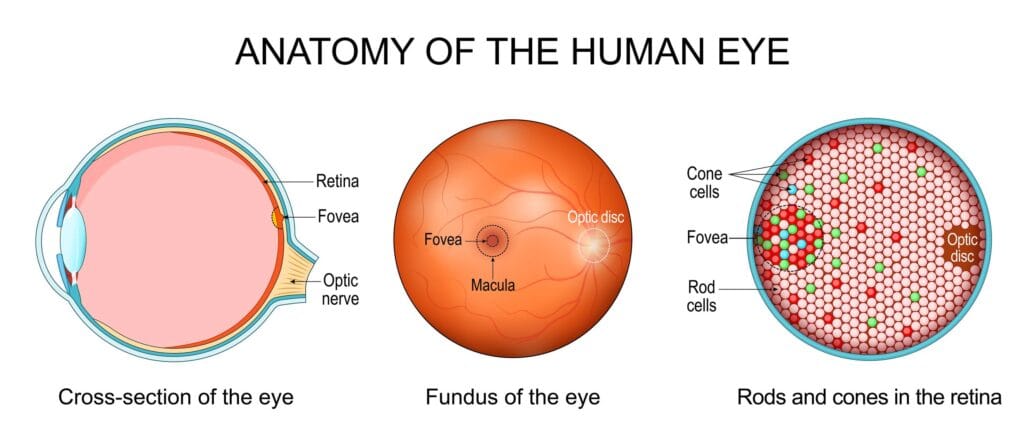
Light enters the eye through the cornea, the clear front surface of the eye. It then passes through the lens, which focuses the light onto the retina at the back of the eye.
The retina contains special cells called photoreceptors that convert light into electrical signals. These signals travel through the optic nerve to the brain.
The brain then processes the signals and creates the image you see.
If any part of this process is disrupted, vision can become blurry or weak.
1. Refractive Errors
The most common reason people have weaker vision is refractive error.
Refractive errors occur when the eye cannot properly focus light on the retina.
The main types include:
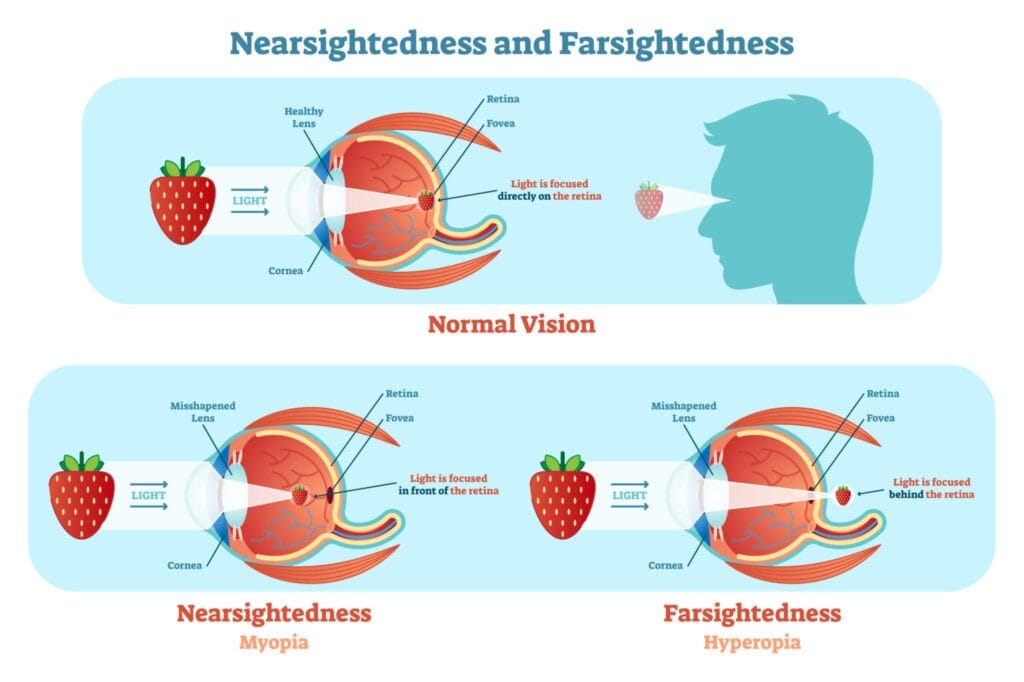
Nearsightedness (Myopia)
People with myopia can see near objects clearly, but distant objects appear blurry.
This happens when:
- the eyeball is slightly longer than normal
- light focuses in front of the retina
Myopia is becoming increasingly common worldwide, especially among people who spend long hours using screens or reading.
Farsightedness (Hyperopia)
In hyperopia, people can see distant objects more clearly, but nearby objects appear blurry.
This occurs when:
- the eyeball is shorter than normal
- light focuses behind the retina
Astigmatism
Astigmatism occurs when the cornea has an irregular shape.
Instead of being perfectly round, the cornea becomes slightly oval. This causes light to focus unevenly, leading to distorted or blurred vision.
2. Aging and Vision Changes
Vision naturally changes as people grow older.
One common condition is presbyopia, which usually appears after age 40.
In presbyopia:
- the eye lens becomes less flexible
- it becomes harder to focus on nearby objects
This is why many older adults need reading glasses.
3. Eye Muscle Strain
Long periods of close work can strain the eyes.
Activities that can cause eye fatigue include:
- staring at screens for hours
- reading in poor lighting
- focusing on small text for long periods
This condition is often called digital eye strain.
Symptoms may include:
- blurred vision
- headaches
- dry eyes
- difficulty focusing
Although eye strain usually does not cause permanent damage, it can temporarily worsen vision.
4. Genetics
Genetics plays a major role in eyesight.
If your parents have poor vision, there is a higher chance you may also develop vision problems.
Researchers have identified many genes linked to myopia and other vision conditions.
This means that weaker vision often runs in families.
5. Lack of Outdoor Time
Recent studies suggest that children who spend more time indoors may be more likely to develop myopia.
Sunlight exposure appears to help regulate normal eye growth.
Children who spend more time outdoors tend to have lower risk of developing severe nearsightedness.
6. Eye Diseases
Sometimes weaker vision is caused by medical conditions affecting the eye.
Common eye diseases include:
Cataracts
The lens of the eye becomes cloudy, causing blurry vision.
Glaucoma
Damage to the optic nerve can lead to gradual vision loss.
Macular Degeneration
This condition damages the central part of the retina responsible for sharp vision.
These conditions often occur later in life and may require medical treatment.
7. Nutritional Deficiencies
Certain nutrients are essential for healthy eyes.
Important nutrients include:
- Vitamin A
- Omega-3 fatty acids
- Vitamin C
- Vitamin E
- Zinc
A lack of vitamin A, for example, can lead to night blindness and poor vision.
Maintaining a balanced diet supports long-term eye health.
Signs of Weak Vision
Common symptoms of poor eyesight include:
- blurry vision
- difficulty seeing distant objects
- eye strain
- headaches after reading
- squinting to see clearly
If these symptoms appear frequently, it may be helpful to have an eye examination.
How Vision Problems Are Corrected
Fortunately, many vision problems can be corrected.
Common treatments include:
Glasses
Corrective lenses help focus light properly onto the retina.
Contact lenses
These work similarly to glasses but sit directly on the eye.
Laser eye surgery
Procedures like LASIK reshape the cornea to improve focus.15.Human biology basics everyone should know
How to Protect Your Vision
Several habits can help maintain healthy eyesight.
Follow the 20-20-20 rule
Every 20 minutes, look at something 20 feet away for 20 seconds.
Take breaks from screens
Reducing screen time helps prevent eye strain.
Eat eye-healthy foods
Foods rich in antioxidants support eye health.
Get regular eye exams
Early detection of vision problems allows timely treatment.
learn Ear :Anatomy,physiology & Function
The Bottom Line
People develop weaker vision for many reasons, including refractive errors, aging, genetics, lifestyle habits, and eye diseases.
In most cases, vision problems occur because the eye cannot properly focus light onto the retina.
Fortunately, modern treatments such as glasses, contact lenses, and surgery can help millions of people maintain clear vision.✅ Krebs Cycle (TCA Cycle) Made Easy | With Steps & Diagram
Taking care of eye health through good habits and regular checkups can also help protect eyesight throughout life.
move to STD Myths and Facts India