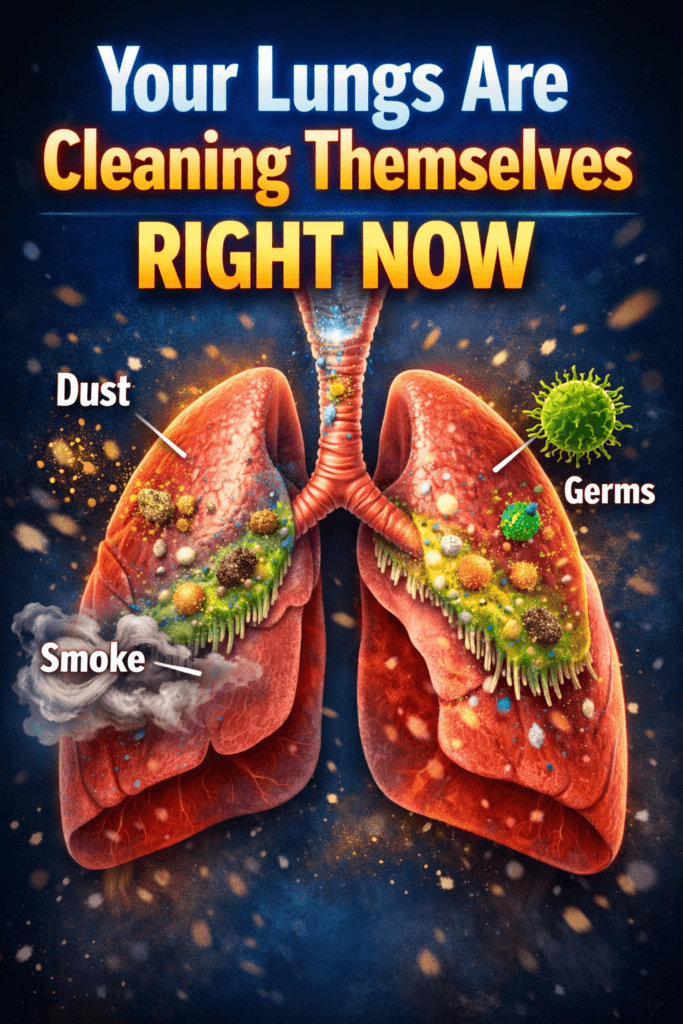

🌬️ What If Your Lungs Had a Built-In Cleaning System?
Every single day, with every breath you take, your body is exposed to invisible threats.
Dust. Smoke. Pollution. Harmful bacteria. Even toxic particles from vehicle exhaust.
If all of this stayed inside your body, breathing would become dangerous within days.
But here’s the fascinating truth:
🫁 Your lungs are not passive organs — they are active self-cleaning machines.
Without you noticing, your lungs are constantly filtering, trapping, and removing harmful substances. This silent cleaning process happens 24 hours a day, even when you’re asleep.
learn Breathing and exchange of gases
🧬 The Hidden Cleaning System Inside Your Lungs
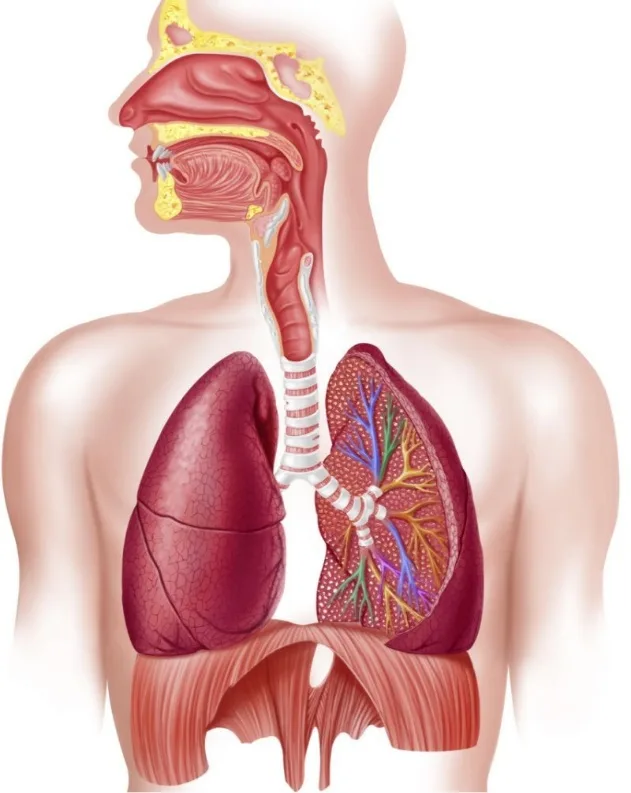
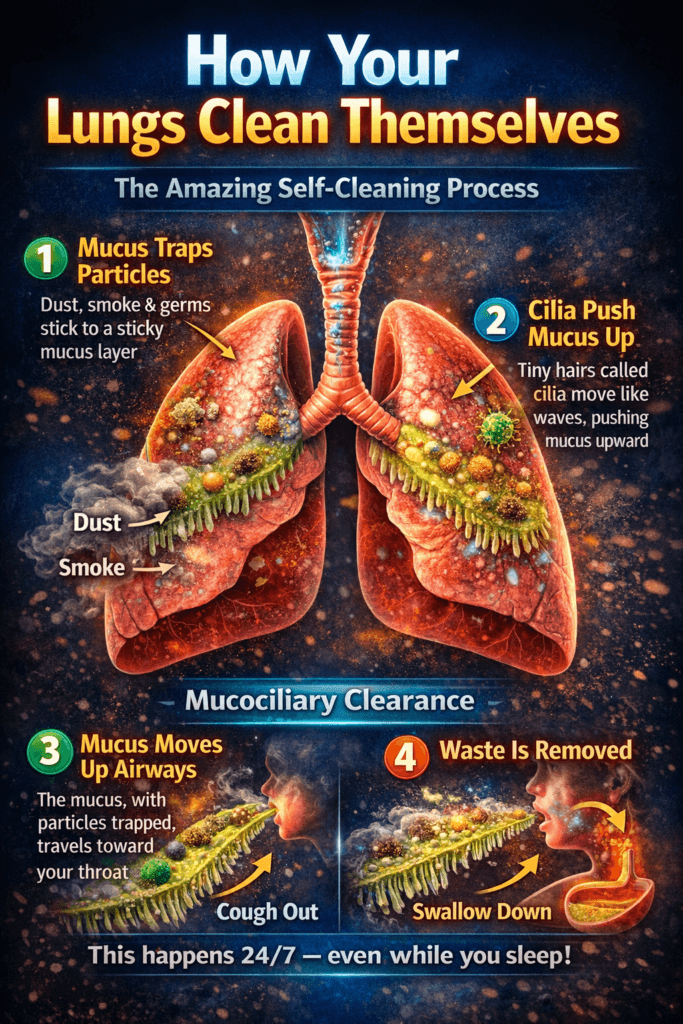
Your lungs use a highly efficient defense mechanism known as the mucociliary clearance system.
It may sound complex, but the concept is simple.
👉 Your lungs trap unwanted particles and push them out before they can cause harm.
Let’s break it down.
🧪 1. Mucus — The Sticky Trap
Inside your airways is a thin, slippery layer of mucus.
This mucus plays a critical role:
- It traps dust particles
- Captures bacteria and viruses
- Prevents harmful substances from reaching deeper lung areas
Think of mucus as a natural “sticky filter.”
Every time you inhale polluted air, this layer catches most of the unwanted particles before they can damage your lungs.
But trapping is only the first step. The real magic happens next.
🔄 2. Cilia — The Tiny Cleaners
Lining your respiratory tract are millions of microscopic hair-like structures called cilia.
These tiny structures are always in motion.
👉 They move in a coordinated, wave-like pattern — similar to how grass moves in the wind.
Their job?
- Push mucus upward toward your throat
- Carry trapped particles away from the lungs
This movement is so smooth and constant that you never feel it happening.
🚶♂️ 3. The “Escalator” Effect
When mucus and cilia work together, they create what scientists call a cleaning escalator.
Here’s how it works step by step:
- You inhale air containing dust or germs
- Mucus traps these harmful particles
- Cilia slowly move the mucus upward
- The waste reaches your throat
- You either swallow it or cough it out
Yes — you are constantly swallowing tiny amounts of trapped dust and bacteria, and your stomach acid destroys them.
It may sound strange, but it’s one of the most effective defense systems in your body.
learn Corona virus
🤧 Why Coughing Is Actually Helpful
Many people think coughing is a sign of illness.
But in reality, coughing is a powerful cleaning reflex.
When your lungs detect irritation or excess mucus, they trigger a cough to:
- Clear blocked airways
- Remove thick mucus
- Expel harmful particles quickly
👉 A single strong cough can move air at speeds up to 80 km/h, pushing unwanted substances out of your lungs.
So next time you cough, remember — your body is protecting you.
learn how cancer starts
🧠 What Happens During Sleep?
You might think your lungs “rest” at night.
But they don’t.
While you sleep:
- Cilia continue moving mucus
- Your breathing slows but remains steady
- Repair and regeneration processes increase
However, mucus may accumulate slightly, which is why many people feel the need to cough or clear their throat in the morning.
👉 That’s your lungs finishing their overnight cleaning cycle.
learn The Science of Happiness: How Dopamine Hacks Your Brain
🚨 What Can Damage This Natural Cleaning System?
Despite being powerful, your lung cleaning system is not indestructible.
Certain habits and conditions can weaken or even destroy it.
❌ Smoking
Smoking is the biggest enemy of lung cleaning.
- It paralyzes cilia
- Reduces their movement
- Causes mucus buildup
Over time, this leads to chronic cough and serious lung diseases.
❌ Air Pollution
Constant exposure to polluted air:
- Overloads the mucus system
- Slows down cleaning efficiency
- Increases risk of infections
This is especially concerning in urban environments.
❌ Dehydration
Water is essential for keeping mucus thin and fluid.
When you’re dehydrated:
- Mucus becomes thick and sticky
- Cilia struggle to move it
- Cleaning slows down
❌ Infections
Respiratory infections can:
- Damage cilia temporarily
- Increase mucus production
- Block airways
This is why you feel congestion during illness.
learn How Immune System Works
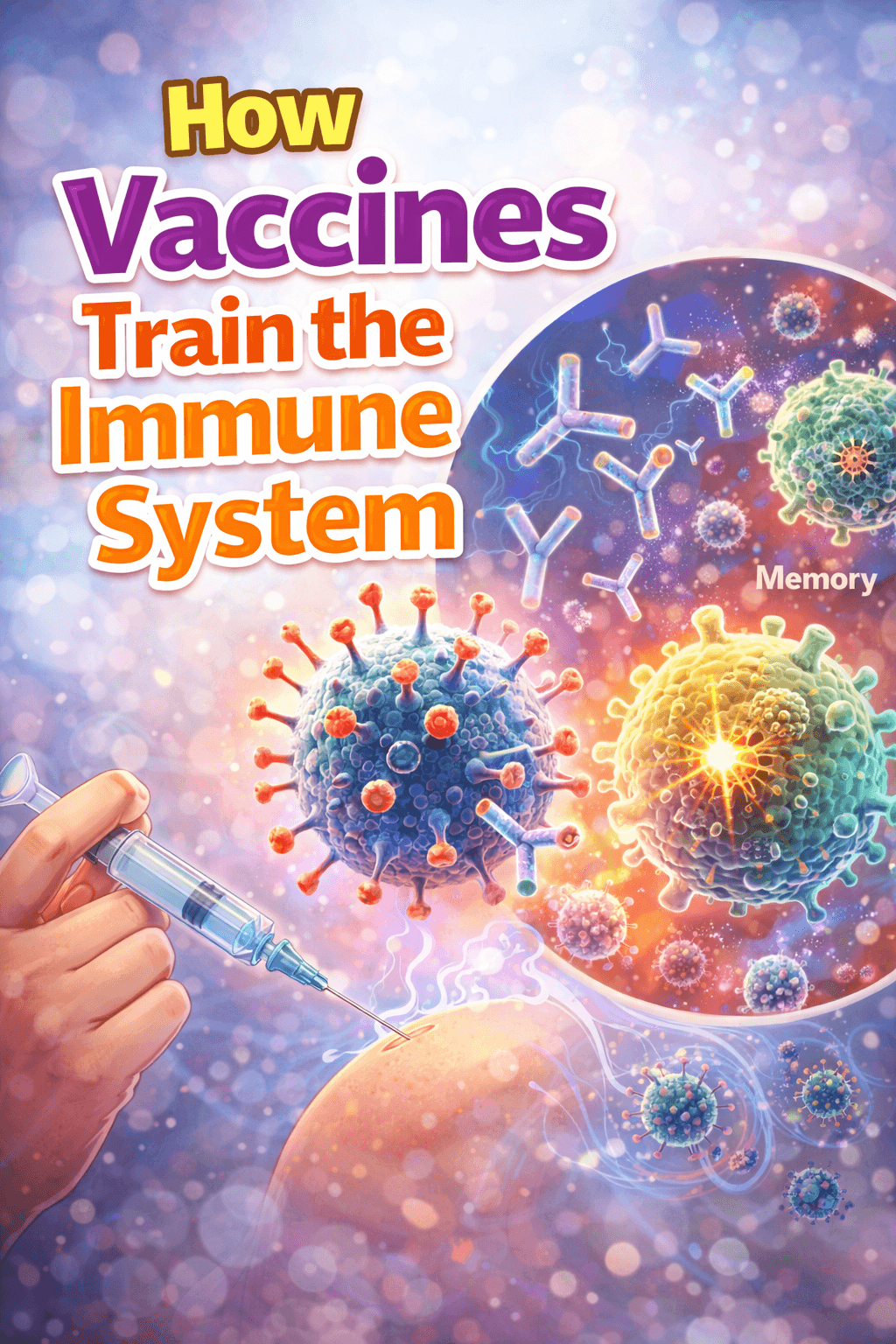
how vaccine train immune system
💡 How to Support Your Lung Cleaning System
The good news is — you can help your lungs function better.
Here are simple, science-backed ways:
✅ Stay Hydrated
Drink enough water to keep mucus thin and easy to move.
✅ Practice Deep Breathing
Deep breathing expands your lungs and improves airflow, helping the cleaning process.
✅ Exercise Regularly
Physical activity increases breathing rate and boosts lung efficiency.
✅ Avoid Polluted Environments
Use masks or limit exposure in high-pollution areas.
✅ Eat Nutrient-Rich Foods
Fruits and vegetables provide antioxidants that support lung health.
🫁 Amazing Fact: Your Lungs Are Huge (Inside!)
Your lungs contain around 300 million tiny air sacs called alveoli.
If you spread them out, their surface area would be as large as:
🏸 A badminton court!
This massive surface helps your body absorb oxygen efficiently — while the cleaning system keeps it safe.
🚀 Why This Matters More Than Ever
Modern lifestyles are putting extra pressure on our lungs:
- Increased pollution
- Indoor air contamination
- Shallow breathing habits
- Sedentary routines
All of this reduces lung efficiency over time.
👉 The less you use your lungs properly, the weaker their cleaning ability becomes.
move to how brain form memories
🎯 Final Thought
Your lungs are one of the most hardworking organs in your body.
Every second, they are:
- Filtering air
- Removing toxins
- Protecting your health
And they do all of this silently.
But here’s the truth:
🫁 Your lungs can only protect you if you support them.
Every breath you take is a choice.
👉 A choice to strengthen your body
or slowly damage it
So the next time you inhale…
Remember:
Your lungs are already working to clean your body — make sure you’re not making their job harder.
learn 🫁 What Happens When You Hold Your Breath Too Long? The Science Behind Oxygen Starvation